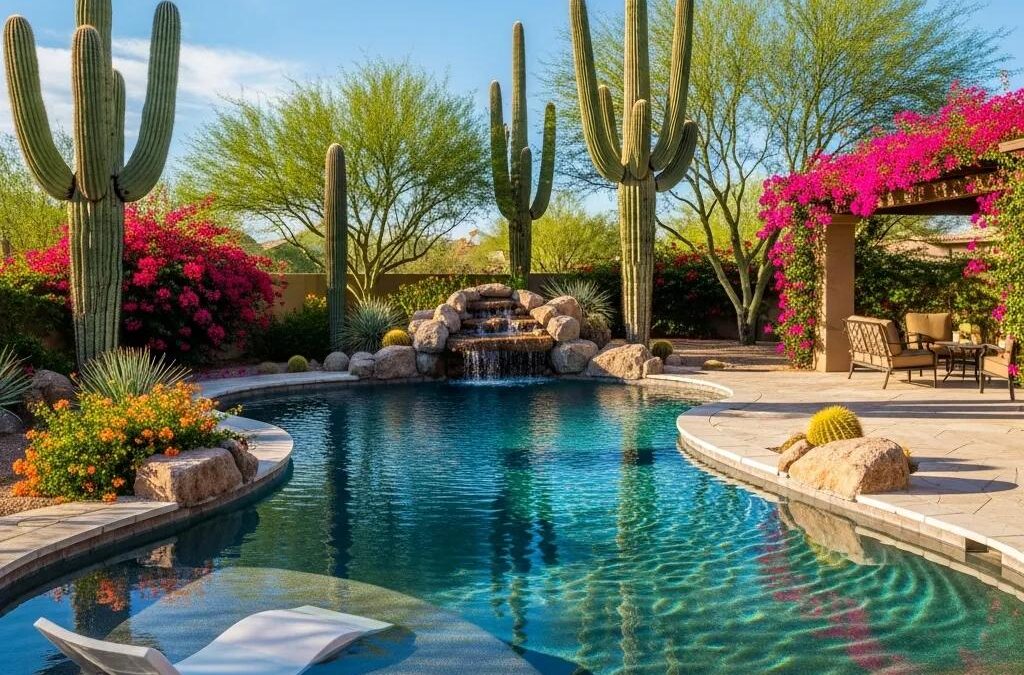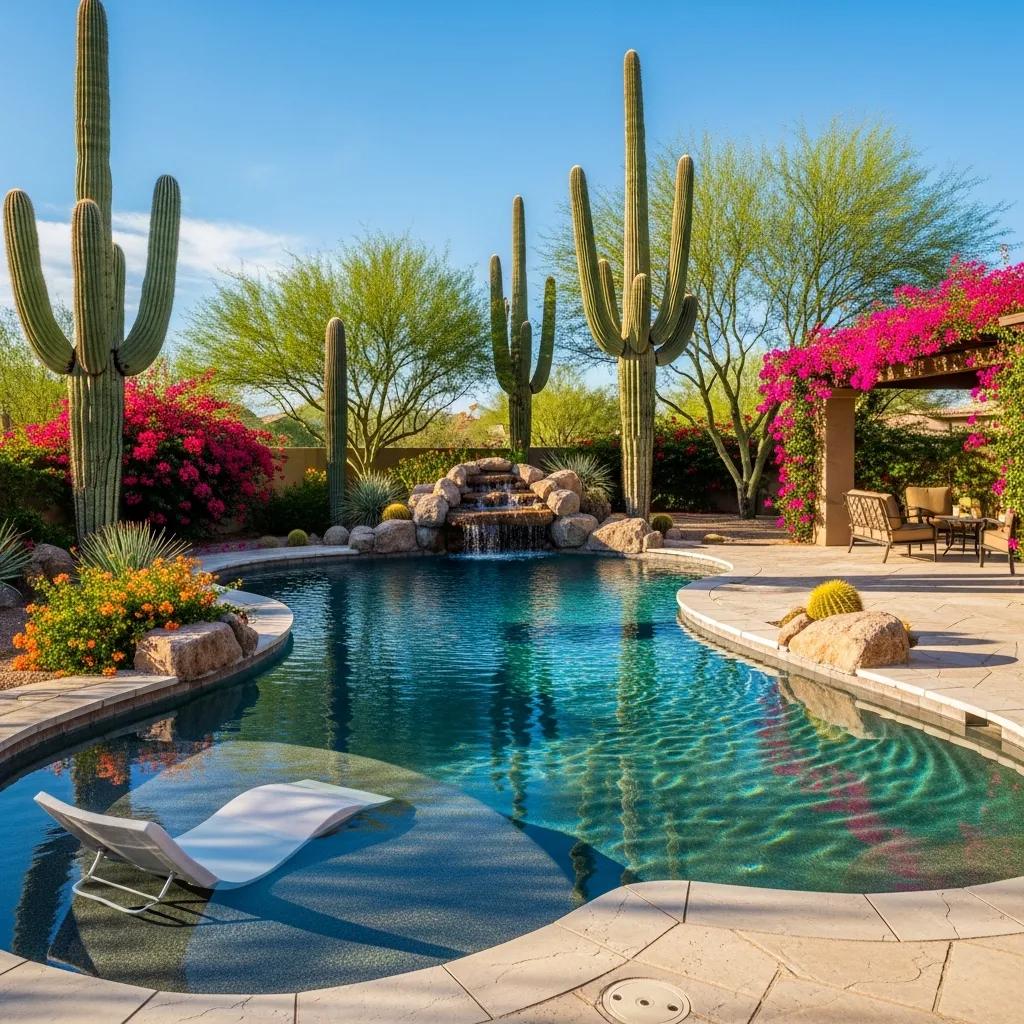
Spring Pool Opening Checklist for Arizona Homeowners

Spring Pool Opening Checklist for Arizona Homeowners
Spring Pool Opening Checklist for Arizona Homeowners: Your Practical Guide to a Luxury Desert Oasis

Opening a luxury pool for Arizona spring takes the right timing and a clear step-by-step plan. This guide walks Arizona homeowners through a complete spring opening workflow: when to schedule, key pre-opening tasks, target chemistry ranges, must-do equipment checks, deep-cleaning tips, and how to decide between DIY work and hiring pros or pursuing a remodel. You’ll get desert-specific timing cues, a practical approach to water testing and balancing, inspection and maintenance checks for pumps, filters, and automation, plus accessory reinstallation and final safety checks. We also cover smart tech options and drought-aware landscape reminders for desert yards, and we highlight the signs that mean it’s time to call in a professional. Keep reading for an Arizona-focused checklist that preserves high-end finishes and gets your backyard oasis ready for the season.

When is the Best Time to Open Your Pool in Arizona?

In Arizona, the ideal window is usually late March through mid-April—when daytime highs regularly hit the mid-70s and overnight lows stop dipping below the 50s. That timing reduces cold stress on plumbing and equipment and avoids prolonged exposure to early-season dust and pollen that can overwhelm sanitizers. Opening during this period also helps prevent repeated shock cycles from wide temperature swings and lowers the risk of early algae as sunlight intensity rises. If you’re in a higher-elevation microclimate, shift the window later; if you’re in a low-elevation desert pocket that warms quickly, you can open earlier but test chemistry closely.

How Do Arizona's Climate and Seasonal Changes Affect Pool Opening Timing?

Arizona’s intense spring sun speeds free-chlorine decay and raises stabilizer needs, so plan for UV-driven sanitizer loss when you pick an opening date. Desert dust and seasonal pollen can build up on a covered pool during spring yard work, which means more filtration and skimming after you open. Local microclimates matter: valley floors warm faster than higher neighborhoods, and nearby irrigation or tree cover affects water-temperature rise and debris exposure. Aim for a few consecutive warm, low-wind days so filtration can do its job without constant dilution from wind-blown debris, and plan to test chemistry daily during the first week to catch rapid shifts.

What Are the Risks of Opening Your Pool Too Early or Late in Arizona?

Opening too early risks late cold snaps that stress pumps and can cause condensation-related corrosion; it also exposes your pool to extra dust and pollen that increase filter and chemical demand. Waiting too long lets debris decompose under the cover, creating stubborn organic loads that fuel algae and staining and require heavier shock treatments. If your water turns green or cloudy after opening, follow a shock-and-filter protocol rather than repeated partial fills, which can destabilize chemistry. If you see corrosion or scale on returns or equipment, stop and inspect before resuming full operation. Knowing these risks helps you choose an opening date that minimizes chemical volatility and mechanical strain.

What Are the Essential Pre-Opening Preparations for Arizona Pools?
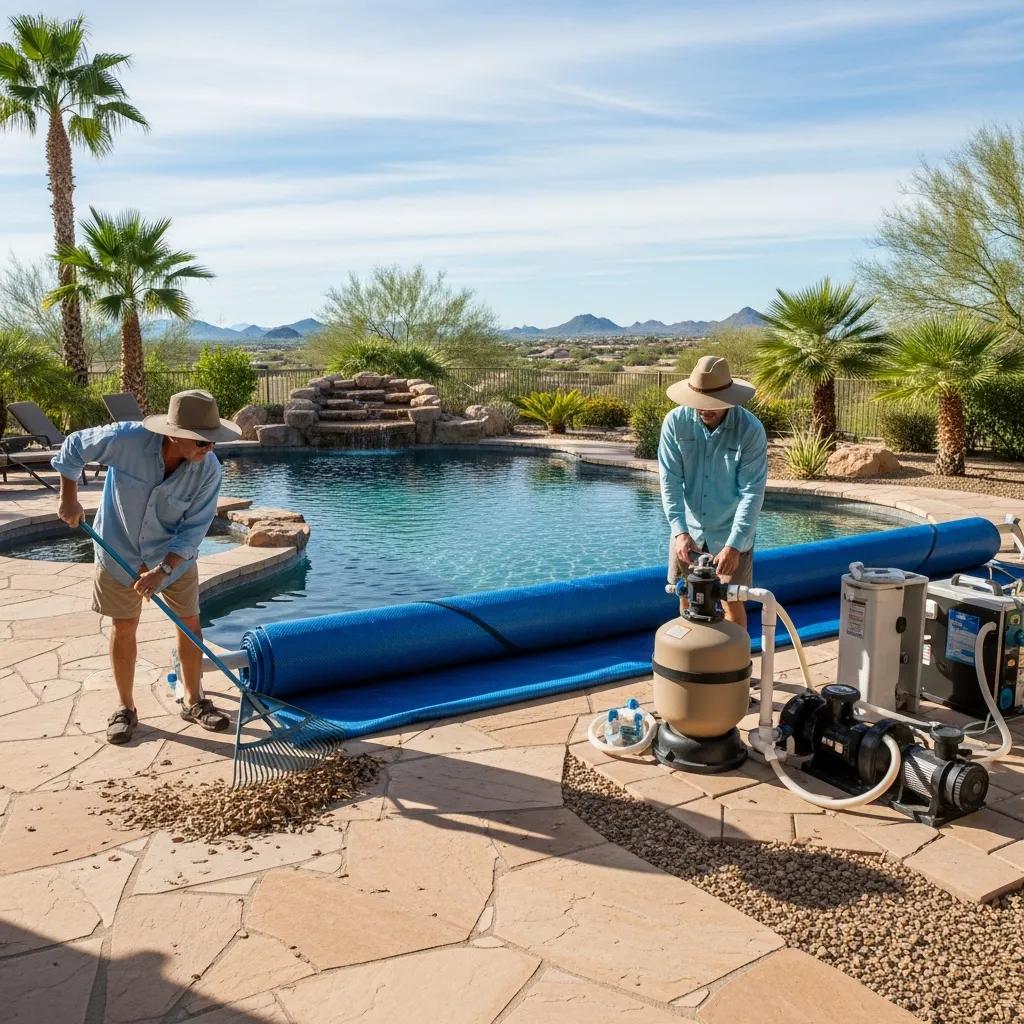
Start pre-opening by clearing landscape debris, inspecting the cover and pool perimeter, and confirming power and control access. These steps lower initial chemical demand, protect finishes from abrasive grit, and make equipment inspections easier. Below is a short checklist of top pre-opening items to do or delegate before you restore circulation and refill to working levels.

  • Clear loose debris around the pool to prevent wind-driven contamination when you remove the cover.
  • Inspect and document the cover’s condition and any fasteners or integrated tracks before attempting removal.
  • Confirm access to the pool pad, equipment pad, and automation controls, and switch power off before starting inspections.

These actions reduce the chance of early-season chemistry swings and help protect investment-grade surfaces. If you uncover structural issues or a complex integrated cover, have a professional handle removal.

How to Properly Remove and Clean Your Luxury Pool Cover

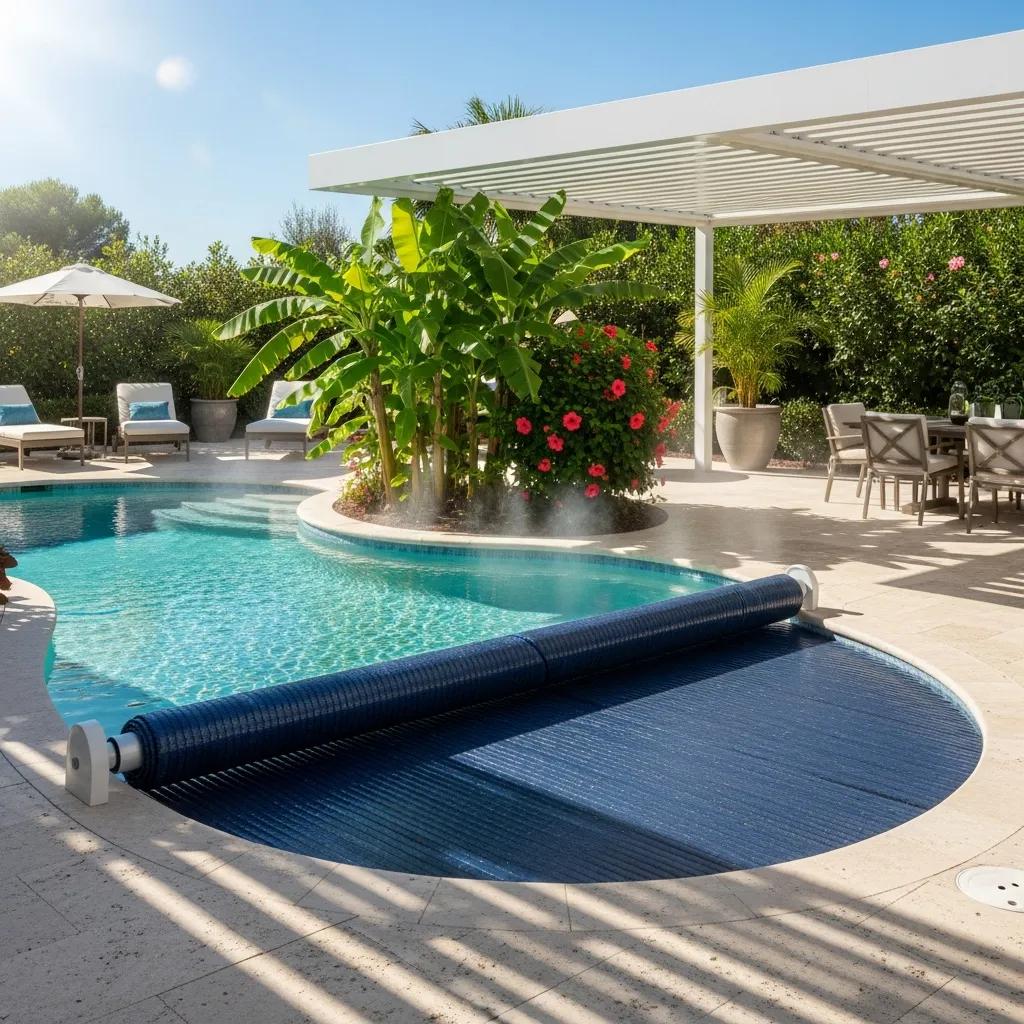
Luxury covers can be heavy or custom fitted, so removal needs a plan and the right help. Clear nearby debris and secure pets and children, then partially open the cover and pump off trapped water with a submersible pump at a low-flow setting. For delicate materials, use mild, non-abrasive cleaners and a soft brush to lift stains and grit—avoid high-pressure washing that can damage seams or trim. Dry the cover in the shade before folding or rolling, and store it on a clean, elevated surface to prevent mold and abrasion. If your cover uses motors or tracks, consider professional removal to avoid damage.

Which Equipment Inspections Protect Your Investment During Spring Opening?

A short mechanical inspection catches small issues before they become costly. Check for leaks, corrosion, loose fittings, and odd electrical behavior. Visually inspect pump seals and union fittings for residue, run the pump briefly to listen for grinding or cavitation, and record initial filter pressure for a baseline. Look for rodent damage or moisture intrusion in visible wiring and automation enclosures, and make sure heater vents and combustion areas are clear if you have a heater. If you find oil, heavy corrosion, strange noises, or persistent pressure spikes, call a professional diagnostic service rather than attempting major repairs yourself.

How Do You Master Arizona Pool Chemistry for Spring?

Getting chemistry right in Arizona starts with consistent testing, a logical balancing order, and attention to desert-specific factors like high UV and hard water. Start with accurate baseline tests for pH, total alkalinity, free chlorine, calcium hardness, and cyanuric acid (CYA). Adjust in order—alkalinity first, pH second, then calcium and sanitizer—to avoid overshooting targets. Test regularly during the first two weeks after opening: warm days and strong sun can quickly drop free chlorine and destabilize pH, so small, frequent corrections work better than large dose changes.

Intro: Use the table below as a quick reference for recommended Arizona spring chemical ranges and desert-specific notes.

ChemicalRecommended Range (Arizona spring)Purpose / Notes
pH7.4 – 7.6Balances sanitizer efficiency and protects plaster; slightly higher pH helps reduce corrosion risk in hard water.
Total Alkalinity80 – 120 ppmBuffers pH swings from rapid temperature shifts and bather load.
Free Chlorine1.5 – 3.0 ppm (higher after opening/shock)Primary sanitizer; expect UV-driven decay—check and adjust frequently.
Calcium Hardness200 – 400 ppmProtects plaster from erosion and prevents scaling; Arizona well water can run high—monitor for buildup.
Cyanuric Acid (CYA)30 – 50 ppmStabilizer to slow UV chlorine loss; keep moderate to avoid locking up sanitizer.

Summary: Use this table for initial dosing and retesting. Persistent departures from these ranges often point to circulation problems or heavy organic loads that deserve closer inspection.

What Are the Ideal Chemical Levels for Arizona Pools in Spring?

Arizona pools benefit from a bit more buffering and careful stabilizer control because strong sun quickly consumes free chlorine and creates wide daily swings. Aim for pH 7.4–7.6 for comfort and finish protection, keep total alkalinity at 80–120 ppm to stabilize pH, and maintain free chlorine at 1.5–3.0 ppm for regular sanitizing (higher after an opening shock if needed). Keep CYA between 30–50 ppm to limit UV loss without impairing chlorine effectiveness. Test weekly during the first month after opening to track sun-driven decay.

How to Test and Balance pH, Alkalinity, Chlorine, and Other Chemicals Effectively?

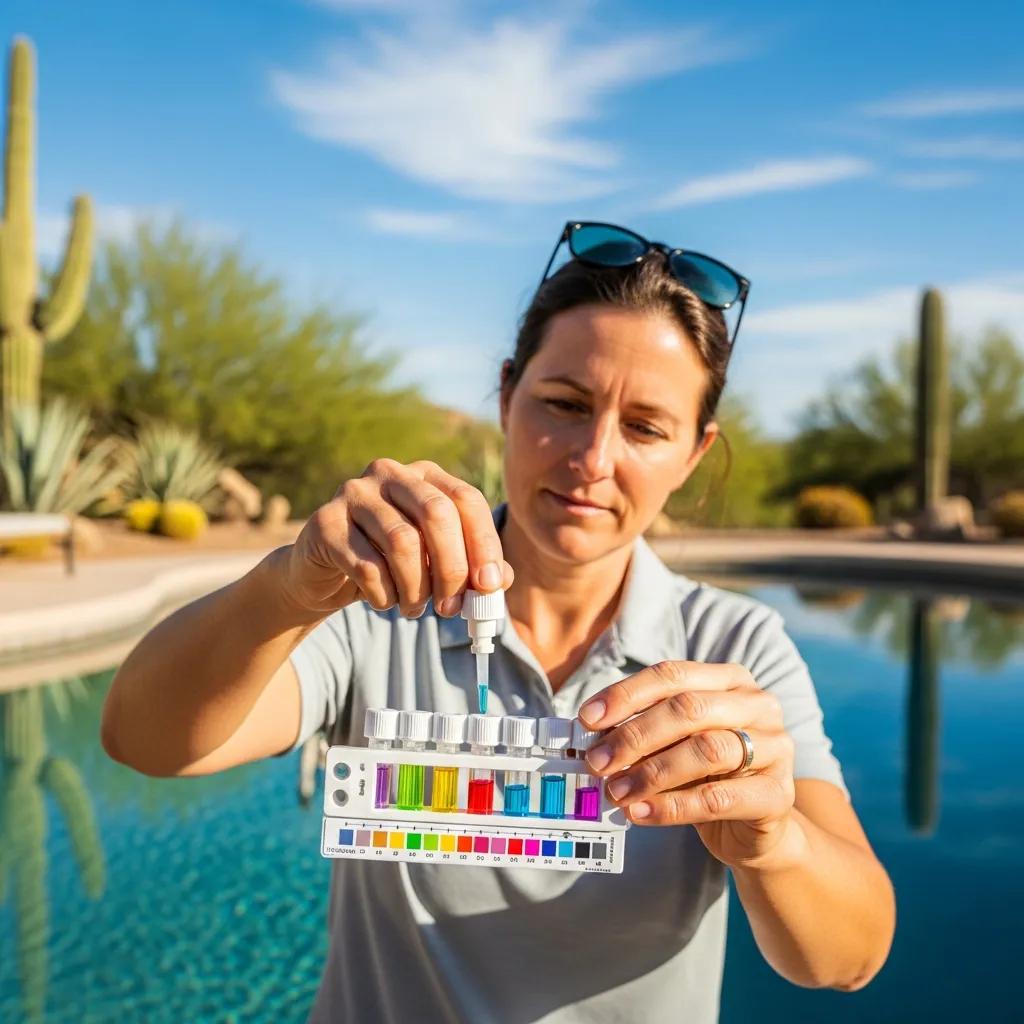
Use a reliable test kit or digital photometer and follow an order that avoids chemical interaction skewing results: total alkalinity first, pH second, calcium hardness third, then CYA and free chlorine. Raise alkalinity with sodium bicarbonate, then adjust pH with sodium carbonate (increase) or muriatic acid/sodium bisulfate (decrease), allowing circulation time between doses. For green or high-organic pools, use a non-stabilized chlorine shock, run the filter continuously, and brush surfaces to expose algae—retest after filtration cycles and repeat shock only as indicated. If scaling or cloudiness persists despite correct chemistry, seek a professional water analysis and treatment plan.

What Essential Equipment Checks Ensure a Smooth Pool Opening Season?

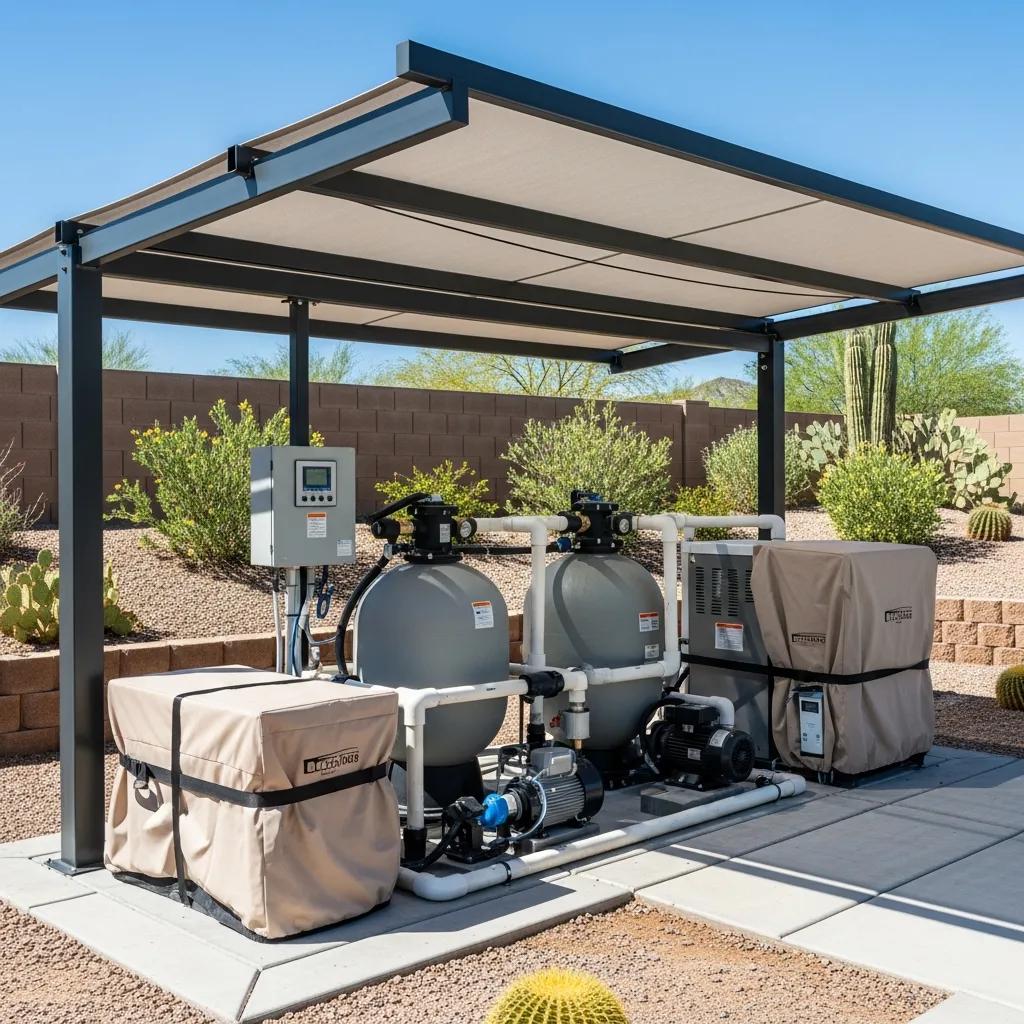
Prioritize circulation, filtration, and control-system readiness to avoid season-long problems and preserve luxury components. Start with a visual survey, run the pump briefly to establish baseline pressure and listen for mechanical issues, then service filters and check heaters and automation. The table below outlines common spring problems by equipment and suggested actions so homeowners can decide when to DIY and when to call a pro.

Intro: This table compares equipment parts, typical spring issues, and recommended actions to keep opening-season repairs manageable.

EquipmentCommon Issues (spring)Action / When to call a pro
Pump & MotorLeaks, noisy bearings, seal failureTighten unions and replace O-rings; call a pro for seal or motor replacement
Filter (sand/DE/cartridge)High pressure, clogged media, tearsBackwash or clean cartridges; replace media or DE grids if performance doesn’t recover
HeaterVent blockage, ignition failure, scaleInspect vents and gas/electric connections; call a pro for combustion or ignition issues
Automation & ControlsCommunication dropouts, sensor driftReboot and recalibrate sensors; call a pro for wiring or firmware faults

Summary: Use this table to triage common problems—routine checks and simple service can prevent off-season failures, but persistent mechanical symptoms usually need professional diagnostics.

How to Inspect and Maintain Your Pool Pump, Filter, and Heater

Check the pump lid and seal for cloudiness or residue—these signs point to seal wear or minor leaks that often respond to new O-rings and fresh lubrication. Run the pump briefly and note filter pressure: a steady rise past the manufacturer baseline signals backwash or media replacement, while sudden spikes suggest blockages or closed valves. For heaters, confirm vents are clear and listen for odd ignition sounds; don’t attempt combustion repairs yourself—call a certified technician if ignition fails or you smell unusual odors. Keeping a simple log of pressure readings and runtimes builds a service history that helps predict component replacement and supports warranty claims.

How Can Smart Pool Technology Enhance Your Spring Pool Opening?
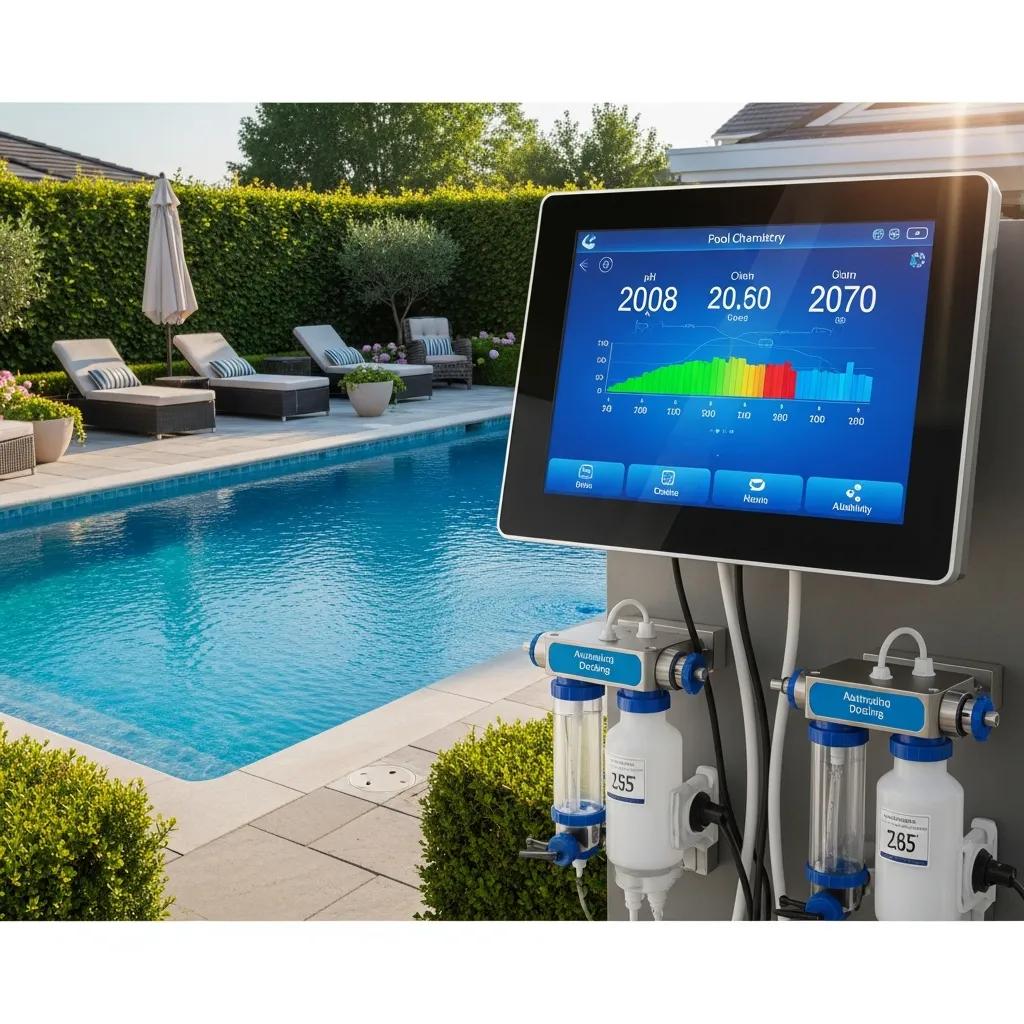
Smart controllers and automated dosing simplify spring opening by keeping chemistry steady, sending remote alerts for issues, and scheduling runtimes for lower electricity rates or calm weather windows. Automated chlorine and pH dosing cuts down on manual errors and steadies water quality during the volatile early weeks, while remote monitoring alerts you to pump failures or unusual runtimes that could mean leaks. Integrating pool controls with home automation and irrigation supports conservation—limiting fill cycles and coordinating irrigation to reduce dust near the pool. Upgrading to smart controls during spring opening is often the easiest time to install sensors and controllers while systems are offline.

How Do You Complete Cleaning and Final Touches for a Luxury Pool Opening?

The final cleaning and accessory reinstallation prepare a luxury pool for safe, attractive use and protect high-end finishes. Deep cleaning addresses scum lines, tile, and plaster with finish-safe tools and products, then skimmer and hair-trap service restores circulation efficiency. Reinstalling lights, handrails, and safety covers requires checking sequence and electrical safety so all accessories work reliably. The steps below outline a methodical final pass so your pool looks and performs its best before regular use.

  1. Brush and vacuum: Remove settled debris and clean scum lines with soft brushes made for delicate finishes.
  2. Service skimmers and baskets: Empty hair and leaf traps and confirm skimmer weir operation.
  3. Test accessories: Verify lights, ladders, and any safety covers are secure and functioning after reinstallation.

After these tasks, run the filtration and monitor chemistry for 24–48 hours; steady readings and clear water indicate readiness for normal use, while repeated fluctuations suggest more cleaning or professional evaluation.

What Are the Best Practices for Deep Cleaning Pool Walls, Floors, and Skimmers?

Start deep cleaning with non-metallic brushes and a pool-safe cleaner matched to your finish—plaster, tile, or specialty surfaces—to avoid etching. Work in sections: brush scum lines and stained areas, then vacuum slowly to remove dislodged particles without re-suspending settled debris. Clean skimmer baskets and pump traps frequently during the process to keep flow steady; partial clogs slow clearing. For stubborn stains or scale, consult a professional cleaner who can recommend finish-safe chemicals or mechanical treatments that protect luxury surfaces.

How to Reinstall Accessories and Safety Features Correctly?

Reinstallation should follow a sequence that secures mechanical mounts before electrical reconnection: fasten ladders and handrails, test anchors, then power up lights and automation with a qualified electrician for integrated systems. For pool lights and underwater fixtures, confirm GFCI protection and that housings and wiring are dry and undamaged—never energize submerged components if moisture is suspected. Reattach safety covers and cycle them several times to ensure tracks and motors run smoothly; motorized or integrated covers may need professional recalibration. Finish with a safety sweep: check gates and fencing and confirm alarms or signage are working.

When Should Arizona Homeowners Consider Professional Pool Opening and Remodeling?

Bring in professionals when you see signs of structural, persistent chemical, or mechanical problems that DIY work won’t reliably fix. Triggers include recurring chemistry failures despite correct dosing, visible tile or coping damage, repeated filter pressure anomalies, or automation faults that affect safety or warranty coverage. Pros also spot high-impact remodeling opportunities found during opening—outdated circulation, inefficient heaters, or landscape changes that would improve water quality and backyard function. The table below helps you interpret signals from opening and choose the right action.

SignalWhat it Means for your PoolRecommended Action (DIY vs Pro)
Persistent green water after shockHigh organic load or circulation failurePro service for heavy algae removal and circulation assessment
Repeated filter pressure spikesClogged media or mechanical restrictionDIY cleaning first; call a pro if pressure returns quickly
Cracked tile or coping gapsPotential structural or water intrusionPro evaluation for repair and finish protection
Automation or heater failureSafety and efficiency impactsPro diagnostics and certified repair recommended

Summary: If you see the red flags above, prioritize professional diagnostics to protect finishes, preserve warranties, and avoid escalating costs. Many issues discovered at opening are easier and less costly to fix before peak season.

What Are the Benefits of Hiring Experts for Luxury Pool Maintenance?

Pros offer technical diagnostics that uncover root causes—hidden leaks or hydraulic design issues—that a basic opening checklist can miss. Professional teams bring trade-rate parts and specialized cleaning methods tailored to high-end plaster, tile, and automation systems, and they document findings in a scope of work that supports warranty claims or remodel planning. Hiring experts saves you time and reduces risk: certified technicians follow safety protocols for electrical and combustion systems and often include follow-up checks to confirm long-term stability. A typical pro opening includes a full inspection, equipment servicing, targeted repairs, and water balancing to operating standards.

How to Identify Opportunities for Luxury Pool Remodeling During Spring Opening?

Spring opening turns routine inspection into a discovery process for remodeling needs: poor circulation, outdated lighting, chipped tile, or inefficient heaters are priority candidates for upgrades that improve both look and performance. Try a simple scoring method—assign 1–3 points for safety concerns, functional failures, and aesthetic decline; scores above your chosen threshold suggest action. Safety issues score highest, followed by circulation and automation shortcomings, then aesthetic updates—this helps prioritize by impact and budget. If opening reveals multiple medium-to-high signals, request a consultation with Island Pools and Landscaping AZ. Our luxury pool remodeling and integrated landscape design services focus on attention to detail, clear communication, and protecting high-end finishes while planning drought-friendly outdoor living upgrades.

For a professional evaluation or remodeling consultation, request a tailored inspection to turn opening findings into a prioritized plan that balances safety, performance, and aesthetics; Island Pools and Landscaping AZ offers design-build expertise and a satisfaction-focused process to guide those decisions.

Frequently Asked Questions

What are the signs that indicate I need professional help for my pool opening?

Call a pro if you see persistent green water after shocking (a sign of heavy organic load or circulation failure), repeated filter pressure spikes, visible tile or coping damage, or failures in automation or heating systems that affect safety. These issues usually need professional diagnosis and repair to avoid bigger problems.

How can I maintain my pool's luxury finishes during the opening process?

Protect luxury finishes by using gentle cleaning methods and non-abrasive tools. Avoid pressure washing; instead use soft brushes and pool-safe cleaners made for plaster or tile. Keep skimmer baskets and pump traps clean to maintain good circulation—this helps prevent stains and buildup and extends the life of premium surfaces.

What should I do if my pool water turns cloudy after opening?

Start by testing pH, alkalinity, and chlorine. Adjust chemicals as needed and run the filter continuously to clear the water. If cloudiness persists, shock with a non-stabilized chlorine product and brush surfaces to remove algae or organic matter. If problems continue, schedule a professional evaluation.

How often should I test my pool water after opening?

Test daily for the first week after opening to monitor rapid changes in pH, free chlorine, and alkalinity caused by Arizona’s strong sun and warm days. After that initial period, testing once a week is usually sufficient, but test more often during heavy use or after storms.

What are the benefits of using smart technology for pool maintenance?

Smart systems automate dosing, monitor water quality, and send remote alerts for imbalances—reducing human error and keeping chemistry steady. They can schedule pump runtimes for energy savings and integrate with irrigation to limit dust and unnecessary fill cycles. Smart tech makes maintaining a clean, efficient pool easier.

How can I prepare my pool area for the opening season?

Clear debris from the deck and surrounding landscape, inspect the pool cover for damage, and make sure equipment like pumps and filters is accessible and in good condition. Verify power and controls work. These steps reduce initial chemical demand and help ensure a smooth transition back to regular pool use.

Conclusion

Opening your luxury pool in Arizona protects your investment and brings your outdoor living space back to life. Follow this checklist and keep the desert’s unique challenges in mind to ensure a safe, enjoyable season. If you’d like expert help or want to explore remodeling to boost performance and style, reach out to our team. Let us help you start the season with a pristine, reliable pool oasis.

Fall Landscaping Tips for Arizona Homeowners

Fall Landscaping Tips for Arizona Homeowners

Fall Landscaping Tips for Arizona Homeowners: Your Guide to a Luxury, Low‑Maintenance Autumn Garden

Autumn is the smartest season to refresh an Arizona yard: cooler air and still‑warm soil let roots push deeper with less heat stress, so new plants establish more reliably before winter and the following spring. This guide walks through what to plant, how to craft poolside, luxury outdoor living areas for fall entertaining, and which low‑maintenance choices save water and time while keeping an upscale look. You’ll find specific planting windows, irrigation tweaks, and practical installation options—everything from artificial turf to elegant hardscapes and outdoor heating—that complement fall color and entertaining needs. We also outline recommended trees, shrubs, seasonal flowers, maintenance steps like irrigation reprogramming, and lawn prep tactics such as overseeding with ryegrass or caring for dormant Bermuda. Throughout, practical keywords like fall planting Arizona, Arizona fall landscaping, overseeding ryegrass Arizona, and artificial turf Arizona fall are woven into clear, actionable advice so you can plan an elegant, drought‑aware autumn landscape.

Why Is Fall the Best Season for Landscaping in Arizona?

Fall is a top choice in Arizona because daytime temperatures ease while soils retain summer warmth—an ideal mix for root growth and lower transplant shock. With reduced evapotranspiration, newly planted roots hold moisture more easily and need fewer supplemental waterings than summer installs, producing long‑term health and measurable water savings. Contractors and homeowners also benefit from more comfortable working conditions that allow quality hardscape and planting work to finish and settle before winter weather. Understanding these seasonal advantages helps you pick the right plants and schedules for your microclimate and elevation.

Fall planting delivers several clear benefits for Arizona homeowners:

  • Cooler air plus warm soil cuts transplant shock and encourages faster root development.
  • Lower irrigation frequency in fall reduces water use and favors drought‑aware landscapes.
  • Installing trees and shrubs in fall gives roots a head start before spring heat returns.

Those advantages make autumn an excellent time to invest in quality materials and design that conserve water, build shade for next season, and stretch the entertaining calendar.

How Do Arizona's Fall Climate Conditions Benefit Plant Growth?

Arizona fall generally pairs cooler days with warm soils leftover from summer, shifting plant energy toward root development rather than top growth. That root focus improves drought resilience and nutrient uptake—key for long‑term success in arid yards. Planting windows vary by microclimate: the lower Valley typically works from mid‑October through early December, while higher elevations start earlier. The science is consistent across locations: warm soil encourages root cell activity and cooler air lowers transpiration, reducing transplant losses and giving new specimens a stronger, lower‑maintenance start into spring.

What Are the Water Conservation Benefits of Fall Planting in Arizona?

Planting in fall reduces lifetime irrigation because plants can form deeper root systems before summer heat returns, cutting the need for heavy summer hand‑watering compared with summer installs. Water agencies and xeriscape principles support fall planting as a water‑wise move: with lower evaporation and reduced ET rates you can shorten cycles and use smart controllers more effectively. For example, shrubs planted in fall often require fewer hand‑watering sessions after the first two months versus summer transplants, and establishment sometimes overlaps with seasonal monsoon moisture. Those savings are closely tied to smart plant choices, soil prep, and controller programming—the core of sustainable Arizona fall landscaping.

Which Are the Best Fall Plants for Arizona Luxury Landscapes?

For a luxury, low‑maintenance palette choose plants with strong form, drought tolerance, and seasonal interest. Pair evergreen structure for year‑round backbone with trees and shrubs that deliver fall color, and add perennials and groundcovers for bloom and texture near pools and outdoor rooms. Below are high‑impact, low‑water selections commonly used in upscale Arizona yards.

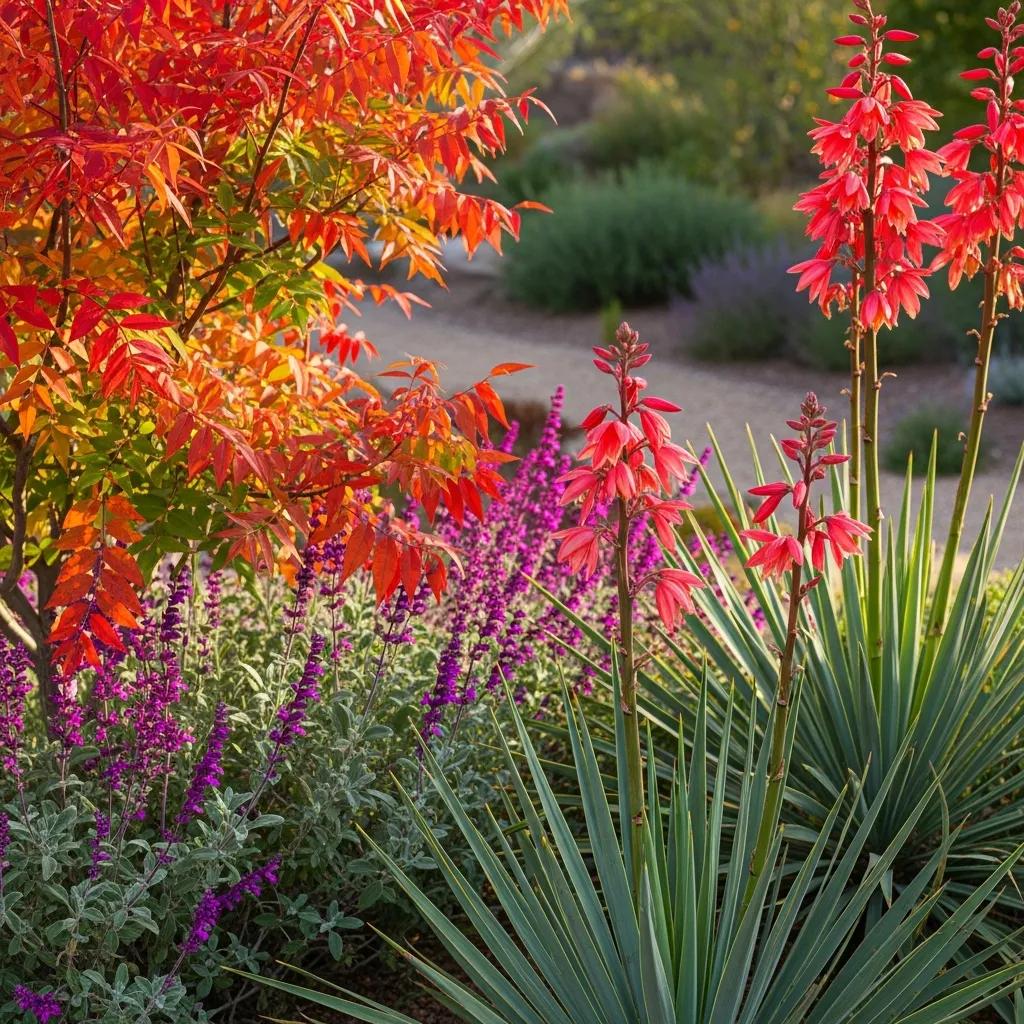
  • Chinese Pistache — dramatic fall color, excellent shade canopy, low water once established.
  • Red Yucca — bold architectural leaves with late‑season blooms that attract pollinators.
  • Autumn Sage — dependable fall and winter blooms with modest water needs.
  • Desert‑adapted groundcovers — stabilize soil, add color near pool decks, and cut maintenance.

These choices lead into a quick comparison so you can weigh water needs, mature size, and placement for each species.

PlantWater NeedsFall Color / BloomMature SizeBest Use
Chinese PistacheLowBrilliant orange‑red canopy20–35 ftShade specimen, street‑side screening
Red YuccaLowCoral tubular blooms (fall–winter)3–6 ftAccent, pool‑edge, rock garden
Autumn Sage (Salvia)LowPurple to red blooms in fall2–4 ftBorders, pollinator pockets
Dwarf LantanaLow–MedYellow/orange blooms1–3 ftGroundcover, containers

This table makes it easier to place each species in poolside or formal garden settings and plan care accordingly.

What Drought-Tolerant Trees and Shrubs Thrive in Arizona's Fall?

Drought‑tolerant trees and shrubs give structure, seasonal color, and low irrigation demand when sited and mulched correctly. Chinese Pistache offers striking fall color and broad shade for patios and pools; palo verde varieties bring spring flowers and a refined, fine‑textured look. Shrubs like Texas sage and, where appropriate, oleander form low‑maintenance hedges or specimen groupings. Mind mature size and distance from pools or foundations to avoid root conflicts, and focus on correct early watering and soil amendment so these woody plants thrive through Arizona winters into spring.

Which Fall Flowers and Groundcovers Add Seasonal Color to Arizona Gardens?

Fall‑friendly flowers and groundcovers deliver color, texture, and erosion control without heavy upkeep. Pansies and autumn sage provide dependable cool‑season blooms, while trailing lantana, dichondra, and native sedums work well around pool coping and in planters. Combine bold foliage (agave, ornamental grasses) with smaller perennials for a refined look that isn’t cluttered. These selections generally need less water and deadheading when matched to seasonal performance—perfect for patios, fire features, and high‑end outdoor rooms.

Use CaseRecommended SpeciesWater NeedsDesign Note
Pool‑adjacent accentsRed Yucca, Dwarf LantanaLowChoose low‑shedding plants to reduce debris
Shade treesChinese Pistache, Palo VerdeLowPlant outside splash zones and allow canopy room
Pollinator pocketsAutumn Sage, Native SalviasLowPlace near seating to enhance evening enjoyment
GroundcoverDichondra, SedumLowStabilize slopes, reduce erosion, soften paver edges

Use this guide to match plants to functional areas before planning poolside and patio adjacencies.

How Can You Design a Luxury Fall Outdoor Living Space in Arizona?

Designing a luxury outdoor living space for fall is about layers, focal points, and materials that extend comfort into cooler evenings while keeping maintenance low. Start with durable hardscapes—pavers, protected decking, and reliable drainage—then layer canopy trees and low‑shedding shrubs to frame views and shelter outdoor kitchens and seating. Lighting sets autumn ambiance: warm‑tone fixtures and low‑voltage path lights create inviting evenings, and fire features or infrared heaters lengthen the entertaining season. Those design choices should guide poolside plant selection and placement to minimize debris and protect pool finishes.

  1. Place low‑shedding accents like Red Yucca and dwarf agaves near pool edges to cut maintenance.
  2. Use raised planters with drip irrigation to keep beds tidy and water‑efficient.
  3. Layer uplighting and recessed step lights to add depth and a refined evening atmosphere.

A clear plant‑and‑material plan lowers upkeep and keeps outdoor rooms usable year‑round—exactly where professional design‑build expertise turns ideas into a polished installation.

Island Pools and Landscaping AZ brings design‑build experience to luxury pool remodels and integrated outdoor living projects. We combine landscape design, hardscaping, and pool finishes into fall‑ready plans that balance drought‑tolerant palettes, quality materials, and straightforward communication. Homeowners planning a remodel often start with a consultation to review gallery examples and discuss how combined pool and landscape updates can boost autumn entertaining while reducing long‑term water use.

What Are Creative Poolside Landscaping Ideas for Fall?

Creative poolside design for fall focuses on low‑shedding plants, durable surfaces that resist staining, and seating arranged to enjoy cooler evenings. Site canopy trees for late‑afternoon shade but keep them far enough from pool plumbing and surfaces to avoid root issues and leaf drop. Containers with seasonal flowers add color without long‑term commitment and are easy to rotate; choose frost‑tolerant plants for higher elevations. Thoughtful lighting and slip‑resistant materials make pool edges usable after dark and reduce cleanup from organic debris.

  1. Use low‑shedding accent plants like Red Yucca and dwarf agaves near the pool edge to minimize maintenance.
  2. Integrate raised planters with drip irrigation to keep planting beds tidy and water‑efficient.
  3. Layer uplighting and recessed steps to create depth and a luxury evening atmosphere.

How Do You Enhance Patios, Fire Pits, and Outdoor Kitchens for Autumn Entertaining?

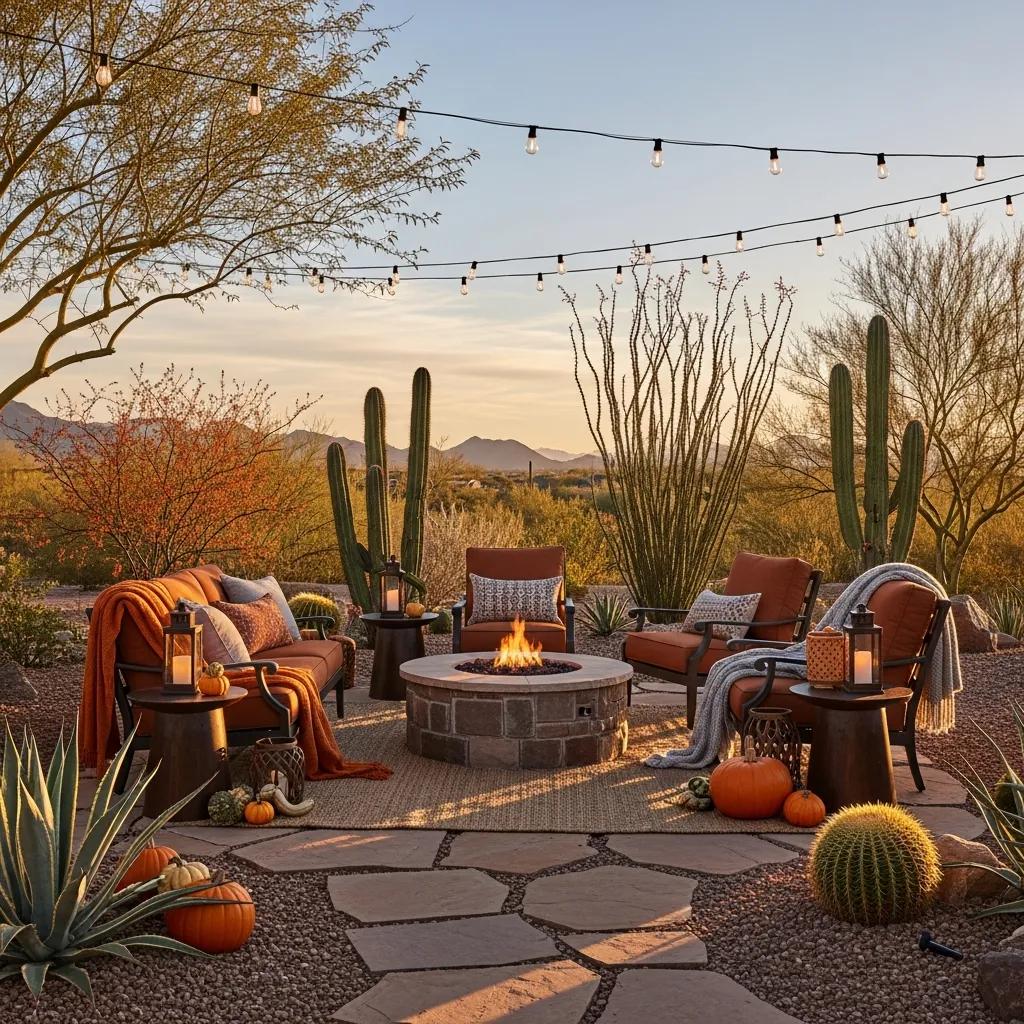
To ready patios and outdoor kitchens for fall, choose durable finishes, layered lighting, and thermal comforts that keep a refined look with minimal upkeep. Pick weather‑resistant furniture with removable cushions and high‑end materials—natural stone or premium porcelain pavers—paired with built‑in fire pits or gas fireplaces to anchor seating areas. Use plants and hardscape walls to define outdoor rooms and block seasonal breezes so dining and conversation stay comfortable.

These moves support frequent use and low maintenance, helping homeowners host easily through Arizona’s pleasant autumn evenings.

What Are Essential Fall Landscape Maintenance Tips for Arizona Homeowners?

Fall maintenance focuses on irrigation adjustments, light pruning for structure, weed control, and soil prep for planting or overseeding. Start with an irrigation audit: reduce run times as temperatures fall, check emitters for clogs, and recalibrate drip and rotor schedules to match lower ET rates. Remove deadwood and make light corrective pruning to preserve shape and avoid heavy cuts before possible cold snaps. These steps prepare beds for overseeding or new installations and tie into the more detailed schedules below.

Irrigation and maintenance steps to follow this fall:

  1. Reduce irrigation run‑times by 20–40% as daytime highs drop; check soil moisture weekly for new plantings.
  2. Inspect and clean drip emitters and adjust spray head angles to prevent overspray on hardscapes.
  3. Apply 2–3 inches of mulch around new plants to conserve moisture and moderate soil temperature.

A deliberate maintenance plan minimizes water waste and prepares planting areas; if you prefer pros, seasonal irrigation audits, controller reprogramming, and maintenance contracts make these changes straightforward.

Maintenance TaskWhen to Do ItTools / MaterialsFrequency
Irrigation auditEarly fall (Oct–Nov)Controller, moisture meter, basic toolsAnnual / Before overseed
Light pruningFall (Oct–Dec)Hand pruners, loppersAnnual / As needed
Mulching & soil prepAt planting timeCompost, mulch, soil test kitPer planting
Weed preventionEarly fallPre‑emergent or manual removalAnnual / Seasonal

This checklist clarifies timing and tools for routine fall tasks and leads into irrigation adjustments for different landscape areas.

When technical work is needed, Island Pools and Landscaping AZ provides irrigation audits and seasonal maintenance to reprogram controllers, test emitters, and set watering plans that match fall planting schedules—saving water while protecting new materials. Our approach emphasizes clear communication, project walkthroughs, and quality materials to support long‑term performance.

How Should You Adjust Watering and Irrigation Schedules in Fall?

Adjust watering in fall by shortening run‑times and spacing cycles to match lower evaporation, while keeping enough moisture for new roots. A practical approach: cut run‑times 20–40% as temperatures drop, switch established trees and shrubs to fewer but deeper cycles, and keep frequent, shallow cycles for seed germination during overseeding. An ET‑based or smart controller automates these percentage reductions and reacts to weather changes; verify with manual soil‑moisture checks to ensure proper root‑zone wetting. Pair these adjustments with mulch and soil amendments for best results.

What Are Best Practices for Pruning, Weed Control, and Soil Preparation in Autumn?

In fall, focus pruning on removing dead or crossing branches and on preserving overall structure—avoid heavy reductions just before cold snaps. For weed control, apply pre‑emergent herbicides in early fall where appropriate or remove weeds manually to reduce competition. Soil prep should start with a pH and nutrient test, add organic matter to improve structure, and avoid deep tilling that disturbs established roots. These steps give new plantings a hospitable root zone and keep established specimens healthy through dormancy and into spring.

How Do Low-Maintenance Solutions Like Artificial Turf and Hardscapes Benefit Fall Landscaping?

Low‑maintenance options such as artificial turf and durable hardscapes reduce water use, cut seasonal upkeep, and extend usable outdoor time in Arizona fall landscapes. Artificial turf eliminates many late‑season overseeding chores and gives a consistent, green surface for play areas, putting greens, and pool surrounds. Decomposed granite, pavers, and bluestone provide stable entertaining surfaces that resist erosion and require little seasonal care. These practical components complement softscapes and outdoor living design; use the comparison below to weigh maintenance, cost, and best uses.

SolutionMaintenanceCost ConsiderationBest Use
Artificial turfMinimal watering, occasional brushingHigher upfront, lower lifecycle water costPlay areas, putting greens, pool‑adjacent lawns
PaversRare sealing, occasional joint refillingModerate upfront, durablePatios, pathways, outdoor kitchens
Decomposed granitePeriodic top‑up, weed controlLow to moderateCasual paths, filler areas, xeriscape beds
Native rock / boulderVirtually maintenance‑freeVariableStructural accents, erosion control

Why Is Artificial Turf Ideal for Arizona Fall Yards?

Artificial turf works well in Arizona fall yards because it keeps a green, even surface for entertaining while cutting water use and mowing time. Turf is excellent for putting greens, play areas, and pool surrounds where consistent footing and neat aesthetics matter. Top‑quality turf systems mimic natural blades and handle drainage well. Concerns about heat and lifespan are mitigated by choosing the right infill, professional installation, and solid warranties—installation quality and warranty details matter when evaluating turf as a long‑term, low‑maintenance luxury surface.

What Hardscape Features Complement Fall Landscaping and Outdoor Living?

Hardscapes that complement fall landscapes include paver patios, integrated fire pits, raised planters, and clearly defined pathways that form outdoor rooms for entertaining. Textured pavers, natural stone, and permeable options pair with autumn foliage while helping drainage and reducing upkeep. Proper grading and drainage protect adjacent plantings, and warm, muted materials enhance fall color schemes. These elements create durable, usable spaces for outdoor kitchens and seating with less seasonal work than large perennial beds.

How Can Arizona Homeowners Prepare Their Lawns for Winter After Fall Landscaping?

Preparing lawns for winter requires a plan for overseeding, dormant turf care, and weed prevention that matches your Arizona climate zone. For cool‑season overseeding with ryegrass, timing and seed‑bed prep are key to achieve even germination and a dense winter cover for fall and winter use. For warm‑season Bermuda entering dormancy, cut back on fertilization and irrigation to protect crown health and avoid late‑season stress. These lawn strategies integrate with your fall landscaping choices and complete a seasonal program.

When and How Should You Overseed with Ryegrass in Arizona?

Overseeding with ryegrass works best in early to mid‑fall in the lower Valley—typically when nighttime lows consistently reach the 50s°F—so seedlings establish before growth slows. Prep includes mowing lower, lightly raking for good seed‑to‑soil contact, sowing at recommended rates, and using frequent shallow irrigations for the first two weeks to encourage germination. After establishment, reduce frequency and increase run time to promote deeper roots and a smoother spring transition. This timing and contact focus helps avoid patchy results and builds consistent winter turf.

What Are Dormant Bermuda Grass Care and Winter Weed Prevention Tips?

For dormant Bermuda, reduce irrigation and skip late, high‑nitrogen fertilizing as growth slows—those practices can invite disease or weak winter growth. Apply pre‑emergent herbicides in the recommended fall window to suppress winter annuals, or use targeted post‑emergent treatments for visible outbreaks. Keep cultural controls—proper mowing and dethatching—as your first defense. During dormancy, water only as needed to prevent desiccation, and schedule aeration and other soil health work during active growth windows. These steps preserve a healthy turf base that rebounds quickly when warm‑season growth returns.

Island Pools and Landscaping AZ provides integrated lawn and landscape services to support overseeding plans, irrigation reprogramming, and dormant turf care as part of seasonal maintenance contracts. Our design‑build approach prioritizes quality materials, clear project walkthroughs, and responsive communication so fall installations perform as intended. Homeowners seeking a consultation can contact Island Pools and Landscaping AZ by phone at 602.818.1277 or by email at PoolConnect@Gmail.com to schedule an on‑site evaluation or discuss gallery examples and service options that fit luxury, low‑maintenance fall landscaping goals.

Frequently Asked Questions

What are the benefits of using artificial turf in Arizona fall landscaping?

Artificial turf gives a consistent, green surface with very little maintenance—no mowing and little to no watering—so it’s a strong choice in a region where conserving water matters. It stays usable through fall and winter for gatherings and play, and high‑quality turf closely resembles natural grass while simplifying upkeep. When specified and installed correctly, turf delivers both performance and an elevated look for low‑maintenance yards.

How can I incorporate seasonal flowers into my fall landscape design?

Add seasonal flowers to boost color and seasonal interest. Choose hardy annuals and perennials that do well in Arizona—pansies, autumn sage, and ornamental kale are good examples. Plant in clusters or borders for impact and contrast them with evergreen elements. Containers are a great option for rotateable color and easy maintenance, and seasonal blooms also support pollinators to enrich your garden’s ecosystem.

What are some effective strategies for weed control in fall landscaping?

Combine prevention and hands‑on care for the best results. Apply pre‑emergent herbicides in early fall where appropriate to block winter annuals, and remove visible weeds promptly to reduce competition with new plants. Mulching beds suppresses weeds while conserving moisture. These tactics keep landscapes tidy and cut spring weeding needs.

How can I ensure my outdoor living space is comfortable during cooler fall evenings?

Focus on warmth and ambiance: add a fire pit or outdoor heater to extend use after sunset, layer soft lighting like string lights or lanterns for a cozy feel, and choose weather‑resistant seating with removable cushions for comfort. Arrange plants and hardscapes to create sheltered niches that block wind and make evenings inviting for gatherings.

What maintenance tasks should I prioritize in the fall for my landscape?

Start with an irrigation audit to adjust schedules to cooler weather, then do light pruning to remove dead or crossing branches. Apply mulch around new plantings to conserve moisture and set up for overseeding if you plan to add ryegrass. These priorities protect investments and prepare the landscape for winter and spring recovery.

How can I design a low-maintenance garden that still looks luxurious?

A low‑maintenance, luxurious garden begins with smart plant and material choices. Use drought‑tolerant species—native plants and succulents—alongside durable hardscapes like pavers and stone. Raised planters with drip irrigation reduce upkeep, and strategic plant placement and layering deliver visual richness without constant work. The result is an elegant outdoor space that performs well year after year.

Conclusion

Updating your Arizona landscape this fall improves curb appeal, conserves water, and reduces long‑term upkeep when you choose the right plants, materials, and irrigation strategies. With thoughtful design—especially around pools and outdoor living areas—you can create a luxurious, low‑maintenance yard that thrives through the cooler months. If you’d like help turning these ideas into a practical plan, contact Island Pools and Landscaping AZ to explore custom solutions for your fall landscaping project.

Enhance Backyard Security with Outdoor Lighting

Enhance Backyard Security with Outdoor Lighting

Smart Outdoor Security Lighting for Safer, More Beautiful Backyards

At Island Pools and Landscaping AZ, we believe good security lighting should protect without overpowering. Combining targeted illumination, motion sensors, and smart controls, the right system deters intruders, reduces nighttime accidents, and preserves your landscape’s evening look. This guide walks you through how security lighting works, the most effective fixtures and placements, energy-smart options, what professional installation involves, and simple maintenance routines. You’ll find placement checklists, sensor recommendations, and design tips that balance upscale curb appeal with real safety improvements—covering motion sensors, pathway and pool-area lighting, LED vs. solar trade-offs, and smart features for remote monitoring and automation.

Why Choose Outdoor Security Lighting for Your Backyard?

Security lighting is a proactive, visible layer of protection that improves sightlines, discourages opportunistic crime, and lowers the chance of trips and falls after dark. Properly placed lighting clarifies access routes, helps cameras record usable footage, and removes hiding spots near fences, side yards, and dense plantings. Thoughtful lighting also adds value—guiding guests safely while highlighting architectural and landscape features. Below we unpack the safety mechanisms and aesthetic benefits, then translate those ideas into practical fixture and placement choices you can act on.

How Does Outdoor Lighting Improve Home Security and Safety?

Outdoor lighting raises visibility where intruders might hide and boosts the effectiveness of surveillance equipment that needs light to produce clear footage. Bright, well-directed fixtures shrink shadowed areas and open sightlines across driveways, side yards, and garden corners—making detection more likely and opportunistic theft less attractive. Research and industry guidance show illuminated entryways and perimeters are linked to reduced opportunistic crime, while well-lit pool edges and steps cut accident risk by clarifying hazards at night. With this understanding, homeowners can prioritize fixtures and sensor placement for the biggest impact.

What Are the Benefits of Landscape Lighting for Home Security?

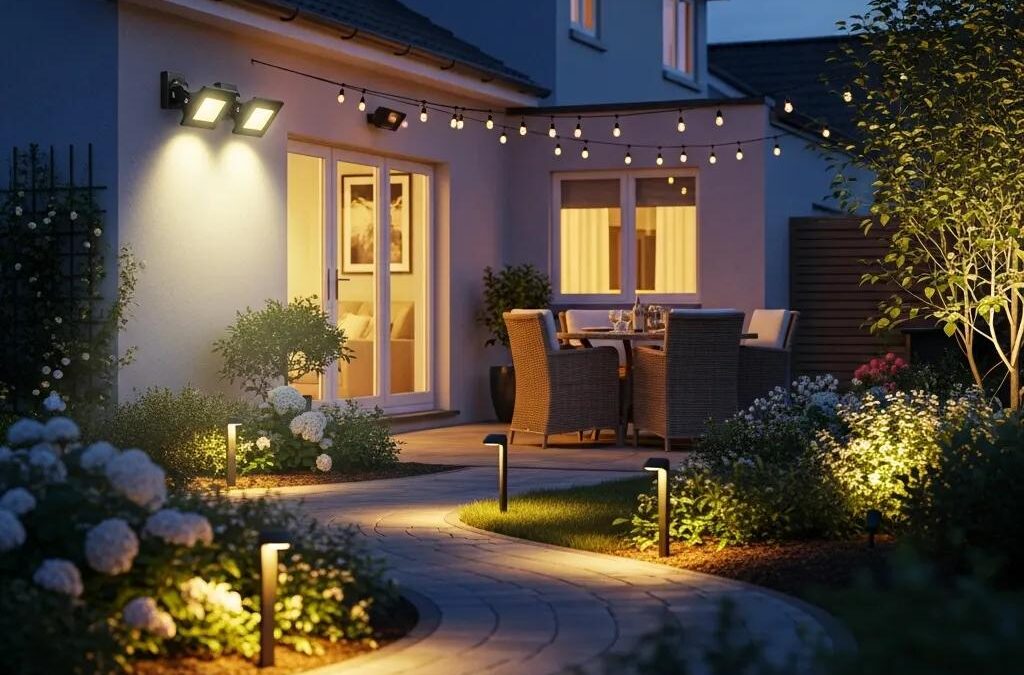
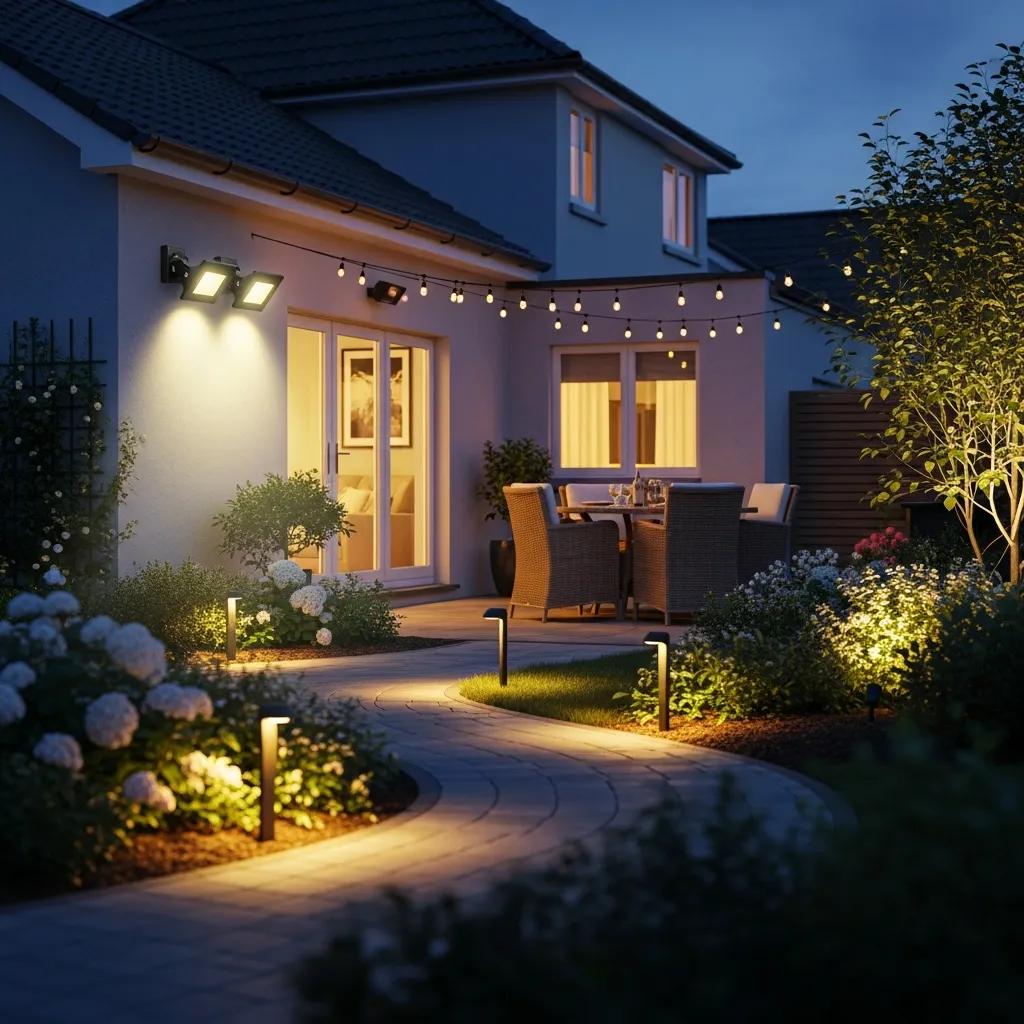
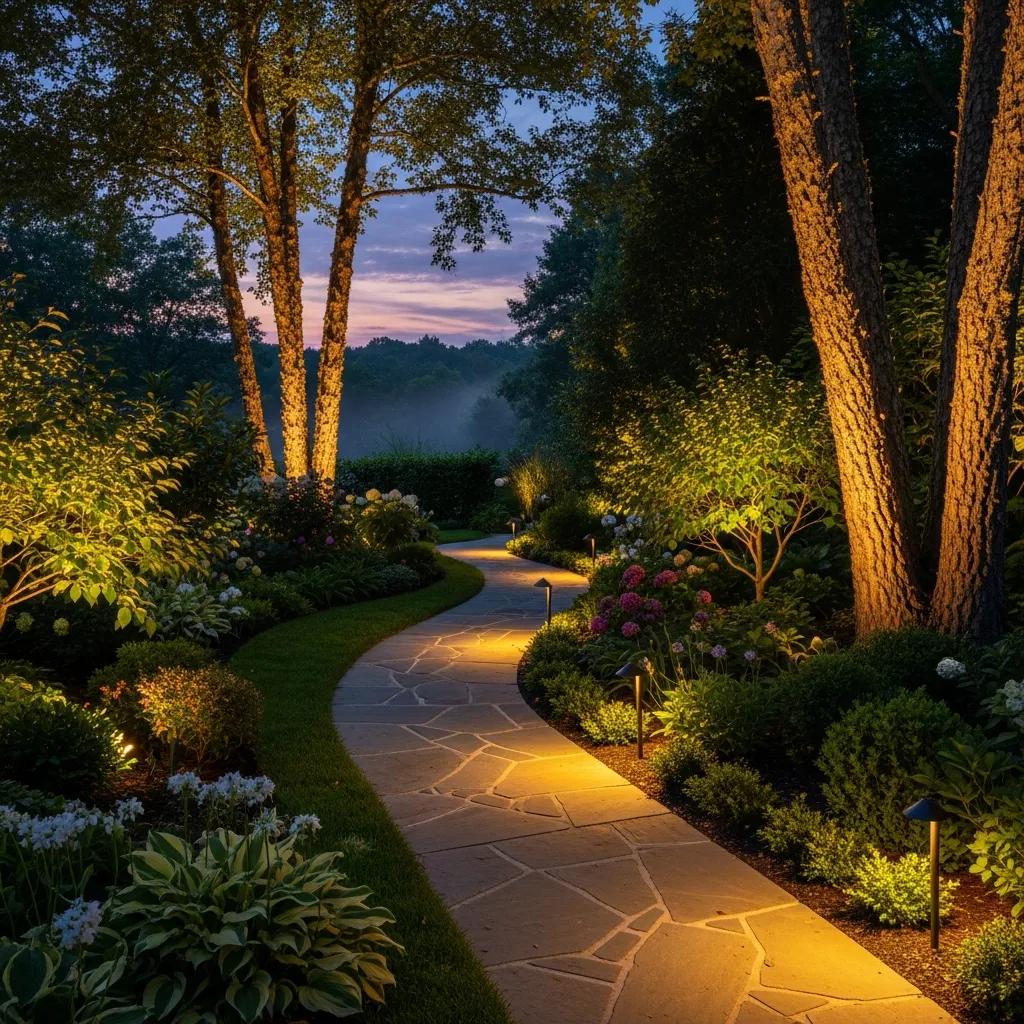
Landscape lighting blends safety and style by softening shadows and highlighting movement corridors without resorting to harsh, glaring light. Accent uplighting and path fixtures make approach routes clearer for guests and cameras, while keeping a refined evening atmosphere. Dark Sky–aware designs and warm color temperatures preserve curb appeal and reduce light spill and glare. In short, security lighting can be elegant—protecting your property while enhancing its nighttime livability.

  • This list outlines the primary reasons landscape lighting supports both security and aesthetics:

Together, these elements create an outdoor space that feels safer and more inviting while supporting both deterrence and design goals.

What Are the Best Types of Outdoor Security Lighting?

Choosing the right fixtures ensures balanced coverage and a look that suits your home. Motion-activated floodlights deliver high-output, instant illumination for perimeters and entry points, while pathway and step lights provide steady, low-glare guidance. Smart systems tie sensors, timers, and app controls together to simulate occupancy and coordinate with cameras and alarms. The table below compares common fixture types and use-cases so you can pick combinations that match your yard’s layout and style.

Fixture TypeBest UseKey Attribute
Motion sensor floodlightPerimeter and entry pointsHigh lumen output, instant activation
Pathway/step LED lightsWalkways and pool edgesLow glare, continuous guidance
Accent/uplightsLandscaping and facadesShadow control and feature highlighting

How Do Motion Sensor Outdoor Lights Enhance Backyard Safety?

Motion sensor lights create sudden, noticeable illumination that alerts occupants and discourages unwanted visitors while saving energy compared with always-on fixtures. Sensor type matters: passive infrared (PIR) detects body heat and works well near doors and plantings; microwave sensors cover wider areas and suit open perimeters. Mount sensors 8–12 feet high with a slight downward tilt to cut blind spots and avoid triggers from pets or moving foliage. Proper calibration and integration with cameras or a smart hub ensure motion events trigger recording and notifications, speeding response and preserving evidence.

What Are Effective Landscape Lighting Options for Residential Security?

An effective landscape scheme mixes low-voltage LED path and step fixtures, targeted uplights to break up shadow pockets, and subtle accent lights that keep the yard looking polished. Typical lumen ranges: pathway lights 50–150 lumens for gentle guidance; uplights for shrubs or small trees 200–400 lumens to eliminate deep shadows. Pick fixtures with low-glare optics and shielding to avoid spilling light into neighboring properties, and follow Dark Sky principles when possible. Layer ambient, task, and accent lighting to add depth and improve both human navigation and camera visibility where it matters most.

  • Landscape fixture selection checklist:

These tactics help your landscape lighting protect the property while maintaining a high-end, cohesive look.

How to Strategically Install Outdoor Security Lighting for Maximum Protection?

Smart installation layers light sources, focuses on vulnerable access points, and ties sensors and controls together for automatic responses. Start with a site assessment to locate entryways, sightline gaps, and high-traffic areas. Then design a layered plan combining perimeter floodlights, targeted uplighting, and continuous pathway illumination. Follow local codes and best practices for wiring and mounting—concealed conduits, weather-rated fixtures, and secure brackets—to ensure long-term reliability. Use the placement guide below as a practical checklist for concentrated, efficient coverage.

  1. Front and rear doors: Install focused entry lights and motion sensors to cover approach routes.
  2. Driveways and garages: Use flood or wall-mounted fixtures to illuminate vehicles and sightlines.
  3. Pathways and steps: Place low-level path lights every 6–10 feet to prevent trips.
  4. Perimeter corners and side yards: Add sensor floodlights or occupancy-simulating schedules.
  5. Pool edges and terraces: Ensure even edge lighting to prevent accidental falls.

This placement checklist turns your assessment into an actionable installation plan that strengthens both safety and surveillance coverage.

Where Should Residential Exterior Security Lighting Be Placed?

Start by lighting entry points, then close sightline gaps and illuminate accident-prone areas like pools and steps. Mount entry lights near door hardware at heights that help identify faces—typically around 6–8 feet—while avoiding beams that shine into neighbors’ windows. Perimeter corners and fence lines benefit from elevated fixtures that cast light across likely approach paths; side yards should have motion-activated coverage to prevent unseen access. Pool edges and stairs need consistent, low-glare task lighting to reduce slip-and-fall risk and help cameras capture clear night footage.

How Does Smart Home Integration Improve Security Lighting Functionality?

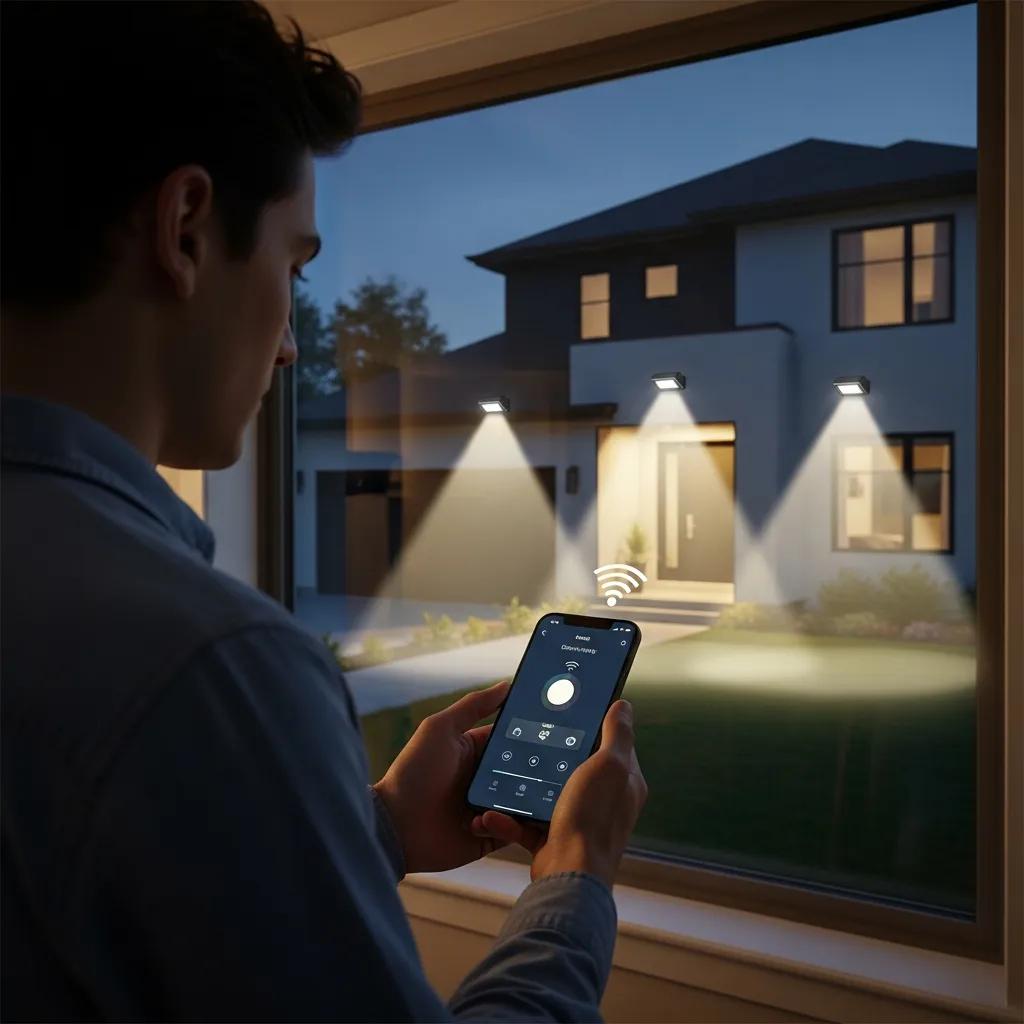
Smart integration turns lighting from static fixtures into an active security layer that can simulate presence, trigger cameras, and send instant alerts. Use schedules and geofencing to automate lights based on occupancy patterns; program motion events to start recordings and push notifications to your phone. Smart controllers also report energy use and device health so you know when a fixture or solar battery needs attention. When combined with cameras and alarms, lighting becomes part of a coordinated security system that improves deterrence and simplifies incident response.

  • Smart integration benefits:

These features let lighting actively support your overall home security plan.

How to Choose Energy-Efficient and Aesthetic Security Lighting Solutions?

Choose fixtures by weighing efficiency, lifetime cost, and how they look after dark. LED technology delivers top lumen-per-watt efficiency and long life; solar cuts wiring costs but depends on sun exposure and battery care. Favor warm whites (around 2700–3000K) to preserve a luxurious evening feel and avoid harsh glare—cooler temps (above 4000K) can be more clinical. Consider maintenance needs, warranty coverage, and whether drivers, batteries, or lenses are easily replaced when evaluating options. The table below summarizes the trade-offs so you can pick solutions that meet security and design goals.

TechnologyEnergy & MaintenanceAesthetic & Application
LEDHigh efficiency, long life, low maintenanceClean light, narrow beam control, flexible fixtures
SolarLow infrastructure cost, battery maintenanceUseful for remote zones, dependent on sun exposure
Low-voltage wiredModerate efficiency, durableConcealed wiring, professional-grade installations

What Are the Advantages of LED and Solar Outdoor Security Lights?

LEDs deliver consistent lumen output, long operating life, and tight beam control that cuts wasteful spill light—making them ideal for most security needs. Solar fixtures remove the need for trenching and wiring and work well for remote paths or temporary installs, though performance depends on sun exposure and battery condition. Both LED and solar can pair with motion sensors and smart controllers, but LEDs often integrate more reliably with hardwired smart systems. Assess sunlight patterns and your security priorities to decide on LEDs, solar, or a hybrid approach for your property.

How Can Lighting Design Enhance Both Security and Curb Appeal?

Good design layers ambient, task, and accent lighting, uses warm color temperatures, and hides hardware so security elements feel intentional—not intrusive. Pick fixtures that suit your home’s architecture, use uplighting and grazing to add texture, and program timers or scenes so lights remain discreet until needed. Shield and aim fixtures to avoid over-lighting and protect views of the night sky. Proper design improves safety while enhancing property value and neighbor relations.

  • Design principles summary:

Applying these principles ensures your security lighting also elevates your home’s nighttime appearance.

What Is the Process for Professional Motion Sensor Outdoor Lights Installation?

Professional installation starts with a site assessment that maps risk areas, sightlines, and electrical access, followed by a custom design balancing coverage and curb appeal. Typical steps: permitting checks where needed, trenching or conduit installation, secure fixture mounting, sensor calibration, and smart system programming for schedules and alerts. A thorough post-installation test verifies sensors and cameras coordinate correctly and that light levels meet safety goals without excessive spill. Ongoing support and maintenance contracts preserve system performance with recalibration, component replacement, and seasonal tune-ups as required.

Island Pools and Landscaping AZ places this service inside our full outdoor living design offering, delivering tailored lighting that integrates with luxury pool and landscape projects. Our approach is client-focused and guided by two simple principles: “Details and Communication Matters!” and “Satisfaction Always Guaranteed.” For homeowners wanting a cohesive upgrade that blends security lighting with high-end outdoor features, a consultation with Island Pools and Landscaping AZ produces a custom plan that aligns safety, design, and technology.

How Does a Custom Outdoor Lighting Design Improve Backyard Security?

Custom designs outperform off-the-shelf kits because they account for property shape, sightlines, and planting to remove dark pockets and reduce false triggers. A bespoke plan specifies fixture types, lumen levels, beam spreads, and sensor zones for each access point and camera field of view, creating coordinated coverage without unnecessary overlap. By integrating lighting with pool features and planting, we avoid glare and protect evening ambiance while improving camera capture quality. That measured approach delivers steadier deterrence and longer-term reliability than one-size-fits-all solutions.

What Are the Steps for Seamless Installation and Ongoing Support?

A seamless project follows clear phases: assessment and design, permitting and groundwork, electrical installation and mounting, sensor tuning and programming, and final testing with homeowner training. Quality installs conceal wiring, secure fixtures against weather and tampering, and calibrate sensors to prevent nuisance alerts. Recommended ongoing support includes periodic inspections, firmware updates for smart controllers, and maintenance plans covering cleaning, seal checks, and component replacement to sustain performance. These steps lower installation risk and keep your system operating as intended.

  • Installation & support steps:

Following these steps reduces installation risk and preserves long-term functionality.

How Can You Maintain and Monitor Your Backyard Security Lighting?

Long-term reliability comes from routine inspections, lens cleaning, timely component replacement, and smart monitoring that flags problems before they affect performance. Do seasonal checks every 6–12 months to evaluate fixture alignment, lens condition, corrosion on mounts, solar battery health, and sensor responsiveness. Smart systems add value by reporting lamp failures, battery charge levels, and firmware updates through an app—letting you schedule service before a problem becomes urgent. The practices below list specific maintenance tasks and monitoring features to keep systems working well.

What Are Best Practices for Maintaining Residential Security Lighting?

Follow scheduled inspections that verify illumination levels, sensor function, and fixture condition—at least twice a year and after major storms. Clean lenses, trim vegetation that causes false triggers, and use corrosion-resistant fittings in coastal or harsh environments. Replace LEDs, drivers, or batteries per manufacturer guidance, and document smart-controller settings so recalibration after service is fast. If you see persistent false triggers or dim output, call a professional to check wiring, grounding, or sensor placement.

How Can Smart Systems Enable Remote Monitoring and Automation?

Smart systems offer remote control, alerts, and automation rules that reduce manual tasks for busy homeowners. Common app features include scheduling, geofencing, motion event logs, and device health reports that flag lamp failures or low solar battery levels. Integrations with cameras and alarms enable automated recording and notifications when motion is detected; cloud or local storage options determine where footage is kept. Firmware updates via networked controllers keep features current and patch vulnerabilities—making smart monitoring an essential maintenance and incident-management tool.

  • Smart monitoring capabilities:

With these capabilities, lighting becomes an actively monitored security asset—not just a passive fixture.

Frequently Asked Questions

What factors should I consider when choosing outdoor security lighting?

Consider fixture types, placement, energy efficiency, and the look you want. Identify areas that need illumination—entry points, pathways, blind spots—and decide whether LED or solar best fits each location. Pay attention to color temperature to keep a welcoming atmosphere while ensuring visibility, and evaluate smart integration for remote control and automation.

How can I ensure my outdoor security lighting is energy-efficient?

Choose LED fixtures for low energy use and long life, and consider solar for spots with reliable sun. Use motion sensors so lights run only when needed, and add timers or smart schedules to avoid wasted power. These choices reduce energy bills while keeping your property secure during critical hours.

What maintenance is required for outdoor security lighting systems?

Regular maintenance includes inspecting fixtures, cleaning lenses, and removing obstructions like overgrown plants. Test motion sensors, replace bulbs or batteries as recommended, and perform seasonal checks every 6–12 months. For smart systems, watch app notifications for device-health alerts to catch issues early.

Can I integrate outdoor security lighting with my existing smart home system?

Yes. Many lighting systems work with popular smart-home platforms, letting you control lights via apps or voice assistants. Integration enables remote scheduling, motion-triggered alerts, and real-time monitoring—helping you manage lighting alongside cameras and alarms for a unified security setup.

What are the best practices for positioning outdoor security lights?

Place lights to illuminate entry points, pathways, and potential blind spots. Mount fixtures at heights that offer coverage without glaring into neighbors’ windows. Use motion sensors along perimeters and space pathway lights every 6–10 feet to guide movement safely. Reassess placement after landscaping changes to keep coverage effective.

How do I choose the right color temperature for outdoor security lighting?

Warm white light (around 2700–3000K) is usually best for residential settings—it looks inviting while delivering good visibility. Cooler temperatures (above 4000K) increase perceived brightness but can feel harsh. Balance visibility and ambiance to keep your outdoor space both safe and pleasant.

Conclusion

Thoughtful outdoor security lighting raises visibility, deters unwanted activity, and lowers the risk of nighttime accidents—while also enhancing your home’s evening curb appeal. By choosing suitable fixtures, placing them strategically, and using smart controls and regular maintenance, you turn lighting into an active, reliable security asset. Explore our outdoor lighting solutions at Island Pools and Landscaping AZ to create a safer, more beautiful backyard tailored to your needs.

Essential Pool Cleaning Tips for Arizona Homeowners

Essential Pool Cleaning Tips for Arizona Homeowners

Essential Pool Cleaning Tips for Arizona Homeowners: Your Complete Arizona Pool Maintenance Guide

Arizona pools require a different maintenance playbook. This guide walks homeowners through keeping water crystal clear, equipment running smoothly, and finishes protected year‑round. You’ll learn how desert heat, hard water, dust storms and monsoon debris change chemical needs, filtration routines and weekly chores so you can prevent algae and scale. We outline ideal chemistry ranges for Arizona, share a practical weekly checklist, recommend DIY tools and water‑saving options, and explain algae ID and treatment. You’ll also get steps for filter and pump care and clear signs that mean it’s time to call a luxury pool pro. Each section includes straightforward, actionable steps and quick references so you can use these strategies immediately.

What Are the Unique Pool Cleaning Challenges for Arizona Homeowners?

Arizona pools face three main environmental pressures that shape how you maintain them: intense heat that burns through sanitizer, mineral‑rich source water that encourages scale, and seasonal airborne debris that clogs filters. Together these forces shorten chemical life, increase evaporation and dissolved solids, and raise organic load after storms. Knowing how temperature, minerals and debris interact helps you prioritize preventive steps. Below we break down each factor and offer fast, practical mitigations you can start using right away to protect water quality and extend equipment life. Addressing them in sequence creates a layered maintenance plan that cuts down on emergency treatments and preserves upscale finishes.

How Does Arizona's Desert Climate Affect Pool Maintenance?

The desert climate speeds chlorine breakdown and drives evaporation, so chemicals need more frequent attention and occasional partial refills. High daytime heat and strong UV degrade free chlorine faster, so sanitizer demand spikes on hot, sunny days and after heavy use—adding stabilizer and using shade where practical help slow that loss. Evaporation concentrates calcium and other dissolved solids, which raises scaling risk on tile and gear; tracking calcium hardness and diluting when necessary prevents damage. Using covers during peak heat and scheduling pump runtime for cooler overnight hours improves circulation and lowers chemical consumption, which both protects surfaces and reduces long‑term service needs.

What Impact Do Dust Storms and Monsoon Season Have on Pool Cleanliness?

Dust storms and monsoon rains dump fine dust, organic debris and extra nutrients into pools that can overwhelm skimmers and filters, increasing turbidity and algae risk. After dust events or storms, increase skimming, empty skimmer baskets, and check filter pressure to see if backwashing or cartridge cleaning is needed—ignoring it lets organics break down and spike chlorine demand. Build a seasonal calendar with pre‑monsoon shock treatments and post‑storm filtration checks to lower the chance of persistent cloudiness and blooms. Landscape choices—like stabilizing loose soil and adding windbreaks—also reduce cleanup frequency and help keep water clearer longer.

How Do You Balance Pool Chemicals for Optimal Water Quality in Arizona?

Balancing Arizona pool chemistry means keeping pH, free chlorine, total alkalinity, calcium hardness and cyanuric acid (CYA) in ranges that offset heat, evaporation and mineral content while avoiding stains or corrosion. Regular testing and a repeatable adjustment cycle—test, interpret, dose, circulate, retest—keeps chemistry stable even through rapid weather changes. The table below is a quick reference with target ranges and immediate actions when readings fall outside ideal windows. Small, frequent corrections are better than large shocks that stress finishes and waste products.

Before the table, a short note on why each metric matters for Arizona pools:

  • pH dictates how well your sanitizer works and protects surfaces from corrosion or scale.
  • Free chlorine is your daily disinfectant and is consumed faster in heat and after storms.
  • Total alkalinity buffers pH to reduce rapid swings common in desert conditions.
ParameterRecommended RangeQuick Action if Out of Range
pH7.2 – 7.8Lower pH with muriatic acid or sodium bisulfate if >7.8; raise with soda ash if <7.2; retest after circulation.
Free Chlorine (FC)2.0 – 4.0 ppm (higher during heat/bather load)Add chlorine shock or boost sanitizer feed if FC below range; maintain stabilizer if sunlight exposure high.
Total Alkalinity (TA)80 – 120 ppmRaise TA with baking soda; lower with controlled acid additions and retest to stabilize pH.
Calcium Hardness200 – 400 ppmReduce hardness via partial drain and refill if scaling occurs; use sequestering agents for moderate increases.
Cyanuric Acid (CYA)30 – 50 ppmDilute with fresh water if CYA too high; maintain moderate CYA to protect chlorine from UV but avoid over‑stabilization.

Use this table to respond quickly to off‑range readings so equipment and surfaces stay protected. If balancing stays unstable because of very hard source water, consider professional water analysis and a long‑term treatment plan.

What Are the Ideal pH, Chlorine, and Alkalinity Levels for Arizona Pools?

For Arizona pools, follow slightly conservative targets to account for heat‑related swings: keep pH between 7.2 and 7.8 so chlorine works without risking etching, and aim for free chlorine of 2.0–4.0 ppm—higher during peak heat or heavy use. Total alkalinity of 80–120 ppm helps buffer pH against evaporation and routine dosing. These ranges balance sanitizing power, swimmer comfort and equipment protection; make small, regular adjustments and always circulate for several hours before retesting to verify results.

How Can Homeowners Test and Adjust Pool Water Chemistry Effectively?

Test at least twice a week during hot spells and after storms, and at least once a week in cooler, stable months—more often with increased bather load or after chemical treatments. Use a good liquid test kit or a calibrated digital tester for accurate free chlorine and pH readings, and send samples to a professional lab if imbalances persist to check source‑water influence. The simple workflow is: test → compare to targets → dose the calculated amount → run the pump for proper turnover → retest after circulation. This loop prevents overcorrection and chemical waste. Safety reminders: always add chemicals to water (never the reverse), wear gloves and eye protection with acids or concentrated chlorine, and store chemicals in a cool, dry place to preserve potency.

What Is the Weekly Pool Cleaning Checklist for Arizona Homeowners?

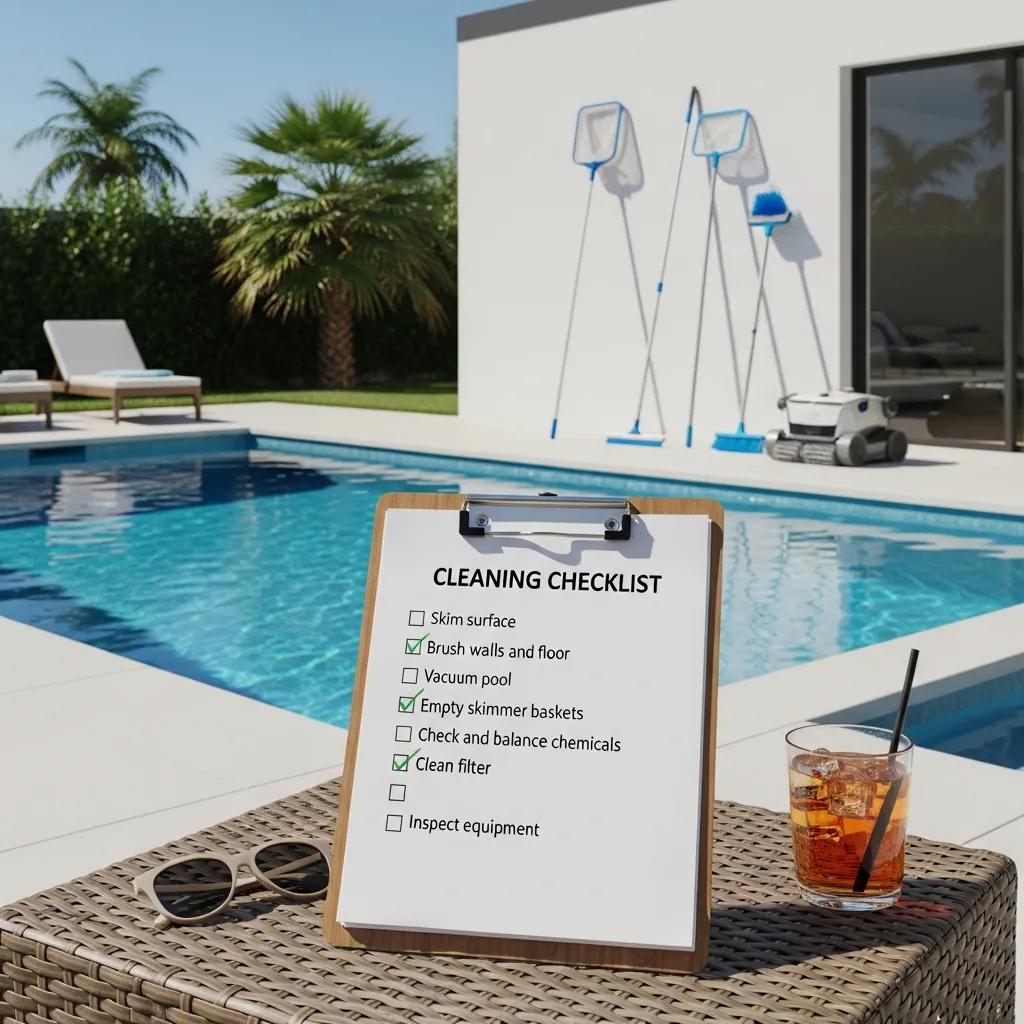
A simple, Arizona‑focused weekly checklist makes maintenance predictable and keeps small problems from turning into costly repairs: daily skimming and visual checks, weekly brushing and vacuuming, and filter care based on debris load. A steady routine minimizes sanitizer swings and prevents algae by removing organics before they break down. Below is a compact guide that pairs tasks with frequency and tools to streamline your work and cut total maintenance time. Consistency keeps chemistry stable and lets you optimize pump schedules for energy savings.

The weekly checklist and tool guidance are summarized below for quick reference:

TaskFrequencyTool / Method
Skim surface debrisDailyLeaf skimmer; empty skimmer baskets each visit
Brush walls and tileWeeklyNylon brush; focus on corners and waterline
Vacuum pool floorWeeklyManual vacuum or robotic cleaner
Test water chemistry2–3× per week in heatLiquid test kit or digital tester; record results
Clean pump and skimmer basketsWeeklyHand‑clean; inspect for tears or blockages
Backwash or clean filterAs-needed / monthly checkBackwash sand/DE; rinse cartridges; monitor pressure
Inspect equipment and pool areaWeeklyVisual check for leaks, noise, or loose fittings

Which Daily and Weekly Tasks Keep Your Pool Sparkling Clean?

Daily tasks are quick prevention that stop debris from upsetting chemistry; weekly tasks remove biofilm and nutrient buildup that feed algae. Spend 5–10 minutes each day skimming, checking the waterline and confirming pump runtime to prevent leaf buildup and lower sanitizer demand. Weekly, brush all surfaces, vacuum settled debris, test chemistry and clean baskets and hair traps—these 30–60 minute sessions dramatically reduce cloudy water and algae risk. Regular attention helps you catch small issues early so filter and pump care can stay focused on efficient operation rather than remediation.

How Should You Maintain Pool Filters and Pumps in Arizona?

In a dusty, hard‑water environment you need to watch filters and pumps closely: monitor filter pressure and backwash or clean when pressure rises 8–10 psi above baseline, and inspect pumps for leaks, cavitation or odd noises. Cartridge filters usually need rinsing and occasional chemical soak every 3–6 months depending on load; sand filters require regular backwashing and periodic sand replacement; DE filters need careful recharging and cleaning to keep fine filtration working. Balance pump cycles for turnover and energy efficiency—longer overnight runs during cooler hours reduce evaporation and chemical loss and work well with variable‑speed pumps. Regularly lubricate O‑rings, check unions visually and confirm the pump lid seals properly to avoid air leaks and loss of prime.

How Can You Prevent and Treat Algae Growth in Arizona Pools?

Prevention relies on steady sanitizer levels, good circulation and removing organics; treatment uses targeted shock, brushing and algaecide when needed. Arizona’s heat, sunlight and nutrient‑rich dust make algae spread fast after storms or maintenance lapses, so be proactive. The table below compares common algae types, signs and the most effective prevention and treatment steps so you can triage a bloom quickly. Early identification and action cut down on repeated shocks and reduce staining risk.

Algae TypeSignsPreventionTreatment
Green algaeCloudy water, green tint, slimy surfacesMaintain FC, brush surfaces, keep circulationShock with chlorine, brush, filter thoroughly; use algaecide for persistent cases
Mustard (yellow) algaeYellow/brown particles clinging to surfacesBrush regularly, maintain sanitizer, vacuumUse algaecide effective on mustard algae, brush, repeat shock as needed
Black algaeBlack spots in grout or rough surfacesPrevent by targeting rough surfaces with consistent brushingAggressive scrubbing, high chlorine shock, algaecide labeled for black algae; may need repeated treatments

What Are Common Types of Algae Affecting Arizona Pools?

Arizona pools typically see three algae types—green, mustard (yellow) and black—each with distinct looks and treatment difficulty. Green algae cause a general green tint and are the easiest to clear with shock and brushing. Mustard algae creates stubborn yellow flakes that resist chlorine and often need specific algaecides and thorough filtration. Black algae grips rough surfaces and grout and usually requires vigorous scrubbing and repeated chemical treatment to remove its root‑like hold. Spotting the differences early lets you pick the right treatment and avoid wasting time and chemicals on ineffective fixes.

Which Algae Prevention and Shock Treatment Methods Work Best?

Combine prevention—steady sanitizer, good circulation and routine brushing—with calibrated shock treatments and targeted algaecides when prevention falls short. During peak season or after storms, perform a preventive shock to raise free chlorine quickly and oxidize organics, then brush and run filtration until clarity returns. Choose algaecides suited to the algae type and follow label dosages; for stubborn blooms repeat shock and algaecide over consecutive days while backwashing and cleaning filters frequently. Safety note: don’t mix shock with metal‑based clarifiers that can stain, and always follow personal protection and chemical handling instructions.

What DIY Pool Care Techniques and Tools Are Recommended for Arizona Homeowners?

A compact DIY kit and desert‑smart techniques reduce labor, conserve water and protect premium finishes. Invest in a sturdy skimmer, a quality nylon brush, a reliable test kit or digital meter, and a robotic cleaner for floors to cut manual time and keep surfaces consistently clean. Automation—programmable timers or smart controllers and variable‑speed pumps—saves energy and improves circulation control. Covers and windbreaks minimize evaporation and debris. Below is a practical homeowner kit and why each item matters for Arizona pools.

Recommended DIY tool kit:

  • Skimmer and telescoping pole for daily debris removal.
  • Nylon brush and vacuum head for weekly surface cleaning.
  • Liquid test kit or digital meter for accurate chemistry checks.
  • Robotic pool cleaner for consistent floor cleaning and reduced pump usage.

Use these tools with simple habits—brush before vacuuming and run the pump during cooler night hours—to reduce chemical swings and preserve tile and plaster. These practices extend time between professional visits, though trained technicians are still needed for complex equipment work and warranty‑sensitive repairs.

How Do Robotic Pool Cleaners and Smart Technology Enhance Maintenance?

Robotic cleaners and smart controllers cut manual labor, boost filtration efficiency and save energy by optimizing pump runtime and scheduling cleaning windows. Robotic units work independently of the main pump, scrubbing and filtering debris while reducing runtime and energy cost compared with traditional suction systems. Smart controllers and variable‑speed pumps let you run circulation during off‑peak hours and dial flow to the job—cleaning without overworking equipment. Integration with home automation can send alerts for pressure spikes or chemical alarms so you can act faster and avoid prolonged imbalances that lead to algae or equipment stress.

What Eco-Friendly Pool Cleaning Solutions Are Suitable for Arizona?

Eco‑friendly strategies in Arizona focus on cutting evaporation, lowering chemical use and improving energy efficiency. Solar or automatic covers dramatically reduce evaporation and heat loss, preserving water and lowering top‑offs; paired with variable‑speed pumps, covers yield measurable energy savings. Enzymatic cleaners and selective clarifiers reduce organic load and chlorine demand as supplemental tools while keeping core sanitizer levels for safety. Thoughtful landscaping that reduces loose soil and adds windbreaks lowers debris and saves water used for backwashing or partial drains.

When Should Arizona Homeowners Call Professionals for Pool Maintenance?

Call a pro when chemistry stays unstable, algae keeps returning despite proper treatment, equipment shows failure signs, or structural issues threaten finishes or warranties. Professionals are crucial when water won’t balance after careful DIY work, when pumps or heaters make unusual noises, or when cracks, lifting tile or stubborn stains appear. The list below gives triage guidance so you can decide whether to stabilize the pool short‑term or schedule immediate service. Recognizing these thresholds protects valuable pool investments and keeps homeowner effort efficient.

  1. Immediate attention needed: Rapidly cloudy water after dosing, persistent foaming, or visible smoke from equipment.
  2. Schedule soon: Repeated algae returns, ongoing pressure spikes, or pump cavitation.
  3. Monitor and plan: Minor leaks, slow chemical drift, or cosmetic tile discoloration.

What Are Signs That Require Expert Pool Cleaning or Repairs?

Call an expert for equipment failure or unusual noises, persistent cloudiness despite correct chemistry, recurring algae after repeated treatments, or visible structural problems like cracks or tile separation. If filter pressure keeps climbing after backwashing, you detect hot spots on equipment, or clarity doesn’t return within 24–48 hours after corrective steps, professional diagnostics can find circulation dead zones, hidden leaks or failing components. Short‑term homeowner actions include reducing bather load, increasing circulation and maintaining shock‑level sanitizer until help arrives—but don’t delay service on critical equipment faults to avoid larger damage and higher repair costs.

How Does Island Pool & Landscaping Support Luxury Pool Care Needs?

Island Pool & Landscaping specializes in luxury pools and outdoor living with a design‑build background that supports both preventative maintenance and complex repairs—ideal for protecting high‑end finishes and custom installations. Our Arizona experience means attention to detail, clear communication and a satisfaction approach designed to preserve resort‑style investments. Homeowners can request a consultation to review recurring chemistry issues, create seasonal maintenance plans, or evaluate equipment upgrades for energy efficiency and hard‑water management. Partnering with a specialist helps turn the routine steps in this guide into a long‑term preservation plan for your luxury pool and outdoor space.

Frequently Asked Questions

What are the benefits of using a robotic pool cleaner in Arizona?

Robotic pool cleaners are especially useful here: they scrub and filter debris independently of your pool pump, which saves energy and reduces wear on equipment. They can run on a schedule during off‑peak hours and keep surfaces clean, helping prevent algae and lowering the frequency of chemical adjustments. In short, they make maintenance easier and more efficient.

How can homeowners reduce water evaporation in their pools?

To cut evaporation in Arizona, use solar or automatic covers—these are the most effective tools for saving water and heat. Add landscaping or windbreaks to reduce direct wind exposure, and keep proper circulation so water isn’t stagnant. Together these steps conserve water, stabilize chemistry and reduce maintenance costs.

What should I do if my pool water remains cloudy after treatment?

If cloudiness persists, first check the filtration system—clogged or failing filters are a common culprit. Test pH, alkalinity and chlorine to ensure chemistry is in range. If chemistry is correct, consider a shock treatment and run filtration continuously. If clarity doesn’t return, contact a professional for a full filter clean or diagnostic to find hidden issues.

How often should I perform a deep clean of my pool?

Plan a deep clean at least once a month during peak season—this includes thorough brushing, vacuuming and cleaning the filter. Also do a deep clean after major weather events like dust storms or heavy rains. Regular deep cleaning preserves clarity, prevents algae and keeps equipment running efficiently.

What are the signs that my pool equipment needs professional servicing?

Look for unusual pump noises, persistent cloudy water despite correct chemistry, frequent pressure spikes, leaks around the pump or filter, or a heater that won’t reach temperature. These signs indicate the need for professional servicing—address them promptly to avoid more costly repairs.

Can I use natural cleaning products for my pool maintenance?

Yes—many eco‑minded homeowners use enzymatic cleaners to break down organics and lower chlorine demand, and baking soda can help stabilize pH. Always check that any natural product is pool‑safe and won’t disrupt chemistry. When in doubt, consult a pool professional about compatibility.

What is the best time of day to clean my pool in Arizona?

Clean early in the morning or late evening when temperatures are cooler. Lower heat reduces evaporation and makes chemical applications more effective, and running pumps during cooler hours improves circulation efficiency and comfort while you work.

Conclusion

Keeping a pool in Arizona looking its best means adapting routines to the region’s heat, minerals and seasonal debris. With consistent cleaning habits, regular chemistry checks and the right tools you can enjoy clear water and long‑lasting equipment. For recurring problems or high‑end finishes, professional services can add peace of mind and protect your investment. Contact us to learn how specialized pool care can elevate your outdoor living experience.

Summer Pool Maintenance Tips for Arizona’s Heat

Summer Pool Maintenance Tips for Arizona’s Heat

Arizona Summer Pool Care: Essential Maintenance for Luxury Pools

Arizona’s summer heat puts extra strain on luxury pools: chlorine breaks down faster, water evaporates more quickly, and finishes and equipment face intense UV and dust exposure. This homeowner-focused guide from Island Pools and Landscaping AZ explains how heat, bright sun, and desert dust affect water chemistry and materials, then gives practical, region-specific steps to protect performance and appearance. You’ll find clear targets for chemistry and testing cadence, evaporation and water-saving tactics, equipment-protection routines, and higher-level options like automation and professional service. Follow these recommendations to keep your pool balanced, efficient, and looking its best all summer — with fewer surprises and lower operating costs.

What Are the Unique Challenges of Maintaining a Pool in Arizona's Extreme Heat?

Arizona combines high daytime temperatures, strong solar radiation, low humidity, and seasonal dust events. Together those conditions speed chlorine loss, promote pH drift, increase evaporation, and wear on surfaces and equipment. UV light photolyzes sanitizers and fades finishes; low humidity and high heat raise evaporation, forcing frequent top-offs that change chemistry; and monsoon dust and pollen increase the solids load on your filtration. Understanding these drivers helps you choose targeted steps that cut water loss, chemical use, and premature surface wear.

Here are the main challenges to prioritize so your actions address the causes — not just the symptoms.

  • High temperatures speed sanitizer breakdown and raise water temperature, increasing bacterial growth risk.
  • Strong UV exposure degrades chlorine and accelerates tile and plaster fading.
  • Rapid evaporation concentrates dissolved solids and requires more frequent refilling, which alters chemistry.
  • Dust storms and monsoon debris add solids to the water, increasing filter workload and maintenance frequency.

These issues shape the practical solutions below, including chemistry control and evaporation-reduction tactics that target each listed problem.

How Does Arizona's Climate Affect Pool Water Chemistry and Surfaces?

Arizona sunlight and heat speed chemical reactions in pool water: free chlorine breaks down faster and pH can drift up as CO2 escapes. Intense UV calls for careful cyanuric acid (CYA) management to protect chlorine without over-stabilizing it. Hard, mineral-rich source water common here increases the risk of calcium scaling and plaster discoloration when pH and alkalinity aren’t buffered correctly. Repeated thermal cycling and hot surfaces also stress tile and decking, which can cause early deterioration.

Begin mitigation with proactive chemistry control and routine surface checks. Keep alkalinity and buffers in range, monitor calcium hardness, and use shading and appropriate materials to reduce UV-driven fading and surface wear.

What Impact Do Rapid Evaporation and Dust Storms Have on Pool Maintenance?

Rapid evaporation quickly lowers pool volume, concentrating dissolved solids and changing pH and sanitizer levels unpredictably. Topping off with hard municipal water can raise mineral content and speed scaling. Daytime temperature swings stress equipment and finishes. Dust storms and monsoons drop fine particulates that can bypass skimmers, burden filters, and increase algae risk if sanitizer levels fall.

To limit these effects, check water level daily during heat spikes and use covers, shade, and landscaping to reduce exposure. Watch for rising filter pressure or persistent chemical drift — those are signs you should step up maintenance or call a pro.

How Can You Optimize Pool Water Chemistry During Arizona Summers?

Optimizing chemistry in Arizona means targeting slightly adjusted ranges and testing more often to counteract UV-driven chlorine loss and evaporation-driven concentration changes. Set a routine testing schedule, manage CYA to protect chlorine, and shock the pool after storms or heavy use to restore sanitizer levels. Regular checks prevent scaling, staining, and microbial growth while keeping the high-end look you expect from a luxury pool.

Below is a compact table comparing key chemical parameters with Arizona-specific notes so you can act quickly and confidently.

This table lists ideal ranges and practical notes for hot-weather management:

ParameterIdeal RangeNotes for Arizona Heat
pH7.4–7.6Bias toward 7.4–7.6 to reduce scaling and keep chlorine effective.
Free Chlorine (FC)1.0–3.0 ppmKeep at the upper end during heat spikes; boost after storms or heavy use.
Total Alkalinity (TA)80–120 ppmMid-range TA helps stabilize pH against evaporation-driven swings.
Cyanuric Acid (CYA)30–50 ppmUse higher CYA to guard chlorine from UV, but avoid levels >70 ppm.
Calcium Hardness200–400 ppmMonitor to prevent plaster scaling when source water is mineral-rich.

Action recommendation: Test 2–3 times per week at minimum, and test daily during heatwaves. Adjust chlorine and buffer chemicals immediately when readings fall outside these ranges to avoid cascading issues.

This compact summary gives clear targets and a short action step so homeowners can apply guidance quickly.

What Are the Ideal pH, Chlorine, and Alkalinity Levels for Arizona Pools?

In Arizona summers, aim for pH 7.4–7.6 to limit scale and keep sanitizers effective. Free chlorine should typically be 1.0–3.0 ppm, leaning higher during heat spikes, heavy bather loads, or after storms. Total alkalinity of 80–120 ppm buffers pH against evaporation and CO2 loss. Keep CYA between 30–50 ppm to protect chlorine from intense UV; avoid over-stabilizing the water.

When correcting chemistry, raise alkalinity first if it’s low, then adjust pH, and finally set chlorine — that order minimizes unintended swings and protects finishes and equipment. Small, frequent adjustments beat large corrections that can cause damage.

How Often Should You Test and Adjust Pool Chemicals in Hot Weather?

During a typical Arizona summer test chemistry at least 2–3 times weekly, and switch to daily testing during heatwaves, big gatherings, or after storms. Use reliable test strips or a quick kit for daily checks and run a full panel with a digital reader or lab test weekly to monitor calcium hardness and CYA. Smart dosing systems can handle continuous pH and sanitizer adjustments, reducing manual work and keeping levels steady.

Choose between DIY and automation based on how hands-on you want to be: automation reduces human error and keeps chemistry consistent, while manual testing gives you direct control. If balance keeps drifting despite care, have a pro evaluate source-water hardness, equipment, or hidden causes.

What Are Effective Evaporation Control and Water Conservation Strategies for Luxury Pools?

Evaporation drives water and chemical costs in Arizona — especially for large luxury pools and water features. The best conservation approach combines covers, architectural shading, and landscaping to reduce wind and sun exposure. Automatic and safety covers offer the strongest evaporation reduction and integrate cleanly with upscale design; solar blankets and custom shade structures balance cost and aesthetics. Pair these with smart fill systems and leak detection for the most reliable water savings on high-end properties.

Below is a quick comparison of common evaporation-control solutions and their typical benefits for luxury pools.

SolutionEstimated Evaporation ReductionLuxury Tradeoff / Benefit
Solar pool cover50–70%Cost-effective and easy to retrofit; removes visually when in use.
Automatic pool cover90–95%Top performance, integrates with decking and safety features; premium finish options.
Shade structures (pergolas/awnings)20–40%Adds architectural value, lowers UV exposure, and creates usable outdoor space.
Smart retractable cover80–90%Offers automation and design integration; best planned at build or remodel.

Summary: Automatic covers give the biggest evaporation savings and pair well with luxury design. Solar covers are an affordable retrofit, while shade and landscaping add thermal and visual benefits.

How Do Pool Covers and Shade Structures Reduce Water Loss?

Covers reduce direct surface exposure, the main driver of evaporation. A well-fitted automatic cover can cut evaporation 90–95%, while solar or thermal blankets typically reduce it 50–70%. Shade — pergolas, awnings, or well-placed trees — lowers surface temperature and UV exposure, cutting both evaporation and UV-driven sanitizer loss. Luxury installations often conceal covers within decking or water-features so protection doesn’t compromise design.

Choose a solution based on retrofit feasibility, visual goals, and automation preferences; combining covers with landscape elements delivers the best functional and aesthetic outcome while lowering refill and chemical costs over time.

What Are Best Practices for Water Level Management and Leak Detection?

Keeping the water level steady prevents pump cavitation and skimmer problems, and it helps you spot abnormal loss that suggests a leak. Do daily visual checks during heat spikes and consider automatic-fill systems or level sensors to avoid manual topping-off. For a basic leak test, use a bucket test to compare pool loss versus evaporation over 24 hours — big differences usually indicate a leak. If you see persistent unexplained loss, wet spots near equipment, or rapid drops that aren’t evaporation, call a leak-detection specialist.

Early detection saves infrastructure and repair costs. Integrate level sensors with auto-fill and alerts for a hands-off setup that protects water resources and your pool’s finishes.

How Should You Protect Pool Equipment and Surfaces from Arizona's Harsh Conditions?

Protect pumps, filters, heaters, and finishes with routine maintenance and physical shielding from sun and heat. Equipment in direct sun ages faster — seals and plastics become brittle and electrical parts wear sooner. Place mechanicals on shaded pads, inside ventilated enclosures, or under UV-rated covers to extend service life. Plaster and tile are prone to mineral scaling and thermal stress; regular inspections and targeted cleaning slow deterioration. Pair maintenance with design choices — for example, situating mechanicals in shaded, accessible locations — to prevent heat-related failures and keep systems running efficiently.

The maintenance schedule below lists recommended actions and frequencies for luxury pools in Arizona.

ComponentRecommended ActionFrequency
PumpInspect seals, check for leaks, clean strainer basketWeekly visual / monthly detailed
FilterBackwash or clean cartridge, inspect media and pressureEvery 1–2 weeks or as pressure rises
Heater/Heat pumpClean intake screens, inspect electrical connectionsMonthly during heavy use
Surfaces (plaster/tile)Inspect for cracks, clean scale, apply protective cleaningMonthly visual / quarterly deep clean

Summary: A scheduled maintenance plan cuts heat- and UV-related failures and preserves the premium finishes you expect from a high-end pool.

What Are Optimal Pump and Filter Run Times for Summer Efficiency?

Balance filtration turnover with energy use: aim to circulate the pool volume once per day, which typically requires 8–10 hours with a correctly sized pump. Variable-speed pumps let you spread that runtime across low-speed continuous circulation plus short high-speed cycles for cleaning. Running filtration partly overnight reduces costs and improves clarity, while daytime cycles address heat-driven sanitizer loss. Calculate turnover by dividing pool volume by pump flow and set schedules to meet that target.

Use timers, variable-speed settings, and smart controllers to keep filtration consistent and efficient. Watch filter pressure so the system maintains designed flow without unnecessary extra runtime.

How Do You Maintain and Shield Equipment from UV and Heat Damage?

Shield mechanicals with UV-resistant covers, shaded enclosures, and good ventilation to prevent overheating and seal failure. Mount equipment on elevated, level pads that drain water and allow airflow; choose corrosion-resistant hardware and UV-rated piping when possible. Do monthly visual checks for brittle hoses, cracked housings, or faded labels that signal UV breakdown, and replace small parts proactively. For electrical systems, use protective conduits and schedule routine safety inspections to keep systems reliable in extreme temperatures.

What Advanced Maintenance Tips Enhance Luxury Pool Longevity and Performance?

Advanced care focuses on automation, premium filtration, and professional service to protect aesthetics while reducing homeowner effort. Smart controllers and automated dosing keep pH and sanitizer steady with small, precise corrections that prevent large swings from heat and evaporation. Higher-tier filtration — like secondary polishing cartridges or specialty media — improves clarity and eases the load on primary systems. Regular professional service packages for luxury pools include deep cleaning, finish inspection, and seasonal tuning to protect long-term value.

How Can Smart Pool Technology Automate Chemical Dosing and Temperature Control?

Smart systems use sensors to read pH, ORP (oxidation-reduction potential), and temperature, then trigger dosing pumps to add small amounts of acid, chlorine, or alkalinity as needed. The pattern is straightforward — sensor → trigger → dose — which stabilizes chemistry and smooths out the peaks caused by heat. Integration with home automation and remote alerts lets owners track trends and get notifications, reducing manual tests and improving response times. Maintain sensors with regular calibration and consider redundancy for critical controls.

The return on investment from automation often shows up as lower chemical waste, fewer emergency calls, and longer finish and equipment life — a compelling option for busy homeowners who want a hands-off pool experience.

When Should High-End Homeowners Seek Professional Pool Services?

Call professionals when chemical imbalance persists despite correct dosing, when leaks or unexplained water loss continue after DIY checks, when you’re planning complex automation or mechanical upgrades, or when resurfacing and tile work are required. Monthly or biweekly professional packages can include deep-cleaning, filter media replacement, finish inspections, and system tuning to stop small problems from growing. High-end owners also benefit from seasonal audits before peak summer use to confirm automation, heaters, and water features are ready.

How Does Proper Summer Pool Maintenance Support Your Luxury Outdoor Living Investment?

Consistent summer maintenance preserves pool aesthetics, lowers lifecycle costs, and protects the broader outdoor-living investment that luxury homeowners expect. Healthy water and well-maintained equipment prevent visible issues like staining, scaling, and faded tile, and efficient operation reduces utility and chemical bills over time. Pairing pool care with drought-friendly landscaping and water-saving tech supports sustainability goals and Arizona’s conservation priorities. These choices help maintain property value and keep the outdoor space a reliable extension of the home.

If you’re considering design-built upgrades, integrated covers, or a hands-off service plan, Island Pools and Landscaping AZ offers consultations, portfolio walkthroughs, and service packages with transparent communication and a satisfaction guarantee to protect your investment.

Why Is Regular Maintenance Key to Preserving Pool Aesthetics and Functionality?

Routine maintenance stops staining, scale, and mechanical wear from gradually degrading appearance and performance. Small, steady steps avoid large corrective projects later. Keeping pH, sanitizer, and alkalinity in range prevents mineral precipitation and surface etching; prompt filter service removes particulates before they embed in finishes. Scheduled professional inspections catch early signs of tile separation, plaster crazing, or equipment strain homeowners might miss. Preventive care preserves the premium look-and-feel of a luxury pool and lowers total ownership cost.

Well-maintained pools not only look better but also show good stewardship of a valuable asset — a plus for resale and owner satisfaction.

How Does Pool Care Integrate with Sustainable Luxury Lifestyle Practices in Arizona?

Sustainable luxury pool care blends efficient equipment, water-saving covers, and desert-appropriate landscaping so you reduce environmental impact without sacrificing style. Xeriscaping and native-plant buffers cut debris and irrigation needs, while high-efficiency variable-speed pumps and automation lower energy and water waste. Water-conserving measures — automatic covers, smart-fill systems, and leak detection — fit into design-build plans that pair sustainability with high-end finishes. Today’s luxury outdoor living increasingly includes visible conservation practices as part of the overall design brief.

Adopting these strategies delivers immediate operating savings and aligns your property with Arizona’s stewardship expectations — completing an integrated approach to luxury pool ownership.

Frequently Asked Questions

What are the benefits of using automated pool maintenance systems?

Automated systems give luxury pool owners continuous monitoring and small, accurate chemical corrections so water stays balanced without constant attention. That saves time, reduces chemical waste, and cuts down on human error. Many systems also integrate with home automation so you can receive alerts and check status remotely. Overall, automation offers consistent water quality, fewer emergency calls, and longer equipment and finish life.

How can landscaping contribute to pool maintenance in Arizona?

Thoughtful landscaping helps a lot in Arizona. Shade trees and well-placed shrubs lower direct sun exposure, reducing evaporation and UV damage. Proper plant selection and placement can block wind-driven dust and debris, cutting filter workload. Choosing drought-resistant plants supports water conservation and keeps the outdoor space cohesive and low-maintenance — an important pairing with a luxury pool.

What should homeowners look for in a professional pool service?

Choose a service experienced with luxury pools and local climate challenges. Look for comprehensive offerings: regular cleaning, chemical balancing, equipment inspections, and emergency repairs. Tailored maintenance plans based on your pool’s design and water source are valuable. Check reviews and testimonials, and confirm the company is licensed and insured to protect your investment and give you peace of mind.

How does water conservation impact pool maintenance costs?

Water conservation lowers refill frequency and the need for chemical rebalancing, which cuts operating costs. In high-evaporation climates like Arizona, covers, efficient landscaping, and smart-fill systems reduce water loss and utility bills. Conservation also reduces wear on equipment and surfaces, further lowering long-term maintenance expenses while preserving the pool’s appearance.

What are the signs of a potential leak in a pool?

Watch for steady water loss beyond normal evaporation, damp or soggy areas near equipment, or unexpectedly high water bills. If the skimmer or pump runs dry, that can also signal a leak. A bucket test (compare pool versus bucket water loss over 24 hours) helps distinguish evaporation from a leak. If results suggest a leak, contact a professional leak-detection service promptly.

What role does regular equipment inspection play in pool maintenance?

Regular inspections keep equipment efficient and extend service life. Checking pumps, filters, heaters, and controls identifies small issues before they become costly failures. Routine tasks — replacing seals, cleaning strainers, monitoring pressure — prevent bigger problems and save energy. A proactive inspection routine preserves performance and supports a safer, more reliable pool experience.

Conclusion

Keeping a luxury pool healthy through Arizona’s extreme heat requires focused chemistry control, evaporation reduction, and equipment protection. Follow a consistent maintenance plan — or partner with a trusted professional — to preserve beauty, cut operating costs, and support sustainability goals. For tailored advice, design-built upgrades, or a premium maintenance plan, reach out to Island Pools and Landscaping AZ and we’ll help protect your outdoor living investment.