Preparing Your Arizona Garden for Monsoon Season

Preparing Your Arizona Garden for Monsoon Season
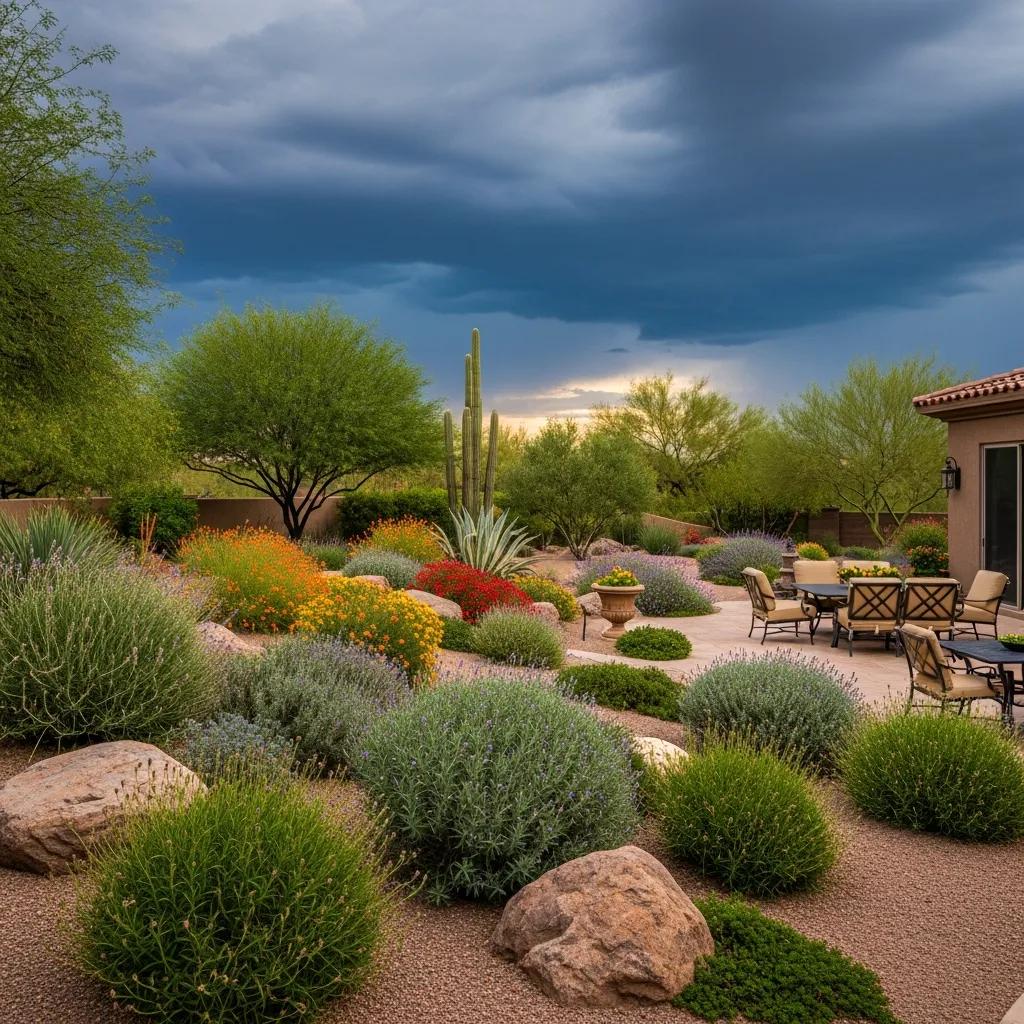
Preparing Your Arizona Garden for Monsoon Season: Practical Steps to Protect Luxury Landscapes

Monsoon season in Arizona compresses months of weather into a few intense weeks: heavy downpours, strong gusts, and swings in humidity that can quickly expose weaknesses in even the most carefully designed outdoor spaces. This guide walks homeowners through what matters most for monsoon-ready gardens—how to spot vulnerability (poor drainage, exposed roots, wind-exposed plantings) and practical steps to protect hardscapes, pools, and outdoor kitchens. You’ll find clear, prioritized actions: advanced drainage options, wind-mitigation strategies, a resilient plant palette, and smart irrigation and rain-capture tactics. Island Pools and Landscaping AZ is mentioned as a design-build resource when engineered solutions are needed; otherwise the focus stays on homeowner-ready, actionable advice to limit erosion, avoid equipment damage, and keep high-value outdoor areas functional after storms.

What Are the Key Challenges of Arizona Monsoon Season for Gardens?

Arizona monsoons bring a mix of sudden, high-intensity storms and strong winds that create four main threats to landscapes: rapid soil saturation, surface runoff and erosion, wind damage to plants and structures, and debris that harms irrigation and pool gear. These forces work fast—a brief, intense storm can wash mulch away, clog drains, or temporarily waterlog beds that aren’t designed to drain. Knowing where water concentrates and which elements are exposed lets you prioritize fixes—better drainage, storm-tolerant planting, and structural reinforcement—to reduce repair costs and downtime for luxury outdoor features. The next section explains how storms generate damage and what to look for during a quick inspection.

How Do Heavy Rains and High Winds Impact Desert Gardens?

Heavy rain and wind affect desert landscapes in predictable ways: soil displacement, root stress, and mechanical damage to plants and hardscapes. Fast runoff on compacted or bare soil produces sheet flow that strips mulch and exposes roots; on slopes, that same flow accelerates erosion and can undermine retaining walls. Poorly drained beds can stay saturated long enough to invite root rot in intolerant species, while gusts create “sail” forces that snap branches or pull up newly planted trees. Hardscapes also suffer—clogged gutters and drains can redirect stormwater toward foundations or pool equipment. Simple inspections for pooling, silt on patios, or leaning trunks let you take immediate steps: stake vulnerable trees, clear debris, and reroute runoff to safe discharge points. Those quick fixes naturally lead to planning engineered drainage and more resilient plantings.

Why Is Monsoon Preparation Critical for Luxury Outdoor Spaces?

High-end outdoor areas—pools, outdoor kitchens, custom stonework—concentrate value and can be expensive to repair. A shifted retaining wall, flooded kitchen, or damaged pool deck often requires specialists and long downtime. Preparing in advance—improving drainage, choosing materials that tolerate storms, and staging movable items—keeps small storm impacts from becoming major restoration jobs. For homeowners who value both aesthetics and performance, preparation lowers insurance claims, preserves design intent, and shortens recovery time so families can enjoy their outdoor spaces sooner after a storm.

How Can Advanced Drainage Solutions Protect Your Arizona Garden During Monsoons?
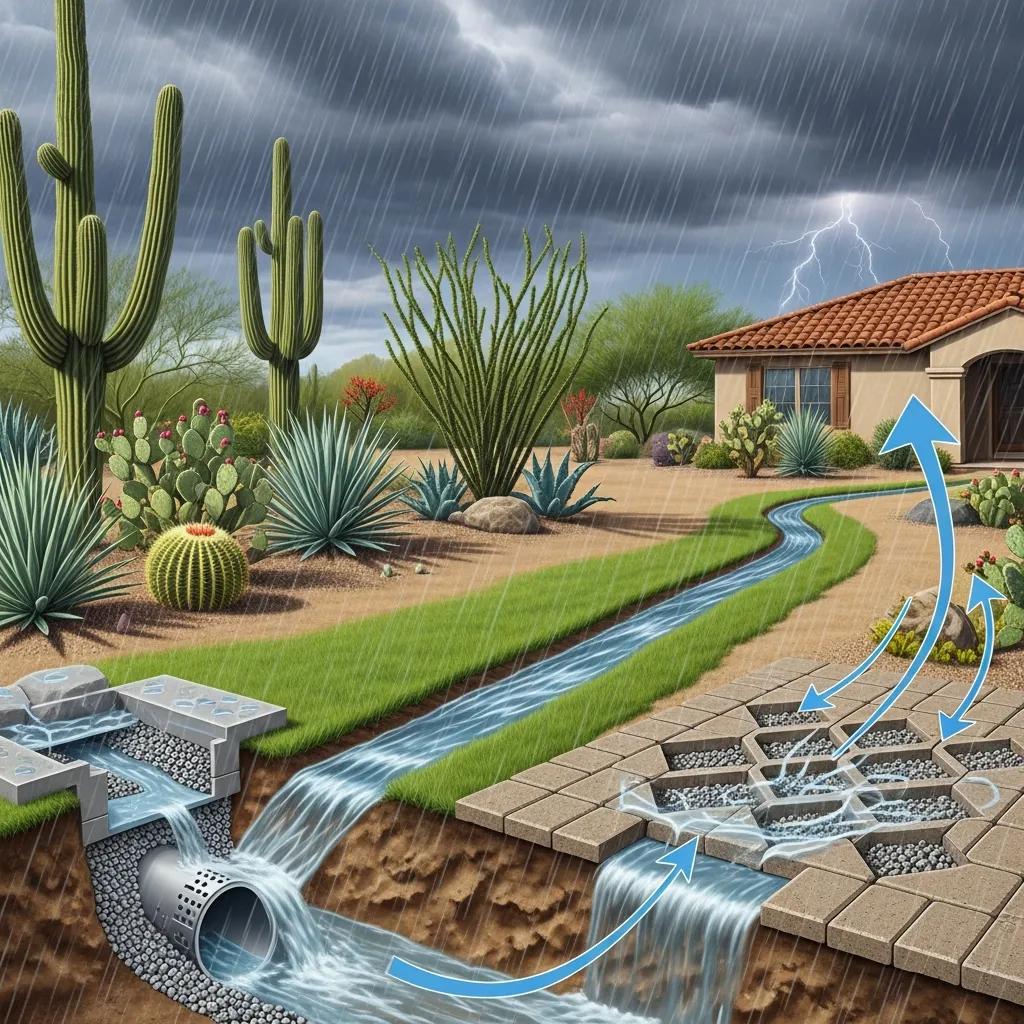
Good drainage channels concentrated flows away from structures, increases safe infiltration where appropriate, and reduces soil movement on slopes. Solutions like French drains, swales or dry creek beds, and permeable paving each play a role: French drains capture subsurface water, swales slow and spread sheet flow, and permeable surfaces reduce runoff from hardscape areas. Combined with thoughtful grading and properly routed downspouts, these measures form layered defenses that minimize waterlogging and erosion while keeping the landscape visually appealing. Below is a practical comparison to guide choices based on capacity, maintenance, and typical Arizona site conditions.

Looking at stormwater through an ecological lens highlights opportunities to blend engineered controls with landscape-scale design for greater resilience.

Arid City Stormwater Management: Ecological Design for Urban Resilience

Cities manage water for supply, sanitation, and runoff—often with engineered systems that work well but can reduce natural habitat and other ecosystem benefits. Recent projects aim to restore or reintroduce ecosystem services—water quality improvement, habitat, and public access—by designing interventions that perform hydrologic functions while reconnecting urban areas to natural processes. Although inspired by arid-city work, these ecological design ideas apply more broadly to urban landscapes seeking resilience and multiple benefits.

Different drainage systems bring different strengths for storm control and long-term upkeep.

Drainage ApproachKey CharacteristicTypical Use Case
French drainPerforated subsurface pipe surrounded by gravel to intercept lateral flowRunoff concentrated near foundations or under patios
Swale / dry creek bedSurface channel that slows sheet flow and encourages infiltrationSloped yards and channels leading to basins
Permeable pavingLoad-bearing surface with joints or base that allow water to pass throughDriveways and patios that need better drainage

The table shows how systems complement one another: French drains for subsurface control, swales for surface velocity, and permeable paving to cut runoff from impervious areas. Best choice depends on slope, soil infiltration, and the existing hardscape layout.

What Are Effective Drainage Systems for Monsoon Flood Prevention?

French drains, swales, dry creek beds, and permeable surfacing each contribute to a resilient drainage plan when used together. French drains move subsurface water away from structures, easing hydrostatic pressure beneath patios and near foundations. Swales and dry creek beds slow and spread sheet flow, reducing erosion and giving water more time to sink in. Permeable pavers lessen peak runoff from entertainment areas and driveways. Installation tips: French drains need correct trenching and outlet grading; swales benefit from rock lining and stabilizing plantings; permeable paving requires an engineered base to support loads. Maintain these systems by keeping inlets clear, topping gravel envelopes when needed, and checking outlets after storms so they stay reliable through repeated monsoons.

How Does Proper Yard Grading and Maintenance Prevent Water Damage?

Grading steers surface water away from buildings toward safe discharge points; the basic guideline is a 2% slope (about 1/4 inch per foot) away from foundations for the first several feet, though engineered sites may require tailored grades. Seasonal maintenance includes clearing gutters, ensuring downspouts discharge to stable areas, and inspecting for scour or ponding after heavy storms. Simple, effective steps—replacing compacted mulch with coarse rock in high-flow paths, re-shaping contours with topsoil, and confirming retaining walls have functioning drains—reduce the risk of sudden failure. If regrading is beyond your comfort level, a professional assessment will show whether regrading, engineered retaining walls, or subsurface drains are the right solution. Good grading and basic upkeep form the backbone of a monsoon-resilient landscape.

Which Wind-Resistant Landscape Designs Safeguard Your Outdoor Living Areas?
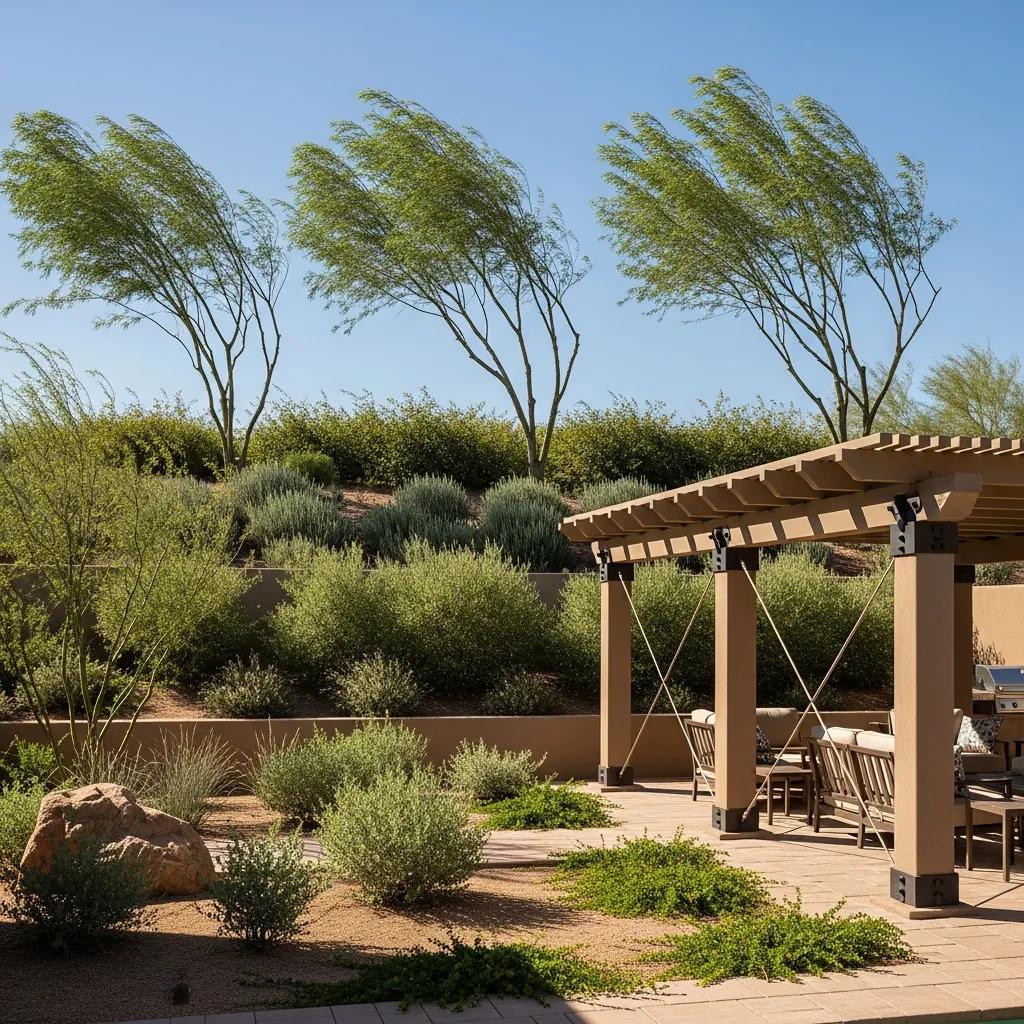
Wind-resistant landscapes combine plant choice, layered planting, and structural reinforcement to reduce uplift, slow wind near sensitive areas, and safeguard amenities. Shelterbelts—rows of compatible shrubs and trees—break prevailing gusts and create calmer microclimates for patios and pools. Layering from groundcovers to mid-height shrubs and canopy trees lowers the “sail” effect that can lift furniture or damage structures. On the built side, anchored pergolas, through-bolted connections, and removable shade elements add protection. These biological and structural measures work together to limit wind energy and protect expensive outdoor components. Use the checklist below to prioritize actions that reduce wind exposure and potential damage.

Wind-resistant design depends on layered plantings, secure anchoring, and timely maintenance:

  1. Create layered windbreaks: Use a mix of low, medium, and tall species to diffuse gusts.
  2. Plant deep-rooted specimens on slopes: They help hold soil and prevent tree tilt.
  3. Anchor structures: Choose wind-rated fasteners and tie-downs for pergolas and shade systems.

Combining living screens with engineered anchors produces the most dependable protection; next we cover tree care practices that increase storm resilience.

How Does Tree Pruning and Staking Enhance Storm Resilience?

Targeted pruning reduces wind load by thinning crowded limbs and balancing the canopy, which lowers the chance of breakage in strong gusts. Structural pruning removes crossing branches and establishes a clear central leader on young trees to build wind-tolerant form while keeping a natural look. Staking helps newly planted trees establish roots but should allow controlled trunk movement—overly rigid, long-term staking can hinder root development and increase later failure risk. Use breathable staking materials and remove supports after one growing season for most species; call an arborist for mature trees with structural defects. Seasonal pruning and pre-monsoon inspections greatly reduce uprooting and limb failure, and they tie directly into structural protection for outdoor fixtures.

What Structural Reinforcements Protect Pergolas and Outdoor Furniture?

Pergolas and outdoor furnishings benefit from both design-time reinforcement and seasonal precautions to resist wind uplift. Anchor pergolas into proper foundations and specify wind-rated hardware—through-bolts and straps—to increase resistance. For furniture, use tie-downs, weighted bases, or quick-disconnect hardware so you can secure or store pieces before a storm. Removable shade systems let you reduce sail area when gusts are forecast, and choosing corrosion-resistant materials preserves strength over time. A routine of securing loose items, checking fasteners, and storing fragile décor before storms links landscape design with everyday monsoon readiness.

What Are the Best Drought-Tolerant and Monsoon-Resilient Plants for Arizona Gardens?

Pick species that tolerate drought yet survive intermittent monsoon moisture by considering root form, disease resistance, and mature size appropriate to the planting location. Native and well-adapted plants often have deep or fibrous root systems that stabilize soil during heavy flows and recover quickly after wet periods. Favor species with moderate water uptake after storms and avoid shallow-rooted, high-maintenance ornamentals near slopes or drainage channels to limit plant loss. The table below compares recommended species on drought tolerance, monsoon performance, and mature size to help with planting decisions in upscale landscapes.

Using climate-smart plant choices helps turn arid yards into resilient, low-maintenance landscapes that perform through extreme weather.

Desert Landscape Resilience: Climate-Smart Interventions for Arid Zones

In very dry regions with large temperature swings, limited vegetation and high winds raise the risk of desertification. Climate-smart approaches focus on conserving soil, water, and biodiversity while introducing resilient planting and land-use practices that can transform marginal areas into productive, more stable landscapes. These strategies highlight the value of plant selection and soil care in restoring ecological function in arid zones.

Recommended landscape plants balance drought tolerance with the ability to withstand monsoon conditions.

PlantDrought Tolerance / Monsoon ResilienceMature Size
Mesquite (Native)Very drought-tolerant; deep roots help resist erosion20–30 ft
Palo Verde (Native)Handles short saturation events; prefers well-drained soils15–30 ft
Agave (Adapted)Excellent drought tolerance; vulnerable to prolonged saturation2–6 ft
Desert WillowDrought-adapted and tolerates intermittent moisture well15–25 ft

This comparison shows deep-rooted trees like mesquite and palo verde act as anchors during monsoon cycles, while succulents and adapted shrubs perform best in raised or well-drained micro-sites.

Which Native Desert Plants Thrive During Monsoon Season?

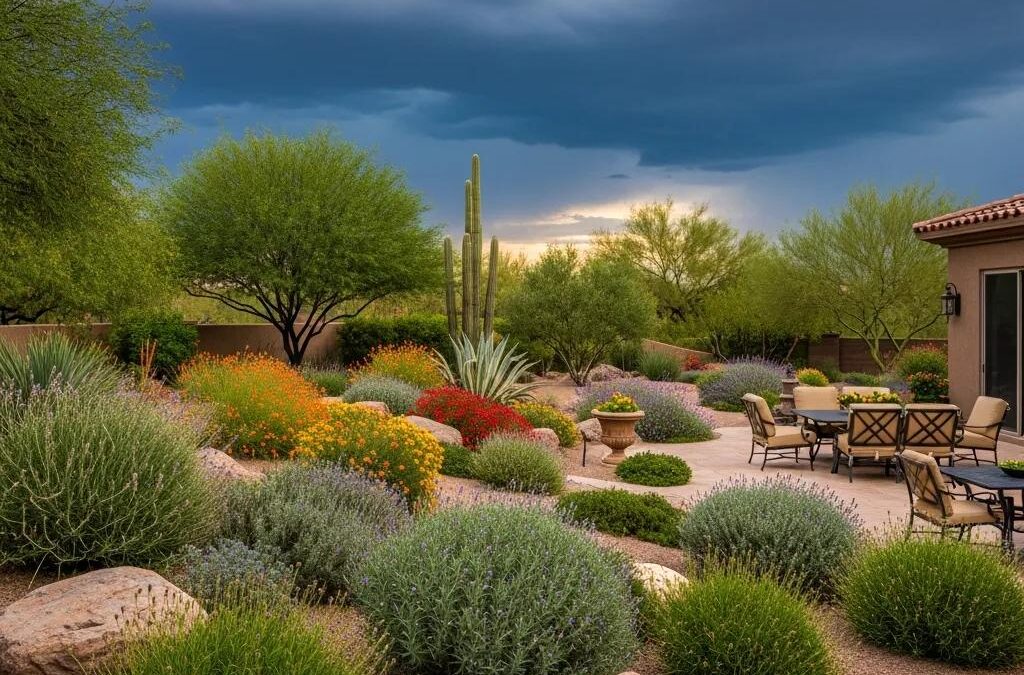
A restrained palette of native and adapted species gives structure, seasonal color, and resilience in monsoon-prone yards. Deep-rooted trees—mesquite and palo verde—stabilize slopes and provide canopy for layered plantings. Flowering shrubs and subshrubs adapted to desert conditions can tolerate brief inundation if soils drain quickly; species such as desert willow and select penstemons resprout after heavy moisture. Succulents and agaves do best in raised, well-draining beds where standing water is unlikely, making them ideal accents. Thoughtful placement preserves the luxury look while improving monsoon performance and informs soil preparation and planting details.

How Does Strategic Plant Placement Improve Storm Survival?

Siting plants by root depth, water tolerance, and exposure reduces wind damage and erosion during storms. Put deep-rooted trees and shrubs at slope toes and along contours to intercept and slow water, and reserve shallow-rooted ornamentals for flat or raised beds with amended, fast-draining soil. Use sacrificial buffer zones—hardier species placed to absorb flow—so delicate specimens near entertaining areas are protected. Coarse organic or rock mulch improves infiltration and limits surface velocity, and adding well-aged compost improves soil structure for faster recovery after storms. Proper placement and planting technique are the final steps before adjusting irrigation for monsoon cycles.

How Can Smart Irrigation and Water Management Optimize Monsoon Garden Care?

Smart irrigation and rainwater capture reduce unnecessary watering, conserve municipal supply, and protect plants from root-suffocating saturation during monsoons. Weather-based controllers and soil moisture sensors pause scheduled watering when rain arrives or is forecast, preventing excess moisture that can encourage fungal disease and nutrient loss. Rainwater capture—cisterns or redirected downspouts—stores runoff for later use, lowering flows that cause erosion and providing reserves for dry periods. Combining smart controls, adjusted schedules, and capture strategies creates a responsive water plan that supports plant health and reduces outdoor water use. The table below compares common technologies and their benefits for monsoon-aware maintenance.

Smart irrigation tools deliver measurable advantages for monsoon-ready landscapes.

TechnologyBenefitTypical Use Case
Weather-based controllerAdjusts schedules automatically based on forecast dataReduces unnecessary watering during monsoon season
Soil moisture sensorsStops irrigation when root zone is already wetPrevents overwatering and root disease
Leak detection & flow monitoringNotifies you of breaks or unusually high flowDetects hidden leaks during or after storms

Sensor-driven and forecast-aware systems cut water waste and avoid conflicts between scheduled irrigation and natural rainfall, improving plant health and efficiency.

What Smart Irrigation Systems Reduce Water Usage During Monsoons?

Weather-responsive controllers, ET-based scheduling, and soil moisture probes are the most effective features for reducing unnecessary irrigation during monsoon months. Controllers that pull local weather data suspend or reduce cycles when rain is expected, while moisture probes inhibit cycles when the root zone is already wet. Zone-specific programming keeps low-water zones—succulent beds and desert-adapted areas—off during wet periods while maintaining targeted irrigation for newly planted or high-value specimens. Remote monitoring and alerting let homeowners or maintenance teams react quickly to leaks or damaged components after storms. Regular checks of heads and valves before and after monsoon events complete a strong irrigation management routine.

How Does Rainwater Harvesting Support Sustainable Garden Maintenance?

Rainwater harvesting captures stormwater for later use and reduces peak flows that cause erosion and downstream siltation. Systems range from simple downspout diverters into 50–200 gallon barrels for garden use to larger cisterns storing thousands of gallons for landscape irrigation; sizing depends on roof area and desired capture. Proper overflow routing and first-flush diversion keep storage cleaner and protect water quality for plants. Harvested water is well suited to non-potable uses—irrigation and hardscape cleaning—reducing demand on municipal supplies during dry months. Paired with smart irrigation controls, rainwater reserves let you strategically top up critical zones after storms, combining sustainability with resilience.

How Does Island Pools and Landscaping AZ Build Monsoon-Ready Luxury Outdoor Spaces?

Island Pools and Landscaping AZ delivers monsoon-ready landscapes through an integrated design-build approach that coordinates hardscape, softscape, and pool systems with engineered drainage and structural reinforcement. The process begins with a site assessment and risk mapping that identifies drainage paths, wind exposure, and locations of high-value features like pools and outdoor kitchens. From that assessment, plans specify grading, French drains or swales where needed, a suitable plant palette, and anchoring details for pergolas and fixtures. During construction, coordinated trades ensure drainage outlets, irrigation controls, and pool equipment are placed and protected according to the engineered plan. After installation, we provide a walkthrough and maintenance guidance so homeowners can maintain resilience through every monsoon season.

What Is Our Design-Build Approach to Monsoon-Resilient Landscaping?

Our design-build workflow follows clear steps: consultation and site assessment; engineered grading and drainage design; integrated hardscape and softscape plans; coordinated construction across pool, irrigation, and landscape trades; and a final inspection with homeowner orientation. Clear responsibilities ensure grading, drain installation, and anchoring align with planting plans and pool equipment locations so systems perform under storm conditions. Hands-on communication and construction oversight reduce rework and ensure French drains, swales, and irrigation controls function as intended during monsoon events. This approach preserves design intent while delivering engineered resilience for upscale outdoor environments.

How Do We Customize Solutions for High-End Arizona Homeowners?

We tailor solutions by choosing materials, plant palettes, and technical details that match an estate’s aesthetic while meeting monsoon performance needs. Options include custom retaining systems, reinforced pergola anchoring, and discreetly integrated drainage alongside premium finishes, plus plant selections that balance drought tolerance with storm resilience. Our project management keeps homeowners informed about schedule and design choices, and the handover includes seasonal maintenance recommendations for monsoon preparation. By blending luxury finishes with technical solutions—like concealed French drains next to natural stone patios—we protect both the look and long-term durability of outdoor investments.

  1. Protective Consultation: A targeted site review that identifies immediate risks and ranks mitigation priorities.
  2. Integrated Engineering: Coordinated drainage and grading plans that align with hardscape and pool layouts to prevent unintended runoff.
  3. Finish & Function: Premium materials and subtle technical solutions that combine beauty with resilience.
Frequently Asked Questions

What are the signs that my garden is at risk during monsoon season?

Watch for pooling water in low spots, visible erosion on slopes, exposed roots, or leaning trees and shrubs—these are clear signs of stress. Clogged gutters and downspouts can also cause overflow near foundations and pool equipment. Regular checks before and after storms help you catch issues early and act quickly.

How can I improve soil drainage in my garden?

Improve drainage by adding organic matter like compost to loosen compacted soil, installing subsurface drains or swales to move excess water, or building raised beds so roots sit above saturated soil. Aerating compacted areas also helps water move through the profile faster.

What maintenance should I perform on my irrigation system before monsoon season?

Inspect for leaks, broken heads, and clogged lines; adjust timers to account for expected rainfall; and consider soil moisture sensors to prevent automatic watering during wet periods. Make sure valves and controllers are operating correctly so irrigation doesn’t conflict with natural rainfall.

How can I protect my outdoor furniture during storms?

Choose weather-resistant materials and use tie-downs or weighted bases where possible. Store lightweight or movable pieces indoors or in a sheltered area when storms are forecast. Furniture covers provide extra protection against moisture and debris for items that remain outside.

What role do native plants play in storm resilience?

Native plants often have deep or fibrous roots that stabilize soil and reduce erosion during heavy rain. They’re adapted to local climate swings, so they recover faster after wet periods and typically need less irrigation—making them a smart choice for long-term resilience.

How can I assess the effectiveness of my drainage systems after a storm?

After a storm, inspect areas that usually collect water for standing pools, sediment buildup, or new erosion channels. Confirm that outlets and inlets are clear and that water is being routed away from structures. If swales or French drains show signs of failure, schedule maintenance or a professional review.

Conclusion

Preparing your Arizona garden for monsoon season protects both beauty and function. By improving drainage, choosing resilient plants, reinforcing structures, and using smart water controls, you can reduce damage and speed recovery after storms. Start with a site review, prioritize the most vulnerable areas, and combine simple homeowner actions with engineered fixes where needed—your landscape will be more resilient and easier to enjoy year after year. For expert help integrating these strategies into a luxury design-build plan, Island Pools and Landscaping AZ is ready to assist.

Pool Winterization & Off-Season Care in Arizona

Pool Winterization & Off-Season Care in Arizona

Winterize Your Luxury Pool — Start Today

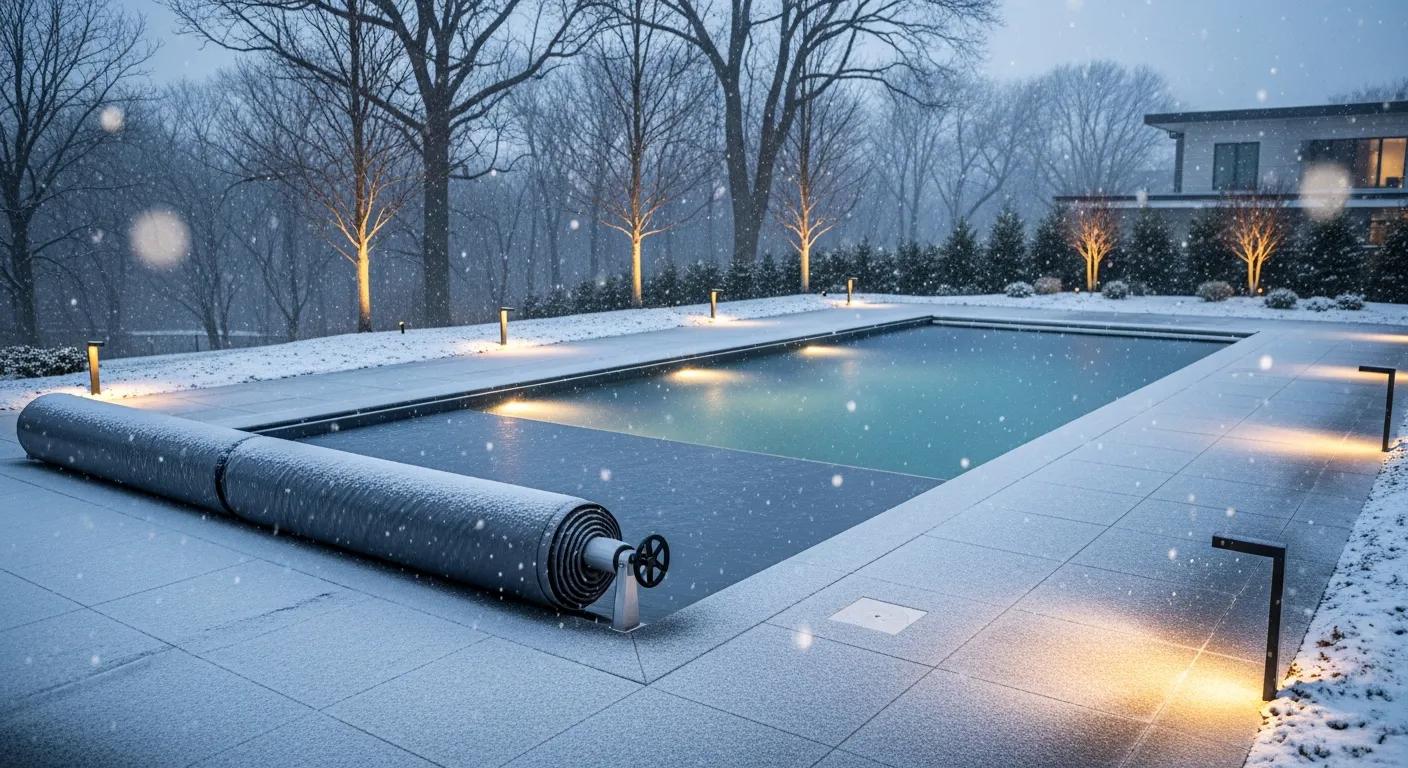
Winterizing a high‑end Arizona pool is a tailored blend of deep cleaning, equipment protection, and water management designed for our region’s off‑season realities. This guide explains why premium pools need a different approach than standard installations, walks through a practical step‑by‑step winterization checklist, and shows how homeowners protect delicate finishes, integrated systems, and landscape work. Arizona properties face wide temperature swings, dust intrusion, and rapid evaporation — all of which increase the risk of staining, mechanical wear, and water loss if left unaddressed. The solution is precision cleaning, stabilized chemistry, mechanical isolation, and the right cover plus monitoring so your pool is spring‑ready without costly repairs. Below we cover Phoenix and Scottsdale microclimates, a numbered checklist with ideal chemistry targets, equipment protection tactics including smart integration, a comparison of premium covers and safety features, and a realistic timeline for scheduling professional closings. We also highlight drought‑aware water conservation and energy‑efficient options and explain how Island Pool and Landscaping’s premium process protects high‑value outdoor living investments while keeping practical homeowner guidance front and center.

Why Luxury Pools in Arizona Need a Specialized Winterization Plan

Luxury pools demand a focused winterization plan because their finishes, automation, and integrated systems are more sensitive to environmental stress. A correct program combines debris management, chemical stabilization, mechanical isolation, and the proper cover to cut evaporation, prevent staining, and protect electronics. The payoff: fewer spring repairs and longer equipment life for complex builds. Features like automation, heaters, water displays, and premium tile are more vulnerable to pH swings, gritty debris, and intermittent circulation — so a specialized process isn’t optional, it’s essential. Recognizing these higher‑value risks informs every winterization decision for high‑end properties.

What Winter Challenges Are Unique to Arizona Pools?

Arizona brings specific off‑season stressors that change how pools should be cared for. Dust storms and seasonal pollen settle quickly on surfaces and in skimmers, so early debris removal is critical to avoid staining and circulation problems. Large day‑to‑night temperature swings weaken sanitizer effectiveness and raise algae risk when circulation is reduced; some elevated or exposed lots can also see nights near freezing that threaten exposed plumbing and equipment. Evaporation concentrates minerals, increasing the chance of calcium scaling and staining when turnover is low. To reduce these risks, keep covers free of abrasive debris, maintain baseline circulation when practical, and test chemistry periodically so small imbalances don’t damage finishes — measures that fit neatly into a professional winterization plan.

How Winterization Protects High‑Value Pool Investments

A proper winterization program protects luxury pools by cutting common failure modes, preserving finishes that define the outdoor space, and creating service records that support warranties and resale. Mechanically, isolating and draining vulnerable components prevents freeze cracks and seal failures; chemically, stabilization prevents algae, scale, and discoloration that can require expensive surface work. Keeping pH, alkalinity, and calcium hardness in range preserves plaster, tile, and stone coping from etching and staining. Regular service notes and chemistry logs also give homeowners and builders a clear record of care that helps with warranty claims or maintenance decisions. These outcomes lead into the practical checklist below.

Essential Steps for Arizona Pool Winterization

Arizona winterization follows a straightforward sequence: targeted cleaning, precise chemical balancing, equipment isolation, and cover installation — all carried out with luxury finishes and automation in mind. The order is simple: remove debris, stabilize chemistry to winter targets, protect mechanical systems, then install a cover to reduce evaporation. The reward is a smoother spring reopening with preserved finishes and maintained warranties. Use the checklist below to guide a DIY close or to scope a professional service.

  1. Perform advanced debris and surface cleaning to remove leaves, dust, and biofilm.
  2. Balance pH (see targets below), total alkalinity, calcium hardness, and residual sanitizer.
  3. Apply long‑lasting oxidizers and preventative algaecide when circulation will be reduced.
  4. Drain or isolate pumps, heaters, and automation peripherals per manufacturer guidelines.
  5. Install an appropriate premium cover and document the closing with photos and chemistry logs.

This sequence is the framework; the sections that follow expand on cleaning techniques and the precise chemistry ranges needed to execute each step correctly.

Before you start cleaning and dosing, Island Pool and Landscaping offers a premium winterization service that blends design awareness with field precision. We prioritize protecting luxury finishes and automation through documented procedures and an owner‑ready report. For homeowners who want a consultative close, a professional process closes the gap between DIY checklists and fully documented care.

Chemical parameters play distinct roles during winterization — the quick reference table below makes those roles easy to compare for decision‑making.

ParameterIdeal Winter RangeRationale
pH7.4 – 7.6Keeps sanitizer effective while minimizing surface etching
Total Alkalinity80 – 120 ppmBuffers pH swings during temperature changes
Calcium Hardness200 – 400 ppmPrevents plaster etching and scale formation
Free Chlorine (Residual)1 – 3 ppm (stabilized)Maintains residual protection without over‑chlorination
Cyanuric Acid (stabilizer)30 – 50 ppmProtects chlorine from UV degradation while avoiding clouding

This chemistry snapshot highlights how each parameter reduces specific risks and helps owners or technicians choose the right interventions for a pool’s finish and equipment profile.

How to Perform Advanced Cleaning and Debris Removal

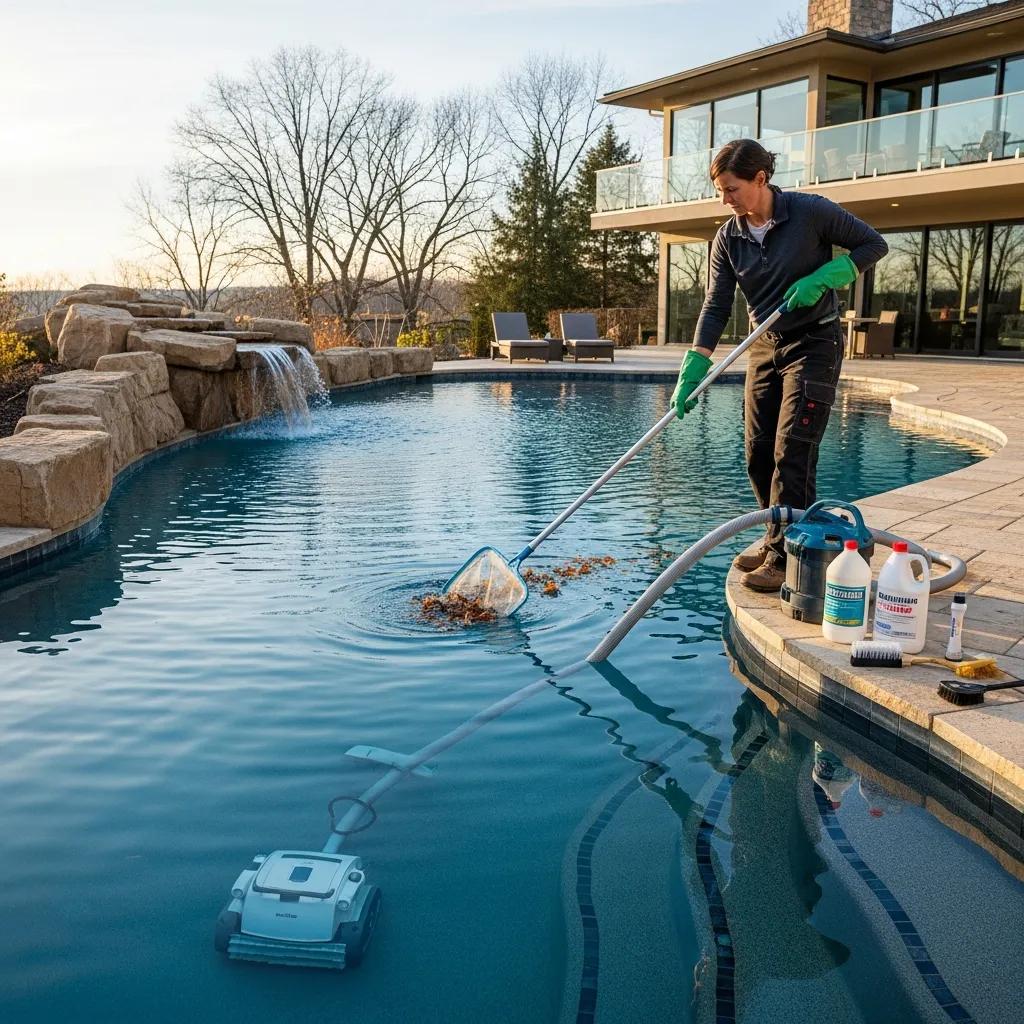
Advanced cleaning is the first defensive step and pairs bulk debris removal with gentle surface care suited to premium materials. Start by skimming and emptying skimmer and pump baskets, then vacuum settled debris with a low‑abrasion head to avoid grit‑driven wear on tile and stone coping. For waterline buildup, use pH‑neutral cleaners or manufacturer‑recommended products and soft brushes rather than aggressive scrubbing. For stubborn stains or organic films, schedule professional stain treatment or pressure washing that respects finish tolerances. Proper cleaning reduces finish wear and sets the stage for stable chemistry.

Tools and sequence for a pro‑level clean:

  • Skimmer net and routine basket maintenance to remove floating debris.
  • Low‑abrasion vacuum and soft‑bristled brushes for floors and walls.
  • pH‑neutral tile cleaners and targeted stain treatments, used sparingly and rinsed thoroughly.

Consistent use of these tools and methods prevents surface damage and reduces the need for reactive restoration, which leads directly into precision chemical balancing.

Process for Precision Chemical Balancing

Precision balancing stabilizes water so finishes and equipment remain protected through cooler temperatures and lower turnover. Start with a full water test for pH, alkalinity, calcium hardness, free chlorine, and cyanuric acid, then adjust alkalinity before pH so buffers work correctly — that order protects finishes. In Arizona winters, use long‑lasting oxidizers and moderated algaecides to maintain residual protection when pumps run less often, and consider phosphate control where dust and landscape runoff increase nutrient loads. Test chemistry every 2–4 weeks during the off‑season or use remote monitoring if available; keeping records also supports warranties and resale. The table below restates winter targets with practical dosing notes.

Winter dosing reference:

Chemical MetricWinter TargetImplementation Note
pH7.4–7.6Adjust with small doses; retest after mixing
Alkalinity80–120 ppmUse sodium bicarbonate to raise; aeration to lower
Calcium Hardness200–400 ppmTreat high hardness conservatively to avoid precipitation
Free Chlorine1–3 ppmUse stabilized chlorine or a slow‑release oxidizer
Algaecide / Phosphate ControlPreventive dosingApply per label to limit algal blooms during low circulation

Keeping chemistry in these ranges reduces staining and microbial risk while protecting finishes and mechanical components; the next priority is safeguarding the pool’s equipment.

How Arizona Homeowners Can Protect Pool Equipment Over Winter

Protecting equipment on luxury pools blends correct shutdown sequences, targeted drainage, and weatherproofing electronics to prevent freeze, dust, and corrosion damage. The approach uses mechanical isolation, controlled draining or desiccation, and protective coverings to extend pump and heater life and avoid seal or diaphragm failures. The homeowner benefit is fewer emergency repairs, lower spring commissioning costs, and reliable performance from integrated systems. Below is a practical breakdown of common equipment, failure modes, and recommended protection frequency.

Equipment table — risks and protection:

EquipmentRisk / Failure ModeProtection Method / Frequency
PumpSeal/shaft corrosion from stagnationDrain strainer, remove baskets, cover (annual)
FilterResidual debris, freeze crackingBackwash/clean, depressurize, dry‑lid (annual)
HeaterCorrosion and freeze damageIsolate, drain water‑side, professional service (annual)
Automation ControllerDust and moisture damageRemove batteries, install weatherproof cover, monitor remotely (seasonal)
Plumbing LinesLow‑point freeze and crackingBlow out lines or install low‑point drains (seasonal)

These protection methods clarify the effort and ROI for each system and lead into step‑by‑step techniques for pumps, filters, and heaters.

Techniques to Safeguard Pumps, Filters, and Heaters

Start equipment protection with a correct shutdown sequence: power down, isolate valves, relieve pressure, then drain low points. Remove and store detachable parts like pump baskets, and clean filter grids or DE elements to avoid trapped organic matter that can corrode components or cause odors. For heaters, follow the manufacturer’s instructions: isolate fuel or electrical supplies, drain water‑side components, and schedule a professional inspection to check seals and combustion chambers. Protect electronic controllers and variable‑speed drives with weatherproof covers and desiccants, or remove them if they’re exposed to dust storms. Record serial numbers and service steps to support warranty claims. These precautions lower mechanical failure risk and prepare the system for smart monitoring options.

How Smart Pool Technology Strengthens Winter Protection

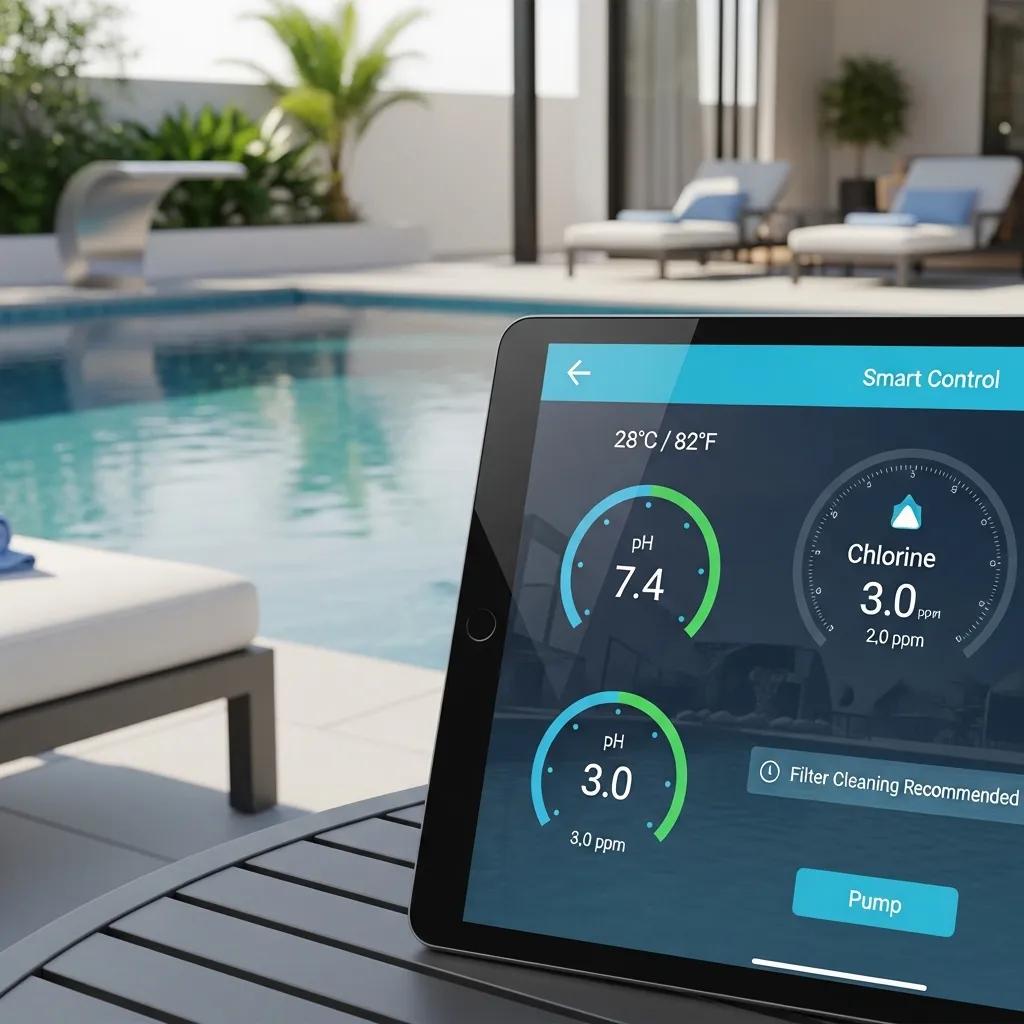
Smart controllers and sensors add an important layer of protection by sending remote temperature alerts, reporting chemistry, and enabling automated dosing so sanitizer and pH stay within targets during reduced circulation. These systems can detect steep overnight temperature drops and trigger circulation cycles or heater thresholds to avoid localized freezing or chemistry collapse. Automated dosing preserves residual sanitizer and adjusts pH, reducing manual testing and curbing algae risk in low‑use months. Smart logs also create a digital record of chemistry and runtime that supports warranty documentation and service decisions on complex builds. Remote monitoring reduces site visits while keeping mechanical and finish protections active.

Best Luxury Pool Covers and Safety Features for Arizona Winters

Choosing the right premium cover protects water, finishes, and people — and it should balance appearance, automation compatibility, and environmental performance. A well‑chosen cover blocks debris, reduces evaporation, and helps stabilize temperature; thermal and automated systems further cut energy use and chemical loss. Covers also serve safety and landscape integration roles on luxury properties. The comparison below helps homeowners decide which premium cover type best fits an estate‑scale pool.

Premium cover comparison:

Cover TypeMaterial / R‑value / SafetyBest Use Case / Pros & Cons
Automatic Rolling CoverPolypropylene or vinyl solid panels; moderate to high R‑value; good safetyIdeal for estates needing convenience and clean aesthetics; higher cost but excellent for frequent use
Thermal BlanketLightweight polymer; moderate R‑value; limited safetyCost‑effective for evaporation and heat retention; less debris and safety protection
Solid Safety CoverHeavy‑duty reinforced fabric; high safetyMaximum debris and child‑safety protection; requires anchors and a professional install
Designer‑Integrated CoverCustom materials and finishes; variable R‑valueSeamlessly matches landscape design; premium aesthetic for showpiece pools

Comparing these attributes clarifies trade‑offs between convenience, energy savings, and safety, and leads into how covers specifically conserve water and energy in Arizona.

Which Premium Pool Covers Are Available?

Premium covers range from automatic reel systems and solid safety covers to thermal blankets and bespoke designer solutions that conceal hardware in the landscape. Automatic covers are the most convenient for high‑traffic estates and integrate with pool automation to close on schedule. Solid safety covers offer the best debris exclusion and child‑safety protection. Thermal blankets are a lower‑cost option that reduce evaporation and heat loss but usually require a reel or manual handling. Designer‑integrated covers use custom materials and concealed hardware to preserve the look of a high‑end yard. Match the cover type to use patterns, aesthetic priorities, and your water‑conservation goals.

How Covers Help Save Energy and Water

Covers cut evaporation and heat loss, reducing daily water top‑offs and heater run time — that translates to measurable energy and water savings in Arizona’s dry climate. Thermal covers commonly reduce heat loss by roughly 30–50% depending on conditions, so heaters run less and pools retain temperature with less energy. Reduced evaporation also slows chemical depletion, lowering sanitizer and pH adjustments and conserving treatment chemicals. In drought‑sensitive areas, fewer refills support local conservation goals and reduce utility costs. Paired with proper winterization, a premium cover is a cost‑effective investment.

When and How to Schedule Professional Pool Closings in Phoenix & Scottsdale

Schedule a professional closing when nightly lows show a sustained trend near or below about 40°F — typically mid‑December through January in many neighborhoods, though higher‑elevation or exposed lots may need an earlier close. Timing should be risk‑based: act when temperature swings and weather patterns raise freeze or contamination risk so you’re ahead of potential damage. A professional closing delivers documented chemistry stabilization, equipment isolation, and cover installation that reduce spring reopening work and protect warranties. The short timeline below helps homeowners decide when to book service.

  1. Watch forecast trends in late November and early December; schedule a closing when sustained cooler nights begin.
  2. Arrange a site assessment to document equipment, finish materials, and any special conditions before the appointment.
  3. Expect on‑site chemistry testing, mechanical shutdown and drain, cover installation, and a post‑service report.

This timeline explains when to act, what a professional scope should include, and how to prepare for a consultation.

Benefits of Expert Winterization Services

Professional winterization lowers repair risk, creates documented records for warranties and resale, and saves homeowners time and uncertainty over the off‑season. Certified technicians follow manufacturer shutdown sequences for pumps and heaters, apply precision chemical programs, and install covers correctly for durable protection. Service records and chemistry logs build a defensible trail that can simplify warranty claims and provide accountability for quality. In short, expert service converts technical complexity into homeowner peace of mind and a lower total cost of ownership at spring commissioning.

Preparing for a Consultation with Island Pool and Landscaping

Before your consultation, gather clear photos of the pool and equipment pad, note equipment make and model numbers if visible, and list finish materials, cover preferences, or automation platforms you have or want. Share details about water features, fountains, or integrated landscape elements that affect draining and cover installs, and have any warranty or builder documentation handy. The consultation will include a site assessment, a written estimate outlining chemistry targets and mechanical actions, and a recommended timeline for closing. Scheduling early in the cooler season helps secure priority service and keeps your luxury pool protected through Arizona’s variable winters.

Frequently Asked Questions

1. What specific maintenance tasks should I perform during the winter months?

During winter, check your pool’s chemistry regularly to keep pH, alkalinity, and chlorine within target ranges. Clear debris from covers and skimmers to prevent staining and circulation issues, monitor water level, and inspect equipment for signs of wear. Address irregularities quickly to avoid costly spring repairs. Regular, simple checks help maintain the pool’s condition and make reopening easier.

2. How can I tell if my pool cover is suitable for winter conditions?

Evaluate your cover’s material and R‑value to understand insulation performance. A good winter cover should be durable, weather‑resistant, and fit securely to prevent debris buildup. Look for UV resistance and safety ratings if children or pets are present. Inspect the cover regularly for wear and ensure it’s properly installed to maximize protection over winter.

3. Are there any eco-friendly options for winterizing my pool?

Yes. Consider biodegradable cleaners and natural algaecides where appropriate, and use a solar or thermal cover to retain heat and reduce evaporation. Smart monitoring systems also optimize chemical use and reduce waste. These choices protect your pool while supporting sustainable water use in our region.

4. What should I do if I missed the ideal winterization window?

If you missed the ideal window, assess the pool’s current condition: check chemistry, look for algae or stains, and clear debris. You can still perform winterization tasks, but if freezing is likely, consider professional help to ensure proper protection. Acting late is usually better than not acting at all.

5. How does winterization affect my pool's energy efficiency?

Proper winterization improves energy efficiency by stabilizing water chemistry and using a high‑quality cover to reduce heat loss and evaporation. That lowers heater runtime and the need for chemical top‑ups, saving on utilities and extending equipment life. A well‑winterized pool is easier and less energy‑intensive to reopen in spring.

6. What are the benefits of using a professional service for winterization?

Professional winterization brings specialist knowledge of complex systems and finishes. Technicians ensure steps are performed correctly — from chemical balancing to equipment protection — minimizing damage risk. They also provide documentation that supports warranties and resale value, and save you time and uncertainty during the off‑season.

7. Can winterization help with pool resale value?

Yes. Comprehensive winterization preserves finishes and equipment, preventing costly damage and maintaining the pool’s appearance. Documented winterization records reassure potential buyers about maintenance history, making the pool a stronger selling point when it’s time to list the property.

1. What is the best time to winterize a luxury pool in Arizona?

Plan to winterize when nighttime temperatures consistently trend near or below 40°F — typically mid‑December through January in many Phoenix and Scottsdale neighborhoods. Monitor forecasts and schedule a closing as soon as sustained cooler nights appear, and move earlier for high‑elevation or exposed lots.

2. How can homeowners ensure their pool cover is effective?

Choose a cover that suits your needs — consider material, R‑value, and safety features — and maintain it regularly. Keep the cover clear of debris, inspect for wear, and ensure proper installation and fastening to prevent water pooling and damage. A quality cover installed correctly will cut evaporation and protect the pool.

3. What are the signs that a luxury pool needs winterization?

Watch for increasing debris, fluctuating water levels, persistent chemistry imbalances, or equipment strain (unusual pump or heater noises). If temperatures are falling or you see algae growth, it’s time to winterize. Regular checks catch small issues before they become expensive.

4. Can I winterize my pool myself, or should I hire a professional?

Some owners can handle basic winterization, but for luxury pools with complex systems and sensitive finishes we recommend a professional. Certified technicians perform advanced cleaning, precise chemical balancing, and proper equipment protection — and they provide documentation that supports warranties and resale value.

5. What are the risks of not winterizing a luxury pool in Arizona?

Skipping winterization can result in equipment damage from freezing or dust, staining from debris buildup, and algae growth from poor chemistry — all of which may require costly repairs. Unprotected finishes can etch or discolor, raising spring reopening costs and risking long‑term value.

6. How does smart technology improve winterization processes?

Smart systems deliver remote alerts for temperature and chemistry, automate dosing and circulation, and maintain a digital log of runtime and water readings. That leads to faster responses to temperature drops or chemistry shifts, fewer site visits, and clearer service records to support warranty and maintenance decisions.

7. What should I do if I notice issues with my pool during winter?

If you see unusual water levels, debris buildup, or equipment problems, start by checking chemistry and clearing visible debris. If problems persist, contact a professional for assessment. Early intervention prevents larger issues and protects your investment.

Conclusion

Winterizing a luxury pool in Arizona is a practical investment in longevity, curb appeal, and peace of mind. A comprehensive winterization plan — combining targeted cleaning, precise chemistry, equipment protection, and the right cover — reduces repair costs and extends the life of your pool’s finishes and systems. Professional service delivers meticulous care and documentation so you can enjoy a worry‑free spring reopening. Schedule your winterization consultation with Island Pool and Landscaping to protect your outdoor investment this season.

Conclusion

Winterizing your luxury pool in Arizona is essential for keeping its beauty and performance through the off‑season. A tailored plan of thorough cleaning, accurate chemical balancing, and careful equipment protection lowers repair risk and extends your investment’s lifespan. Professional services ensure meticulous execution and provide documentation that supports warranties, giving you confidence for a smooth spring reopening. Contact Island Pool and Landscaping today to schedule your winterization consultation and safeguard your outdoor oasis.

Safe Use of Outdoor Fire Pits & Fireplaces

Safe Use of Outdoor Fire Pits & Fireplaces

Outdoor Fire Pits & Fireplaces: Practical Safety Guidelines for Arizona Homeowners

Outdoor fire pits and fireplaces—whether built-in or portable—add warmth, atmosphere, and a gathering spot to your backyard. In Arizona’s dry climate, even a few drifting embers can ignite mulch or nearby plants and raise wildfire risk. This guide lays out clear, practical steps so homeowners can enjoy their fire features while minimizing liability and property damage. You’ll find placement rules, approved fuel choices, supervision tips for children and pets, local permitting notes, and simple extinguishing and maintenance routines tailored for residential settings. We also cover Arizona-specific permit and burn-ban issues, a city reference table, and how professional design and installation fold safety into luxury outdoor living. Use the checklists and tables here to make safe, repeatable decisions.

Key Outdoor Fire Pit Safety Guidelines Every Homeowner Should Know

Fire pits and fireplaces are intentional sources of heat and light that need careful siting, construction, and operation to prevent ember spread, structural ignition, and injury. The main risks come from ember transport and radiant heat reaching combustible materials. Following basic guidelines reduces wildfire risk, limits insurance exposure, and extends the life of the feature. Start by confirming clearances from structures and vegetation, installing a non-combustible base and perimeter, supervising all burns, and keeping tested extinguishing tools nearby. Local codes and seasonal restrictions can change what fuels are allowed and whether a permanent installation needs a permit, so include a permit check in your planning. The checklist below summarizes these core practices and connects to the fuel, maintenance, and supervision recommendations that follow.

Understanding wildfire prevention—especially where homes meet wildlands—reinforces why local safety rules matter.

WUI Fire Hazard Guidelines: Planning & Defensible Space

Wildland-Urban Interface (WUI) fires are a growing global concern due to climate change and expanding development. Jurisdictions publish standards and codes for planning, prevention, and protection against wildfires. This review summarizes WUI hazard guidance, including defining risk zones, defensible-space practices, and material and protection requirements for the built environment.

Guidance on design and construction of the built environment against wildland urban interface fire hazard: a review, P Intini, 2020

This numbered checklist highlights the most actionable safety rules you can apply right away.

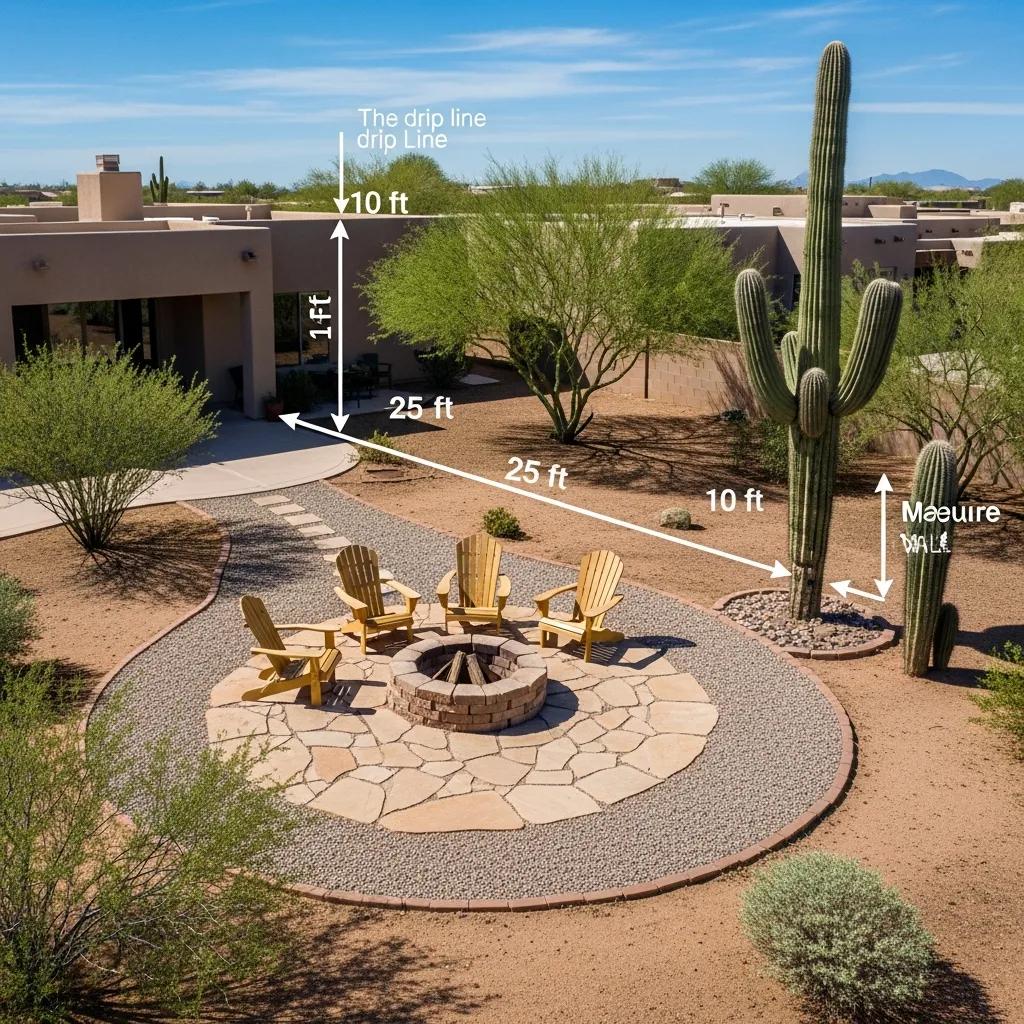
  1. Maintain minimum clearances: Keep flames at least 10 feet from structures and about 25 feet from large trees or combustible hedges whenever practical.
  2. Use non-combustible bases: Place fire pits on concrete, pavers, stone, or compacted gravel instead of wood or combustible decking.
  3. Control embers and sparks: Fit spark screens or arrestors and clear the surrounding area of loose mulch and dry leaves.
  4. Supervise at all times: Never leave an active fire unattended—assign a responsible adult to monitor conditions and wind changes.
  5. Keep extinguishing tools ready: Have a Class ABC extinguisher, a metal shovel, and a bucket of water or sand within reach.
  6. Avoid accelerants and banned materials: Never use gasoline, lighter fluid, treated wood, plastics, or household trash as fuel.

Choosing a Safe Location for Your Fire Pit or Fireplace

Pick a location by measuring horizontal and vertical clearances, checking prevailing winds, and planning sightlines to pools, patios, and walkways. Start with at least 10 feet horizontally from house eaves, overhangs, and utility lines, and increase distance when dense shrubs or combustible landscaping are present. Confirm there are no tree limbs, pergolas, or rooflines overhead—embers can travel up and ignite higher combustibles. Note wind patterns throughout the day and orient seating so smoke drifts away from the home and neighbors. A well-sited pit keeps sightlines clear for supervision, preserves safe walkways, and uses non-slip approaches to reduce trip hazards and ember contact.

Non-Combustible Materials for Safe Fire Pit Bases

Non-combustible bases limit heat transfer and stop direct contact between embers and combustible surfaces. Good options include poured concrete pads, interlocking pavers on compacted aggregate, natural stone slabs, or a compacted gravel bed with a steel burn ring. Don’t place pits directly on wooden decks unless an engineered heat shield and certified installation are used—extra clearance, a protective barrier, and frequent inspection are still required. For built-in pits, a metal burn ring or insert inside the masonry protects mortar and stone from cyclic heating and spalling. The right base also simplifies maintenance and cuts the chance of settling or cracks that create ember traps later on.

How Arizona Regulations and Permits Affect Outdoor Fire Features

Permit rules in Arizona vary by city and county and can determine whether a permanent masonry pit, a gas fireplace, or a portable wood unit needs a permit or inspection. Differences come from local building codes and wildfire risk assessments. Seasonal burn bans and air-quality advisories also affect what fuels and recreational fire times are allowed, so always check local rules before installing or using a fire feature. Common permit triggers include permanent gas hookups, built-in masonry work, and any changes to structural or utility systems; portable units used occasionally generally face fewer permit requirements but still must follow burn-ban rules. Preparing permit paperwork, following inspection checklists, and scheduling work around regulatory windows reduces delays and rework. If this feels complex, a professional can streamline approvals for homeowners aiming for compliant, high-end outdoor living.

Island Pools and Landscaping AZ designs luxury outdoor living spaces and routinely handles permit coordination as part of our installation process. We work with local authorities so safety and aesthetics align with construction milestones and inspection timelines.

Which Arizona Cities Typically Require Permits?

Permit requirements depend on whether the feature is permanent, tied into utilities, or part of a larger hardscape. Generally, permanent masonry fireplaces, built-in gas burners, and work involving gas-line extensions or structural changes will require a permit and often an inspection. Portable, freestanding units that aren’t attached to fuel lines may not need construction permits but still must meet setback and burn-ban rules. Processing times, required documents (plans, site sketches, gas specs), and inspection checklists vary by jurisdiction, so contact your city or county early to avoid surprises. When unsure, plan as if the feature is permanent—this conservative approach favors safety and compliance.

Remember: burn bans and seasonal restrictions can override typical permit allowances—check both permit rules and current burn status.

City/CountyPermit Required?Notes
Phoenix (Maricopa area jurisdictions vary)Often yes for permanent installationsPermanent fireplaces and gas-line hookups generally trigger permits and inspections
Tucson / Pima CountyYes for built-in or gas-connected featuresPortable units may be allowed with setbacks; confirm seasonal bans
Flagstaff / Coconino CountyFrequently yes, with wildfire-focused restrictionsHigher elevations and forested areas have stricter burn rules and shorter seasons

This matrix shows how requirements vary—verify both permit thresholds and seasonal restrictions locally.

Permit rules work alongside burn bans and wildfire alerts, which are the next operational step owners should check.

Current Burn Bans and Restrictions in Arizona

Burn bans are determined by local fire districts, county air-quality advisories, and statewide drought and wildfire alerts, and they directly affect whether wood-burning features are allowed. During high-risk periods, authorities may prohibit open burning and recreational fires, restrict charcoal and wood use, or permit only certified gas appliances with spark control. Always check alerts from your local fire department, county office, or the state forestry service before lighting a fire to avoid fines and reduce wildfire risk. If a ban is active, delay wood-burning activities or switch to approved gas or propane options that meet local rules. Carry a simple decision checklist—permit status, burn-ban status, and available extinguishing equipment—to keep outdoor living legal and safe.

Best Practices for Fuel Selection and Ember Prevention

Fuel choice has a big impact on ember production, smoke, and chemical hazards. Use well-seasoned hardwoods and manufactured logs rated for outdoor use when burning wood. Gas and propane systems produce fewer embers and are easier to control. Store fuels in a cool, dry spot away from structures and check moisture content before burning to avoid excessive smoke and hard-to-control fires. Combine good fuel choices with physical ember controls—spark screens, burn rings, and perimeter gravel—to reduce ember travel. The table below compares common fuel options to help you choose safely.

Below is a quick comparison of common fuel options and precautions.

Fuel TypeSafe to Burn?Notes/Precautions
Seasoned hardwood (oak, mesquite)YesLow moisture (<20%), high heat, fewer sparks; store dry and split
Manufactured fire logsYes, if rated for outdoor useConsistent burn and reduced sparks; follow manufacturer guidelines
Propane/gasYes (with certified installation)Clean burn, minimal embers; requires proper gas-line installation and shutoff

After choosing fuel, follow operational do’s and don’ts to further reduce risk and neighbor impacts.

Safe Wood and Fuel Choices for Outdoor Pits

Seasoned hardwoods like oak or native mesquite are preferred because lower moisture yields hotter, cleaner combustion with fewer sparks and less smoke. Manufactured logs made for outdoor use burn predictably and produce fewer embers when used per instructions. Professionally installed gas or propane systems produce minimal airborne embers and are often allowed during higher-risk periods when wood burning is restricted. Confirm wood is well-seasoned (ideally below 20% moisture) before burning, and store it off the ground under breathable cover to prevent mold. Fuel choice affects safety and neighbor comfort—consider smoke profile and scent, especially near pools and seating areas.

Materials You Should Never Burn

Do not burn treated, painted, or pressure-treated lumber, plywood, or particleboard—these release toxic fumes and can produce hot, unpredictable embers. Avoid plastics, glossy or coated paper, cardboard, yard trash, and household waste; they emit toxic smoke and can create molten droplets that start secondary fires. Never use accelerants like gasoline, lighter fluid, or alcohol to start or speed a fire—these cause explosive flare-ups and unpredictable heat. For yard waste, use municipal green-waste pickup, chipping, or composting instead of burning to protect air quality and reduce fire risk. Substitute seasoned wood or approved manufactured logs for safer burning.

Supervision and Safety Around Fire Pits for Children and Pets

Active supervision and physical separation are the best protections against burns and accidental contact. Create a clear safety zone with defined boundaries and seating placement, and enforce supervision whenever a fire is lit. Teach household members and guests simple rules—no running near the fire, keep flammable clothing away, and assign an adult to watch the burn. For pets, use training, leashes, or temporary gates to keep curious animals at a safe distance; pet fur and synthetic bedding can ignite quickly if embers land. Temporary barriers and clear signage help during gatherings or when alcohol is present.

Recommended Safe Zones and Distances

Set measurable safe distances by activity: seated adults should stay at least three feet from the pit edge; for active children and pets increase that to six to ten feet depending on fire size and wind. Arrange seating in a circular pattern with clear paths and keep play areas well outside the active zone. Consider a raised curb or low decorative wall as a visual and physical barrier. In windy conditions, increase clearances or switch to gas appliances to reduce ember travel. Temporary baby gates, outdoor safety screens, or marked rope lines add protection during events and can be removed afterward. These simple spatial rules give supervisors predictable boundaries to enforce.

Essential Safety Equipment for Outdoor Fire Pits

Keep a Class ABC fire extinguisher sized for residential outdoor use (a 2A:10B:C or larger is recommended), a metal shovel for spreading coals, a metal ash container with a lid for cooled ash, and a spark screen or arrestor sized to the pit opening. Store extinguishers and ash tools in a clearly marked, weather-protected spot within arm’s reach of the fire area and make sure household members know how to use them. A fire blanket helps with small clothing ignitions, and a bucket of sand or water can quickly suppress small embers. Inspect equipment regularly—check extinguisher pressure, screen mesh, and tool condition—so the right tools are ready if needed.

Proper Steps for Extinguishing and Maintenance

Thorough extinguishing removes residual heat that can smolder and spread, while regular maintenance prevents degradation that leads to unsafe conditions. For wood fires, let flames die down to embers, spread them to speed cooling, and slowly apply water or sand while stirring until no hot spots remain. Verify by cautiously checking for heat from a safe distance. For gas systems, shut off the fuel at the source and follow manufacturer cool-down guidance, and schedule periodic professional gas-line inspections. Regular tasks—ash removal, screen cleaning, mortar checks, and gas-valve inspections—prevent buildup and hidden hazards. The maintenance table below gives a simple schedule and tools so homeowners can adopt a repeatable routine.

Use this maintenance schedule and tool list to keep your fire feature safe and long-lasting.

TaskFrequencyTools/Method
Ash removalAfter each significant useMetal shovel and metal ash container with lid; ensure ash is cold before storage
Spark-screen and grate inspectionMonthly during seasonWire brush, heat-resistant gloves; replace screens with damaged mesh
Gas-line inspection and testingAnnually or after serviceLicensed technician, gas leak detector, pressure test per code

Following this schedule helps prevent hazards and extends the life of your fire feature.

How to Safely Extinguish Your Fire Pit or Fireplace

Follow a controlled sequence: reduce the flames, separate embers, cool, and verify. For wood fires, let flames fade until mostly coals remain, then spread the coals with a metal shovel to expose hotspots. Gradually add water or sand while stirring—avoid dumping large volumes that scatter ash and create steam. Continue until there’s no steam, sizzling, or glowing embers, then check for residual heat from a safe distance. Once cool, move ashes to a metal container with a lid for disposal or cold storage. For gas systems, turn off the control valve and main supply, follow manufacturer cool-down steps, and inspect fittings for leaks before the next use.

Routine Maintenance to Prevent Hazards and Damage

Routine maintenance stops structural decline and hidden risks—address ash buildup, mortar deterioration, creosote (in enclosed fireplaces), and gas-line integrity. Remove cooled ash after use to prevent moisture retention and corrosion. During heavy use, inspect screens, grates, and burn rings monthly for warping or cracks and replace worn parts. Annually, schedule a full inspection: check mortar joints, clean chimneys or flues where applicable, and have a licensed technician test gas lines. Repair structural damage—large cracks, spalling stone, or persistent odors—promptly to prevent worsening issues. Regular upkeep reduces fire risk and keeps the finish and value of your luxury outdoor space intact.

How Island Pools and Landscaping AZ Builds Safety into Luxury Fire Features

At Island Pools and Landscaping AZ we design and build luxury outdoor living spaces with safety integrated from concept to handover. Our process includes clearance modeling, specifying non-combustible surrounds, and coordinating with permitting authorities so installations meet both design and code requirements. In design we model radial clearances, sightlines to pools and structures, and wind patterns to optimize placement. We choose heat-resistant finishes, plan for drainage, and add ember-control details that protect aesthetics without compromising safety. Installation covers professional gas-line testing, proper foundations and anchoring, and a post-installation walkthrough that reviews operation, maintenance, and safety equipment placement. This methodical approach reduces liability, improves longevity, and delivers the high-quality finishes our clients expect.

Design Elements That Improve Safety in Custom Fire Features

Design choices that lower risk include raised hearths to limit direct contact, non-combustible surrounds like stone or concrete, integrated gravel or paver setbacks, and built-in ember-control screens or wind breaks. Designers balance comfort and clearance with raised planters or low walls to create visual separation while maintaining required distances. Specify finishes with high thermal tolerance and minimal spalling, and use a metal burn ring or stainless steel insert for wood-burning installations. Include drainage and clean-out access to prevent water retention and freeze/thaw damage in colder microclimates, and design for easy replacement of wear items like grates or screens. These details preserve a luxury look while keeping safety straightforward and maintainable.

Why Professional Installation Matters for Safety

Professional installation enforces quality checks that DIY projects can miss: correct foundation compaction, proper burner and gas-line sizing, certified gas connections with leak testing, secure anchoring, and documented inspections with local officials. Licensed installers confirm combustion air and venting for enclosed fireplaces and run post-installation combustion and leak tests for gas systems. A professional handover includes homeowner training on operation, extinguishing, and basic maintenance, plus a checklist of items that need scheduled professional service. Working with licensed professionals also streamlines permitting because they know local documentation and inspection requirements, reducing rework and ensuring code compliance. That discipline protects homeowners and preserves the value and beauty of luxury outdoor installations.

To request a consultation or see visual examples, ask us for a design review that covers clearance modeling, material samples, and photo callouts of completed projects showing how safety and luxury come together. Island Pools and Landscaping AZ focuses on detail, clear communication, and top-quality materials and installation—contact us to discuss site-specific safety and design options.

Frequently Asked Questions

What should I do if I notice a burn ban in my area?

If a burn ban is in effect, follow local rules to avoid fines and reduce wildfire risk. During bans, recreational fires may be prohibited. Consider using gas or propane appliances that comply with local standards if permitted. Always confirm current restrictions with your local fire department or county office before using any outdoor fire feature.

How can I safely store firewood for my outdoor fire pit?

Store firewood in a cool, dry place away from structures and combustible materials. Stack wood off the ground on a rack to promote airflow and speed drying. Use a breathable cover over the top of the pile to protect from rain but allow moisture to escape. Aim for well-seasoned wood—ideally below 20% moisture—to reduce smoke and sparks.

What are the signs that my outdoor fire pit needs maintenance?

Look for visible cracks or spalling in masonry, rusted metal components, or heavy ash and debris buildup that blocks airflow. Excessive smoke or difficulty keeping a flame can indicate a blockage or structural issue. Inspect spark screens for damage and have gas lines checked if you suspect leaks. Address issues promptly to prevent hazards and costly repairs.

How can I create a safe environment for children around fire pits?

Set a clear safety zone of at least six to ten feet for active children, use physical barriers like baby gates or low walls, and keep seating arrangements away from the fire edge. Teach children fire safety rules—no running near the fire—and always assign an adult to supervise when the fire is lit. Non-combustible seating and visible boundaries help reduce accidental access.

What should I do if my fire pit produces excessive smoke?

Check your fuel first: wet or unseasoned wood produces more smoke. Use well-seasoned hardwood or approved manufactured logs. Inspect the pit for restricted airflow or chimney blockages and rearrange the wood to improve ventilation. If the issue continues, call a professional for a thorough inspection and maintenance.

Are there specific materials I should avoid when building a fire pit?

Avoid combustible materials such as wood or treated lumber and materials that emit toxic fumes when heated—plastics, painted wood, or particleboard. Use non-combustible materials like stone, brick, or concrete for longevity and safety. Proper material choice is essential for a durable, safe fire feature.

How often should I inspect my outdoor fire pit for safety?

Inspect your fire pit at least monthly during the burning season and after each heavy use. Check for structural cracks, damaged spark screens, and secure, leak-free gas lines. Clean out ash and debris to maintain airflow. A consistent inspection routine helps you catch problems early and keeps operation safe.

Conclusion

Following these safety guidelines helps reduce wildfire risk while letting you enjoy your outdoor space. By matching local rules with good practices—proper siting, sensible fuel choice, regular maintenance, and responsible supervision—you create a safer backyard for family and friends. Ready to combine safety and luxury? Contact a professional to plan and install a fire feature that fits your site and meets local codes. Explore our services to bring safe, beautiful outdoor living to your home.

Partnering with Industry Leaders: Paramount & Pentair

Partnering with Industry Leaders: Paramount & Pentair

Arizona Luxury Pool Remodels with Paramount & Pentair — Trusted Equipment, Lasting Results

Luxury pool remodels that specify industry leaders like Paramount and Pentair pair proven equipment engineering with design-forward systems to create low‑maintenance, energy‑smart backyards for discerning homeowners. Below we show how manufacturer-grade components—better circulation, integrated cleaning, advanced automation, and improved sanitation—change a pool’s lifecycle and everyday experience in Arizona. Many owners wrestle with surprise maintenance costs, inconsistent water quality, and the tension between dramatic design and reliable operation; aligning with trusted suppliers solves those pain points by bringing durable mechanics and intelligent controls into the plan from day one. Scroll on for a clear comparison of Paramount and Pentair offerings (think Paramount PCC2000 and Pentair IntelliFlo3), real project outcomes, and practical next steps for a remodel that balances performance with beautiful design.

Why Partner with Paramount and Pentair for Luxury Pool Remodeling?

Paramount and Pentair build equipment that emphasizes mechanical reliability, modular innovation, and long-term parts availability—so you spend less time fixing gear and more time enjoying the backyard. Specifying manufacturer‑grade components improves circulation, filtration, and automation capabilities, which lowers lifetime operating costs and reduces routine maintenance for homeowners. Factory warranties and established supply chains also protect remodel investments by making parts and technical support easier to get than with commodity equipment, helping preserve resale value and peace of mind. Compared with generic gear, these suppliers offer deeper integration paths for lighting, sanitization, and in‑floor cleaning that designers can confidently include in complex remodels.

For high‑end projects, working with Paramount and Pentair delivers clear homeowner outcomes and greater design freedom. With trusted equipment specified early, designers can add water features, negative edges, and custom geometries without sacrificing hydraulic performance. Coordinated control protocols mean automation and features operate as a cohesive system, cutting the need for on‑site workarounds. Knowing these advantages helps homeowners prioritize equipment choices during the design phase.

  • Key benefits of partnering with Paramount and Pentair:

    Reliability: Heavy‑duty components cut failures and downtime.
    Innovation: Advanced cleaning and automation add convenience.
    Efficiency: Variable‑speed pumps and smart controls lower energy use.
    Support: Easier parts sourcing and manufacturer guidance protect your investment.

Put simply: the result is a backyard that runs predictably and looks exceptional with less hands‑on care from the owner. Next, we explain how Paramount’s in‑floor cleaning systems do much of that work by using engineered circulation patterns.

Island Pool and Landscaping maintains dealer relationships with both Paramount and Pentair so those manufacturer advantages translate into confident product selection, warranty coordination, and retrofit or new‑build installation options. Our role is to match equipment to your project goals while preserving the technical benefits and inviting you to a consult to explore upgrades.

What advantages do Paramount and Pentair bring to high-end pool projects?

Paramount and Pentair supply engineered subsystems—cleaning, circulation, automation, and sanitation—designed to work together reliably in complex pool geometries. Their components are manufactured to tighter tolerances and include sealed motors, modular electronics, and standardized control interfaces that simplify integration with lighting and water features. For homeowners, that means fewer service calls, longer intervals between maintenance, and steady performance across Arizona’s seasons. Brand documentation and dealer networks also make sourcing parts and scheduling professional service simpler when you need it.

Those supplier strengths also unlock design options: engineers and landscape architects can specify in‑floor jets, variable‑speed pumps, and automated controls without resorting to risky custom fixes. That predictability supports elevated features—vanishing edges, raised spas, integrated water kitchens—while keeping mechanical systems accessible for routine service. With these benefits in view, the next subsection shows how partnerships turn into measurable performance and reliability gains.

How do these partnerships enhance pool performance and reliability?

Working with established manufacturers improves performance by combining component engineering (pumps, valves, jets) with system‑level controls that optimize flow and sanitation automatically. Variable‑speed pumps and coordinated automation reduce runtime and stabilize turnover rates, which improves clarity and lessens chemical volatility—critical for maintaining luxury finishes. Quality control at the factory also reduces premature seal failures, motor burnouts, and electronic faults you might see with lower‑cost equipment. For homeowners, better engineering means fewer surprises, steadier water quality, and a more worry‑free ownership experience.

Integrated systems further reduce human‑error maintenance: automation handles schedules, exception alerts, and interlocks for heaters, cleaners, and sanitizers. That prevents risky sequences—like running a heater without proper circulation—that can stress equipment and surfaces. Those protections preserve pool assets and minimize lifetime service interruptions. With that foundation explained, the next major section looks at how Paramount’s in‑floor cleaning systems cut down on manual maintenance.

How Do Paramount In-Floor Cleaning Systems Revolutionize Pool Maintenance?

Paramount’s in‑floor cleaning systems sweep pool surfaces with timed jet sequences that move debris toward collection points, reducing skimming and vacuuming while improving chemical distribution. A network of in‑floor outlets and timed valves generates currents that dislodge fine and coarse debris across shallow shelves and deep ends, sending waste to returns or drains. The net effect: cleaner surfaces, more even sanitizer distribution, and less reliance on handheld or robotic cleaners—especially important when preserving luxury finishes and clear sightlines. In‑floor hardware also fits neatly into complex geometries and water features, keeping the look clean while the system works out of sight.

Before comparing models, here’s a concise table comparing Paramount’s main in‑floor systems to help you choose the right solution for a remodel or retrofit.

ModelCleaning MethodRetrofit CompatibilityIdeal Project Type
PCC2000Timed sweep with synchronized jetsBest for new construction; limited retrofit optionsLarge custom pools with complex geometry
PV3High‑coverage directional jetsRetrofit‑friendly for many existing shellsRenovations seeking broader floor coverage
VanishLow‑profile, vanishing‑jet integrationWorks well in aesthetic‑focused remodelsPools prioritizing discreet hardware
VantageZoned control with targeted jetsDesigned for modular installs and staged upgradesHigh‑end remodels needing precise debris control

This comparison shows how each system balances coverage, retrofit potential, and aesthetics so you can pick what fits your build type, shell shape, and maintenance goals.

Paramount systems cut long‑term maintenance by consistently moving debris and improving circulation, which helps stabilize chemical levels. That translates into fewer service visits and less reliance on labor‑intensive cleaning routines. The sections below break down key model features and describe how in‑floor cleaning delivers measurable time and operational savings.

What are the key features of Paramount's PCC2000, PV3, Vanish, and Vantage systems?

Each Paramount model has a clear focus: coverage, retrofit ease, invisibility, or zoned control. The PCC2000 is built for wide‑sweep coverage in large custom shells and handles heavier debris patterns. PV3 strikes a balance—strong performance with retrofit flexibility—so it’s popular for upgrades that avoid full demolition. Vanish emphasizes aesthetics with outlets that blend into the finish, ideal where visible hardware is a concern. Vantage provides zoned control and modular expansion for precise schedules and easier future upgrades.

Installation timing matters: PCC2000 and Vantage are best specified early so plumbing and hydraulics are optimized, while PV3 and Vanish can often be added during targeted renovations. Control needs vary too—some systems require timed valves or dedicated controllers—so coordinate with your automation platform during engineering. These distinctions help homeowners and designers match mechanical performance to visual and budget priorities.

How do in-floor cleaning systems reduce maintenance and improve water quality?

In‑floor systems use directed jet patterns and scheduled cycles to move debris from floors and shallow shelves toward drains or filtration intakes, cutting the need for manual skimming and robotic cleanings. That steady, gentle circulation also evens out chemical distribution, reducing sanitizer spikes and stabilizing pH—both of which help protect finishes and clarity. Homeowners typically see fewer weekly hands‑on cleaning hours and a simpler chemical routine. In Arizona, where dust and windblown debris are common, in‑floor systems noticeably reduce visible build‑up and can shorten total filtration runtime.

Beyond time savings, better circulation eases wear on skimmers and portable vacuums, extending accessory life and lowering replacement frequency. The overall result is a cleaner‑looking pool with less operational hassle—an attractive outcome when a remodel aims for both beauty and convenience. With cleaning explained, the next section covers Pentair’s smart technologies that automate and optimize those mechanical systems.

What Smart Pool Technologies Does Pentair Offer for Modern Luxury Pools?

Pentair provides a full ecosystem—automation hubs, variable‑speed pumps, sanitization modules, and ozone options—that simplifies control, cuts energy use, and reduces maintenance for modern luxury pools. These systems let you schedule remotely, create scene presets for lighting and features, and optimize hydraulics to lower runtime and stabilize chemistry. Pairing Pentair automation with Paramount cleaning and properly sized hydraulics creates an interoperable system that improves user experience and lowers lifecycle costs. The table below clarifies control features, energy potential, sanitation results, and homeowner value.

SystemPrimary Control/FeatureTypical Benefit
IntelliCenterCentral automation hub with app controlRemote scheduling, scene presets, and system monitoring
IntelliFlo3Variable‑speed pump with optimized hydraulicsMeaningful energy savings and quieter operation
IntelliChlorSalt chlorine generator controlConsistent chlorine production with less chemical handling
Clear O3Ozone sanitization moduleImproved oxidation and reduced chemical demand

Use this table to weigh ease of control against energy and sanitation priorities—each component reduces operational burden while supporting luxury features.

Pentair’s automation focuses on a homeowner‑friendly interface and reliable scheduling that handles cleaning cycles, heater operation, and feature sequencing without constant attention. Scene controls let you create “party,” “relax,” or “maintenance” modes that run pumps, lights, and water features together. That automation lessens daily decision fatigue and protects system longevity by enforcing correct operating sequences. The sections below dig into IntelliCenter and IntelliFlo3 in more detail.

How does Pentair IntelliCenter enable remote pool automation and control?

IntelliCenter is a centralized control hub that ties pumps, heaters, cleaners, sanitizers, and lighting into one scheduleable, remotely accessible interface. Owners can set daily cleaning windows, temperature hold points, and entertainment scenes from an app—reducing on‑site tinkering. Remote status visibility helps service techs diagnose issues faster, cutting time‑to‑service and downtime. Where desired, IntelliCenter can integrate with whole‑home automation when electrical and control pathways are planned during remodeling.

IntelliCenter’s scheduling and scene features simplify owner interaction and protect hydraulic and electrical efficiency by preventing conflicting equipment calls. That consistency matters for luxury remodels with multiple features and pool/spa interactions that must coordinate precisely. Next, we quantify energy savings tied to variable‑speed pumping.

What energy-saving benefits do Pentair IntelliFlo3 pumps provide?

IntelliFlo3 variable‑speed pumps reduce energy use by matching motor speed to hydraulic demand instead of running at one constant speed. Lower speeds during filtration and idle circulation translate into measurable operating‑cost reductions and much quieter running—improving backyard comfort. Typical savings versus single‑speed pumps vary with runtime and local rates, but upgrades usually yield significant percent reductions. The pump’s flexibility also lets owners schedule heavy runs for off‑peak hours. Reduced mechanical stress from variable operation extends motor life and lowers replacement frequency over the pump’s lifecycle.

When paired with smart scheduling, variable‑speed pumps avoid wasted runtime and let designers dial flow for delicate water features without oversizing equipment. That precision improves energy performance and supports refined hydrodynamic effects that matter to the look and sound of luxury pools. After Pentair, the next section explains how Island Pool and Landscaping integrates these products into custom remodels.

How Does Island Pool and Landscaping Integrate Paramount and Pentair Products into Custom Pool Designs?

We integrate manufacturer equipment into luxury remodels through a coordinated process that aligns homeowner goals with product capabilities, engineering needs, and construction sequencing. Our services include consultation, custom pool design, outdoor living design and build, landscaping, artificial turf installation, project management, and a final walkthrough to confirm satisfaction—steps that make sure equipment choices meet lifestyle and maintenance expectations. During planning we treat equipment as an engineering constraint that guides plumbing layout, control locations, and service access so aesthetics and long‑term operability are preserved. Project management coordinates warranties and commissioning so you receive a documented handoff and clear maintenance plan.

Our integration process emphasizes communication between design, mechanical, and landscape teams so lighting, water features, and outdoor kitchens complement Paramount and Pentair systems without creating service conflicts. That coordination keeps automation, pumps, and cleaners accessible yet discreet, maintaining the luxury look while allowing routine servicing. Homeowners benefit from a single‑source approach that manages product selection, warranty coordination, and commissioning as part of the remodel.

What is the process for incorporating industry-leading equipment into luxury remodels?

We start with an on‑site consultation and discovery to document goals, existing equipment, and constraints. From there we produce a conceptual design that maps aesthetic intent to hydraulic and electrical requirements. Next we select equipment—Paramount in‑floor systems or Pentair pumps and automation—to match the design, then create engineering and construction documents that place plumbing, conduits, and service access correctly. Installation and commissioning finish the project with functional testing, system programming, and a homeowner walkthrough that explains automation, maintenance expectations, and warranty coordination. This staged approach minimizes surprises and protects finished surfaces during retrofit work.

Each phase includes homeowner touchpoints and clear timelines so you know when equipment decisions affect design or budget. Retrofit projects get a careful compatibility review to avoid unnecessary demolition while meeting performance goals. With process covered, the next subsection shows how outdoor living features are planned around equipment needs.

How do custom outdoor living features complement Paramount and Pentair technologies?

We design outdoor kitchens, fire features, integrated lighting, and landscaping in tandem with pool systems so electrical loads, control zones, and staging work together. Automation hubs are placed to balance service access with discreet placement, and lighting circuits are wired to sync with Pentair scene presets for unified ambiance. Water features and spillways are engineered to match pump capacities and cleaning flow so they don’t interfere with debris handling. Landscape plans include maintenance access and plant/turf choices that reduce windblown debris, helping in‑floor cleaning and filtration perform well in Arizona conditions.

Planning outdoor living with mechanical systems prevents last‑minute compromises that hurt either performance or appearance. Early coordination lets remodel teams deliver cohesive backyard environments where technology supports the intended experience rather than complicating it. After integration strategies, the next section shares real project outcomes with measurable results.

What Are Real-World Benefits and Case Studies Featuring Paramount and Pentair Equipment?

Real projects show that pairing in‑floor cleaning with variable‑speed pumps and automation delivers tangible gains: less manual cleaning, clearer water, and lower energy use. Conservatively reported outcomes include fewer owner maintenance hours and shorter primary pump runtimes when variable‑speed controls and optimized schedules are applied. These case metrics help set realistic ROI expectations and show where maintenance relief is most likely with Paramount and Pentair systems in a luxury remodel.

Project TypeEquipment UsedMeasured Outcome
Remodel (dust‑prone site)Paramount PV3 + Pentair IntelliFlo3Noticeable drop in weekly skimming; lower filtration runtime
New build (complex geometry)PCC2000 + IntelliCenterCleaner surfaces via automated schedules; consistent water clarity
Luxury backyard overhaulVanish outlets + IntelliChlorReduced visible hardware; more stable sanitizer levels

This summary presents conservative, aggregated results rather than guaranteed returns, but it illustrates the common benefits: less manual work, clearer water, and stronger operational control. The sections that follow describe homeowner outcomes and measurable improvements across projects.

How have high-end Arizona homeowners benefited from these partnerships?

High‑end owners report more time entertaining and less time on pool chores after adding in‑floor cleaning and automation. Invisible cleaning hardware paired with smart controls lets hosts set mood and service modes without constant input, making the backyard easier to use for events and daily life. Manufacturer‑backed systems also reduce uncertainty around maintenance schedules and parts replacement, which helps owners plan long‑term. Together these outcomes position a remodeled pool as both a design statement and a practical asset.

Those lifestyle gains matter in Arizona, where extended outdoor seasons and wind bring frequent debris. Addressing those conditions with coordinated equipment selection gives owners a more consistent ownership experience that supports entertaining and relaxation. With homeowner outcomes covered, the next subsection summarizes measurable energy and maintenance improvements.

What measurable energy savings and maintenance improvements have been achieved?

Typical improvements include reduced pump runtime from variable‑speed optimization and fewer hands‑on cleaning hours when in‑floor systems handle routine debris. Energy savings depend on runtime and local rates, but conservative estimates show meaningful reductions when single‑speed pumps are replaced and schedules are optimized. Maintenance improvements show up as fewer weekly interventions and less wear on portable cleaners and skimmer baskets, lowering accessory replacement frequency. While exact numbers vary by site, the consistent trends—lower energy use, reduced manual maintenance, and steadier chemistry—make supplier‑grade systems compelling for high‑end remodel budgets.

Project monitoring commonly pairs runtime logs with homeowner‑reported maintenance hours to build a realistic baseline for expected gains. Those paired measurements inform ROI conversations during design and help prioritize which systems to include. With outcomes and metrics addressed, the final section explains how Arizona homeowners can start a remodel.

How Can High-End Homeowners in Arizona Start Their Luxury Pool Remodeling Journey?

Begin a luxury pool remodel with clear priorities, an understanding of equipment options, and a staged process that balances design goals with system requirements. Prepare photos, top goals, and a budget range to guide the first conversation, then schedule an on‑site assessment so a provider can evaluate hydraulics and retrofit feasibility. Expect a planning sequence: consultation, conceptual design, equipment selection and estimate, then construction and commissioning—steps that ensure Paramount and Pentair systems are integrated correctly. The checklist below outlines a homeowner‑focused path to get started.

  1. Request an initial consultation: Share photos and your goals to start the discovery process.
  2. Receive a site assessment: Have a pro evaluate hydraulics, finishes, and retrofit options.
  3. Review conceptual design and estimate: Compare equipment choices and operational implications.
  4. Approve schedule and begin construction: Coordinate project management and commissioning.

Following these steps helps homeowners make informed equipment choices and sets clear expectations for timeline and outcomes. The next two sections describe Island Pool and Landscaping’s services and how to request a personalized consult.

What consultation and design services does Island Pool and Landscaping offer?

Island Pool and Landscaping provides consultation, custom pool design, project management, outdoor living design and build, artificial turf installation, and a final walkthrough to confirm satisfaction. These services support Paramount and Pentair integrations by ensuring product selection is written into drawings, construction sequencing preserves mechanical access, and commissioning includes homeowner orientation. Our project management coordinates trades and warranty handoffs so the finished pool operates as intended. Homeowners get the convenience of a single team managing design and technical details.

These services support both new builds and remodels by addressing design, equipment selection, landscape context, and ongoing maintenance expectations during planning. The final section explains how to schedule an initial consult and what to prepare.

How to schedule a personalized consultation for Paramount and Pentair integrated pools?

To schedule a consultation, gather project photos, summarize your goals (maintenance reduction, automation, energy savings, or aesthetic aims), and provide a rough budget range to make the discovery call efficient. Use Island Pool and Landscaping’s website or Google Business Profile to request an appointment and note interest in Paramount and Pentair integrations so the initial visit includes a compatibility check. Expect a follow‑up to arrange an on‑site assessment where we document hydraulics, electrical access, and finish conditions to produce a conceptual design and estimate. This prep accelerates decision points and ensures early equipment choices support both the look and operation you want.

Follow this approach and you’ll move from inspiration to a technically sound plan that leverages Paramount in‑floor cleaning and Pentair automation to create a low‑maintenance, energy‑efficient luxury pool tailored to your lifestyle.

Frequently Asked Questions

What is the typical timeline for a luxury pool remodel?

Timelines vary with complexity, size, and features. Expect initial consultations and design to take a few weeks, while construction generally runs four to twelve weeks for most remodels. Factors like permitting, material lead times, and weather can extend that window. We’ll provide a more accurate schedule once we assess scope and site conditions.

How do I choose the right in-floor cleaning system for my pool?

Choosing the right system depends on pool size, shape, and existing infrastructure. Paramount’s PCC2000 suits large custom shells, while PV3 is often a retrofit choice. Consider debris type, weekly maintenance goals, and how visible you want hardware to be. A professional site assessment will confirm compatibility and recommend the best fit.

What maintenance is required for Pentair's smart pool technologies?

Pentair systems reduce manual tasks, but they still need routine checks: inspect the variable‑speed pump for wear, clean or replace filters, and confirm automation schedules and sensors are operating correctly. Monitor chemistry regularly and service sanitization modules like IntelliChlor per manufacturer guidance. An annual professional tune‑up helps keep everything running efficiently.

Can I retrofit my existing pool with Paramount and Pentair systems?

Yes—many Paramount and Pentair products are retrofit‑friendly. PV3, for example, is designed for many existing shells so you can upgrade without a full rebuild. Feasibility depends on your pool’s current layout and condition; a site inspection will show what’s possible and cost‑effective.

What are the energy-saving benefits of using variable-speed pumps?

Variable‑speed pumps like Pentair’s IntelliFlo3 adjust power to match demand, cutting energy use during low‑flow tasks such as filtration. That can lead to notable reductions in utility bills and quieter operation. Savings depend on runtime and local rates, but upgrades from single‑speed pumps typically deliver measurable improvements.

How do I ensure my luxury pool design remains aesthetically pleasing while incorporating technology?

Plan equipment early and work with designers familiar with discreet integrations. Choose low‑profile options like Vanish outlets and place control hubs and service access where they won’t disrupt the view. Coordinating lighting, water features, and control zones during design keeps the visual result cohesive and beautiful.

What should I prepare for my initial consultation regarding a luxury pool remodel?

Bring photos of your pool and inspiration images, a short list of goals (maintenance, automation, energy, aesthetics), and a budget range. This information helps us provide focused recommendations and speeds up the discovery process so we can propose realistic options and next steps.

Conclusion

Specifying industry leaders like Paramount and Pentair in a luxury remodel gives homeowners reliable, innovative, and efficient systems that improve both performance and appearance. These technologies lower maintenance effort, stabilize water quality, and reduce energy use—making them smart investments for high‑end properties. With the right equipment and an experienced team, you can create a stunning, low‑maintenance oasis that fits your lifestyle. Ready to get started? Schedule a consultation with our team to explore options and next steps.

Integrating Outdoor Entertainment Systems in Your Backyard

Integrating Outdoor Entertainment Systems in Your Backyard

Bring Luxury Outdoor Entertainment to Your Backyard — Designed for Arizona Living

A luxury outdoor entertainment system combines weather-rated audiovisual equipment, landscape‑aware installation, and smart automation to turn your backyard into a space that entertains, relaxes, and enhances daily life. This guide walks through what those systems include, why they matter for today’s homeowners, and how outdoor TV installation, weatherproof speakers, and smart tech work together to create poolside movie nights and multi‑zone audio. Homeowners often want high‑quality sound, bright all‑weather displays, and discreet integration that stands up to Arizona’s sun and dust. We cover design possibilities, the key AV and network components to specify, smart automation scenarios, a step‑by‑step design and install process, why a local design‑build partner helps, and long‑term maintenance and upgrade strategies. By the end you’ll know how to plan outdoor AV integration, what to ask your installer, and how to future‑proof poolside entertainment for years of enjoyment.

How Can You Transform Your Backyard with Luxury Outdoor Entertainment Systems?

Luxury outdoor entertainment transforms a yard by blending rugged AV gear with thoughtful landscape design to create areas for movies, sports, and socializing. These systems pair weatherproof displays and speakers with amplifiers, networked control, and layered lighting scenes to shape moods and define functional zones around pools, patios, and lawns. The payoff is a backyard that functions like an outdoor living room or private theater—boosting lifestyle value and giving you more reasons to use the space year‑round. Knowing how these transformations work helps you prioritize the zones and scenes that matter before choosing equipment or signing off on installation.

Common transformation types we design include:

  • Poolside cinema setups with bright, sun‑readable displays and directional speakers for clear movie sound under the stars.
  • Integrated patio living rooms with covered or retractable screens and multi‑zone audio that extend indoor comfort outside.
  • Distributed audio across pool, dining, and garden areas so music and volume follow activity.
  • Mood‑driven lighting and automation that ties AV, irrigation, and climate controls together for effortless hosting.

These approaches deliver lifestyle benefits and measurable resale value, and they inform the equipment and installer choices that fit local conditions.

H3: What Makes Outdoor Entertainment Essential for Modern Backyards?

Outdoor entertainment matters because homeowners now treat exterior spaces as extensions of their home—for daily use, socializing, and quiet retreats. Outdoor sound and poolside systems deliver background music, cinematic audio, and clear commentary for sports gatherings while solving challenges indoor systems don’t face, like glare, reflections, and exposure to weather. With more time spent outdoors, the right mix of multi‑zone audio, durable displays, and smart lighting supports a wide range of activities throughout the year. Identifying those use cases early helps define viewing distances, speaker coverage, and the brightness and weather ratings your displays need.

Those practical requirements lead to the next step: choosing components that withstand heat, UV, and moisture while preserving the look of your landscape.

H3: How Does Island Pools and Landscaping AZ Create Seamless Outdoor Experiences?

Island Pools and Landscaping AZ works as a design‑build partner that coordinates custom pools, landscapes, and outdoor technology so everything feels intentional and lasts. Our team designs pools and yards with AV integration in mind—selecting durable materials, planning equipment placement, and ensuring access for service. Working with one firm eliminates finger‑pointing between trades, improves placement decisions for screens and speakers, and protects the overall aesthetic. That single‑team approach streamlines installation and supports long‑term reliability by aligning hardscape, enclosures, and service access from the start.

That collaboration sets the stage for choosing hardware that’s specified for Arizona conditions—starting with displays and speakers rated for the desert.

What Are the Key Components of a High-End Outdoor Entertainment System?

A high‑end outdoor entertainment system groups into four core areas: all‑weather displays, weatherproof speakers and buried subwoofers, robust amplification and control electronics, and outdoor‑grade network and power infrastructure. Each element must meet weather and brightness requirements and be mounted so it performs reliably—pay attention to sun‑facing brightness (nits), IP ratings, and display ventilation, plus speaker placement to avoid acoustic dead zones near water. Designing these parts as an integrated whole—outdoor TV installation, sound system layout, and Wi‑Fi/mesh coverage—keeps performance consistent for backyard cinemas and poolside entertainment.

The essential components include:

  1. Outdoor TV or display: A weatherproof, high‑brightness display with UV‑resistant enclosure for direct sun viewing.
  2. Outdoor speakers and subwoofers: Landscape or bollard speakers and buried subwoofers for even coverage with low visual impact.
  3. Amplification, receivers, and control: Weather‑rated amps and smart controllers for scene recall and multi‑zone routing.
  4. Networking and power: Outdoor‑capable mesh nodes, surge protection, and sealed power enclosures for dependable streaming and control.

Below is a concise comparison to help guide product selection before you consult an installer.

ComponentKey AttributeTypical Consideration
Outdoor DisplayBrightness & IP ratingSpecify 1500–2000+ nits for sun‑facing installs; IP65+ enclosures limit dust/moisture and UV exposure
Outdoor SpeakersDispersion & mountingWide dispersion for patios; buried subwoofers add bass without visible cabinets
Amplifier / ReceiverWeatherproofing & channelsRack‑mounted gear with ventilation or dedicated outdoor enclosures for protection
Wi‑Fi / MeshCoverage & latencyPlace mesh nodes near living areas to support streaming and reliable smart‑tech control

Which Weatherproof Outdoor TVs Are Best Suited for Arizona Climates?

In Arizona, choose displays engineered for high ambient brightness, active thermal management, and UV‑resistant housings to avoid sun and heat damage. Ask for specs on nits for daytime visibility, IP ratings to keep out dust and moisture, and whether the unit uses active cooling or passive heat dissipation. Homeowners and installers commonly compare purpose‑built outdoor display lines—ask about warranties for direct‑sun installs and recommended mounting clearances. Picking the right display also dictates speaker placement, shading, and viewing comfort strategies.

That decision then informs the overall layout to optimize sightlines and shade wherever possible.

How Do Integrated Outdoor Speaker Systems Enhance Your Backyard Ambiance?

Integrated outdoor speaker systems shape ambiance by delivering even, balanced sound across defined backyard zones while staying visually discreet. Landscape speakers hide in planting beds, bollard speakers guide sound along paths, and buried subwoofers add bass without visible boxes—so a mixed approach usually works best. Placement takes into account listening positions, reflections from hard surfaces, and neighbor concerns; concealing components in planters or behind features preserves the look. Good audio design ties directly into lighting and automation so music and movie soundtracks complement the scene rather than compete with it.

Those placement and aesthetic choices naturally lead to automation strategies that sync lighting, AV, and irrigation for smooth control.

How Can Smart Backyard Automation Elevate Your Outdoor Living Space?

Smart automation ties lighting scenes, AV control, irrigation, and climate devices together so one command sets mood, comfort, and utility. A single “movie night” action can dim landscape lights, send audio to patio speakers, lower a screen, and turn on heaters—so complex coordination happens automatically. Common integration points include voice assistants, app scene control, and central hubs that manage multi‑zone audio and lighting while respecting network limits. Homeowners get convenience, energy savings through scheduling, improved security with simulated occupancy, and consistent ambiance for entertaining.

Below is a simple mapping of common smart features to homeowner benefits to clarify trade‑offs.

Smart FeatureIntegrated FunctionPrimary Benefit
Smart Lighting ScenesColor, dimming, schedulingEasy ambiance control and reduced energy use
AV Scene ControlMulti‑zone routing, presetsSmooth transitions between activities
Smart IrrigationScheduled watering, weather‑basedWater savings and healthier plants
Climate DevicesHeaters/fans with schedulesComfort that extends your outdoor season

What Smart Home Features Integrate with Outdoor Entertainment Systems?

Features that integrate well include lighting control platforms, multi‑zone AV controllers, voice assistants, smart irrigation controllers, and networked climate devices like patio heaters and fans. Those integrations enable scenes—party mode, for example—where paths light up, a playlist starts, and irrigation pauses during the event, all from one app or voice command. You can choose a central hub for orchestrating scenes, direct cloud integrations for remote access, or local control for lower latency and reliability. Picking a control strategy early avoids vendor lock‑in and keeps future upgrades straightforward.

Choosing integration points also shapes the installation sequence and ensures your network can handle the load.

How Does Smart Landscape Lighting Improve Mood and Security?

Smart landscape lighting improves both mood and safety with dimmable fixtures, adjustable color temperature, motion triggers, and schedules that support activities and deter intruders. Warm, layered lighting creates inviting dining and relaxation areas, while path and step lighting keeps everyone safe after dark. Motion‑activated fixtures add security without wasting energy, and automation can simulate occupancy when you’re away. Selecting durable fixtures and protecting power connections ensures scenes remain consistent and fixtures last longer.

Those lighting decisions feed directly into the design and installation plan that makes scenes come to life.

What Is the Process for Designing and Installing a Custom Outdoor Home Theater?

Designing and installing a custom outdoor theater follows a reliable sequence: initial consultation and visioning, system design and product selection, coordinated installation with trades, then testing and ongoing support. This phased approach makes sure choices—screen size, speaker layout, and network topology—match homeowner expectations and site realities like sightlines, sun paths, and power access. Expect measured site surveys, renderings or mock‑ups, and tight coordination among electrician, landscape contractor, and AV installer to protect aesthetics and function. After commissioning, documented testing and a maintenance plan keep performance predictable and reduce service calls.

The steps below summarize typical workflow and timeline.

  1. Consultation and vision planning: Capture use cases, budget, viewing distances, and long‑term goals.
  2. Design and product selection: Specify displays, speakers, amps, and automation rated for local climate.
  3. Installation and coordination: Sequence trades, install mounts and wiring, and protect gear with enclosures.
  4. Testing, commissioning, and support: Calibrate audio/video, program scenes, and set up maintenance protocols.

How Does Consultation and Vision Planning Ensure Personalized Solutions?

Consultation and vision planning make solutions personal by documenting lifestyle needs, preferred activities, budget parameters, and site constraints before choosing gear. Installers gather details like typical audience size, primary viewing spots, audio coverage goals, nearby reflective surfaces, and available power/network access. That checklist‑driven process aligns product performance—brightness, speaker dispersion, and mountings—with practical realities like sun orientation and wiring routes. A thorough vision phase reduces rework and results in placements and products that satisfy over the long term.

A detailed plan then moves smoothly into installation and testing where those decisions are realized.

What Are the Steps for Professional Installation and Ongoing Support?

Professional installation follows staged milestones: site prep and conduit rough‑in, mounting and wiring of displays and speakers, enclosure and weatherproofing work, then detailed audio/video calibration and scene programming. Roles typically include a design‑build lead coordinating landscapers and electricians, an AV installer handling integration, and a commissioning tech validating performance. At handoff, homeowners receive documentation on settings, firmware update steps, and seasonal checks. Service agreements or maintenance plans that cover firmware updates, warranty coordination, and annual inspections help preserve uptime and protect the investment.

Clear responsibilities and proactive support reduce downtime and make future upgrades simpler.

Why Choose Island Pools and Landscaping AZ for Your Outdoor Entertainment Integration?

Island Pools and Landscaping AZ brings full design‑build experience to integrated outdoor projects—combining custom pools and landscapes with AV integration and a focus on quality, detail, and customer care. Working with a single firm that understands hardscape, softscape, and AV placement reduces coordination friction, simplifies warranty handling, and ensures equipment is installed for peak performance and easy service access. Our portfolio of luxury backyard projects emphasizes cohesive aesthetics and durable installations that address Arizona‑specific issues like heat, dust, and sun exposure. Homeowners get a partner who designs the landscape and integrates the technology rather than tacking AV on as an afterthought.

When evaluating partners, ask about their design‑build coordination, examples of integrated work, and how they handle long‑term service and homeowner communication.

How Does Local Arizona Expertise Benefit Your Outdoor System?

Local Arizona expertise helps by matching materials and installation methods to desert conditions—specifying UV‑resistant enclosures, advising on shading or ventilation for sun‑exposed displays, and scheduling maintenance around dust and heat seasons. Knowing local sun paths and temperature swings guides optimal display orientation and mount heights to reduce glare and thermal stress. Local experience also yields practical service interval recommendations and protective measures that extend component life in arid environments. This climate‑aware approach improves performance and lowers the risk of premature failure.

Those local choices also affect which premium brands and warranties are most valuable for long‑term support.

What Luxury Brand Partnerships Enhance System Quality and Reliability?

Luxury brand partnerships matter because top outdoor display, speaker, and control manufacturers generally offer higher IP ratings, outdoor‑specific warranties, and proven field performance—key to long‑term reliability. Expect reputable outdoor AV names to come up during product discussions; these vendors invest in rugged materials and support networks for outdoor deployments. Ask about outdoor warranty terms and the installer’s experience with each brand. Choosing well‑supported manufacturers simplifies spare parts sourcing and service over the system’s life.

Knowing which brands do well outdoors helps homeowners prioritize durability and serviceability over the lowest upfront price.

How Do You Maintain and Upgrade Your Outdoor Entertainment System Over Time?

Maintaining and upgrading an outdoor system follows a scheduled, proactive approach: routine cleaning, firmware updates, seasonal inspections, and planned upgrades to network and control elements as tech changes. Regular tasks keep performance steady—cleaning displays, checking speaker fastenings, testing surge protection, and updating the control hub. Typical upgrade paths start with network improvements, then control hub or software updates, and finally component replacements like displays or speakers; this order minimizes disruption while extending system life. A proactive maintenance plan also catches weathering early and supports smarter long‑term investments, such as adding zones or modern smart devices.

Below is a practical maintenance schedule to guide homeowners through routine care.

ComponentMaintenance TaskFrequency / Notes
Outdoor DisplayClean enclosure, check seals, test brightnessQuarterly cleaning; inspect seals biannually before summer
Speakers & SubwooferVisual inspection, cable tension, calibration checkBiannual checks and annual audio calibration
Network & PowerFirmware updates, mesh optimization, surge protection testUpdate firmware quarterly; test surge devices annually
Enclosures & MountsCheck for corrosion, ventilation clearanceInspect annually and before monsoon season

What Are Best Practices for Weatherproofing and Durability?

Weatherproofing best practices include using IP‑rated enclosures, elevating and ventilating displays to prevent heat buildup, running sealed conduit for cabling, and installing surge protection for electrical storms. Choose hardware with proven UV resistance and stainless‑steel fasteners or protective coatings to minimize corrosion in dusty conditions. Seasonal prep—verifying seals before the hottest months and cleaning dust after storms—reduces stress on components and prevents premature wear. Doing this work at installation simplifies upkeep and lowers lifecycle costs.

These protective measures also create a solid foundation for future upgrades without replacing the entire system.How Can You Incorporate Emerging Smart Technologies into Existing Setups?

Bringing new smart tech into an existing system works best as a phased plan: strengthen the network backbone first, add a flexible control hub next, then introduce new devices and voice integrations to avoid compatibility problems. Upgrades often start with mesh Wi‑Fi improvements to cut latency and extend coverage, then move to a control platform that supports modern APIs and voice assistants. Run compatibility checks and pilot new devices in a small zone before full rollout. Keeping wiring modular and enclosures accessible makes hardware swaps easier. This sequence modernizes your setup while protecting investments in current displays and speakers.

That upgrade path lets you modernize steadily while keeping the yard usable for events and everyday life.

Frequently Asked Questions

What are the benefits of integrating smart technology into outdoor entertainment systems?

Smart technology makes outdoor systems easier to use and more capable. From a single app or voice command you can control lights, audio, and climate to create tailored experiences—like a “movie night” that dims lights, adjusts sound, and lowers a screen automatically. Smart schedules reduce energy use, and motion‑activated lighting adds security. In short, smart integration delivers convenience, efficiency, and a polished experience for hosting and everyday living.

How do I choose the right outdoor entertainment system for my space?

Start by evaluating how you’ll use the space, its size, and your typical guest count. Consider sightlines, sun exposure, and how permanent you want the installation to be. Choose weatherproof AV components rated for your climate and think about smart integration for easy control. A professional site assessment and consultation will produce tailored recommendations that balance performance, aesthetics, and budget.

What maintenance is required for outdoor entertainment systems?

Regular maintenance keeps systems reliable: clean displays and enclosures, check seals and cable connections, test audio, and install firmware updates for smart devices. Schedule seasonal inspections to catch wear from dust, heat, or storms. A simple maintenance routine prevents bigger problems and helps the system last longer.

Can I upgrade my existing outdoor entertainment system?

Yes. Begin with a system audit to identify weak points—often the network or control hub—and plan upgrades in phases. You can add smarter control, improve Wi‑Fi, or swap in newer displays and speakers. Work with a pro to ensure compatibility and to stage changes without disrupting the whole system.

What are the common challenges faced when installing outdoor entertainment systems?

Challenges include glare and heat on screens, sound reflections from hard surfaces, weatherproofing requirements, and coordinating electricians, landscapers, and AV techs. Planning, good site surveys, and working with experienced design‑build teams mitigate these issues and keep the project on schedule.

How do I ensure my outdoor entertainment system is energy efficient?

Use smart scheduling and automation so devices run only when needed, choose LED lighting and energy‑efficient audio gear, and consider solar lighting where appropriate. Regular firmware updates and system tuning also help maintain efficient operation over time.

Conclusion

A thoughtfully integrated luxury outdoor entertainment system turns your backyard into a versatile place for gatherings and relaxation while boosting lifestyle and property value. Understanding the right components and design choices lets you create a dependable, beautiful AV experience tailored to your needs. Partnering with a knowledgeable design‑build team ensures the result is both functional and visually cohesive—built to withstand Arizona conditions. Reach out to learn how our team can transform your outdoor living space.