
Navigating Arizona HOA Guidelines for Pools & Landscaping: A Luxury Homeowner's Compliance Guide

In Arizona, homeowners associations (HOAs) control exterior changes—like custom pools and upscale landscaping—through CC&Rs and architectural review to protect community character and safety. This guide walks you through how HOA approvals work, how municipal and state rules overlap with HOA standards, and practical ways to keep your luxury vision on track without unnecessary delays. You’ll get clear, step-by-step pool approval workflows, drought-smart plant and artificial turf guidance, insight into how Architectural Review Committees (ARCs) evaluate submissions, and the fence and barrier details that usually affect permit outcomes. Island Pools and Landscaping AZ positions itself as your compliance partner: we operate as a Design–Build–Landscape–Pools firm, prioritize drought-friendly solutions, back our work with a satisfaction guarantee, and return calls/emails within 24 hours Monday–Saturday. Ahead, we map the approval journey, landscaping limits and options, ARC submission best practices, relevant statutes and city nuances, our compliance process, and common pitfalls plus maintenance tips to avoid fines.

What is the Arizona HOA Pool Approval Process for Luxury Homes?
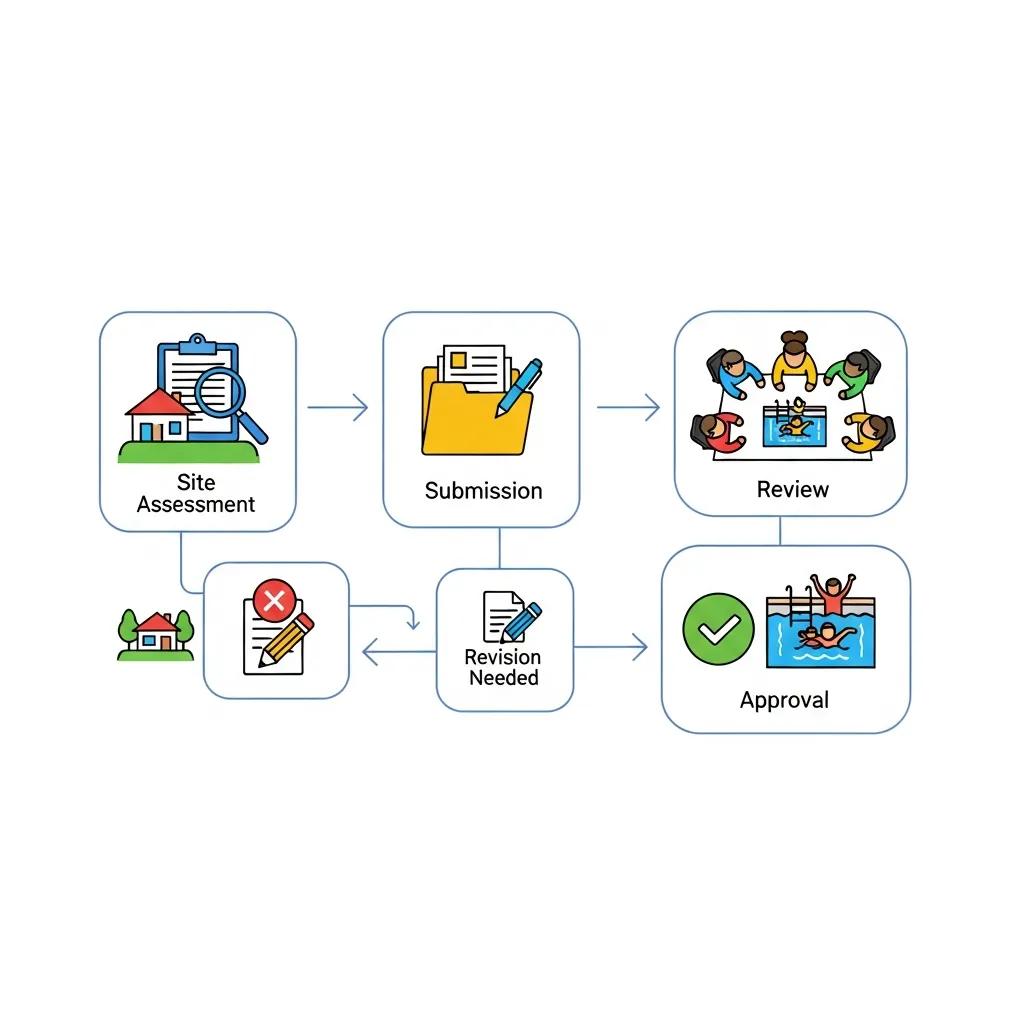
The HOA pool approval path in Arizona is a step-by-step process that turns design ideas into an approved build by meeting CC&Rs, ARC criteria, and local permitting rules. You typically submit scaled site plans, elevations, material lists, safety details and neighbor notices to the Architectural Review Committee, which checks aesthetics, setbacks, safety, and neighborhood fit. Submissions prepared with both HOA expectations and municipal codes in mind tend to reduce rounds of revisions and speed up permit alignment. For luxury homeowners, the main advantage is predictable timelines and fewer costly design changes during construction. Knowing the process up front helps owners and contractors plan for review windows and required documents, improving the chance of first-pass approvals and smoother sequencing with city building departments.

Below is a concise checklist of core submission steps for HOA approval and a table that links common submittals to likely outcomes and timelines.

  1. Pre-submission site assessment with survey and program goals to identify setbacks and utilities.
  2. Prepare drawings: scaled site plan, pool and hardscape elevations, materials/finish schedules, and landscape/irrigation plan.
  3. Safety documentation: pool barrier/fence details, gate hardware specs, and any alarm or safety-system descriptions.
  4. Submit to the ARC, notify immediate neighbors if required, and respond promptly to committee comments.
  5. File municipal permit applications in parallel when possible to avoid rework after HOA conditions are set.

The checklist above shows homeowner responsibilities and typical authorship; the table that follows maps each item to common HOA/permit results and realistic review times.

Submission DocumentTypical RequirementExpected HOA/Municipal Outcome
Scaled site planShows property lines, setbacks and pool footprintConfirms placement and avoids setback variances; 2–6 week review
Elevations & finishesDetails materials, coping, deck surfaces, visible equipmentReviewed for aesthetic compatibility; may request color samples
Safety & barrier detailsFence height, gate hardware, self-closing/latching specsVerifies ARS and local code alignment; conditional approval common
Landscape/irrigation planPlant species, turf choices and water-use strategyChecked for water restrictions and CC&R palettes; revise if non-compliant

This comparison highlights which deliverables usually trigger revisions and which drive first-pass approvals when prepared correctly. Aligning HOA aesthetic expectations with municipal safety requirements reduces duplicated work and speeds the path to permit-ready design.

What are the key steps to obtain HOA approval for a luxury pool?

A staged, compliance-first approach improves approval odds and cuts rework: start with a rules-aware concept and finish with documented ARC sign-off. First, order a site assessment and survey to confirm legal setbacks and locate utilities—this determines whether terraces, retaining walls or split-level pools are needed. Second, develop drawings and a refined materials palette that satisfy CC&R aesthetics and pool-safety requirements—include elevations, coping details, and equipment screening to show minimal visual impact. Third, compile safety documentation (fence specs showing minimum height, gate hardware, alarms or covers). Fourth, submit the complete package to the ARC, notify neighbors when required, and be ready to respond to conditional requests—professional, timely replies often shorten review cycles. Finally, after securing HOA conceptual approval, file municipal permits in parallel and track ARC conditions alongside building-department feedback to avoid conflicting requirements during construction.

How do setback rules and pool placement affect approval?

Setbacks define the buildable envelope and strongly influence pool layout, circulation and compliance risk. Typical setbacks from property lines or easements can limit pool length and orientation, prompting creative options like narrow lap pools, linear edges, or stepped terraces to keep a luxury feel while complying. Setback conflicts may require variances, which add time and often need neighbor notice or hearings—bringing a licensed surveyor and engineer in early reduces surprises. Screening—through plant massing, decorative fencing, or low walls—can reduce visibility and satisfy ARC concerns without changing the pool’s core design. Accurate stamped site plans prepared by professionals increase committee confidence and help reconcile setback limits with the homeowner’s design goals.

How Do HOA Landscaping Rules in Arizona Impact Luxury Outdoor Designs?
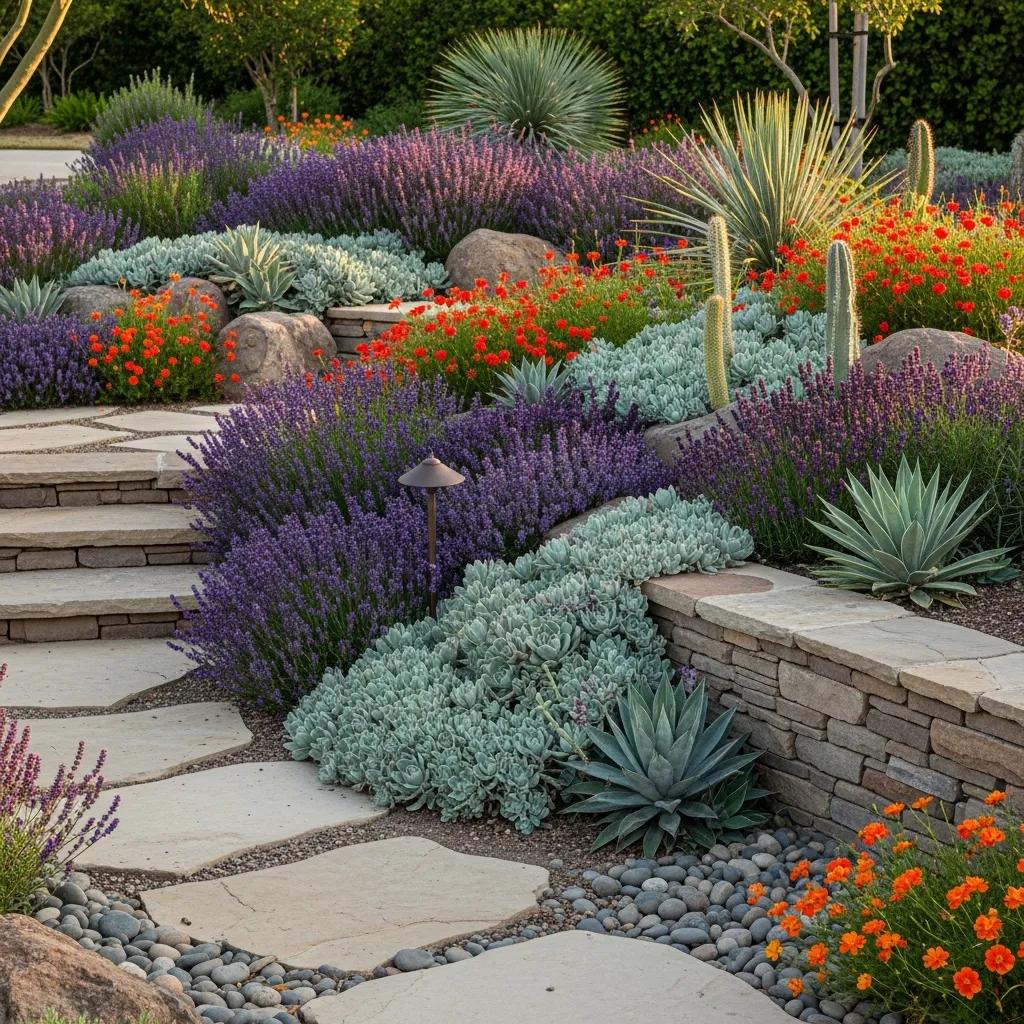
Arizona HOAs commonly regulate plant choices, turf alternatives, hardscape materials and irrigation to balance curb appeal with water conservation and property values. Rules usually list preferred palettes, restrict certain trees or high-water species, and set standards for lawn appearance, artificial turf use, or visible irrigation gear. For luxury homeowners who plan with these rules in mind, it’s possible to craft refined outdoor rooms that are both compliant and elegant—using xeriscape principles, high-quality artificial turf where allowed, and premium hardscapes that match CC&R finishes. Early alignment with HOA palettes and water-use guidelines simplifies approval and avoids costly late-stage substitutions.

Here’s a practical set of drought-friendly plants and turf options that tend to fare well with ARCs, followed by a quick comparison of plant and hardscape choices.

  • Layered xeriscape planting—canopy trees, shrubs and seasonal accents—creates depth and year-round interest.
  • Specify high-quality artificial turf only where CC&Rs allow it, and include physical samples for ARC review to show realistic look and drainage.
  • Choose permeable, natural-finish hardscapes and neutral-toned materials that fit community color palettes.

These choices preserve water efficiency while keeping a curated, upscale appearance; the table below compares typical landscape and hardscape components.

Landscape ComponentCharacteristicHOA Acceptance & Maintenance
Native / drought-tolerant treesLow water use, provides canopy shadeHigh acceptance; low maintenance
Xeriscape shrub mixesTexture and seasonal bloomHigh acceptance; reduced irrigation needs
High-quality artificial turfLow water, consistent green appearanceConditionally accepted; provide samples and drainage plan
Permeable pavers & natural stoneNeutral palette, long-lastingPreferred for upscale look; coordinate finishes with CC&Rs

Presenting these options with maintenance plans and irrigation strategies boosts ARC confidence and reduces negotiation around materials.

Which drought-tolerant plants and artificial turf comply with HOA guidelines?

ARCs typically approve native trees and low-water shrubs scaled to the yard, combined with seasonal perennials for color. Layered plantings—canopy, midsize shrubs and groundcovers—create a composed look that reads intentional rather than sparse. Artificial turf can be approved in many communities when high-quality products, proper infill and engineered drainage are documented; ARCs often request samples, warranties and a maintenance plan. Including a maintenance schedule and projected irrigation reductions with your submission strengthens the case for long-term viability.

What are the restrictions on hardscapes and outdoor features?

HOA rules around hardscapes focus on materials, visible equipment, structure heights and visual prominence to preserve neighborhood cohesion. Common limits include bans on bright or reflective finishes, maximum heights for detached structures, and restrictions on visible mechanical equipment like pool filters or evaporative coolers. For luxury projects, use subdued natural stone, integrated equipment screening and low-profile lighting to meet CC&R expectations while keeping premium aesthetics. When you submit hardscape plans, include material samples, color palettes and sections that show how features relate to neighboring properties to reassure the ARC and reduce requests for alternate finishes.

How to Navigate Arizona HOA Architectural Review Committees for Pools and Landscaping?

Architectural Review Committees judge proposals against written CC&Rs and community expectations, and they typically review packages at scheduled meetings where presentation quality matters. The ARC process usually requires a complete submission packet, a defined review period, possible conditional approvals and then final sign-off. Committees prioritize compatibility, safety and neighbor impact. Knowing ARC workflows ahead of time lets you prevent common objections with strong visuals, clear specifications and proactive neighbor outreach. Presentations that emphasize materials, plant palettes and screening reduce iterations and build committee trust in the project.

Below is a short checklist of required documents and a sample timeline to guide ARC submissions.

  1. Provide full-size scaled site plans, elevations and material schedules showing the proposal’s relation to existing structures.
  2. Include landscape and irrigation plans that demonstrate water efficiency and appropriate species selection.
  3. Attach pool safety documentation: barrier specs, gate hardware and any planned alarm systems.
  4. Supply photo simulations or renderings to show visual impact from adjacent lots and public views.
  5. Track ARC meeting schedules and submit before packet deadlines so your package is reviewed at the next meeting.

Submitting a complete package on time reduces the chance of deferral or denial; the table below lists commonly requested documents and likely ARC actions.

Document TypeTypical Detail RequiredARC Review Action
Site planProperty lines, pool footprint, setbacksVerify compliance; may request revisions
Elevations & materialsFinish schedules and color samplesAssess aesthetic compatibility
Landscape & irrigationPlant list, irrigation zones, water-use estimatesEvaluate sustainability and maintenance needs
Safety systemsFence details, gate hardware, alarm specsConfirm alignment with code and ARS

This table clarifies which documents carry the most weight in ARC review and which items to prioritize when preparing your submission.

What documents and plans are required for committee submissions?

ARCs expect a complete packet: a scaled site plan, elevations that show how the pool and hardscapes relate to the house, a materials and finish schedule, plus a landscape/irrigation plan that addresses water conservation. Safety documents—pool barrier specs, gate latching mechanisms and any cover or alarm systems—should be clear and easy to find. Photos of existing conditions and renderings or simulations illustrating the finished design help the ARC judge visual harmony with surrounding homes. Label files clearly, use the ARC’s preferred formats if provided, and include a brief narrative explaining how the design satisfies CC&R goals to speed review.

How to handle disputes and appeals with HOA committees?

If you hit a dispute, follow a documented, professional path to reduce escalation and protect your interests. Start by asking the ARC for a written reason for denial and any specific conditions needed for approval. Respond with a revised submission that addresses each item and include stamped drawings or expert letters from engineers or landscape architects when technical issues appear. If disagreement continues, review the HOA’s appeal or mediation procedures in the governing documents—these paths usually have strict timelines and steps. Keep careful records of all communications and revisions, and consider professional representation when technical evidence is required to rebut objections.

What Are the Arizona Pool and Landscape Regulations Affecting HOA Compliance?

State statutes and city building codes set baseline safety and permitting rules that HOAs cannot waive, so aligning ARC submissions with these regulations prevents contradicting conditions that cause delays or unsafe installations. Arizona law covers pool barrier and fencing standards, while cities such as Phoenix, Scottsdale and Tucson add local permit requirements and inspection sequencing. The main advantage for homeowners is clarity: mapping state and local codes to HOA expectations early lets designs meet both safety and aesthetic needs without expensive rework. Knowing who enforces each requirement and how inspections are sequenced helps coordinate permit applications and final approvals.

Regulatory SourcePrimary RequirementInteraction with HOA Rules
Arizona state codePool barrier/fence minimums and gate hardwareHOAs can add screening but cannot reduce safety minima
City building codesPermit plans, inspections, equipment setback requirementsMunicipal permits must be satisfied regardless of ARC conditions
CC&Rs / HOA rulesMaterial palettes, plant lists and aesthetic controlsRequired for ARC approval; must not conflict with safety codes

This map shows that safety law takes priority for health and hazard mitigation while HOAs retain authority over aesthetics—successful projects respect both areas.

What are the Arizona pool barrier and fencing requirements?

Arizona pool-safety statutes and common municipal codes require barriers that meet minimum heights, self-closing/self-latching gates, and construction that limits climbability to reduce child access. Practically, include documentation showing fence height, latch details and gate swing direction with your ARC submission, plus any decorative finishes the HOA requests. HOAs frequently ask for additional screening to visually integrate fences into the yard, but aesthetic treatments must never compromise safety. Coordinate barrier design with local inspectors so ARC-approved finishes also pass municipal safety inspections.

How do local city ordinances in Phoenix, Scottsdale, and Tucson influence HOA rules?

City ordinances can add local permit checklists, required inspections and specific constraints—like water-use rules or landscape incentives—that shape acceptable plant palettes. Permit timelines and inspection sequencing vary by city and may require pre-construction footing checks or final equipment inspections to be scheduled alongside HOA sign-off. Water-use ordinances or rebate programs influence turf replacement or irrigation upgrades. Coordinating ARC approval timing with municipal permit intake avoids delays caused by conflicting conditions and ensures inspections occur when the project is ready.

How Does Island Pools and Landscaping AZ Ensure Seamless HOA Compliance?

We provide an end-to-end, compliance-first service that begins with a focused consultation and site assessment, moves through design development that anticipates ARC and municipal needs, and continues with application management and construction oversight through final HOA walk-through. Our Design–Build–Landscape–Pools workflow embeds CC&R analysis into schematic design so submittals address both aesthetics and safety. Homeowners gain a single point of responsibility: we manage revisions, liaise with ARCs, and sequence municipal permit submissions to reduce rework and shorten timelines. Island Pools and Landscaping AZ emphasizes drought-friendly solutions, a satisfaction guarantee, and our promise to return calls/emails within 24 hours Monday–Saturday to keep you informed every step of the way.

Here’s our compliance process in five clear steps and the trust points that lower homeowner risk.

  1. Kickoff and site assessment to identify setbacks, easements and CC&R constraints that shape schematic design.
  2. Design with compliance: produce site plans, elevations and landscape/irrigation plans that anticipate ARC concerns.
  3. Application management: assemble submission packets, handle neighbor notifications and track ARC meeting schedules.
  4. Permit coordination: file municipal permit packages in parallel and manage revisions from building officials.
  5. Construction oversight: supervise installation, coordinate inspections and lead final HOA walkthroughs.

This coordinated, compliance-first approach minimizes iterations and aligns design intent with administrative realities. Our ROC#341253 licensure (B-4) gives homeowners added reassurance that licensed professionals manage technical and regulatory obligations.

What is the step-by-step HOA compliance process offered by Island Pools and Landscaping AZ?

Our process reduces approval cycles: a compliance-focused kickoff documents site constraints, a schematic and design phase integrates CC&Rs, an ARC submission and tracking phase follows, municipal permits are filed in parallel, and construction proceeds with inspection coordination and a final HOA walkthrough. Roles are defined at each stage—surveying and engineering as needed, our design deliverables, ARC packet assembly and homeowner approvals for materials and finishes. Timelines vary by scope, but our commitment to returning calls/emails within 24 hours Monday–Saturday and our satisfaction guarantee give homeowners predictable responsiveness during reviews and construction. ROC#341253 licensure ensures work is handled under the proper contractor classification and supports permit submittals.

How do luxury pool and landscaping designs integrate HOA guidelines from the start?

We treat CC&Rs and ARC palettes as design parameters, not afterthoughts—using them to guide material choices, screening strategies and spatial layout so the finished project feels cohesive with the neighborhood. Examples include hiding equipment behind custom screens that match approved finishes, selecting plant palettes that meet water-use limits, and specifying barrier systems that satisfy safety codes while using refined materials and integrated lighting. Early ARC-friendly visuals—renderings, sections and material boards—help committees picture the finished project and reduce subjective objections. Turning regulatory constraints into design opportunities keeps your luxury intent intact.

What Are Common HOA Compliance Pitfalls and How to Avoid Fines in Arizona?

Common pitfalls include incomplete submissions, mismatched materials, missing safety documentation and poor timing relative to ARC cycles—each can lead to denials, fines or costly rework. HOAs enforce CC&Rs and may fine for unapproved work or deviations from approved plans, so preventing violations through professional submissions and documented approvals protects your investment. The practical way to avoid fines is to hire licensed contractors who prepare full ARC packets, keep records of all communications, and begin work only after written ARC approval and required municipal permits are in hand. Professional management cuts administrative risk and helps preserve property values by ensuring work follows community standards.

Frequent causes of delays and denials include incomplete plans, failure to disclose safety systems, unapproved material changes and missing neighbor notifications. Below are prioritized mitigation tactics.

  1. Provide complete, stamped plans and include safety documentation to avoid initial deferrals.
  2. Present material samples and renderings to show visual compatibility before construction.
  3. Submit well in advance of ARC deadlines and track meeting dates to prevent holdovers.
  4. Keep records of all correspondence, revisions and approvals to document compliance.

Following this prioritized list removes common failure modes that lead to fines or forced remediation; timely, documented compliance is the most reliable prevention.

What are frequent reasons for HOA approval delays or denials?

Most delays and denials stem from incomplete plan sets, missing safety or barrier details, material choices that conflict with CC&Rs, and late submissions that miss ARC packet deadlines. Another common problem is discovering municipal code conflicts only after ARC approval, which forces rework—preparing submissions with municipal code awareness reduces that risk. Neighbor objections can also extend timelines when visibility or shading is at issue; proactive neighbor outreach and clear visualizations help avoid emotional pushback. Prioritizing completeness, authoritative technical documentation and early ARC engagement shortens review cycles.

How to maintain ongoing compliance after project completion?

Ongoing compliance needs scheduled maintenance, documentation of repairs or replacements, and proactive communication when you plan changes after initial approval. Create an annual checklist for the pool barrier, equipment, irrigation system and landscape to keep items in the condition approved by the ARC; keep photos and service records to simplify future inquiries. For upgrades—equipment swaps or plant changes—submit a brief ARC notification with specs to confirm continued compliance. If you want help, Island Pools and Landscaping AZ supports maintenance planning and post-construction service coordination while honoring our promise to return calls/emails within 24 hours Monday–Saturday and our satisfaction guarantee. Contact us to request a consultation with Paul Martin as your project liaison.

Frequently Asked Questions

What are the typical costs associated with HOA compliance for luxury pools and landscaping?

Costs vary widely depending on project size, location and HOA requirements. Budget for design fees, permit costs and the possibility of fines for non-compliance. Professional services—site assessments, architectural drawings and submission prep—add to the total but reduce risk of costly rework. We recommend getting a tailored estimate from local contractors or compliance specialists to understand likely expenses up front and avoid surprises during the approval process.

How can homeowners effectively communicate with their HOA during the approval process?

Clear, respectful communication speeds approvals. Start by reviewing the HOA’s guidelines and submission checklist. Include a concise cover letter with your plans that explains how the project meets community standards. Address ARC concerns promptly and professionally, and keep the tone cooperative. Maintaining open lines and responding quickly to requests builds good will and often leads to faster approvals.

What should homeowners do if their pool or landscaping proposal is denied?

If denied, request a written explanation of the reasons and required changes. Review the feedback carefully and submit a revised package that specifically addresses each concern—bring in stamped drawings or expert letters if technical issues are cited. If disagreements persist, follow the appeal or mediation steps in your HOA’s governing documents. Keep detailed records of all communications throughout the process.

Are there specific landscaping features that are commonly prohibited by Arizona HOAs?

Many HOAs restrict high-water-use plants, certain artificial turf types and invasive or non-native species that affect the community look. Visible irrigation equipment or mechanical gear that detracts from the neighborhood may also be limited. Check your HOA’s CC&Rs for precise prohibitions and favor drought-tolerant, native choices that are more likely to be accepted.

How can homeowners ensure their designs align with both HOA and municipal regulations?

Research local building codes and HOA CC&Rs before starting. Hire professionals familiar with both rule sets to streamline the process. Prepare detailed plans addressing safety, aesthetics and environmental factors, and consider submitting to the HOA and municipality in parallel. That proactive approach minimizes conflicting requirements and reduces delays.

What role do neighbor notifications play in the HOA approval process?

Neighbor notifications let nearby residents review and comment on proposed changes and are often required for larger projects like pools or major landscape work. Notifying neighbors early can diffuse concerns and build support. Share clear information about the project and be prepared to address questions—this transparency often leads to smoother ARC reviews.

Conclusion

Knowing Arizona HOA guidelines for pools and landscaping lets luxury homeowners move through compliance confidently while protecting design and value. With a structured, expert-led approach you can avoid costly delays and ensure both safety and aesthetic standards are met. Partnering with Island Pools and Landscaping AZ simplifies the process—we deliver tailored solutions that align with community expectations and handle the paperwork so you can enjoy the result. Contact us today to discuss how we can help you create the outdoor space you want while keeping full HOA and municipal compliance.