

Protect Your Arizona Garden from Dust Storms — Luxury Landscape Strategies

Arizona dust storms — commonly called haboobs — are fast, wind-driven walls of fine silt that can bury plantings, abrade foliage, and make pools and outdoor rooms high-maintenance. This guide breaks down what haboobs are, why desert gardens are vulnerable, and the practical steps luxury homeowners can take to protect landscape and poolside investments. You’ll get clear design principles for resilient yards, hands-on soil and erosion controls for monsoon season, and a seasonal checklist to prepare for and recover from storms with less cleanup and fewer surprises. Along the way we compare plant choices and erosion-control methods, walk through irrigation and pool equipment checks, and explain when it makes sense to call a professional. Finally, we show how Island Pools and Landscaping AZ builds these protections into high-end design-build projects and restorations.

Arizona’s desert climate creates special challenges — and opportunities — for making landscapes that last.

Arizona Desert Resilience: Green Infrastructure for Climate Adaptation

Phoenix sits in the Sonoran Desert and is one of the nation’s largest cities. Local planning documents highlight the need to build climate resilience into urban infrastructure — including strategies that manage storm flows and reduce dust impacts.

Developing climate resilience in aridlands using rock detention structures as green infrastructure, BL Ruddell, 2021

What Are Arizona Dust Storms and How Do They Impact Luxury Gardens?

Haboobs are sudden outflows of wind that kick up large volumes of fine sediment and sweep it across neighborhoods, most often during Arizona’s monsoon window. These dust clouds abrade leaves, smother low plants with silt, clog irrigation emitters and pool filters, and can shift topsoil in ways that expose roots or destabilize hardscape. Understanding how storms form and the specific ways they harm garden elements lets you choose the right plant palette, wind screening, and surface treatments to reduce both immediate and cumulative damage.

Understanding Haboobs: Arizona's Intense Dust Storms

Haboobs form when thunderstorm downdrafts hit dry ground and push a dense front of dust ahead of them. During monsoon months these outflows happen more often; even short events can leave a thin, abrasive film of particles that blocks leaf stomata and finds its way into filters and moving parts. Because our region has large patches of exposed soil and frequent urban disturbance, there’s plenty of material to be carried by wind — which is why preparedness and good site design matter.

Why Dust Storms Threaten Desert Plants and Outdoor Living Spaces

Dust damages plants in three main ways: physical abrasion of leaves, burial or compaction of the root zone, and physiological stress that lowers photosynthesis and water efficiency. Fine particles abrade cuticles and increase water loss, while deposited dust can form crusts that prevent seedlings from emerging and reduce soil gas exchange. Outdoor furniture, cushions, decks, and pool equipment also suffer — dust shortens finishes, infiltrates mechanical systems, and raises maintenance needs. The good news: smart design and a targeted maintenance plan reduce repair bills and protect plant health.

Haboobs affect luxury gardens in clear ways:

  1. Physical Abrasion: Fine dust wears leaf surfaces and delicate blooms.
  2. Soil Deposition: Silt buries low plants and compacts root zones.
  3. Mechanical Clogging: Filters, emitters, and pool skimmers trap sediment.
  4. Aesthetic & Material Wear: Dust accelerates fading and surface degradation.

These impacts guide the practical steps in the sections that follow, starting with resilient landscape design and plant selection.

How to Design a Haboob-Resilient Landscape for High-End Arizona Homes

Resilient landscapes use layered defenses: strategic plant placement, effective windbreaks, and hardscapes that guide wind and catch dust before it reaches delicate areas. Think of the yard as a graduated sequence — structural hardscape nearest the source, then wind-tolerant trees, a dense mid-layer of shrubs, and durable groundcovers — to slow wind and encourage sediment to settle where you want it. For luxury properties, choose materials and forms that are both beautiful and functional: textured walls, pergolas, and trellises add interest while acting as wind filters, and permeable pavers reduce exposed bare soil. The table below shows plant groups that balance aesthetic expectations with storm resilience.

Introductory note: This table compares resilient plant choices by water use, wind tolerance, maintenance level, and aesthetic role in luxury desert landscapes.

Plant TypeWater NeedsWind ToleranceMaintenanceAesthetic Role
Native desert shrubsLowHighLowStructural backdrop and habitat value
Drought-tolerant groundcoversVery lowMediumLowSoil stabilization and dust suppression
Wind-tolerant treesModerate-lowHighMediumCanopy shelter and vertical windbreak
Ornamental grassesLowMedium-highLowFlexible screens and sediment traps

Layering low-water natives with well-placed trees and groundcovers reduces exposed soil and spreads wind energy, keeping luxury gardens both elegant and durable. Next, we detail specific plant choices and placement strategies.

Which Drought-Tolerant and Native Plants Thrive During Dust Storms?

Pick species that tolerate drought and resist foliar abrasion to reduce replacements after storms while keeping a refined look. Plants with small, waxy, or hairy leaves shed dust faster and recover more quickly; deep-rooted shrubs and trees anchor soil and resist uplift during gusts. Place sacrificial or tougher species on windward edges to catch sediment, and protect finer ornamentals in sheltered microclimates near structures or under pergolas. Source stock from local nurseries to ensure regional adaptation, and install in phases so you get immediate dust control with room for ornamental infill later.

How Do Windbreaks Protect Your Garden from Dust and Wind Damage?

Windbreaks slow wind and force particles to settle before they reach sensitive areas. Both living hedges and architectural barriers work well when oriented perpendicular to prevailing winds and set back the right distance from the area you want to protect. Living barriers (dense shrubs or trees) soften views and support habitat; structural barriers (walls, fences, pergolas) give immediate, predictable protection and play well in luxury designs. As a rule of thumb, a windbreak should extend past the area you’re protecting and sit roughly one to three times its height away to balance filtration and turbulence. Blending live and built elements usually gives the best look and performance — just consider sightlines and local regulations for high-end sites.

Key design principles for haboob resilience:

  1. Layered Planting: Multiple vertical layers dissipate wind energy.
  2. Protective Hardscapes: Use walls and pergolas as functional design elements.
  3. Strategic Placement: Put sacrificial buffers on windward edges.
  4. Mixed Windbreaks: Combine living and structural barriers for beauty and performance.

With those design rules in place, you lock in better soil stability and drainage performance.

What Are Effective Soil and Erosion Control Methods for Desert Gardens?

Keeping soil from lifting and managing monsoon runoff are central to controlling dust and protecting plantings. Mulch, groundcovers, grading, and engineered drainage work together: mulch suppresses dust, groundcovers cut exposure, and swales or French drains handle concentrated flows. Where slopes or channelized flow exist, subsurface collection and careful grading redirect water away from foundations and prevent gullying. The table below compares common surface-stabilization options so you can weigh DIY approaches against professional solutions.

Long-term soil and water management are essential for reducing dust and restoring degraded land in arid regions.

Desert Dust Storm Management: Soil Health & Drought-Resistant Plants

Dust events in arid regions are worsened by drought and land degradation. Limited arable land and water make sustainable soil and water practices — such as sand- and water-harvesting techniques — important tools to support drought-tolerant vegetation and restore degraded areas.

Applying sand and dust management and water harvesting measures to restore degraded areas, M Ahmed, 2024

Introductory note: This table compares erosion-control techniques by cost, installation complexity, and how well they suppress dust and prevent erosion.

TechniqueTypical CostInstallation ComplexityEffectiveness
Organic mulchLowLowMedium (needs replenishment)
Rock mulch / gravelMediumLowHigh for dust suppression, can increase soil temperature
Groundcover plantingsMediumMediumHigh long-term soil stabilization
Engineered drainage (swales/French drains)HighHigh (professional)Very high for runoff control

Long-term erosion control usually combines surface treatments with engineered fixes; professional installation helps where sites are complex. Below we cover mulch choices, drainage tactics, and when to bring in specialists.

How Does Mulching Help Prevent Soil Erosion During Dust Storms?

Mulch covers loose soil, holds moisture, and reduces surface wind speed — all of which lower particle entrainment during storms. Organic mulches improve soil structure and water retention but break down and need periodic replacement; rock or gravel provides durable dust suppression with lower upkeep, though it can raise soil temperatures. Typical depths are two to four inches for organic mulch and a thinner coverage for rock. Prioritize mulch in windward buffer zones to trap sediment before it moves across the site, and choose materials that fit your design palette while still delivering function.

What Drainage Solutions Prepare Your Garden for Monsoon Season?

Drainage ranges from simple grading and permeable paving to engineered subsurface systems that capture and redirect heavy monsoon flows. Swales and shallow bioswales slow and infiltrate runoff; French drains intercept saturated zones below grade; permeable paving reduces sheet flow while keeping outdoor areas usable. Signs you need engineered drainage include repeated erosion paths, gullying, or water pooling near structures or pool equipment. In those cases, professional design and installation help ensure durable performance and code compliance. Regular post-storm inspections keep systems clear and working.

Ranked erosion-control methods for homes:

  1. Immediate mulch and groundcover: Fast, affordable dust suppression and soil protection.
  2. Permeable hardscape: Durable surfaces that reduce surface runoff.
  3. Engineered drainage: Professional-grade solution for high-risk sites and concentrated flows.

These options move from quick homeowner actions to professional interventions when site conditions require them.

How to Prepare Your Garden and Outdoor Living Areas for Monsoon Season in Arizona
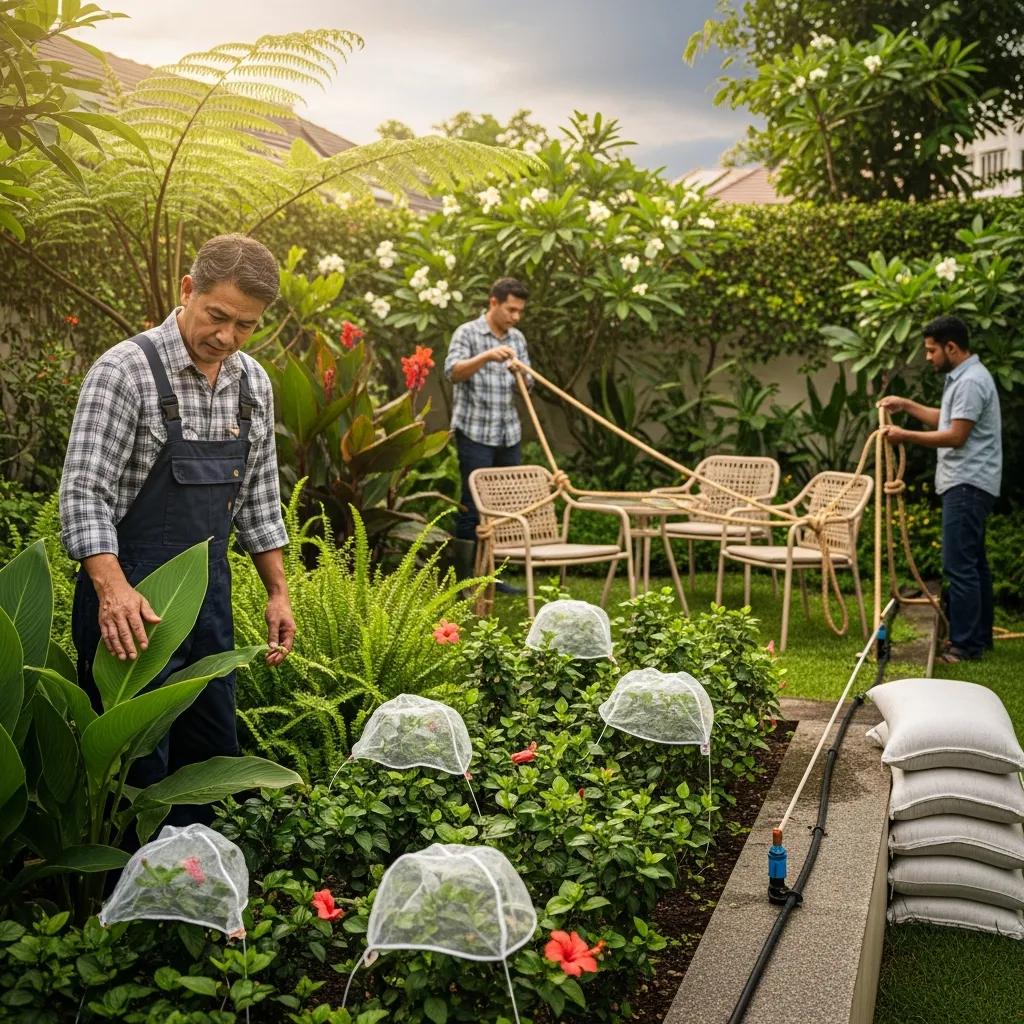
Preparing for monsoon season means a short, focused list: prune to reduce wind sail, secure or store loose items, and inspect irrigation and pool systems so debris and silt don’t cause failures. Proper pruning lowers the chance of limb breakage, securing furniture prevents wind-borne damage, and tuning irrigation avoids overwatering that can worsen erosion after storms. A pre-monsoon routine reduces emergency repairs and speeds recovery — the sections below give pruning tips and an irrigation checklist you can use every year.

Long-term degradation — loss of vegetation and soil stabilizers — makes restoration planning important after repeated disturbance.

Desert Landscape Restoration: Mitigating Erosion & Soil Degradation

Disturbance can alter or destroy vegetation layers, encourage invasive annuals, break down soil stabilizers, compact soils, and increase erosion. Recovery times are measured against pre-disturbance levels of biomass, cover, and soil characteristics.

Anthropogenic degradation of the southern California desert ecosystem and prospects for natural recovery and restoration, JE Lovich, 1999

Introductory note: The checklist below matches seasonal tasks with how often to perform them and whether they’re homeowner jobs or best left to pros.

TaskRecommended FrequencyDIY or Professional
Pruning vulnerable shrubsAnnually before monsoonDIY for small shrubs / Professional for large trees
Secure loose furnitureBefore each storm seasonDIY
Inspect irrigation filters and valvesTwice yearly (pre-monsoon, post-monsoon)DIY / Professional tune-up if issues found
Clear drains and skimmersPre-monsoon and after major stormsDIY with professional help for complex systems

This timeline helps you decide which tasks you can do and which benefit from a pro. Below we cover pruning best practices to strengthen plants for storms.

What Pruning and Plant Care Practices Strengthen Plants Before Storms?

Prune to remove weak or crossing branches, reduce sail area, and keep a strong central structure — ideally just before monsoon so you don’t force new, tender growth. For trees, remove hazardous limbs and preserve the branch collar so wounds heal well; for shrubs, thin the interior rather than shearing the exterior to keep wind moving through the plant. Stake young specimens until roots establish, and hire professionals for large-tree work or complex structural pruning. After pruning, monitor plants and adjust irrigation to support recovery.

How to Inspect and Maintain Irrigation Systems for Storm Resilience?

Before monsoon, check filters and pressure regulators, flush emitters and drip lines, test controller schedules for seasonal settings, and confirm that backflow preventers and valves operate correctly. Dust and silt clog filters and emitters, creating dry spots that weaken plants — clean filters and test emitters for uniform flow. Smart controllers and rain sensors reduce unnecessary watering during wet periods, lowering erosion risk. If you see persistent pressure or flow problems, call a professional for diagnostics. Regular irrigation care keeps plants healthy and reduces system failures during storms.

Pre-monsoon preparation checklist:

  1. Prune and structurally prepare plants: Strengthen canopies and remove hazardous branches.
  2. Secure and store loose items: Prevent wind-borne debris and damage.
  3. Inspect irrigation and drainage: Clean filters, test emitters, and confirm controls.

Finish these tasks before the monsoon to cut recovery time after a storm.

What Steps Should You Take for Post-Dust Storm Garden Care and Restoration?

After a dust storm, focus first on safety, then on assessment, gentle cleaning, and prioritizing critical repairs. Start by removing heavy dust from foliage with a soft brush or a low-pressure rinse to restore photosynthesis, then inspect irrigation and pool filtration for clogging or abrasion. Homeowners can handle small cleanups and temporary stabilization, but large erosion, major tree failure, or damaged drainage usually needs a professional assessment. The subsections below provide step-by-step cleaning tips and clear thresholds for calling a landscape pro — and a reminder that you can request a restoration consultation when needed.

How to Clean and Repair Your Garden After a Dust Storm?

Begin cleanup by ensuring personal safety and switching off power near wet or saturated areas. Gently brush or hose leaves and blooms to remove abrasive dust — avoid high-pressure sprays on stressed plants. Clear debris from irrigation filters and backflush or replace them as needed, inspect emitters for sediment, and run systems to confirm even coverage. Check pool skimmers and pre-filters and remove silt so the filter doesn’t overwork. Repair small erosion spots with mulch or temporary groundcover and schedule replanting for buried seedlings. Prioritize actions that stop further degradation: stabilize bare soil and restore irrigation before moving on to cosmetic fixes.

When to Seek Professional Landscaping Services for Storm Damage Restoration?

Call a professional when damage includes large tree limb failure, extensive erosion or gullying, collapsed drainage structures, widespread irrigation failure, or hardscape and pool-adjacent systems that threaten structure or safety. Pros provide site-specific assessments, engineered drainage fixes, tree risk evaluations, and coordinated restorative grading or hardscape repair — all of which reduce the chance of repeat damage. For luxury properties, a staged restoration plan from an experienced design-build team shortens downtime and aligns repairs with the desired aesthetic. If your initial triage doesn’t restore system performance or you have safety concerns, schedule a restoration consultation to get a clear scope and timeline.

Post-storm homeowner actions vs. professional thresholds:

  1. Homeowner: Gentle plant cleaning, filter checks, and temporary soil stabilization.
  2. Professional: Structural drainage repair, major tree work, and engineered erosion control.

If you encounter any of the professional thresholds above, consider booking a restoration consult to evaluate long-term resilience options.

Why Choose Island Pools and Landscaping AZ for Luxury Storm-Resilient Garden Solutions?

Island Pools and Landscaping AZ designs and builds luxury pools and backyard environments that perform in Arizona’s desert climate. We pair high-end aesthetics with practical solutions — windbreak placement, drought-tolerant plant palettes from local nurseries, graded drainage, and durable materials — so your outdoor living space looks beautiful and stands up to storms. Our process starts with a thorough walkthrough to learn your goals and site conditions, then moves through design, installation, and follow-up planning that emphasize haboob resilience. The result: cohesive outdoor environments that balance luxury and low-maintenance performance.

How Does Our Design and Build Process Ensure Garden Protection from Dust Storms?

We start with an on-site analysis of prevailing winds, soil, and drainage patterns, then design windbreaks, sacrificial buffers, and permeable surfaces where they provide the most protection. During design we match drought-tolerant plant palettes to your aesthetic and select hardscape elements that act as functional barriers while enhancing the look of the yard. Installation follows strict grading, mulch, and planting protocols to deliver immediate dust suppression, and our post-installation follow-ups include maintenance guidance and checks to keep everything working. This phased, communicative approach makes sure resilience measures are effective and aligned with your vision.

What Are Real Client Success Stories of Haboob-Resilient Landscaping?

Typical project outcomes follow a problem → solution → result pattern: one property with chronic windward erosion received a hardscape buffer, dense wind-tolerant plantings, and engineered swales — which reduced sediment migration and cut maintenance. Another project used structural pergolas and layered plantings around a pool deck to protect outdoor living areas; the owners now enjoy less cleaning, healthier plants, and better year-round use. These stories reflect our design-build focus on durability, thoughtful plant selection, and careful execution. If you’d like similar results, request a consultation and on-site walkthrough to explore restoration or upgrades.

Frequently Asked Questions

What are the signs that my garden is at risk from dust storms?

Look for visible dust on plants and hardscapes, increased leaf abrasion, sediment in irrigation filters, or declining plant vigor. Wilting or reduced growth may indicate dust blocking sunlight or interfering with water uptake. Inspect your landscape after storms so you can address issues before they worsen.

How can I improve the drainage in my garden to handle monsoon rains?

Improve drainage by installing swales to redirect flow, adding French drains where water pools, and using permeable paving to reduce runoff. Regrading to slope water away from structures helps too. Keep drains clear of debris so they perform during heavy rains.

What types of mulch are best for protecting against dust storms?

Organic mulches (wood chips, bark) help retain moisture and reduce dust but need periodic replenishment. Rock or gravel mulches are low-maintenance and effective at suppressing dust, though they can warm the soil. Place mulch strategically in windward buffer zones for best results.

How often should I inspect my irrigation system for storm resilience?

Inspect your irrigation at least twice a year — before and after the monsoon season. Check filters, emitters, valves, and controller settings. Regular maintenance keeps systems running efficiently and reduces the risk of erosion or plant stress after storms.

What are the benefits of using native plants in my garden?

Native plants are adapted to local climate and soils, so they need less water and maintenance and tolerate dust and drought better than many non-natives. They support local wildlife, increase biodiversity, and often resist local pests and diseases — all of which lowers long-term care costs.

When is it necessary to hire a professional for garden restoration after a storm?

Hire a professional for major issues: large tree limb failure, widespread erosion or gullying, damaged drainage, or system-wide irrigation failure. Pros provide engineered fixes and coordinated repairs that reduce the chance of repeat damage and restore both function and appearance.

How can I create a layered defense against dust storms in my garden?

Create a layered defense by placing taller trees on the windward side, followed by mid-height shrubs and groundcovers to stabilize soil. Add hardscapes like low walls or pergolas for immediate protection. This multi-layered approach improves dust management and enhances the landscape’s look.

Conclusion

Protecting a luxury garden from Arizona dust storms starts with smart design, the right plant choices, and regular seasonal maintenance. By planning for haboobs and monsoon flows — and by using layered plantings, targeted hardscapes, and sound drainage — you can reduce damage, cut maintenance, and enjoy your outdoor living spaces longer. If you’d like a tailored plan for your property, reach out to our team for a consultation and on-site evaluation.