
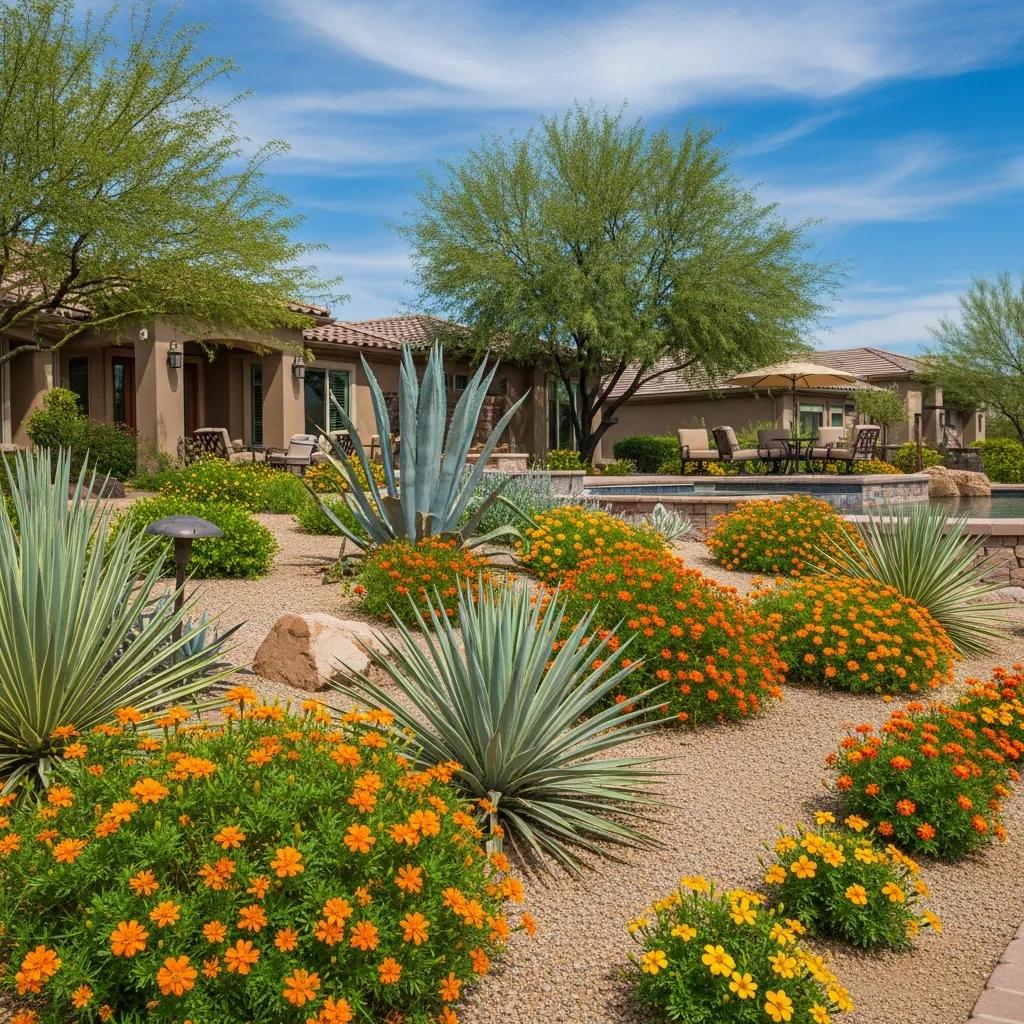
Sustainable Landscaping for Arizona Homes: Xeriscape Design, Drought‑Tolerant Planting, and Water‑Smart Outdoor Living
What Are the Key Principles of Xeriscape Design for Arizona Homes?
Phoenix Arizona Residential Desert Landscaping
In the Phoenix metropolitan area, homeowners living under covenants, codes, and restrictions (CC&Rs) tend to have yards with fewer trees, more shrubs and groundcovers, and smaller turf areas than properties without those rules. In those communities, more front yards are described as desert‑style rather than oasis or mesic designs.
- Planning and Zoning: Group plants by their water needs and create irrigation zones so each area gets the right amount of water.
- Soil Improvement: Amend soils and add organic matter or conditioners to raise water‑holding capacity and support root health.
- Efficient Irrigation: Install drip systems and smart controllers to reduce evaporation and deliver water directly to root zones.
- Appropriate Plant Selection: Favor drought‑tolerant and native species that perform with minimal supplemental irrigation.
- Mulch and Groundcover: Use organic or inorganic mulches to limit evaporation, moderate soil temperature, and suppress weeds.
- Low‑Impact Hardscaping: Choose permeable pavers and reduce lawn areas to cut irrigation needs while keeping outdoor usability.
- Maintenance Planning: Schedule seasonal maintenance that preserves soil structure and irrigation efficiency while maintaining a polished appearance.
How Does Xeriscaping Conserve Water in Arizona's Desert Climate?
Which Drought‑Tolerant Plants Are Ideal for Luxury Xeriscapes?
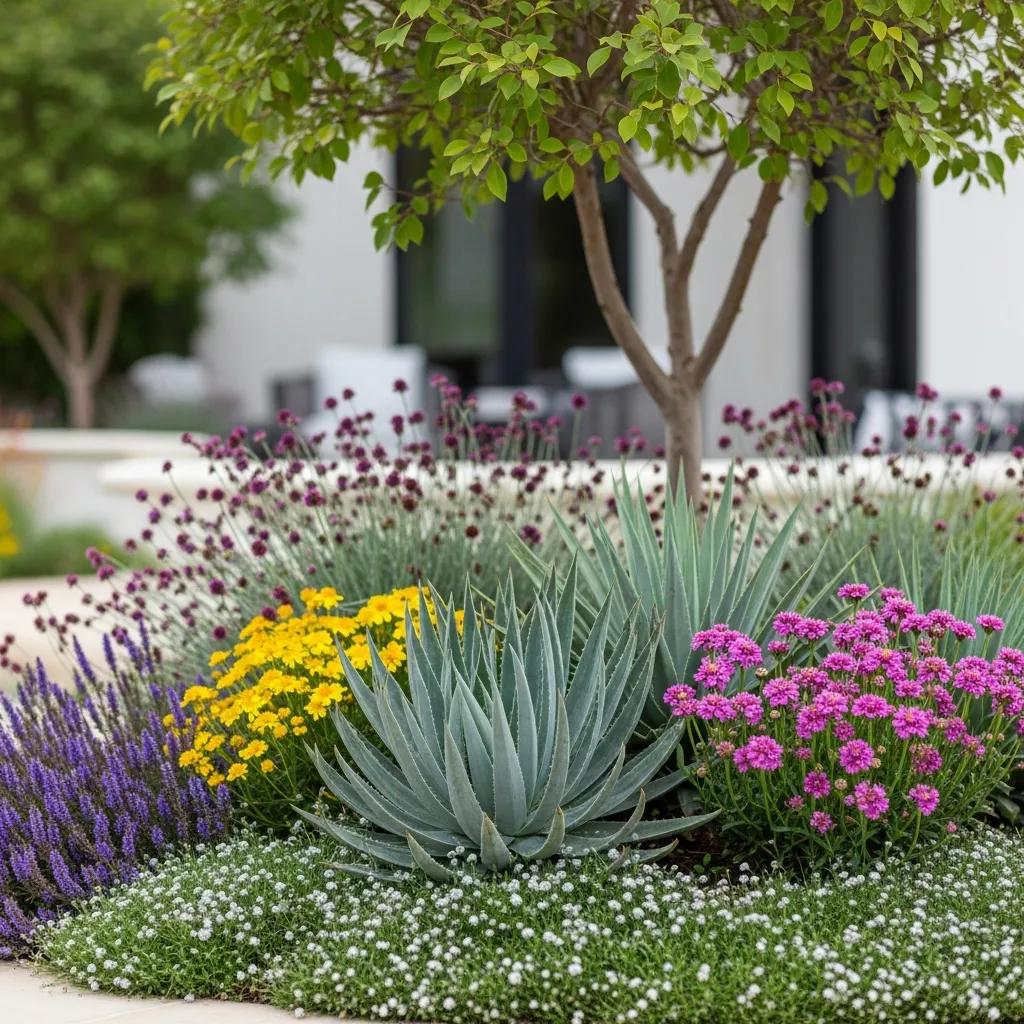
Xeriscape & Water-Smart Landscaping Island Pools and Landscaping AZ
| Plant | Water Needs | Sun Exposure | Maintenance | Luxury Use Cases |
|---|---|---|---|---|
| Agave (accent) | Very low | Full sun | Low; occasional removal of pups | Focal point near entry or poolscape |
| Palo Verde (tree) | Low | Full sun | Low; formative pruning | Shade structure near patio or pool |
| Desert Marigold (flowering) | Very low | Full sun | Low; seasonal deadheading | Mass plantings for seasonal color |
| Yucca (architectural) | Very low | Full sun | Low; occasional pruning | Bold vertical accents along pathways |
What Native Arizona Plants Thrive with Minimal Water?
How Do Succulents and Shade Trees Enhance Eco‑Friendly Backyards?
What Are Effective Water‑Efficient Landscaping Techniques for Arizona Homes?
| Approach | Technique | Water Savings Estimate | Installation Considerations | Suitability for Luxury Homes |
|---|---|---|---|---|
| Drip Irrigation | Point‑source emitters, micro‑sprays | 30–60% vs. overhead | Professional zoning and pressure regulation | High—supports precise planting palettes |
| Mulch & Soil | Organic mulch, soil amendments | 10–25% via reduced evaporation | Quality materials and proper depth critical | High—improves plant health and finish |
| Artificial Turf | High‑quality synthetic turf | Up to 100% water saved vs. grass | Base prep, drainage, cooling strategies | Medium–High—good for play and clean aesthetics |
| Permeable Hardscape | Permeable pavers, decomposed granite | Indirect savings via infiltration | Proper base and grading essential | High—integrates with pool and patio design |
How Do Smart Irrigation Systems Reduce Water Usage?
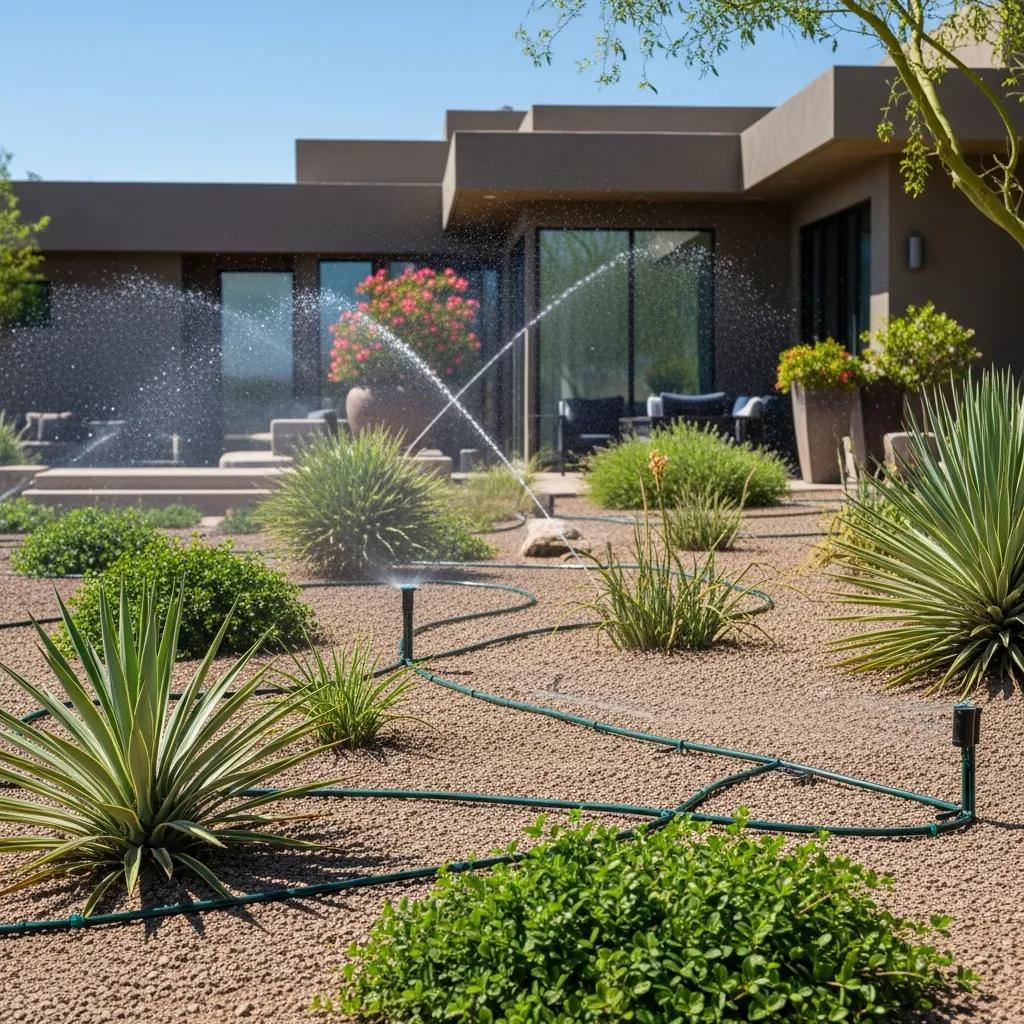
- Weather‑based controller: adjusts schedules using local climate data.
- Soilmoisture sensors: prevent unnecessary runtimes by measuring real soil water.
- Zoning and pressure regulation: ensures consistent emitter performance across varied terrain.
What Role Does Artificial Turf Play in Sustainable Outdoor Living?
How to Integrate Eco‑Friendly Outdoor Living Features in Arizona Luxury Homes?
- Position shade structures to cut solar exposure on patios and pool decks.
- Specify low‑flow fixtures and efficient appliances in outdoor kitchens.
- Choose durable, low‑maintenance materials that withstand Arizona weather.
- Integrate planting zones and irrigation to avoid unnecessary coverage and overlap.
What Shade Structures Improve Comfort and Energy Efficiency?
How Can Outdoor Kitchens and Fire Pits Be Designed Sustainably?
What Advanced Water Conservation Solutions Support Sustainable Landscaping in Arizona?
| System | Typical Capacity/Scale | Estimated Contribution to Irrigation (%) | Cost Considerations | Compliance/Permitting Notes |
|---|---|---|---|---|
| Rainwater harvesting | 2,000–10,000+ gallons cisterns | 10–30% seasonally (varies by rainfall) | Tanks, conveyance, filtration | Often allowed; check local codes for potable restrictions |
| Greywater recycling | Laundry/shower reroutes with basic treatment | 20–50% for landscape (consistent supply) | Treatment, pumps, distribution lines | Requires adherence to health standards and irrigation controls |
| Onsite reclaimed reuse | Complex treat/reuse systems for large estates | 30–70% depending on scale | Higher capital and O&M costs | Stricter permitting and monitoring requirements |