
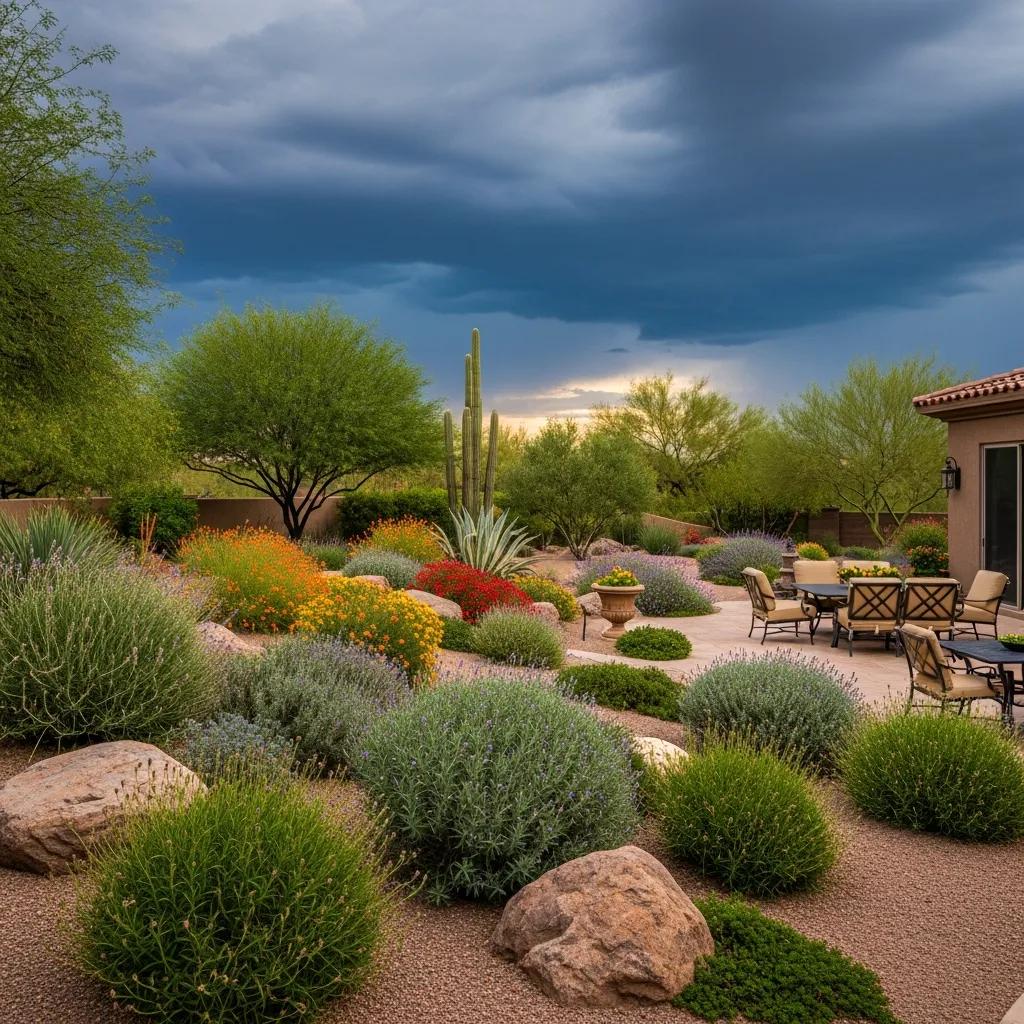
Preparing Your Arizona Garden for Monsoon Season: Practical Steps to Protect Luxury Landscapes

Monsoon season in Arizona compresses months of weather into a few intense weeks: heavy downpours, strong gusts, and swings in humidity that can quickly expose weaknesses in even the most carefully designed outdoor spaces. This guide walks homeowners through what matters most for monsoon-ready gardens—how to spot vulnerability (poor drainage, exposed roots, wind-exposed plantings) and practical steps to protect hardscapes, pools, and outdoor kitchens. You’ll find clear, prioritized actions: advanced drainage options, wind-mitigation strategies, a resilient plant palette, and smart irrigation and rain-capture tactics. Island Pools and Landscaping AZ is mentioned as a design-build resource when engineered solutions are needed; otherwise the focus stays on homeowner-ready, actionable advice to limit erosion, avoid equipment damage, and keep high-value outdoor areas functional after storms.

What Are the Key Challenges of Arizona Monsoon Season for Gardens?

Arizona monsoons bring a mix of sudden, high-intensity storms and strong winds that create four main threats to landscapes: rapid soil saturation, surface runoff and erosion, wind damage to plants and structures, and debris that harms irrigation and pool gear. These forces work fast—a brief, intense storm can wash mulch away, clog drains, or temporarily waterlog beds that aren’t designed to drain. Knowing where water concentrates and which elements are exposed lets you prioritize fixes—better drainage, storm-tolerant planting, and structural reinforcement—to reduce repair costs and downtime for luxury outdoor features. The next section explains how storms generate damage and what to look for during a quick inspection.

How Do Heavy Rains and High Winds Impact Desert Gardens?

Heavy rain and wind affect desert landscapes in predictable ways: soil displacement, root stress, and mechanical damage to plants and hardscapes. Fast runoff on compacted or bare soil produces sheet flow that strips mulch and exposes roots; on slopes, that same flow accelerates erosion and can undermine retaining walls. Poorly drained beds can stay saturated long enough to invite root rot in intolerant species, while gusts create “sail” forces that snap branches or pull up newly planted trees. Hardscapes also suffer—clogged gutters and drains can redirect stormwater toward foundations or pool equipment. Simple inspections for pooling, silt on patios, or leaning trunks let you take immediate steps: stake vulnerable trees, clear debris, and reroute runoff to safe discharge points. Those quick fixes naturally lead to planning engineered drainage and more resilient plantings.

Why Is Monsoon Preparation Critical for Luxury Outdoor Spaces?

High-end outdoor areas—pools, outdoor kitchens, custom stonework—concentrate value and can be expensive to repair. A shifted retaining wall, flooded kitchen, or damaged pool deck often requires specialists and long downtime. Preparing in advance—improving drainage, choosing materials that tolerate storms, and staging movable items—keeps small storm impacts from becoming major restoration jobs. For homeowners who value both aesthetics and performance, preparation lowers insurance claims, preserves design intent, and shortens recovery time so families can enjoy their outdoor spaces sooner after a storm.

How Can Advanced Drainage Solutions Protect Your Arizona Garden During Monsoons?
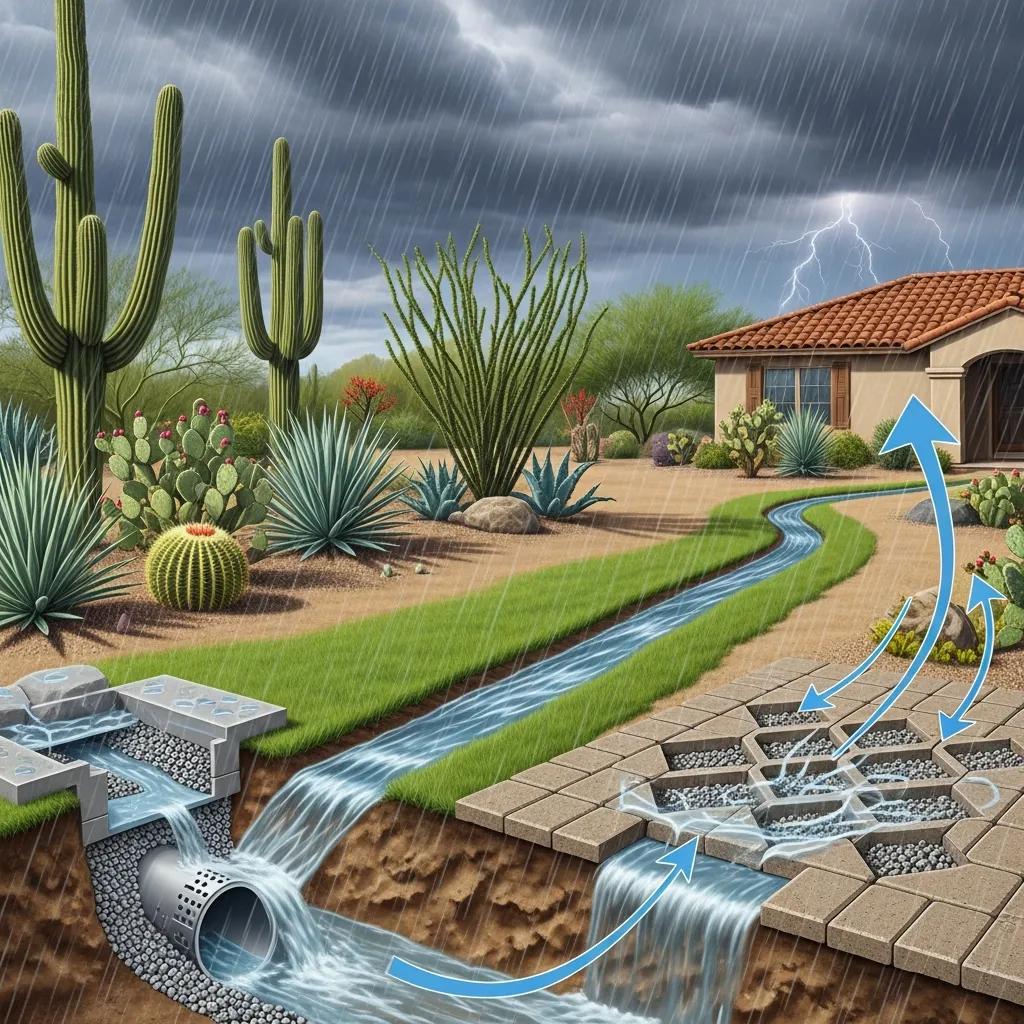
Good drainage channels concentrated flows away from structures, increases safe infiltration where appropriate, and reduces soil movement on slopes. Solutions like French drains, swales or dry creek beds, and permeable paving each play a role: French drains capture subsurface water, swales slow and spread sheet flow, and permeable surfaces reduce runoff from hardscape areas. Combined with thoughtful grading and properly routed downspouts, these measures form layered defenses that minimize waterlogging and erosion while keeping the landscape visually appealing. Below is a practical comparison to guide choices based on capacity, maintenance, and typical Arizona site conditions.

Looking at stormwater through an ecological lens highlights opportunities to blend engineered controls with landscape-scale design for greater resilience.

Arid City Stormwater Management: Ecological Design for Urban Resilience

Cities manage water for supply, sanitation, and runoff—often with engineered systems that work well but can reduce natural habitat and other ecosystem benefits. Recent projects aim to restore or reintroduce ecosystem services—water quality improvement, habitat, and public access—by designing interventions that perform hydrologic functions while reconnecting urban areas to natural processes. Although inspired by arid-city work, these ecological design ideas apply more broadly to urban landscapes seeking resilience and multiple benefits.

Different drainage systems bring different strengths for storm control and long-term upkeep.

Drainage ApproachKey CharacteristicTypical Use Case
French drainPerforated subsurface pipe surrounded by gravel to intercept lateral flowRunoff concentrated near foundations or under patios
Swale / dry creek bedSurface channel that slows sheet flow and encourages infiltrationSloped yards and channels leading to basins
Permeable pavingLoad-bearing surface with joints or base that allow water to pass throughDriveways and patios that need better drainage

The table shows how systems complement one another: French drains for subsurface control, swales for surface velocity, and permeable paving to cut runoff from impervious areas. Best choice depends on slope, soil infiltration, and the existing hardscape layout.

What Are Effective Drainage Systems for Monsoon Flood Prevention?

French drains, swales, dry creek beds, and permeable surfacing each contribute to a resilient drainage plan when used together. French drains move subsurface water away from structures, easing hydrostatic pressure beneath patios and near foundations. Swales and dry creek beds slow and spread sheet flow, reducing erosion and giving water more time to sink in. Permeable pavers lessen peak runoff from entertainment areas and driveways. Installation tips: French drains need correct trenching and outlet grading; swales benefit from rock lining and stabilizing plantings; permeable paving requires an engineered base to support loads. Maintain these systems by keeping inlets clear, topping gravel envelopes when needed, and checking outlets after storms so they stay reliable through repeated monsoons.

How Does Proper Yard Grading and Maintenance Prevent Water Damage?

Grading steers surface water away from buildings toward safe discharge points; the basic guideline is a 2% slope (about 1/4 inch per foot) away from foundations for the first several feet, though engineered sites may require tailored grades. Seasonal maintenance includes clearing gutters, ensuring downspouts discharge to stable areas, and inspecting for scour or ponding after heavy storms. Simple, effective steps—replacing compacted mulch with coarse rock in high-flow paths, re-shaping contours with topsoil, and confirming retaining walls have functioning drains—reduce the risk of sudden failure. If regrading is beyond your comfort level, a professional assessment will show whether regrading, engineered retaining walls, or subsurface drains are the right solution. Good grading and basic upkeep form the backbone of a monsoon-resilient landscape.

Which Wind-Resistant Landscape Designs Safeguard Your Outdoor Living Areas?
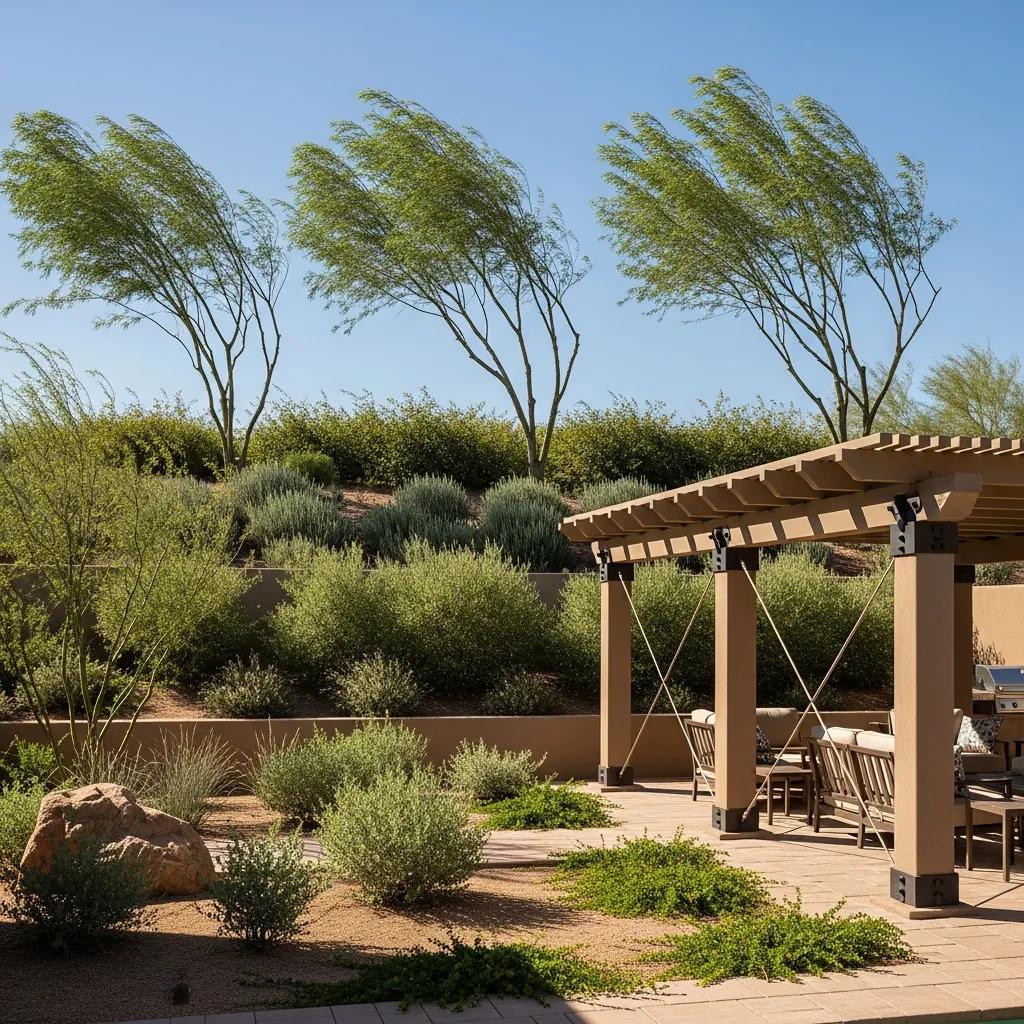
Wind-resistant landscapes combine plant choice, layered planting, and structural reinforcement to reduce uplift, slow wind near sensitive areas, and safeguard amenities. Shelterbelts—rows of compatible shrubs and trees—break prevailing gusts and create calmer microclimates for patios and pools. Layering from groundcovers to mid-height shrubs and canopy trees lowers the “sail” effect that can lift furniture or damage structures. On the built side, anchored pergolas, through-bolted connections, and removable shade elements add protection. These biological and structural measures work together to limit wind energy and protect expensive outdoor components. Use the checklist below to prioritize actions that reduce wind exposure and potential damage.

Wind-resistant design depends on layered plantings, secure anchoring, and timely maintenance:

  1. Create layered windbreaks: Use a mix of low, medium, and tall species to diffuse gusts.
  2. Plant deep-rooted specimens on slopes: They help hold soil and prevent tree tilt.
  3. Anchor structures: Choose wind-rated fasteners and tie-downs for pergolas and shade systems.

Combining living screens with engineered anchors produces the most dependable protection; next we cover tree care practices that increase storm resilience.

How Does Tree Pruning and Staking Enhance Storm Resilience?

Targeted pruning reduces wind load by thinning crowded limbs and balancing the canopy, which lowers the chance of breakage in strong gusts. Structural pruning removes crossing branches and establishes a clear central leader on young trees to build wind-tolerant form while keeping a natural look. Staking helps newly planted trees establish roots but should allow controlled trunk movement—overly rigid, long-term staking can hinder root development and increase later failure risk. Use breathable staking materials and remove supports after one growing season for most species; call an arborist for mature trees with structural defects. Seasonal pruning and pre-monsoon inspections greatly reduce uprooting and limb failure, and they tie directly into structural protection for outdoor fixtures.

What Structural Reinforcements Protect Pergolas and Outdoor Furniture?

Pergolas and outdoor furnishings benefit from both design-time reinforcement and seasonal precautions to resist wind uplift. Anchor pergolas into proper foundations and specify wind-rated hardware—through-bolts and straps—to increase resistance. For furniture, use tie-downs, weighted bases, or quick-disconnect hardware so you can secure or store pieces before a storm. Removable shade systems let you reduce sail area when gusts are forecast, and choosing corrosion-resistant materials preserves strength over time. A routine of securing loose items, checking fasteners, and storing fragile décor before storms links landscape design with everyday monsoon readiness.

What Are the Best Drought-Tolerant and Monsoon-Resilient Plants for Arizona Gardens?

Pick species that tolerate drought yet survive intermittent monsoon moisture by considering root form, disease resistance, and mature size appropriate to the planting location. Native and well-adapted plants often have deep or fibrous root systems that stabilize soil during heavy flows and recover quickly after wet periods. Favor species with moderate water uptake after storms and avoid shallow-rooted, high-maintenance ornamentals near slopes or drainage channels to limit plant loss. The table below compares recommended species on drought tolerance, monsoon performance, and mature size to help with planting decisions in upscale landscapes.

Using climate-smart plant choices helps turn arid yards into resilient, low-maintenance landscapes that perform through extreme weather.

Desert Landscape Resilience: Climate-Smart Interventions for Arid Zones

In very dry regions with large temperature swings, limited vegetation and high winds raise the risk of desertification. Climate-smart approaches focus on conserving soil, water, and biodiversity while introducing resilient planting and land-use practices that can transform marginal areas into productive, more stable landscapes. These strategies highlight the value of plant selection and soil care in restoring ecological function in arid zones.

Recommended landscape plants balance drought tolerance with the ability to withstand monsoon conditions.

PlantDrought Tolerance / Monsoon ResilienceMature Size
Mesquite (Native)Very drought-tolerant; deep roots help resist erosion20–30 ft
Palo Verde (Native)Handles short saturation events; prefers well-drained soils15–30 ft
Agave (Adapted)Excellent drought tolerance; vulnerable to prolonged saturation2–6 ft
Desert WillowDrought-adapted and tolerates intermittent moisture well15–25 ft

This comparison shows deep-rooted trees like mesquite and palo verde act as anchors during monsoon cycles, while succulents and adapted shrubs perform best in raised or well-drained micro-sites.

Which Native Desert Plants Thrive During Monsoon Season?

A restrained palette of native and adapted species gives structure, seasonal color, and resilience in monsoon-prone yards. Deep-rooted trees—mesquite and palo verde—stabilize slopes and provide canopy for layered plantings. Flowering shrubs and subshrubs adapted to desert conditions can tolerate brief inundation if soils drain quickly; species such as desert willow and select penstemons resprout after heavy moisture. Succulents and agaves do best in raised, well-draining beds where standing water is unlikely, making them ideal accents. Thoughtful placement preserves the luxury look while improving monsoon performance and informs soil preparation and planting details.

How Does Strategic Plant Placement Improve Storm Survival?

Siting plants by root depth, water tolerance, and exposure reduces wind damage and erosion during storms. Put deep-rooted trees and shrubs at slope toes and along contours to intercept and slow water, and reserve shallow-rooted ornamentals for flat or raised beds with amended, fast-draining soil. Use sacrificial buffer zones—hardier species placed to absorb flow—so delicate specimens near entertaining areas are protected. Coarse organic or rock mulch improves infiltration and limits surface velocity, and adding well-aged compost improves soil structure for faster recovery after storms. Proper placement and planting technique are the final steps before adjusting irrigation for monsoon cycles.

How Can Smart Irrigation and Water Management Optimize Monsoon Garden Care?

Smart irrigation and rainwater capture reduce unnecessary watering, conserve municipal supply, and protect plants from root-suffocating saturation during monsoons. Weather-based controllers and soil moisture sensors pause scheduled watering when rain arrives or is forecast, preventing excess moisture that can encourage fungal disease and nutrient loss. Rainwater capture—cisterns or redirected downspouts—stores runoff for later use, lowering flows that cause erosion and providing reserves for dry periods. Combining smart controls, adjusted schedules, and capture strategies creates a responsive water plan that supports plant health and reduces outdoor water use. The table below compares common technologies and their benefits for monsoon-aware maintenance.

Smart irrigation tools deliver measurable advantages for monsoon-ready landscapes.

TechnologyBenefitTypical Use Case
Weather-based controllerAdjusts schedules automatically based on forecast dataReduces unnecessary watering during monsoon season
Soil moisture sensorsStops irrigation when root zone is already wetPrevents overwatering and root disease
Leak detection & flow monitoringNotifies you of breaks or unusually high flowDetects hidden leaks during or after storms

Sensor-driven and forecast-aware systems cut water waste and avoid conflicts between scheduled irrigation and natural rainfall, improving plant health and efficiency.

What Smart Irrigation Systems Reduce Water Usage During Monsoons?

Weather-responsive controllers, ET-based scheduling, and soil moisture probes are the most effective features for reducing unnecessary irrigation during monsoon months. Controllers that pull local weather data suspend or reduce cycles when rain is expected, while moisture probes inhibit cycles when the root zone is already wet. Zone-specific programming keeps low-water zones—succulent beds and desert-adapted areas—off during wet periods while maintaining targeted irrigation for newly planted or high-value specimens. Remote monitoring and alerting let homeowners or maintenance teams react quickly to leaks or damaged components after storms. Regular checks of heads and valves before and after monsoon events complete a strong irrigation management routine.

How Does Rainwater Harvesting Support Sustainable Garden Maintenance?

Rainwater harvesting captures stormwater for later use and reduces peak flows that cause erosion and downstream siltation. Systems range from simple downspout diverters into 50–200 gallon barrels for garden use to larger cisterns storing thousands of gallons for landscape irrigation; sizing depends on roof area and desired capture. Proper overflow routing and first-flush diversion keep storage cleaner and protect water quality for plants. Harvested water is well suited to non-potable uses—irrigation and hardscape cleaning—reducing demand on municipal supplies during dry months. Paired with smart irrigation controls, rainwater reserves let you strategically top up critical zones after storms, combining sustainability with resilience.

How Does Island Pools and Landscaping AZ Build Monsoon-Ready Luxury Outdoor Spaces?

Island Pools and Landscaping AZ delivers monsoon-ready landscapes through an integrated design-build approach that coordinates hardscape, softscape, and pool systems with engineered drainage and structural reinforcement. The process begins with a site assessment and risk mapping that identifies drainage paths, wind exposure, and locations of high-value features like pools and outdoor kitchens. From that assessment, plans specify grading, French drains or swales where needed, a suitable plant palette, and anchoring details for pergolas and fixtures. During construction, coordinated trades ensure drainage outlets, irrigation controls, and pool equipment are placed and protected according to the engineered plan. After installation, we provide a walkthrough and maintenance guidance so homeowners can maintain resilience through every monsoon season.

What Is Our Design-Build Approach to Monsoon-Resilient Landscaping?

Our design-build workflow follows clear steps: consultation and site assessment; engineered grading and drainage design; integrated hardscape and softscape plans; coordinated construction across pool, irrigation, and landscape trades; and a final inspection with homeowner orientation. Clear responsibilities ensure grading, drain installation, and anchoring align with planting plans and pool equipment locations so systems perform under storm conditions. Hands-on communication and construction oversight reduce rework and ensure French drains, swales, and irrigation controls function as intended during monsoon events. This approach preserves design intent while delivering engineered resilience for upscale outdoor environments.

How Do We Customize Solutions for High-End Arizona Homeowners?

We tailor solutions by choosing materials, plant palettes, and technical details that match an estate’s aesthetic while meeting monsoon performance needs. Options include custom retaining systems, reinforced pergola anchoring, and discreetly integrated drainage alongside premium finishes, plus plant selections that balance drought tolerance with storm resilience. Our project management keeps homeowners informed about schedule and design choices, and the handover includes seasonal maintenance recommendations for monsoon preparation. By blending luxury finishes with technical solutions—like concealed French drains next to natural stone patios—we protect both the look and long-term durability of outdoor investments.

  1. Protective Consultation: A targeted site review that identifies immediate risks and ranks mitigation priorities.
  2. Integrated Engineering: Coordinated drainage and grading plans that align with hardscape and pool layouts to prevent unintended runoff.
  3. Finish & Function: Premium materials and subtle technical solutions that combine beauty with resilience.

Frequently Asked Questions

What are the signs that my garden is at risk during monsoon season?

Watch for pooling water in low spots, visible erosion on slopes, exposed roots, or leaning trees and shrubs—these are clear signs of stress. Clogged gutters and downspouts can also cause overflow near foundations and pool equipment. Regular checks before and after storms help you catch issues early and act quickly.

How can I improve soil drainage in my garden?

Improve drainage by adding organic matter like compost to loosen compacted soil, installing subsurface drains or swales to move excess water, or building raised beds so roots sit above saturated soil. Aerating compacted areas also helps water move through the profile faster.

What maintenance should I perform on my irrigation system before monsoon season?

Inspect for leaks, broken heads, and clogged lines; adjust timers to account for expected rainfall; and consider soil moisture sensors to prevent automatic watering during wet periods. Make sure valves and controllers are operating correctly so irrigation doesn’t conflict with natural rainfall.

How can I protect my outdoor furniture during storms?

Choose weather-resistant materials and use tie-downs or weighted bases where possible. Store lightweight or movable pieces indoors or in a sheltered area when storms are forecast. Furniture covers provide extra protection against moisture and debris for items that remain outside.

What role do native plants play in storm resilience?

Native plants often have deep or fibrous roots that stabilize soil and reduce erosion during heavy rain. They’re adapted to local climate swings, so they recover faster after wet periods and typically need less irrigation—making them a smart choice for long-term resilience.

How can I assess the effectiveness of my drainage systems after a storm?

After a storm, inspect areas that usually collect water for standing pools, sediment buildup, or new erosion channels. Confirm that outlets and inlets are clear and that water is being routed away from structures. If swales or French drains show signs of failure, schedule maintenance or a professional review.

Conclusion

Preparing your Arizona garden for monsoon season protects both beauty and function. By improving drainage, choosing resilient plants, reinforcing structures, and using smart water controls, you can reduce damage and speed recovery after storms. Start with a site review, prioritize the most vulnerable areas, and combine simple homeowner actions with engineered fixes where needed—your landscape will be more resilient and easier to enjoy year after year. For expert help integrating these strategies into a luxury design-build plan, Island Pools and Landscaping AZ is ready to assist.