
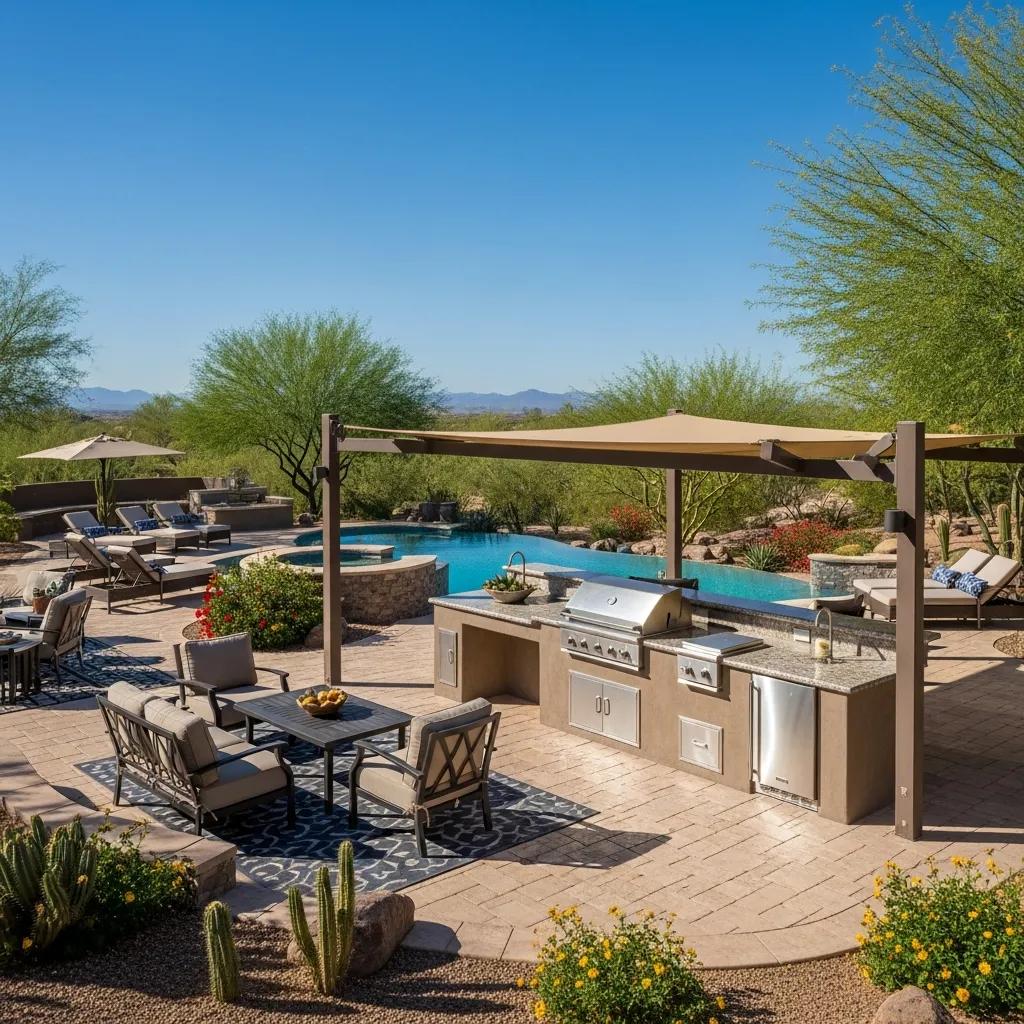
Luxury Outdoor Entertainment in Arizona — The Complete Guide for Upscale Homeowners

A thoughtfully designed luxury outdoor entertainment area blends durable materials, purposeful systems, and refined landscaping to create a resort-quality backyard that performs in Arizona’s extreme sun and heat. This guide defines what luxury outdoor living looks like here, explains how heat, UV exposure and water scarcity influence design, and shows how smart choices keep spaces cool, conserve resources, and simplify upkeep. You’ll find practical features—pools, kitchens, fire and water elements, AV systems, and shade structures—along with plant palettes, maintenance tips, and a step‑by‑step build process from visualization through aftercare. Throughout, we offer actionable lists and clear comparisons to help you plan pool parties, movie nights, and year‑round dining while prioritizing drought‑smart landscaping and integrated controls.

Luxury Outdoor Entertainment in AZ – Island Pools and Landscaping AZ

In Arizona, luxury outdoor design focuses on longevity, comfort, and striking moments that still work under intense sun. Key elements include resort‑style pool features, a fully equipped outdoor kitchen and bar, well‑placed fire and water accents, engineered shade, integrated AV and lighting, and drought‑aware planting that maintains curb appeal with less water. Each choice reduces heat exposure, lowers maintenance, and supports a smooth entertaining flow—together they make the yard more usable and more valuable. Below we break down how pools, landscape, kitchens, and gathering zones shape the backyard experience.

This section lists top features and why they matter in Arizona:

  1. Resort‑style pools (infinity edges, spas): Add visual depth and cooling focal points while enabling evening entertaining.
  2. Custom outdoor kitchen and bar: Support food‑forward gatherings with durable appliances and shaded service flow.
  3. Fire and water features: Create atmosphere for evenings while prioritizing low‑maintenance designs for desert conditions.
  4. Shade structures and pergolas: Cut UV exposure and form comfortable microclimates for seating and dining.
  5. Integrated outdoor AV and layered lighting: Extend usable hours and deliver cinematic, memorable experiences.
  6. Drought‑tolerant landscaping and artificial turf: Keep a luxurious look with far less irrigation need.
  7. Smart controls and pool automation: Improve energy and water efficiency while simplifying operation.

These features guide every major design decision; next we look at how custom pools anchor and elevate outdoor living.

How Do Custom Backyard Pools Enhance Outdoor Living Spaces?
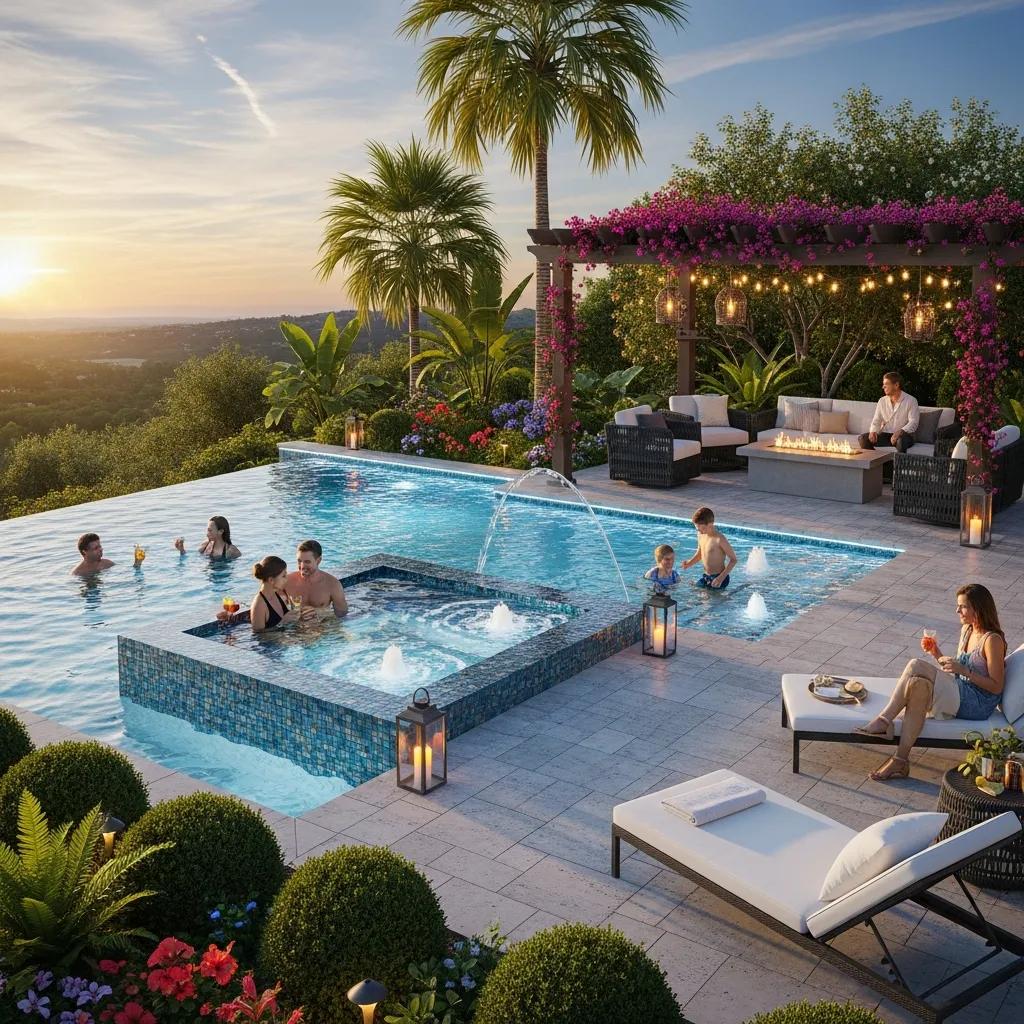
A custom pool becomes the visual and functional centerpiece of a luxury Arizona yard, shaping circulation, sightlines, and entertainment zones. Elements like infinity edges, swim‑up bars, and integrated spas layer experiences—daytime cooling, evening social zones, and dramatic night lighting. Finish and material choices favor thermal performance and low upkeep; light‑colored aggregates and tile reduce heat retention and stand up to UV. Smart pool controls manage chemistry, lighting, and heating to conserve water and simplify seasonal care. Knowing pool types and technical integrations helps homeowners prioritize features that match lifestyle and entertaining goals.

Which High‑End Landscape Design Elements Suit the Arizona Climate?

High‑end desert landscapes balance refined aesthetics with drought resilience: native plant palettes, strategic turf placement, and hardscapes that limit evaporation create comfortable outdoor rooms. Xeriscape principles group plants by water needs and use mulch, rock accents, and selective artificial turf to preserve green visuals without heavy irrigation. Light‑colored pavers, textured stone, and permeable surfaces reduce heat radiation and support passive cooling. Low‑profile drip irrigation and smart controllers target root zones efficiently, and microclimates under pergolas or trees let you expand plant variety in protected pockets. These choices produce a durable, entertaining landscape with lower long‑term maintenance and water use.

This approach reflects a wider design shift: sustainability and climate adaptation are now central to outdoor planning.

Sustainable & Climate‑Adaptive Outdoor Landscape Design

Growing interest in sustainable outdoor design and using landscape planning to visualize climate‑adapted responses is shaping the way designers and planners work.

Adaptive design and green building approach for the city of the future, F Tucci, 2020

How to Create Custom Outdoor Kitchens and Bars for Arizona Backyards?
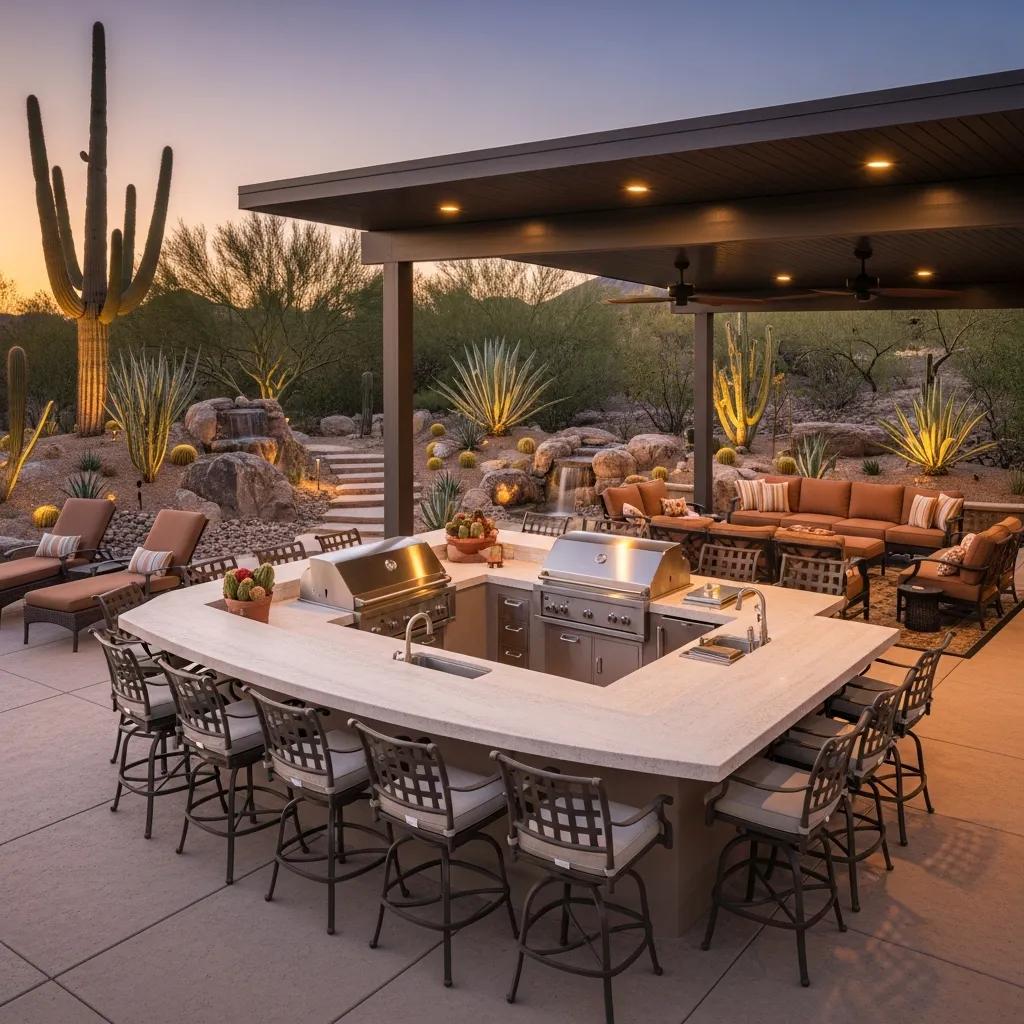
A successful luxury outdoor kitchen in Arizona organizes service flow, durability, and comfort so large gatherings work smoothly despite sun and dust. Layouts follow a work‑triangle between cooking, refrigeration, and cleanup, while bar seating and pass‑through counters encourage interaction. Durable materials—stainless finishes, sealed stone, and purpose‑built enclosures—resist dust and UV; refrigeration and ice systems perform best in shaded, ventilated housings. Adding shade, misters or fans, and smart refrigeration controls keeps guests comfortable and lowers energy use. Below is a concise comparison of high‑end appliances focused on desert durability and maintenance to guide selection.

The outdoor kitchen has evolved into a defining luxury amenity for modern homes.

The Rise of Luxury Outdoor Kitchens in Upscale Homes

The outdoor kitchen has become a mainstream luxury feature—an outdoor, wall‑less room with customized appliances and layouts that extend the home’s living space into the backyard.

Making the Great Outdoors Better: The outdoor kitchen and the changing design of American luxury, 2009

Intro to kitchen appliance comparison table: The table compares common outdoor kitchen appliances by durability and desert suitability to help prioritize purchases and maintenance.

ApplianceCharacteristicDesert Suitability
Built‑in GrillStainless construction, sealed ignitionsHigh — best in covered enclosure to limit dust
Pizza OvenHeat‑retaining refractory or stainlessMedium — perform well under partial shelter
Outdoor RefrigeratorInsulated cabinet, active ventingHigh — needs shaded placement for efficiency
Ice MakerHigh output, water filtrationMedium — routine maintenance needed to avoid mineral buildup
Wine FridgeTemperature zones, UV‑resistant doorHigh — keep in shaded, insulated cabinet

This comparison clarifies trade‑offs: prioritize shaded installs and sealed enclosures to keep appliances efficient and low‑maintenance. Next we cover appliance selection and service planning.

What Are the Must‑Have High‑End Appliances for Outdoor Kitchens?

High‑end outdoor kitchens in Arizona typically include a built‑in gas or hybrid grill, a covered pizza oven, insulated refrigeration, an ice maker, and a dedicated beverage or wine fridge. Choose stainless or sealed finishes, accessible service panels, and enclosures that shield electronics from dust and heat. Refrigeration should be rated for outdoor use or installed inside ventilated, insulated cabinetry. Utility planning requires dedicated circuits, code‑compliant gas shutoffs, and proper drainage for ice and refrigeration lines. A documented maintenance schedule—filter replacements, gasket checks, and seasonal calibrations—keeps equipment running and preserves warranties.

How to Design Functional and Elegant Outdoor Dining Areas?

Elegant outdoor dining balances circulation, sightlines, and guest comfort so service flows from kitchen to table without disruption. Allow at least 36 inches of circulation behind chairs and keep clear service paths for staff. Select weather‑resistant furniture—UV‑stable frames, quick‑dry cushions, and easy‑clean textiles—to stay refined with minimal upkeep. Layered lighting—task lights for prep, softer ambient fixtures over dining areas, and accent lighting near fire or pool features—extends usability after dark. Integrated shade and microclimates ensure year‑round comfort and a polished atmosphere.

What Are the Best Fire and Water Features for Arizona Outdoor Entertainment Areas?

Fire and water features add drama and atmosphere but must be chosen to limit evaporation and simplify maintenance in the desert. Favor gas linear fireplaces, built‑in fire bowls, and low‑maintenance gas fire pits to avoid ash and reduce fire risk. For water, use recirculating systems—small cascades, bubblers, and reflecting basins—that minimize open surface area. Sit fire features near seating but away from overhangs; place water elements in sheltered locations or adjacent to pools so systems can share filtration. The table below compares common options for visual impact, upkeep, and desert suitability.

Intro to fire and water comparison table: This table compares fire and water feature options by maintenance, visual impact, and desert suitability to help homeowners weigh aesthetics and operational needs.

Feature TypeMaintenanceDesert Suitability
Gas Linear FireplaceLow — periodic burner inspectionHigh — clean flame, minimal ash
Fire Bowl (Gas)Low — protected connectionsHigh — sculptural, compact footprint
Wood Fire PitHigh — ash removal, smoke concernsLow — often restricted locally
Recirculating WaterfallMedium — pump and filter careHigh — conserves water when closed loop
Reflecting PoolLow–medium — filtration requiredMedium — smaller surfaces preferred

That comparison shows gas fire and closed‑loop water elements match Arizona needs best. Next we cover selection, safety, and value considerations.

How Do Custom Fire Pits and Fireplaces Add Ambiance and Value?

Custom fire pits and fireplaces anchor gatherings, extend outdoor use into cooler months, and boost curb appeal. Gas options deliver clean, controllable flames without ash, reduce maintenance versus wood, and simplify permitting. Durable materials—concrete, natural stone, or weather‑tolerant metals—stand up to desert conditions. Prioritize safety: maintain required clearances, install non‑combustible hearth zones, and include shutoff valves. Local codes will guide allowable fuels and placement. Well‑designed fire features increase usable evenings and are a recognizable value add for future buyers.

What Decorative Water Features Complement Desert Landscaping?

In desert gardens, decorative water features emphasize recirculation, compact surfaces, and visual contrast over large open pools. Bubblers, narrow cascading walls, and small reflecting basins pair well with xeric plantings and closed recirculation systems to conserve water. Materials like basalt, textured tile, and dark stone create strong reflections and work with drought‑tolerant palettes; locate water features near shaded seating to reduce evaporation. Maintenance focuses on pump service, filtration, and covering during the hottest months to limit mineral buildup and water loss. Thoughtful design adds sensory richness without sacrificing sustainability.

How Can Advanced Outdoor Sound and Visual Systems Elevate Your Backyard Experience?

Outdoor AV turns the backyard into a cinematic living room—perfect for movies, poolside playlists, or synchronized lighting effects. Core components include weather‑resistant speakers, outdoor‑rated subwoofers, and retractable screens or sheltered projectors; smart control systems manage zones, schedules, and privacy. Sound placement and acoustic planning ensure even coverage without disturbing neighbors: buried subs add low end, distributed speakers balance coverage, and directional arrays limit spill. Below is a comparison of common outdoor AV hardware by weather resistance, integration, and typical cost considerations.

Intro to outdoor AV comparison table: This table evaluates outdoor AV elements for weather resistance, integration and typical cost to help plan a high‑end backyard cinema or music setup.

AV ComponentWeather ResistanceControl/Integration
Weatherproof SpeakersHigh — sealed enclosures, IP‑ratedExcellent — integrates with zone controllers
In‑ground SubwooferHigh — buried enclosuresGood — plan access for service
Retractable Screen & ProjectorMedium — projector needs shelterExcellent — pairs with smart home AV
Outdoor Amplifier/ControllerMedium–high — ventilated enclosuresEssential — central hub for zones

Choosing IP‑rated speakers and sheltered projectors maximizes longevity. Below we outline speaker benefits and system integration strategies.

What Are the Benefits of Weather‑Resistant Outdoor Speakers?

Weather‑resistant speakers keep clarity and life expectancy up by using sealed enclosures, corrosion‑resistant components, and IP ratings that block dust and moisture. They offer consistent coverage across terraces and pool decks, resist distortion from heat‑related expansion, and come in discreet forms—in‑ground, rock‑style, or flush‑mounted—to preserve landscape aesthetics. Placement should provide spread for even sound pressure while keeping lower volumes near property lines. Properly specified speakers connect to outdoor‑grade amplifiers and smart controllers so you can switch between party mode, background music, or synchronized audio with lighting and pool features.

How to Integrate Smart Home AV Systems for Seamless Control?

Integrating outdoor AV with whole‑home automation uses a central hub to manage zones, sources, schedules and user access via mobile or voice. Common protocols—Wi‑Fi, low‑latency audio networks, and smart‑home ecosystems—let outdoor zones mirror indoor content or run independently. Zone profiles let you tailor sound for pool parties versus intimate dinners, and weather or security sensors can automatically protect equipment during storms. Choosing open‑integration systems reduces vendor lock‑in and makes future upgrades easier, creating a flexible, dependable entertainment backbone for your yard.

Which Luxury Landscape Designs and Shade Structures Are Ideal for Arizona?

Luxury landscape design in Arizona combines engineered shade with plantings that create comfortable outdoor rooms, cut heat, and deliver elevated aesthetics. Structural shade—pergolas, ramadas, and retractable systems—forms microclimates and protects furniture and appliances, while trees and vertical screens soften sun and wind. Plant palettes prioritize native and low‑water species grouped by need; artificial turf or gravel paths add green contrast without large water demands. Smart irrigation and task lighting complete usable spaces for daytime comfort and nighttime ambiance. Below we compare common shade solutions and their benefits.

This section lists practical shade structure types and their advantages:

  • Pergolas: Provide permanent architectural definition and filtered shade, with options for climbing plantings.
  • Ramadas: Heavier, full‑coverage structures ideal for integrated lighting and durable shade.
  • Retractable Shades: Motorized flexibility for variable sun, offering on‑demand protection when you need it.

How to Choose Drought‑Tolerant Plants for Sustainable Luxury Landscaping?

Choose drought‑tolerant plants by emphasizing natives, grouping by water needs, and layering textures for year‑round interest with minimal irrigation. Flowering shrubs, sculptural succulents, and ornamental grasses provide seasonal color and contrast; grouping plants with similar evapotranspiration rates reduces waste. Smart irrigation—drip lines, moisture sensors, and timers—targets root zones and pairs with soil amendments to boost moisture retention in planting pockets. Consider bloom sequence for visual rhythm, scale to match hardscape proportions, and place plants under shade structures where appropriate to capitalize on lower water demands.

What Are the Advantages of Custom Pergolas and Retractable Shades?

Custom pergolas and motorized shades add comfort and lifestyle flexibility: fixed pergolas give lasting architectural presence, while retractable systems allow precise sun control and protect sensitive equipment. Materials such as powder‑coated aluminum, thermally treated wood, or composite lumber deliver durability and aesthetic warmth suited to desert exposure. Motorized options integrate with smart controls to adjust shading by sun angle or user preference, improving comfort and protecting finishes. These structures expand usable hours and reduce weather wear on furniture and kitchen equipment.

What Is the Island Pools and Landscaping AZ Process for Designing Outdoor Entertainment Areas?

Island Pools and Landscaping AZ uses an integrated Design‑Build approach that coordinates pools, landscape, hardscape, and outdoor living systems into a single cohesive plan. We start with an on‑site consultation to define goals, budget, and constraints, then move to concept design and 3D visualization to confirm sightlines, materials, and circulation before permitting and construction. During the build, clear communication and attention to detail keep the project aligned with approved plans; after handover we provide warranty support and aftercare to maintain performance. We emphasize drought‑friendly options—artificial turf and native plant palettes—alongside a satisfaction guarantee and defined client touchpoints through every phase.

How Does 3D Design and Visualization Enhance Project Planning?

3D renderings and virtual walkthroughs turn sketches into realistic views that show materials, lighting and spatial relationships before construction. These tools reveal sightlines, solar impacts, and scale so homeowners can make confident decisions about pool edges, pergola locations, and furniture layouts — reducing surprises during build. For contractors, models help detect clashes between plumbing, electrical, and structure and improve budget accuracy by clarifying quantities and finishes. Using renderings for approvals speeds decision‑making and sets clear expectations for the final result.

If you’re weighing aesthetic, water‑use, and technology trade‑offs, a tailored 3D design can make choices obvious. Island Pools and Landscaping AZ specializes in integrated design‑build solutions that focus on meticulous detailing, transparent communication during construction, and drought‑friendly options like artificial turf and native plants. Our process is collaborative and backed by warranty and aftercare to support long‑term performance.

What Are the Steps from Concept to Completion Including Warranty and Aftercare?

Projects follow clear milestones: initial consultation and site assessment, concept design and budgeting, detailed 3D design and client approvals, permitting and site preparation, construction with scheduled inspections, final walkthrough and commissioning, and warranty‑backed aftercare. Timelines vary with complexity, but each phase defines client decisions and deliverables—for example, 3D approval signals the move to permitting and procurement. After handover we recommend seasonal equipment checks, pool chemistry services, and irrigation audits to preserve performance. Clear communication at every milestone reduces delays and aligns expectations between client and contractor.

  • Initial Consultation: Define goals, constraints, and a preliminary budget.
  • Design & 3D Visualization: Finalize materials, layout, and system integrations.
  • Permitting & Construction: Execute the build with scheduled inspections.
  • Handover & Warranty: Commission systems and provide post‑build maintenance guidance.

This stepwise process clarifies responsibilities, timelines, and the warranty/aftercare needed to sustain a luxury outdoor entertainment area.

Frequently Asked Questions

What are the best materials for outdoor furniture in Arizona's climate?

Pick materials that stand up to intense sun and heat. Aluminum, teak, and high‑quality synthetic wicker resist fading and hold up well. Use UV‑stabilized fabrics for cushions and quick‑dry foam to limit moisture retention. Weather‑resistant finishes and removable cushion covers make cleaning easier and extend the life of your pieces, keeping the space looking polished with low maintenance.

How can I maintain my outdoor kitchen appliances in Arizona?

Regular cleaning and protection are key. Wipe stainless steel surfaces with recommended cleaners to prevent staining, inspect seals and gaskets on refrigerators and ice makers, and keep appliances covered when not in use. Schedule seasonal servicing for grills and ovens and follow manufacturer maintenance guidelines to extend equipment life and ensure safe, reliable performance during gatherings.

What are the benefits of using smart irrigation systems in desert landscaping?

Smart irrigation saves water and supports healthier plants by using soil moisture sensors and local weather data to adjust watering. Remote control via phone apps makes on‑the‑go adjustments simple. These systems reduce overwatering, lower utility costs, and help maintain attractive landscapes with less manual effort.

How do I choose the right shade structure for my outdoor space?

Consider how much shade you need, where sun exposure is strongest, and the look you want. Pergolas offer a permanent architectural statement; ramadas provide full coverage and integrated lighting; retractable shades give on‑demand control. Choose materials like aluminum or treated wood that resist Arizona conditions, and ensure the structure coordinates with your overall design for a cohesive result.

What are the advantages of incorporating fire features in outdoor entertainment areas?

Fire features enhance ambiance and extend comfortable outdoor evenings. Gas fire pits and fireplaces offer controllable heat without the ash or smoke of wood, making them lower maintenance and easier to permit. They create natural gathering spots and visually anchor seating areas while complementing lighting and landscape design.

How can I ensure my outdoor AV system is weather‑resistant?

Select outdoor‑rated components—IP‑rated speakers, weatherproof enclosures, and sheltered electronics. Protect wiring from moisture and UV exposure, and use retractable screens or covered housings for projectors. Regular inspections and cleaning help preserve performance so you can enjoy your system year‑round.

What are the key considerations for lighting in outdoor entertainment areas?

Plan layered lighting: task lighting for cooking and prep, ambient lighting for dining and lounging, and accent lighting for pools and landscape features. Use weather‑rated fixtures and energy‑efficient LEDs. Consider motion sensors for security and convenience, and design lighting to create atmosphere while keeping pathways and entries safe.

Conclusion

Designing a luxury outdoor entertainment area in Arizona means balancing beauty, durability, and climate‑smart performance. By pairing long‑lasting materials, thoughtful systems, and drought‑wise planting, you can enjoy a backyard that looks like a resort and performs reliably year‑round. Ready to transform your outdoor space? Reach out to Island Pools and Landscaping AZ to discuss a tailored design that fits your lifestyle and budget.