
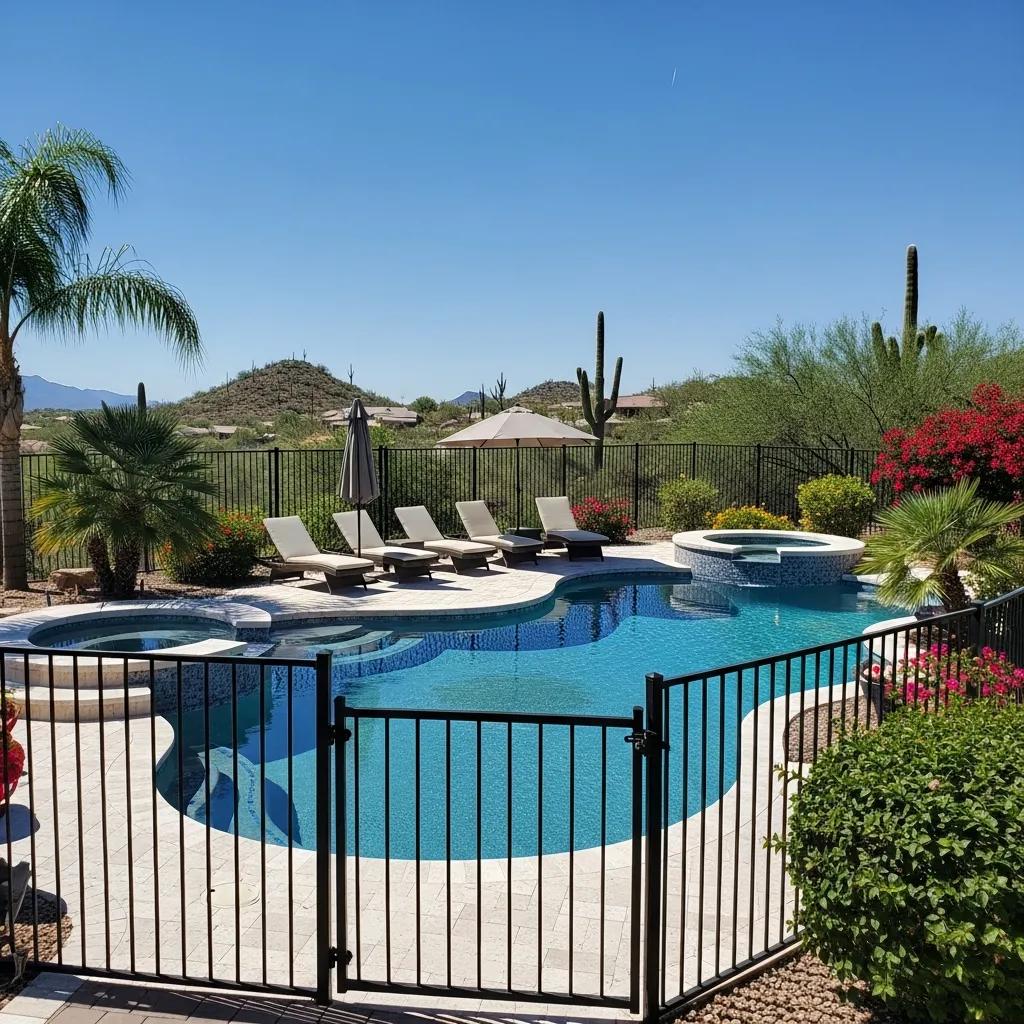
Arizona Pool Safety & Fencing Laws — A Practical Guide for Homeowners
Key Arizona Pool Fence Height and Barrier Requirements
Pool Fencing Reduces Drowning Risk in Young Children
ABSTRACT: Drowning is a leading cause of unintentional death among children, especially those under five. Pool fencing is a passive, environmental intervention aimed at keeping preschool‑age children from unsupervised pool access. Given the high stakes, studies have evaluated fencing as a key strategy to reduce drowning in this age group.
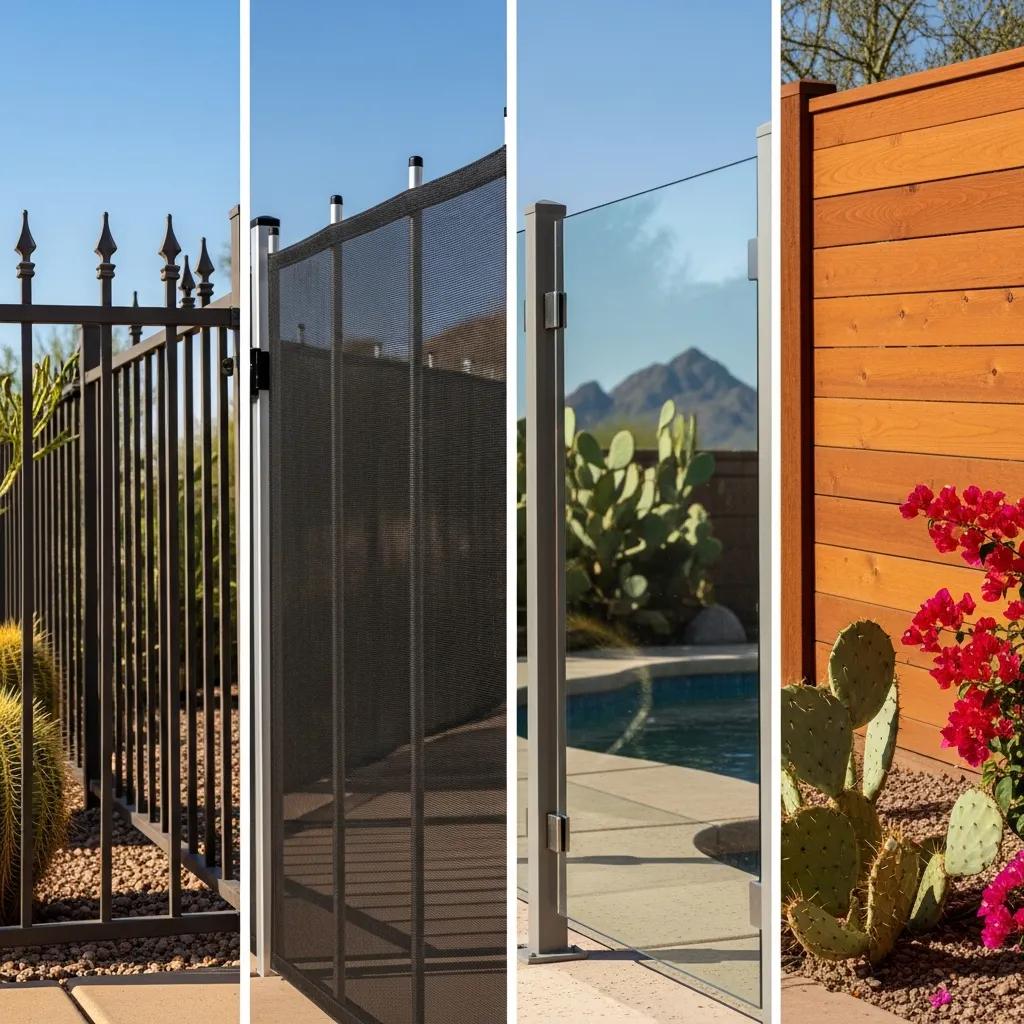
| Fence Type | Key Attribute | Practical Value |
|---|---|---|
| Wrought iron | Meets 60" easily; vertical pickets limit horizontal openings | Durable, upscale look; verify picket spacing to pass the 4‑inch sphere test |
| Mesh safety fence | Removable, low climbability when taut | Great temporary option for families with young kids; anchors and tension are critical |
| Glass panel | Solid, minimal gaps; height measurement is straightforward | High‑end, low maintenance, excellent sightlines for supervision |
| Wood privacy | Solid panels reduce openings but may have climbable rails | Good for privacy—design posts and rails to avoid toe/handholds |
Minimum Height for Residential Pool Fences in Arizona
How the 4‑Inch Sphere Rule Works
How Arizona Pool Gate Laws Keep Access Secure
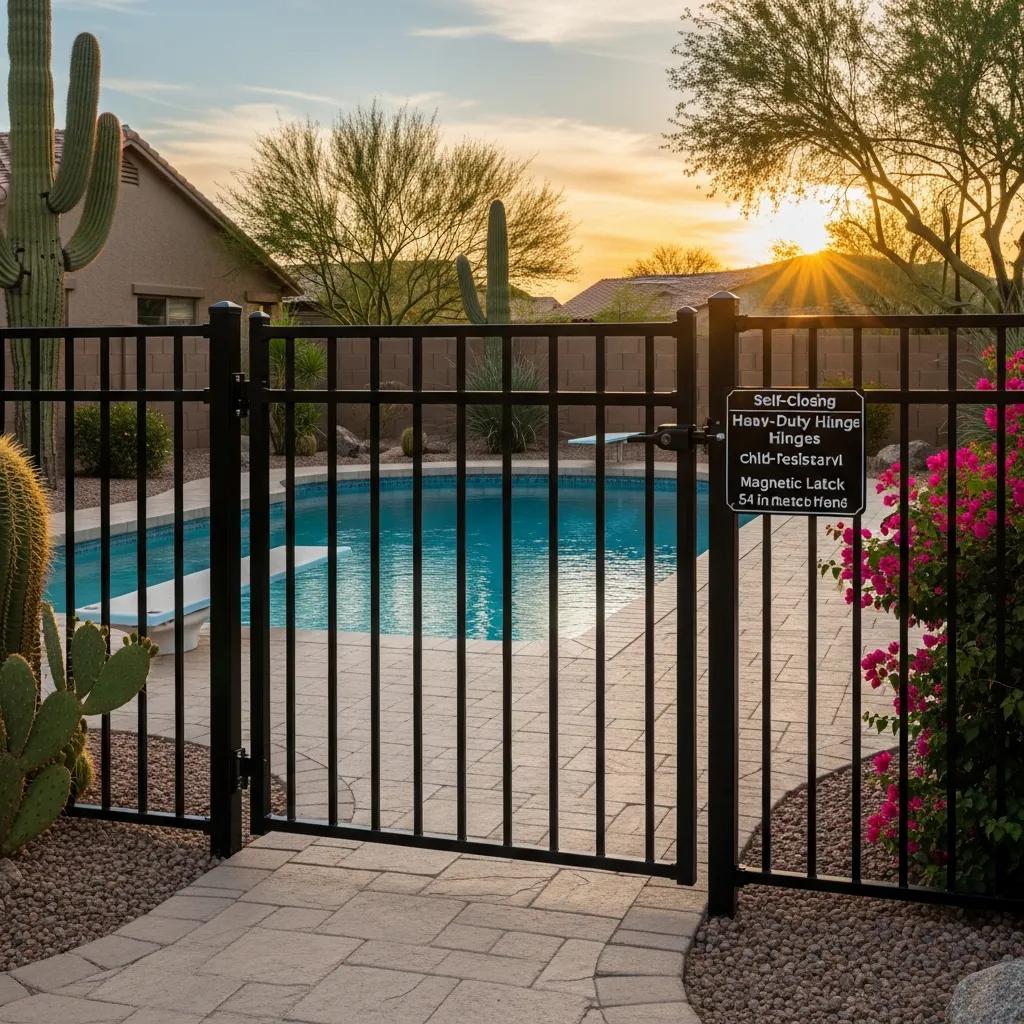
| Gate Mechanism | Required Attribute | Value for Compliance |
|---|---|---|
| Self‑closing hinges | Closing force and speed | Gate must return to closed from 90° without obstruction |
| Self‑latching mechanism | Automatic latch engagement | Latch should engage on closing and resist easy bypass |
| Keyed lock | Optional secondary control | Useful for multi‑family or where extra security is desired |
| Magnetic latch | Alternative, non‑mechanical option | Acceptable if it meets self‑latching and reach requirements |
Requirements for Self‑Closing and Self‑Latching Pool Gates
Why Gates Often Open Outward and Use a 54‑Inch Latch Height
Additional Safety Devices That Complement Fencing
| Safety Device | Standard / Guidance | Recommended Use‑Case |
|---|---|---|
| Surface‑displacement pool alarm | CPSC guidance; manufacturer specs | Good for open pools to detect unexpected water entry |
| Motorized safety cover | ASTM standards for covers | Best for high‑end pools that need a strong, discreet physical barrier |
| Gate/door sensors | Industry alarm standards | Effective for preventing access from the house into the pool yard |
| Wearable alarms | Supplemental use | Adds immediate alerting for a child’s presence—never a standalone solution |
How Alarms and Covers Improve Compliance
Which ASTM Standards Matter for Pool Safety Equipment?
Preventing Child Drowning: A Layered Safety Strategy
- The ABCs of Water Safety summarize three core actions you can implement immediately:
- Adult Supervision: Keep a focused adult within arm’s reach of young children when they’re near water.
- Barriers: Install and maintain a continuous, compliant fence with self‑latching gates.
- Classes: Enroll children in age‑appropriate swim lessons and ensure caregivers are CPR certified.
ABCs of Water Safety: What They Mean in Practice
How Swim Lessons and CPR Training Lower Risk
Local Ordinances: Phoenix, Scottsdale, and Maricopa County
- Submit a permit with a site plan that shows barrier locations and gate swing.
- Include product data for fences, gates, alarms, or covers if requested by the reviewer.
- Schedule inspections at milestones — footing, barrier installation, and final device testing.
How City and County Codes Add to State Law
Typical Permit and Inspection Requirements
Penalties for Non‑Compliance and Maintenance Best Practices
- Quarterly: Visual check of posts, picket spacing, and bottom clearances.
- Monthly: Test self‑closing/self‑latching gates, check alarm batteries, and operate motorized covers.
- Annually: Professional inspection for structural issues, device calibration, and code updates.
Legal Consequences for Pool Safety Violations
Inspection and Update Frequency
- Quarterly homeowner checks: inspect fence integrity and gate alignment.
- Monthly device tests: alarms, latches, and cover operation.
- Annual professional inspection: full system evaluation and documentation.