
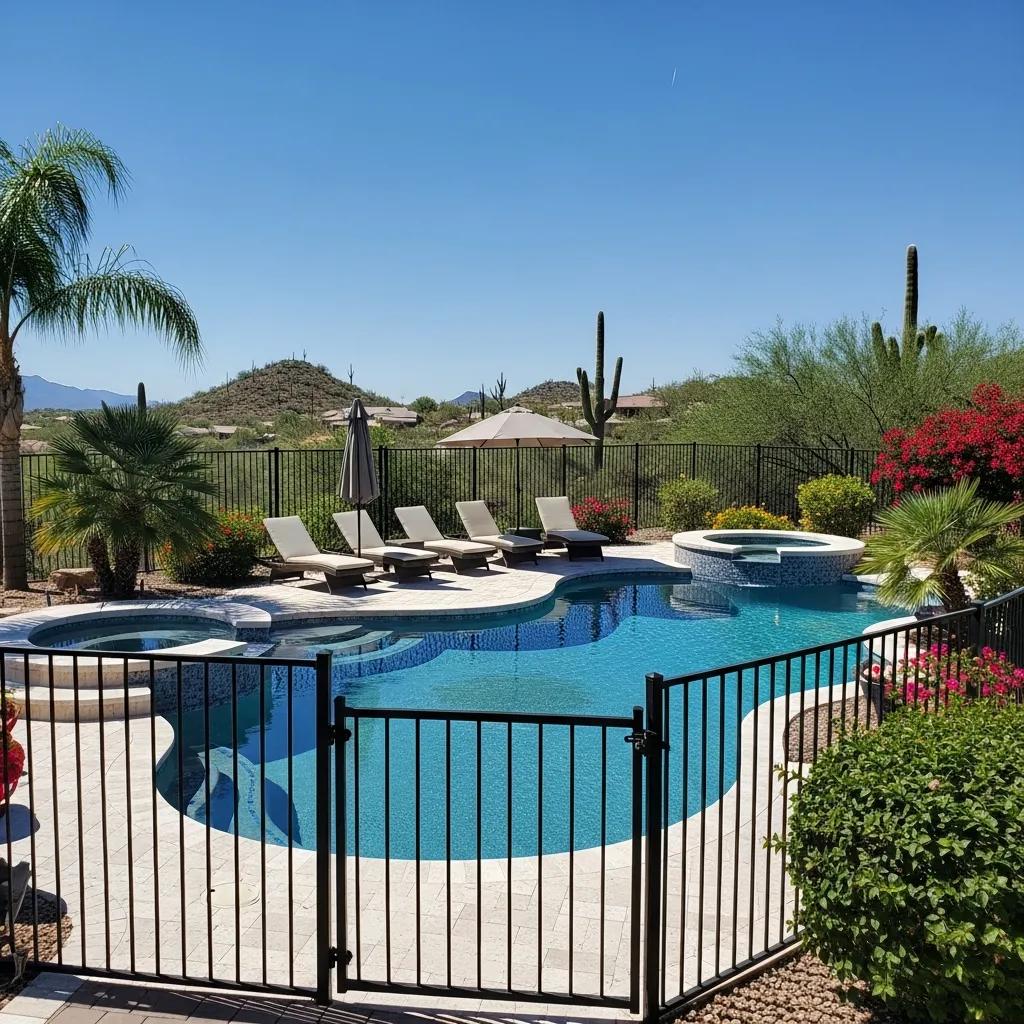
Arizona Pool Safety & Fencing Laws — A Practical Guide for Homeowners

Arizona’s pool safety rules set a minimum standard for barriers, gate hardware, and supplemental devices to reduce child drownings and limit homeowner exposure. This guide breaks down what the statutes and common local ordinances mean in plain language: how measurements like the 4‑inch sphere test apply, when dwelling walls count as part of the barrier, and what to watch for in Phoenix, Scottsdale, and Maricopa County. You’ll get clear checks for fence height, gate mechanics, alarms and covers, a straightforward maintenance cadence, and practical behavioral safeguards—supervision and swim lessons—to layer protection. We reference ARS §36‑1681, Arizona Department of Health Services guidance, ASTM standards, and typical building-code requirements so you can confirm specifics with local regulators. If you want help blending code compliance with thoughtful design, Island Pools and Landscaping AZ offers compliance-minded consultations — email PoolConnect@Gmail.com or call 602.818.1277. Below we map fence minimums, gate rules, additional safety devices, prevention steps, local variations, penalties, and maintenance guidance.

Key Arizona Pool Fence Height and Barrier Requirements
State rules require an effective barrier around residential pools focused on keeping young children from gaining unsupervised access. That means a continuous perimeter at a minimum height, gaps small enough to stop a child from squeezing through, and fence designs that discourage climbing. Measurements are taken from the finished ground on the outside face of the barrier and, when a home wall acts as part of the enclosure, doors and windows are treated as potential openings that may need alarms or additional barriers. Practical compliance centers on three measurable features: a baseline 5‑foot (60″) height, openings small enough to fail the 4‑inch sphere test, and no horizontal footholds that make scaling easy. Older pools often need retrofits — extensions, mesh inserts, or upgraded gates — to meet today’s expectations.

Research consistently shows that a proper pool fence is one of the most effective layers for preventing child drownings.

Pool Fencing Reduces Drowning Risk in Young Children

ABSTRACT: Drowning is a leading cause of unintentional death among children, especially those under five. Pool fencing is a passive, environmental intervention aimed at keeping preschool‑age children from unsupervised pool access. Given the high stakes, studies have evaluated fencing as a key strategy to reduce drowning in this age group.

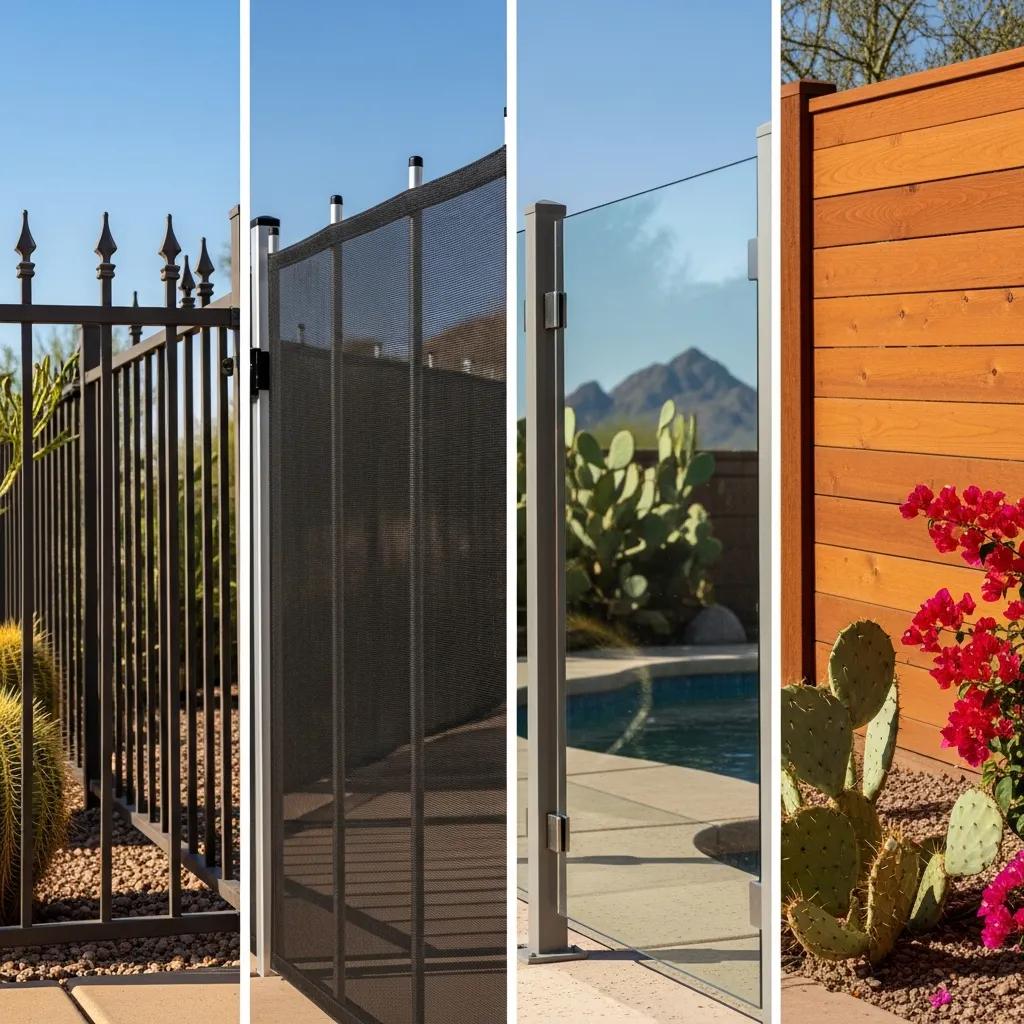
Different materials perform differently for height, gap control, and climb resistance. Use the table below to match a fence type to its practical strengths and what to watch for when installing or inspecting.

Fence TypeKey AttributePractical Value
Wrought ironMeets 60" easily; vertical pickets limit horizontal openingsDurable, upscale look; verify picket spacing to pass the 4‑inch sphere test
Mesh safety fenceRemovable, low climbability when tautGreat temporary option for families with young kids; anchors and tension are critical
Glass panelSolid, minimal gaps; height measurement is straightforwardHigh‑end, low maintenance, excellent sightlines for supervision
Wood privacySolid panels reduce openings but may have climbable railsGood for privacy—design posts and rails to avoid toe/handholds

Minimum Height for Residential Pool Fences in Arizona

Arizona sets a practical baseline: fences should be at least 5 feet (60 inches) high, measured from finished ground on the outside face of the barrier to the top. That outside measurement prevents interior grade or raised terraces from masking climbable access. When a home wall is part of the barrier, openings like doors and windows are controlled with alarms, self‑closing devices, or other measures to preserve effectiveness. On properties with terraces, retaining walls, or complex grades, coordinate barrier placement with landscape and pool design so the fence remains compliant and sightlines for supervision are preserved.

How the 4‑Inch Sphere Rule Works

The 4‑inch sphere test is a simple, physical check: if a 4‑inch diameter sphere can pass through an opening, the opening is too large for a compliant barrier. It’s a practical proxy for a young child’s head and helps inspectors and homeowners evaluate vertical gaps, decorative openings, and bottom clearances. Common problems include decorative rail patterns, stacked horizontal rails that create footholds, and wide bottom gaps. Fixes are usually straightforward — add vertical infill, reduce picket spacing, or attach a lower kickboard. If you want compliance plus curb appeal, glass or narrowly spaced vertical pickets meet the rule while keeping a refined look.

How Arizona Pool Gate Laws Keep Access Secure
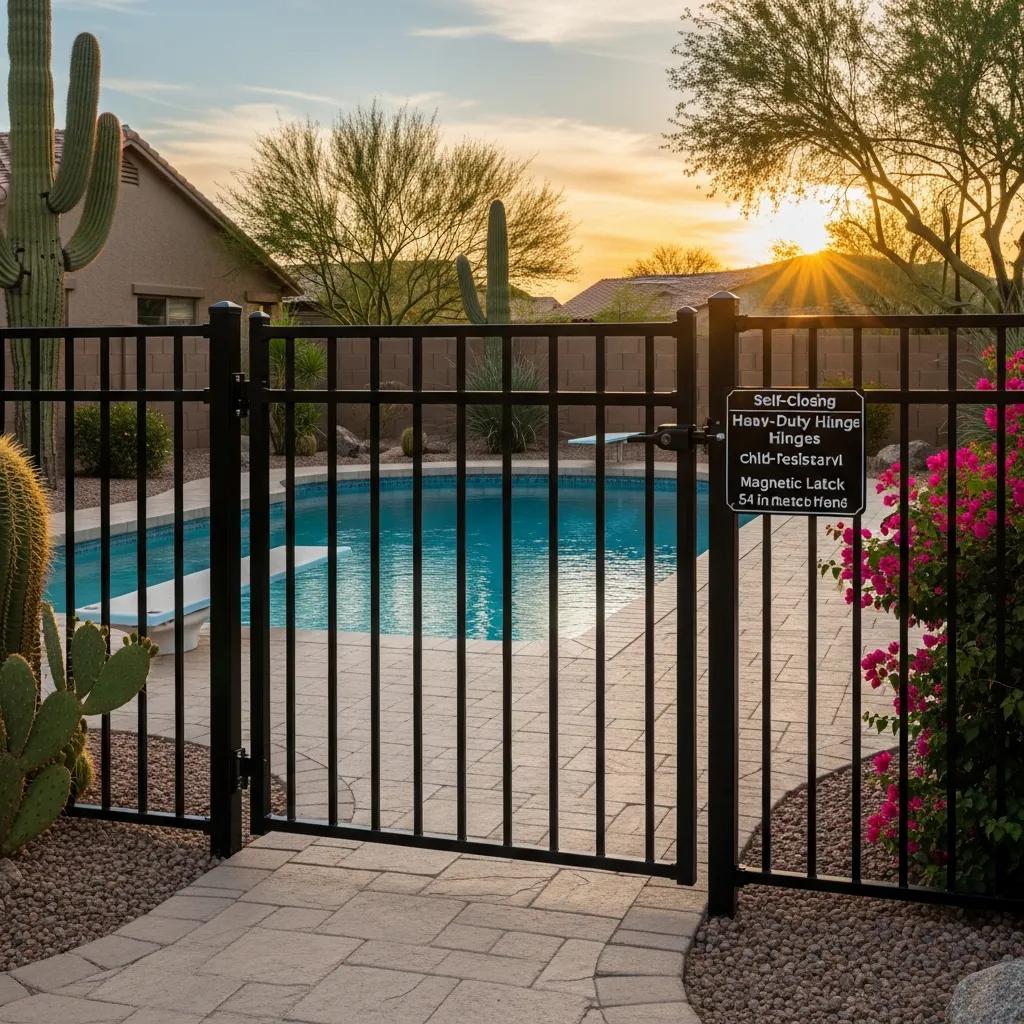
Gate rules focus on hardware and operation so the most common weak point in a barrier — the gate — stays secure. Expect requirements for self‑closing hinges, self‑latching hardware, outward opening direction where practical, and latch placement out of easy reach of small children. Gates are used often and are sometimes propped open, so reliable hardware and routine testing are part of everyday compliance. Proper installation covers mounting, gap control at hinges and latch points, and ensuring the gate resists deformation that could create new openings.

This table summarizes common gate mechanism attributes to help you select durable, code‑friendly hardware.

Gate MechanismRequired AttributeValue for Compliance
Self‑closing hingesClosing force and speedGate must return to closed from 90° without obstruction
Self‑latching mechanismAutomatic latch engagementLatch should engage on closing and resist easy bypass
Keyed lockOptional secondary controlUseful for multi‑family or where extra security is desired
Magnetic latchAlternative, non‑mechanical optionAcceptable if it meets self‑latching and reach requirements

Requirements for Self‑Closing and Self‑Latching Pool Gates

Gates must automatically close and latch after each use so brief lapses in supervision don’t leave an opening. Installers should set mechanisms so the gate closes reliably from any open angle and the latch locks without extra manipulation. Acceptable hardware includes spring hinges or concealed self‑closing systems and tamper‑resistant latches. Regular homeowner checks — opening the gate fully and confirming it returns and latches — plus periodic lubrication and spring replacement preserve function and compliance.

Why Gates Often Open Outward and Use a 54‑Inch Latch Height

Outward opening gates reduce the chance that someone falling against the gate will push it into the pool area, and they make it easier to close the gate when leaving the pool enclosure. A typical latch height of 54 inches places the release point beyond the reach of small children while keeping it accessible to adults. Some sites make outward opening impractical; in those cases, expect compensating measures such as additional latches or secondary barriers. Good designers balance these safety needs with the overall aesthetic so the latch and swing direction feel intentional, not tacked on.

Additional Safety Devices That Complement Fencing

Fences are the foundation, but alarms, motorized safety covers, and door/window sensors add layers of protection. Surface‑displacement alarms detect unexpected motion on the water, gate and door sensors alert to unauthorized openings, and wearable alarms can give child‑specific alerts. Motorized covers that meet ASTM standards provide a physical block when closed and can be integrated cleanly into high‑end designs. National guidance—ASTM and CPSC recommendations—helps you choose devices with verifiable performance and clear maintenance instructions.

Use the comparison below to decide which devices make sense for your property and lifestyle.

Safety DeviceStandard / GuidanceRecommended Use‑Case
Surface‑displacement pool alarmCPSC guidance; manufacturer specsGood for open pools to detect unexpected water entry
Motorized safety coverASTM standards for coversBest for high‑end pools that need a strong, discreet physical barrier
Gate/door sensorsIndustry alarm standardsEffective for preventing access from the house into the pool yard
Wearable alarmsSupplemental useAdds immediate alerting for a child’s presence—never a standalone solution

How Alarms and Covers Improve Compliance

Alarms and motorized covers add detection and physical blocking to passive barriers. Alarms alert caregivers to potential water entry but rely on prompt response and can have false positives from wind or animals. Motorized covers that meet ASTM testing can support some loads and deny access when closed, making them a strong complement for families who want both safety and a clean look. Every device requires maintenance — batteries, calibration, and operational checks — so factor upkeep into your plan. Together with a compliant fence and gate, these devices create a layered, resilient safety system.

Which ASTM Standards Matter for Pool Safety Equipment?

ASTM standards define objective tests for covers, alarms, and related equipment, covering strength, entrapment resistance, and motor reliability. Ask manufacturers for specific ASTM designations and keep the product literature as part of your maintenance records. Using ASTM‑compliant products reduces uncertainty about real‑world performance and can be useful evidence you took recognized steps to protect your family if questions arise later.

Preventing Child Drowning: A Layered Safety Strategy

Stopping drownings takes layers: engineering controls, focused supervision, and education. Our simple ABCs—Adult supervision, Barriers, Classes—captures those layers. Engineering controls are compliant fences, self‑latching gates, alarms, and covers; behavioral controls are deliberate, undistracted supervision and clear pool rules; education is swim lessons for kids and CPR training for caregivers. For homeowners who want safety without sacrificing design, Island Pools and Landscaping AZ helps integrate barrier placement and layered protections into remodeling or outdoor living projects — email PoolConnect@Gmail.com or call 602.818.1277 to schedule a compliance‑focused consultation.

Below are practical steps you can start using right away to improve pool safety.

  1. The ABCs of Water Safety summarize three core actions you can implement immediately:
  2. Adult Supervision: Keep a focused adult within arm’s reach of young children when they’re near water.
  3. Barriers: Install and maintain a continuous, compliant fence with self‑latching gates.
  4. Classes: Enroll children in age‑appropriate swim lessons and ensure caregivers are CPR certified.

ABCs of Water Safety: What They Mean in Practice

The ABCs create redundancy: supervision prevents immediate incidents, barriers stop unsupervised access, and classes build life‑saving skills. Supervision means a designated, undistracted adult who knows to avoid phones or chores while watching children and who has basic rescue tools nearby. Barriers should be continuous, at least 5 feet high, and free of climbable features. Classes should be progressive and appropriate for the child’s age, while caregivers refresh CPR skills periodically. Combining these practices with alarms and covers gives you a robust safety posture that aligns with Arizona requirements and modern prevention strategies.

How Swim Lessons and CPR Training Lower Risk

Swim lessons improve a child’s water competence and CPR equips caregivers with immediate response skills — both reduce the chance of a fatal outcome if an incident occurs. Look for credentialed programs and certified instructors who teach progressive skills: floating, breathing, and basic strokes for children, and hands‑on CPR practice for adults. Regular refresher training keeps skills sharp; run mock drills at home so everyone knows how to respond quickly.

Local Ordinances: Phoenix, Scottsdale, and Maricopa County

Local rules can be stricter than state law. Cities may require different materials, latch types, setbacks, or inspection schedules, so confirming municipal requirements early avoids costly rework. Typical local requirements include specific gate hardware, fenced enclosures for spas, and plan review steps tied to property lines and easements. Always check with the local building department during design, and verify your contractor’s ROC# before work starts to ensure they’re licensed for pool construction and safety retrofits.

Here’s what to expect in the permit and inspection workflow in many Arizona jurisdictions.

  1. Submit a permit with a site plan that shows barrier locations and gate swing.
  2. Include product data for fences, gates, alarms, or covers if requested by the reviewer.
  3. Schedule inspections at milestones — footing, barrier installation, and final device testing.

How City and County Codes Add to State Law

City and county codes often add stricter material specs, latch requirements, or more frequent inspections to reflect local concerns. Compliance with state law alone doesn’t always guarantee local approval. For example, some jurisdictions mandate setback distances, require fences around spas, or limit decorative openings in fences. Confirm local code text early and factor it into plans to avoid on‑site changes that add cost and delay.

Typical Permit and Inspection Requirements

Expect to submit a detailed site plan, manufacturer specs for barrier components, and schedule inspections to verify fence continuity, gate operation, and device function. Review times and steps vary by municipality, but common documentation requests include proof of a licensed contractor, hardware specifications, and final operational testing of alarms and covers. Providing complete documents and working with a contractor who has a validated ROC# usually speeds the process.

Penalties for Non‑Compliance and Maintenance Best Practices

Failing to follow pool safety rules can lead to corrective orders, fines, and greater liability if an incident occurs. Enforcement varies by jurisdiction and severity, but treating compliance as essential risk management is the best approach. Keep a documented inspection and maintenance schedule — quarterly visual checks, monthly device tests, and annual professional inspections — to show you’ve taken reasonable steps to maintain safety. If you’d like help with a compliance audit or updates, Island Pools and Landscaping AZ performs consultative reviews that blend design and regulatory needs — contact PoolConnect@Gmail.com or call 602.818.1277 to book a review tailored to your property.

Use this maintenance cadence to balance homeowner checks with professional evaluations.

  • Quarterly: Visual check of posts, picket spacing, and bottom clearances.
  • Monthly: Test self‑closing/self‑latching gates, check alarm batteries, and operate motorized covers.
  • Annually: Professional inspection for structural issues, device calibration, and code updates.

Legal Consequences for Pool Safety Violations

Consequences may include municipal fines, correction orders, and civil liability where neglect is shown. ARS §36‑1681 and local codes guide enforcement actions and public‑health responses. Maintaining records — purchase receipts, inspection logs, and service reports — demonstrates reasonable care and can be important if liability questions arise. For case‑specific legal advice after an incident, consult official sources or an attorney.

Inspection and Update Frequency

Combine homeowner checks with professional reviews: quarterly visual inspections, monthly functional tests of latches and alarms, and an annual professional inspection. Update components promptly after severe weather, hardware failure, or code changes. Replace worn items — springs, corroded fasteners, failing motors — before they compromise function. Keep dated photos and notes to build a solid maintenance record.

  1. Quarterly homeowner checks: inspect fence integrity and gate alignment.
  2. Monthly device tests: alarms, latches, and cover operation.
  3. Annual professional inspection: full system evaluation and documentation.

Frequently Asked Questions

What happens if I don't follow Arizona pool safety rules?

Local authorities can issue correction orders, fines, or other administrative actions for non‑compliance. Beyond fines, failing to maintain required barriers or devices can increase civil liability if an incident occurs. Treating safety as part of home maintenance — and keeping records of inspections and repairs — helps reduce both risk and potential penalties.

How can I be sure my pool safety devices actually work?

Test devices monthly and perform routine maintenance: replace batteries, clean sensors, and exercise motorized covers. Annual professional inspections verify calibration and structural condition. Keep documentation — model numbers, installation dates, and maintenance notes — so you can track performance and address issues quickly.

Can pool safety be elegant in a luxury home?

Yes. Materials like glass panels, tightly spaced vertical pickets, and integrated motorized covers let you meet code without sacrificing design. We recommend planning barrier placement and hardware selection early so safety elements are integrated, not tacked on.

What should I check about local ordinances?

Confirm local setback rules, permitted materials, required latch types, and any extra inspection steps. Contact your city or county building department during design and verify permit requirements so you avoid costly changes later. A licensed contractor familiar with local codes can help navigate the process.

Are commercial pool rules different from residential?

Yes. Commercial pools usually face stricter requirements for barriers, devices, and inspections because of higher use and liability. They may also need staffing or lifeguard provisions. If you manage a commercial property, check both state and local commercial pool standards.

How do community resources help with pool safety?

Health departments, safety councils, and local organizations offer workshops, materials, and training on pool safety. These resources help homeowners stay current on best practices, local code changes, and training opportunities like CPR and swim lessons.

Can technology improve pool safety?

Smart alarms, automated covers, and remote monitoring add valuable layers — they can send alerts to phones and automate secure covers. Technology helps but is not a replacement for barriers, supervision, and training. Use tech alongside physical and behavioral protections for the best results.

Conclusion

Arizona pool safety rules are straightforward once you know what to look for: continuous barriers, self‑latching gates, and sensible device selection paired with regular maintenance and active supervision. Combine engineering controls with swim lessons and focused adult supervision to build a layered defense that protects your family and reduces liability. If you want a professional review that balances code compliance with great design, contact Island Pools and Landscaping AZ at PoolConnect@Gmail.com or 602.818.1277. We’ll help you make safety practical and visually seamless in your outdoor living space.