
Sustainable Landscaping for Arizona Homes: Xeriscape Design, Drought‑Tolerant Planting, and Water‑Smart Outdoor Living

In Arizona, thoughtful landscaping balances the desert’s limits with a desire for upscale outdoor living. This guide walks homeowners through xeriscape principles, how to choose and place drought‑tolerant plants, and practical, water‑efficient strategies that protect curb appeal and function. You’ll find clear, actionable advice — from soil and mulch techniques to smart irrigation, artificial turf trade‑offs, and on‑site reuse systems — so you can cut outdoor water use without losing design quality. We also show how shade structures, outdoor kitchens, and pool‑landscape integration create comfortable, low‑water environments. Throughout, we recommend region‑appropriate plants, give realistic water‑savings estimates, and provide checklists tailored to luxury projects. After an overview of xeriscape basics and plant selection, the guide reviews irrigation and hardscape tactics, sustainable outdoor living features, and advanced conservation systems like rainwater harvesting and greywater reuse to help you plan and choose contractors with confidence.

What Are the Key Principles of Xeriscape Design for Arizona Homes?

Xeriscape is a planning‑based approach that cuts irrigation needs by matching plants to site conditions, improving soils, and delivering water precisely where roots need it. The result is landscapes that use far less water, need less upkeep, and still look intentional and refined. For high‑end homes, xeriscaping uses premium materials, layered textures, and careful spatial composition so the design reads as deliberate rather than merely functional. Below are the core xeriscape principles adapted for Arizona’s desert climate and upscale properties.

Many Arizona homeowners choose desert‑style landscapes for aesthetic reasons and because local covenants, codes, and restrictions often influence what’s allowed in new neighborhoods.

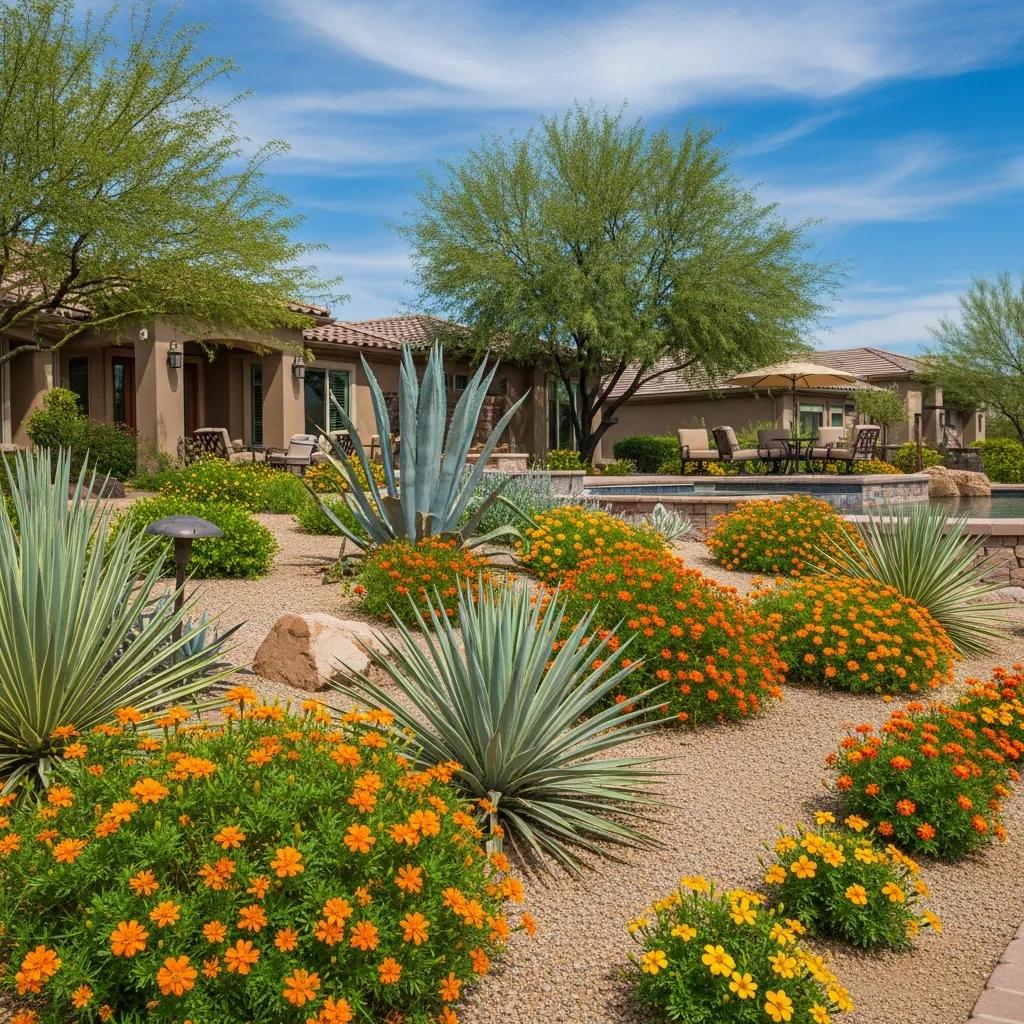
Phoenix Arizona Residential Desert Landscaping

In the Phoenix metropolitan area, homeowners living under covenants, codes, and restrictions (CC&Rs) tend to have yards with fewer trees, more shrubs and groundcovers, and smaller turf areas than properties without those rules. In those communities, more front yards are described as desert‑style rather than oasis or mesic designs.

Xeriscape depends on thoughtful planning and material choices; the next section outlines the specific water‑saving mechanisms these principles create in dry environments.

  1. Planning and Zoning: Group plants by their water needs and create irrigation zones so each area gets the right amount of water.
  2. Soil Improvement: Amend soils and add organic matter or conditioners to raise water‑holding capacity and support root health.
  3. Efficient Irrigation: Install drip systems and smart controllers to reduce evaporation and deliver water directly to root zones.
  4. Appropriate Plant Selection: Favor drought‑tolerant and native species that perform with minimal supplemental irrigation.
  5. Mulch and Groundcover: Use organic or inorganic mulches to limit evaporation, moderate soil temperature, and suppress weeds.
  6. Low‑Impact Hardscaping: Choose permeable pavers and reduce lawn areas to cut irrigation needs while keeping outdoor usability.
  7. Maintenance Planning: Schedule seasonal maintenance that preserves soil structure and irrigation efficiency while maintaining a polished appearance.

Together, these seven practices conserve water and support a refined landscape; the following section explains how those tactics translate into measurable water reductions in Arizona’s climate.

How Does Xeriscaping Conserve Water in Arizona's Desert Climate?

Xeriscaping saves water through reduced evaporation, targeted delivery, and plant choices that lower transpiration. Replacing overhead sprinklers with drip irrigation and adding mulch can sharply cut evaporation from the soil surface, while smart controllers trim runtimes based on weather — commonly reducing irrigation by an estimated 20–50% versus conventional schedules. Drought‑adapted and native plants develop root systems that pull moisture efficiently and require less frequent watering once established, lowering seasonal demand even further. These practices also reduce runoff and improve infiltration, making occasional rainfall and captured water more effective.

Knowing how these mechanisms work helps you prioritize tactics that yield the biggest impact and informs the plant palettes that follow.

Which Drought‑Tolerant Plants Are Ideal for Luxury Xeriscapes?
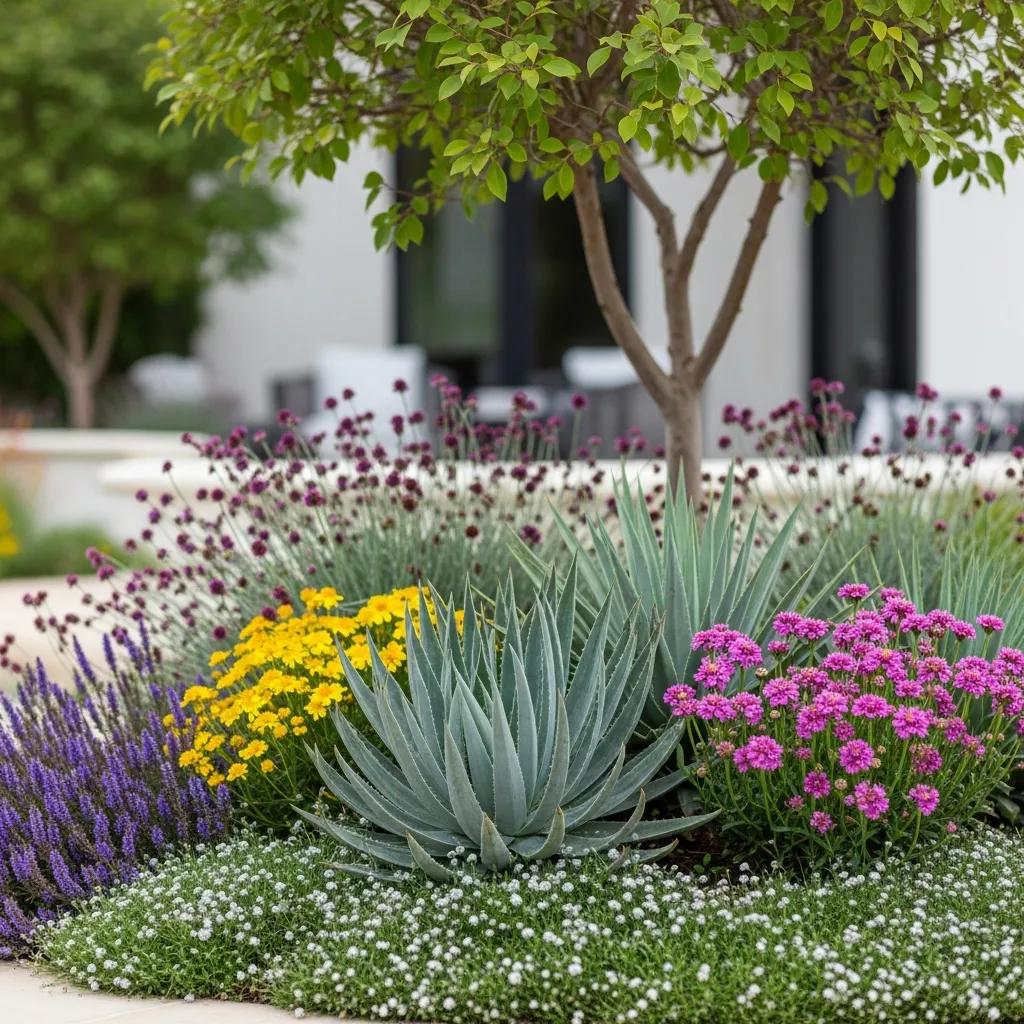
A luxury xeriscape pairs sculptural succulents, flowering natives, and architectural trees to create form and seasonal interest with minimal water. High‑impact choices include agaves and aloes as focal accents, low mounding shrubs like brittlebush and desert marigold for color, and palo verde or mesquite trees for shade and vertical structure. Placement matters: use larger succulents near hardscape edges, mass native flowers along paths to soften edges, and position trees to shade patios, pool areas, and outdoor living zones.

Thoughtful plant pairing and placement deliver a cohesive, upscale aesthetic while keeping irrigation needs low; the next section gives selection criteria and a comparison table to guide choices.

Xeriscape & Water-Smart Landscaping Island Pools and Landscaping AZ

Choosing drought‑tolerant plants starts with assessing water requirements, sun exposure, maintenance expectations, and how each species contributes to the overall composition. Map microclimates on the lot — full sun, filtered shade, or protected courtyards — and match species to those conditions to reduce supplemental watering. Mixing succulents, shrubs, and canopy trees adds visual depth and functional benefits like shade and wind buffering, which lower local temperatures and curb water loss. The table below helps homeowners compare common options for upscale xeriscapes.

This table compares representative species and their suitability for luxury applications to help refine plant lists during design.

PlantWater NeedsSun ExposureMaintenanceLuxury Use Cases
Agave (accent)Very lowFull sunLow; occasional removal of pupsFocal point near entry or poolscape
Palo Verde (tree)LowFull sunLow; formative pruningShade structure near patio or pool
Desert Marigold (flowering)Very lowFull sunLow; seasonal deadheadingMass plantings for seasonal color
Yucca (architectural)Very lowFull sunLow; occasional pruningBold vertical accents along pathways

That comparison shows how different species meet performance and aesthetic goals; next we profile native options and establishment strategies that reduce long‑term irrigation.

What Native Arizona Plants Thrive with Minimal Water?

Native plants are adapted to Arizona’s climate and typically need the least supplemental irrigation once established. Species such as palo verde, brittlebush, desert marigold, and ocotillo offer drought resilience, habitat value, and seasonal interest with minimal input. Establishment relies on targeted, infrequent deep watering during the first two growing seasons to encourage deep roots; thereafter, most natives do well on natural rainfall with occasional supplemental irrigation during extended drought. Using natives also supports local biodiversity and reduces fertilizer and pest pressures.

Natives perform best when sited correctly and grouped by water need; the next section shows how to combine succulents and shade trees for both ecology and comfort.

How Do Succulents and Shade Trees Enhance Eco‑Friendly Backyards?

Succulents deliver texture, low‑maintenance accents, and erosion control with very little water, while shade trees cut solar gain and create cooler microclimates that reduce irrigation needs across the yard. Thoughtful pairings — for example, a palo verde canopy over agave and low‑flowering natives — build layered interest, protect hardscapes from direct sun, and improve outdoor comfort. Design details to watch include root spacing, canopy placement relative to patios and pools, and selecting species with compatible growth habits to preserve clean sightlines.

Pairing structural trees with succulent beds helps luxury backyards feel lush and intentional while materially cutting water use; the next section covers irrigation and hardscape techniques that put these planting strategies into practice.

What Are Effective Water‑Efficient Landscaping Techniques for Arizona Homes?

Effective water‑efficient landscaping pairs irrigation technology, soil and mulch strategies, and thoughtful material choices to reduce landscape water demand without sacrificing luxury. Key tactics include drip irrigation with dedicated zones, smart controllers that use weather or soilmoisture data, deep mulch layers to limit evaporation, and permeable hardscapes to improve infiltration. Artificial turf can replace high‑use lawn areas when low maintenance and a clean look matter, but it requires attention to heat management and long‑term durability. The table below summarizes common approaches, typical water savings, and installation considerations for luxury properties.

Use this table to weigh trade‑offs between performance, cost, and aesthetic fit before specifying systems.

ApproachTechniqueWater Savings EstimateInstallation ConsiderationsSuitability for Luxury Homes
Drip IrrigationPoint‑source emitters, micro‑sprays30–60% vs. overheadProfessional zoning and pressure regulationHigh—supports precise planting palettes
Mulch & SoilOrganic mulch, soil amendments10–25% via reduced evaporationQuality materials and proper depth criticalHigh—improves plant health and finish
Artificial TurfHigh‑quality synthetic turfUp to 100% water saved vs. grassBase prep, drainage, cooling strategiesMedium–High—good for play and clean aesthetics
Permeable HardscapePermeable pavers, decomposed graniteIndirect savings via infiltrationProper base and grading essentialHigh—integrates with pool and patio design

This comparison clarifies which combinations deliver strong water savings while preserving a luxury feel; the next sections dive into smart irrigation mechanics and turf considerations.

How Do Smart Irrigation Systems Reduce Water Usage?
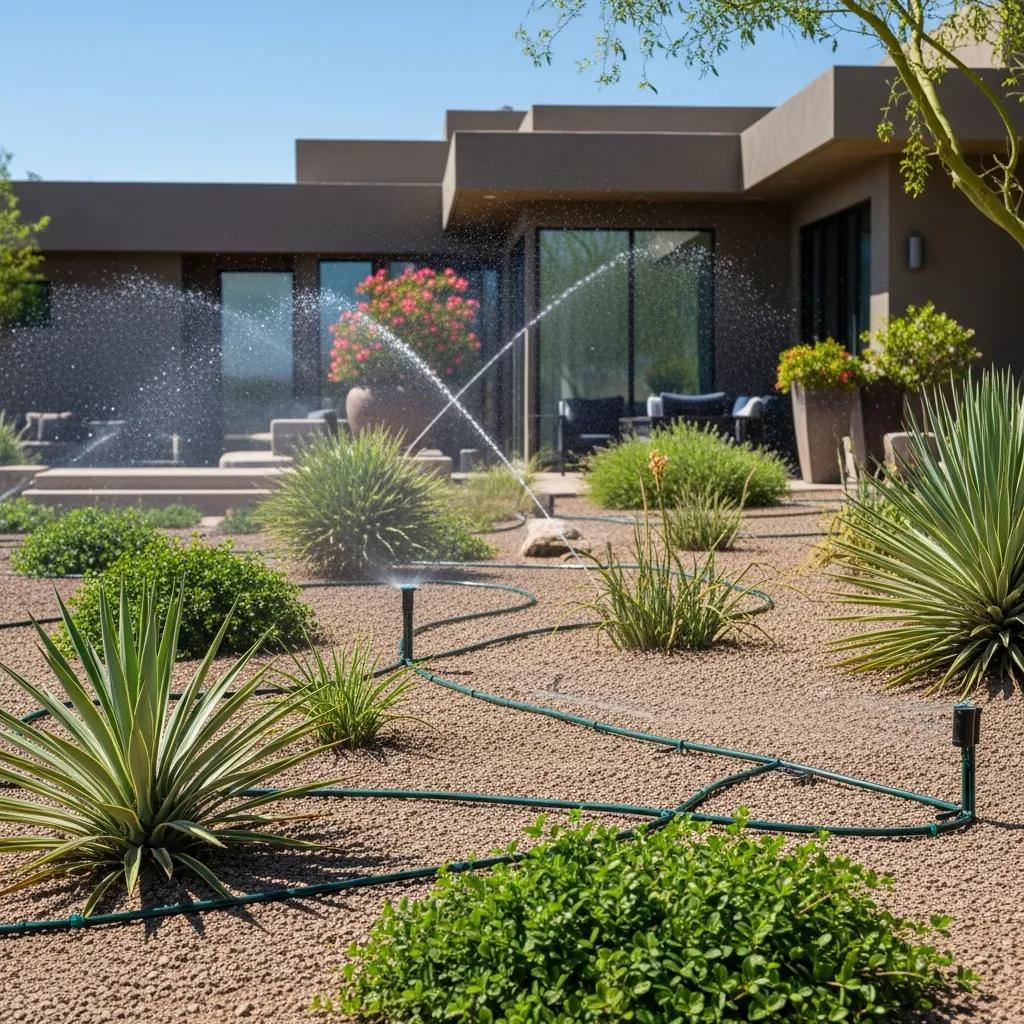
Smart irrigation reduces water use by adjusting schedules with real‑time inputs like weather and soilmoisture. Compared with fixed timers, smart systems typically save 20–40% because they shorten or skip cycles after rain and extend intervals during cooler periods. Core components include weather‑based controllers, soilmoisture sensors, flow meters, and remote interfaces that let you manage multi‑zone systems precisely. For upscale installations, integration with home automation and proper pressure regulation improves reliability and provides maintenance alerts that keep systems performing at peak efficiency.

Smart irrigation shines when combined with properly designed zones and the right emitter types — which leads naturally into evaluating engineered surfaces like artificial turf for low‑water lawns.

Common smart irrigation components include:

  1. Weather‑based controller: adjusts schedules using local climate data.
  2. Soilmoisture sensors: prevent unnecessary runtimes by measuring real soil water.
  3. Zoning and pressure regulation: ensures consistent emitter performance across varied terrain.

These elements work together to reduce waste and protect plant health; understanding turf trade‑offs completes the water‑efficiency strategy.

What Role Does Artificial Turf Play in Sustainable Outdoor Living?

Artificial turf eliminates routine lawnirrigation and can deliver near‑100% water savings compared with natural grass. Advantages include a consistent look, low maintenance, and durability; drawbacks are heat retention, higher upfront costs, and eventual replacement. Mitigate heat with lighter infill materials, shade from trees or pergolas, and by pairing turf with planting pockets and permeable edging to soften the visual field. For luxury properties, premium synthetic turf creates clean, multifunctional surfaces near pools and entertaining areas while substantially reducing irrigation demand.

Evaluating turf requires balancing water savings against heat and lifecycle costs. Professional design‑build teams coordinate turf detailing, irrigation, and adjacent landscape features so the final installation performs and looks great.

Island Pools and Landscaping AZ helps luxury homeowners implement these water‑efficient strategies, combining smart irrigation, thoughtful turf detailing, and low‑water hardscapes into integrated pool and landscape plans. Our design‑build process ties irrigation zoning, material selection, and planting palettes together so systems perform reliably, meet high aesthetic standards, and deliver measurable water savings.

How to Integrate Eco‑Friendly Outdoor Living Features in Arizona Luxury Homes?

Integrating eco‑friendly outdoor living means designing shade, cooking, and fire elements with durable materials, minimal water demand, and a focus on comfort. Smart choices include shaded dining areas that reduce interior cooling loads, water‑efficient fixtures in outdoor kitchens, and carefully specified fire features that avoid stressing nearby plantings. Coordinating pool design, landscape, and outdoor living elements creates efficient irrigation layouts and cohesive sightlines. Use the checklist below during planning to align sustainability goals with luxury outcomes.

Use this checklist in concept development to ensure each outdoor element supports water efficiency and long‑term performance.

  1. Position shade structures to cut solar exposure on patios and pool decks.
  2. Specify low‑flow fixtures and efficient appliances in outdoor kitchens.
  3. Choose durable, low‑maintenance materials that withstand Arizona weather.
  4. Integrate planting zones and irrigation to avoid unnecessary coverage and overlap.

Following this checklist helps every choice support conservation while maintaining a high‑end ambiance; the next sections cover shade solutions and sustainable cooking/fire features in more detail.

What Shade Structures Improve Comfort and Energy Efficiency?

Shade structures — pergolas, ramadas, and well‑placed canopy trees — reduce heat exposure, extend usable outdoor time, and lower cooling loads for adjacent interiors. Louvered or retractable pergolas offer flexible sun control, ramadas create permanent architectural shade, and living shade from trees adds evapotranspirative cooling and seasonal interest. Choose UV‑stable, low‑maintenance materials like metal or responsibly sourced hardwoods, and place structures to shade dining and lounging areas and poolside decks for maximum benefit. In luxury designs, integrating shade with thoughtful lighting and HVAC considerations improves both comfort and long‑term performance.

Shade decisions inform the layout of outdoor kitchens and fire features, which should be specified to minimize resource use while supporting high‑end functionality.

How Can Outdoor Kitchens and Fire Pits Be Designed Sustainably?

Sustainable outdoor kitchens and fire features combine durable finishes with efficient equipment and careful siting to reduce resource use and maintenance. Choose stainless steel or powder‑coated appliances with efficient burners, install low‑flow faucets, and consider on‑demand or recirculating water systems to avoid waste. For fire elements, use controlled gas burners or responsibly sourced fuels and place features away from drought‑sensitive beds to prevent heat damage. Finish details — like routing drip irrigation under nearby planting and using heat‑tolerant species — protect landscape health around active zones.

Coordinating these elements during the design‑build process ensures outdoor living amenities feel elegant and operate responsibly; the final section explores advanced water systems that further reduce irrigation dependence.

Island Pools and Landscaping AZ integrates sustainable outdoor living into full projects, offering design‑build coordination that ties shade, kitchens, fire features, and pool remodels into drought‑friendly schemes. Our portfolio focuses on tailored solutions that balance performance with luxury finishes, and our consultative process evaluates water‑efficiency trade‑offs and long‑term maintenance needs.

What Advanced Water Conservation Solutions Support Sustainable Landscaping in Arizona?

Advanced conservation systems — rainwater harvesting, greywater recycling, and onsite reclaimed reuse — can supplement irrigation and lower dependence on municipal water when properly sized and permitted. These systems capture and redirect water for landscape use: cisterns can offset seasonal irrigation and greywater systems route laundry or shower effluent to approved subsurface irrigation for appropriate plantings. Successful implementation requires considering capacity, seasonal yield, treatment needs, and local regulations to ensure safety and compliance. The table below compares typical systems by scale, expected contribution to irrigation, and key considerations for high‑end properties.

This technical comparison helps owners evaluate ROI, capacity planning, and permitting for advanced systems.

SystemTypical Capacity/ScaleEstimated Contribution to Irrigation (%)Cost ConsiderationsCompliance/Permitting Notes
Rainwater harvesting2,000–10,000+ gallons cisterns10–30% seasonally (varies by rainfall)Tanks, conveyance, filtrationOften allowed; check local codes for potable restrictions
Greywater recyclingLaundry/shower reroutes with basic treatment20–50% for landscape (consistent supply)Treatment, pumps, distribution linesRequires adherence to health standards and irrigation controls
Onsite reclaimed reuseComplex treat/reuse systems for large estates30–70% depending on scaleHigher capital and O&M costsStricter permitting and monitoring requirements

Comparing systems highlights trade‑offs between capacity, reliability, and regulatory complexity; the following sections explain rainwater and greywater details and how they integrate with irrigation.

How Do Rainwater Harvesting Systems Supplement Irrigation Needs?

Rainwater harvesting captures runoff from roofs and paved areas into cisterns or tanks for later landscape use. The process is straightforward: capture, pretreat, store, and distribute. In Arizona, seasonal storms can produce useful supplemental volumes; a correctly sized cistern can offset 10–30% of irrigation needs annually depending on roof area and rainfall. Key installation items include debris screens, overflow controls, pump selection, and integration with existing irrigation controllers or a dedicated pump. In luxury projects, concealed cisterns and integrated filtration preserve aesthetics while delivering measurable water offsets.

Sizing and integration choices determine how much potable supply is displaced; greywater options can provide a steadier year‑round source.

What Are the Benefits of Greywater Recycling for Landscape Irrigation?

Greywater recycling repurposes relatively clean household wastewater — like laundry and shower water — after appropriate treatment for subsurface irrigation of suitable landscape zones. Benefits include reduced potable water use, a more consistent year‑round supply than seasonal rain, and lower utility costs over time. Limitations include the need to match plant selection (deep‑rooted, non‑edible plantings are typical), periodic maintenance, and compliance with local plumbing and health codes. Well‑designed systems route treated greywater through subsurface emitters or mulch basins to avoid exposure and maximize soil infiltration.

When combined with smart irrigation and water‑wise planting, greywater systems create a resilient, low‑impact irrigation strategy for luxury properties. Homeowners should consult qualified designers to assess ROI and permitting requirements.

Island Pools and Landscaping AZ can advise on feasibility and integration of advanced solutions, helping homeowners compare rainwater and greywater options in the context of landscape design, pool remodeling, and long‑term maintenance. Our approach prioritizes compliance, ROI assessment, and seamless design integration so systems perform reliably while maintaining luxury aesthetics and functionality.

Frequently Asked Questions

What are the benefits of using native plants in Arizona landscaping?

Native plants are adapted to Arizona’s climate and typically need minimal supplemental irrigation once established. They reduce water use and maintenance, support local wildlife, and often lower fertilizer and pest management needs. Deep root systems help improve soil structure and control erosion, making natives a smart, resilient choice for sustainable arid‑landscaping.

How can I ensure my xeriscape design remains visually appealing?

Keep variety in texture, color, and height to maintain visual interest. Combine succulents, flowering natives, and ornamental grasses, and use hardscape elements like paths, patios, and decorative stone for structure. Place focal plants strategically and plan for seasonal color. Regular, simple maintenance — pruning, seasonal cleanup, and targeted plant replacement — keeps the design looking intentional and fresh.

What role does mulch play in sustainable landscaping?

Mulch reduces soilevaporation, moderates soil temperature, and suppresses weeds — all vital in xeriscaping. Organic mulches (wood chips, bark) also improve soil health as they break down, returning nutrients to the ground. In Arizona’s climate, a proper mulch layer around plants can significantly cut irrigation needs and protect roots from extreme heat.

How can I integrate smart irrigation systems into my landscaping?

Start with a site assessment and zone the landscape by plant type and microclimate. Then specify weather‑based controllers, soilmoisture sensors, and appropriately sized drip or micro‑spray emitters. Work with a professional to ensure correct pressure regulation, proper sensor placement, and integration with your irrigation controller so the system waters only when and where it’s needed.

What are the advantages of using permeable hardscaping materials?

Permeable materials like pavers and decomposed granite let water soak into the ground instead of running off, helping recharge groundwater and reducing erosion. Permeable surfaces can also reduce heat retention and improve comfort. They’re a sustainable choice that pairs well with low‑water planting and thoughtful stormwater management.

How can I create a comfortable outdoor living space in a hot climate?

Focus on shade — pergolas, awnings, and canopy trees significantly improve comfort. Use heat‑tolerant, water‑efficient plants and materials that reflect heat. Consider outdoor fans or misting systems and orient seating to catch natural breezes. Water features and strategic plantings can also help cool and soften the microclimate.

Conclusion

Sustainable landscaping in Arizona saves water while enhancing the look and livability of outdoor spaces. By adopting xeriscape principles, choosing drought‑tolerant plants, and using smart irrigation and advanced reuse systems, homeowners can create luxurious, resilient landscapes that thrive in arid conditions. These strategies cut maintenance, support local ecosystems, and preserve long‑term value. If you’re ready to transform your property, our team can help you plan and implement solutions tailored to your site and lifestyle.