Popular Pool Shapes & Layouts for Arizona Backyards: Luxury Looks, Practical Solutions

Arizona homeowners choosing a pool must balance aesthetics, yard geometry, and the realities of a desert climate. This guide explains how common pool types — from freeform lagoon-style basins to precise geometric lap pools and compact spools — behave here and what they mean for maintenance, outdoor living integration, and long-term efficiency. You’ll learn which shapes work best on small urban lots versus resort-style estates, how features like Baja shelves and infinity edges change function and feel, and which energy- and water-saving choices matter under intense sun. We walk through six planning areas: popular luxury shapes and their strengths, L-shaped pool benefits, Phoenix-focused layouts for different lot sizes, luxury feature trade-offs, climate-forward material and equipment guidance, and a practical project checklist that ends with how to book a custom consultation. Local search terms like freeform pool Arizona, l-shaped pool, and energy-efficient pool designs Arizona are woven in where they help connect ideas to your neighborhood conditions.

What Are the Most Popular Luxury Pool Shapes in Arizona?

Luxury pool shapes in Arizona span organic freeform lagoons to clean-lined geometric pools — each delivers different lifestyle benefits and maintenance needs. Freeform pools favor curves, rockwork, and waterfalls for a resort vibe; geometric pools emphasize lanes, straight sightlines, and a modern aesthetic. L-shaped pools separate play and lap zones and often fit corner lots efficiently, while plunge pools and spools pack performance into tight footprints. Knowing these differences makes it easier to match form to function, construction complexity, and ongoing upkeep in a desert setting. Below is a concise comparison to help match pool shape to your property goals.

Different pool shapes bring distinct practical strengths and visual roles. The table below helps you compare them quickly for Arizona yards.

Pool ShapeCharacteristicBest-for / Value
Freeform lagoon-style poolsCurved edges, rockwork, waterfallsResort look, blends with desert planting
Geometric / rectangular poolsStraight edges, lap lanes, modern finishesExercise, contemporary homes, low debris
L-shaped poolsZoned shallow/play plus deeper lap or spa armFamily use, entertaining, corner-lot efficiency
Plunge poolsCompact footprint, deep swim depthSmall yards, quick cooling, low upkeep
Spool (spa-pool)Hybrid spa and pool, heated optionsCompact luxury, year‑round social seating

This quick comparison clarifies which shapes align with common lifestyle goals and lot constraints. Next, we explain why freeform designs remain a top luxury choice in Arizona.

Why Choose Freeform Pool Designs for Arizona Backyards?

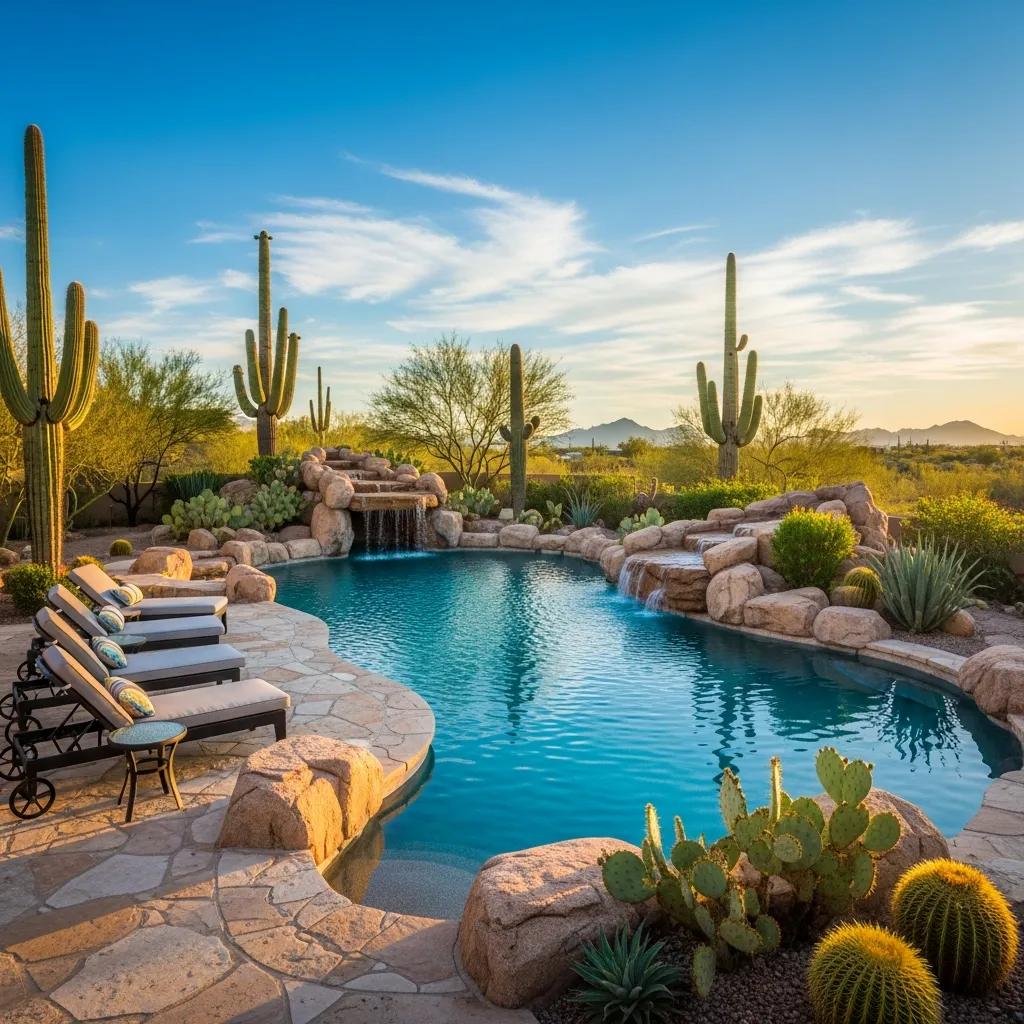
Freeform pools use organic geometry and natural hardscape to create a private, resort-like retreat that sits comfortably in desert landscapes. Irregular edges, integrated boulders, and planted buffers soften scale and can conceal equipment behind the hardscape. The result is a highly customizable yard feature — waterfalls, boulder steps, and extended tanning ledges — that fits irregular or sloped lots where a rectangle would feel forced. Freeform layouts also give you flexibility for decking, outdoor kitchens, and shade structures. After discussing this adaptability, many homeowners consider when a geometric approach better supports modern architecture.

How Do Geometric Pool Ideas Complement Modern Arizona Architecture?

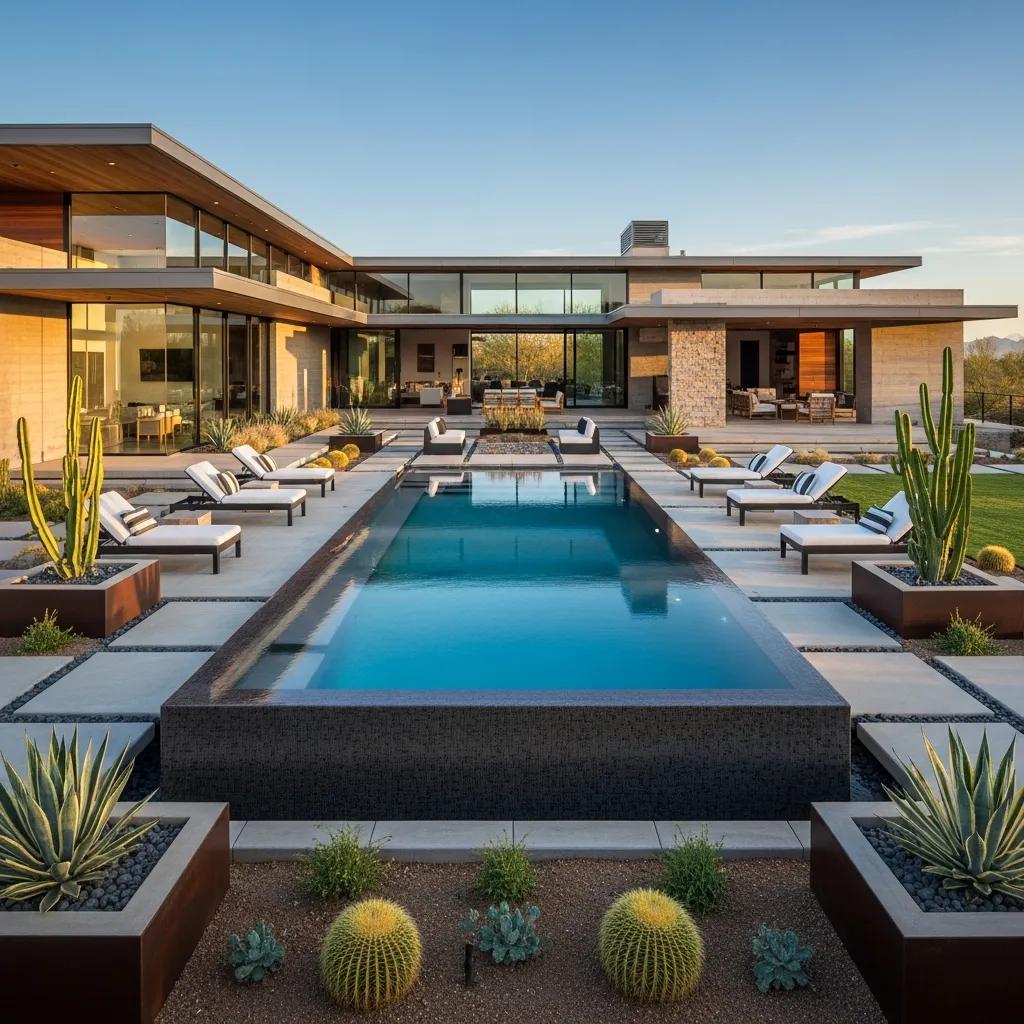
Geometric pools — rectangular lap basins, cantilevered vanishing edges, and compact spools — pair naturally with contemporary homes by reinforcing symmetry and clean material palettes. Materials like dark plaster and linear tile produce reflective planes that visually expand patios and support crisp sightlines. Geometric forms also simplify maintenance zones, equipment access, and the integration of lanes, lighting, and covers — all helpful under Arizona’s sun. Architects often align pool geometry with terraces and indoor views, so a precise shape can preserve architectural coherence while supporting exercise and clean modern aesthetics. With that in mind, many homeowners then look at the flexible, multi-use benefits of L-shaped layouts.

How Do L-Shaped Pools Benefit Arizona Homeowners?

L-shaped pools create natural activity zones: a shallow wing for play and lounging and a deeper arm for laps or a spa. That division supports supervision from patios and living rooms, and the elbow space often becomes the ideal spot for an outdoor kitchen or dining terrace. Corner placements maximize deck and landscape area on tight lots and allow integrated seating, planters, and shade structures to wrap the pool naturally. Functionally, the shape also makes it easier to separate mechanical systems — useful for spa heating or pump zoning — which matters in a climate where energy efficiency is a priority. The sections that follow list design advantages and show how to tie L-shaped pools into outdoor living.

L-shaped pools deliver several direct design advantages for Arizona yards.

  1. Zoned Functionality: Separate shallow and deep areas prevent activity conflicts and support multiple uses.
  2. Space Efficiency: Corner placement preserves usable deck and landscape on tight lots.
  3. Seamless Integration: The shape creates natural locations for outdoor kitchens, fire features, and seating.

These benefits make the L-shape a practical middle ground between compact plunge pools and sprawling resort layouts. The next section digs deeper into those design advantages.

What Are the Design Advantages of L-Shaped Pools in Arizona?

L-shaped pools offer controlled circulation, clear user zones, and easier integration with pergolas, pool bars, and other built elements. One leg can house tanning ledges and family zones while the straight arm remains dedicated to laps or deeper play, reducing interference between users. From a build standpoint, the rectangular legs simplify excavation and staging on constrained sites while still delivering architectural interest. The final effect is a balanced composition that supports lively family days and relaxed evenings — a versatile option across Phoenix and Scottsdale properties. Next we show practical ways to integrate these pools with outdoor living.

How Can L-Shaped Pools Integrate with Outdoor Living Spaces?

L-shaped pools work well when patios and outdoor kitchens wrap around one or both legs, creating smooth circulation and unobstructed sightlines from interior rooms. Designers often align deck heights and use continuous materials — travertine, low-profile pavers, or textured concrete — to blur the transition between waterline and living areas. Built-in seating, submerged benches, and narrow planters along the pool leg create small entertaining zones without expanding the footprint. Orientation to the sun guides placement of shade structures to combat afternoon heat and affects material selection to minimize glare and surface temperature. With those integration strategies in mind, homeowners often want layout suggestions tailored to Phoenix yards of different sizes.

Which Custom Backyard Pool Layouts Work Best in Phoenix?

Choosing a layout in Phoenix starts with lot size, sun and prevailing wind orientation, and how you want to use the space — exercise, entertaining, or low-maintenance cooling. Small urban lots benefit from plunge pools, spools, and narrow lap designs that deliver big impact without sacrificing outdoor living. Mid-size family yards commonly use L-shaped or elongated freeform plans that balance play and laps. Large, resort-style estates layer zones — tanning ledges, vanishing edges, extensive hardscape — to create a cohesive entertainment campus. Good site planning includes sun-path analysis, wind-pattern awareness for outdoor dining comfort, and view corridors to maximize Arizona vistas. The sections below break down small-yard options and elements of resort-style layouts to help you decide.

Compact Phoenix yards can still achieve a luxury feel with focused, multi-functional layouts that prioritize efficiency and atmosphere.

Design ChoiceTypical Yard SizePractical Benefit
Plunge poolUnder 400 sq ftCooling and relaxation with a minimal footprint
Spool (spa-pool)200–600 sq ftHeated seating and pool function in one compact feature
Narrow lap pool1000+ sq ftFitness-focused swim lane that preserves deck space

This compact comparison helps you visualize options that preserve entertaining areas. The next subsection outlines ideal small-yard layouts in practical terms.

What Are Ideal Pool Layouts for Small Arizona Backyards?

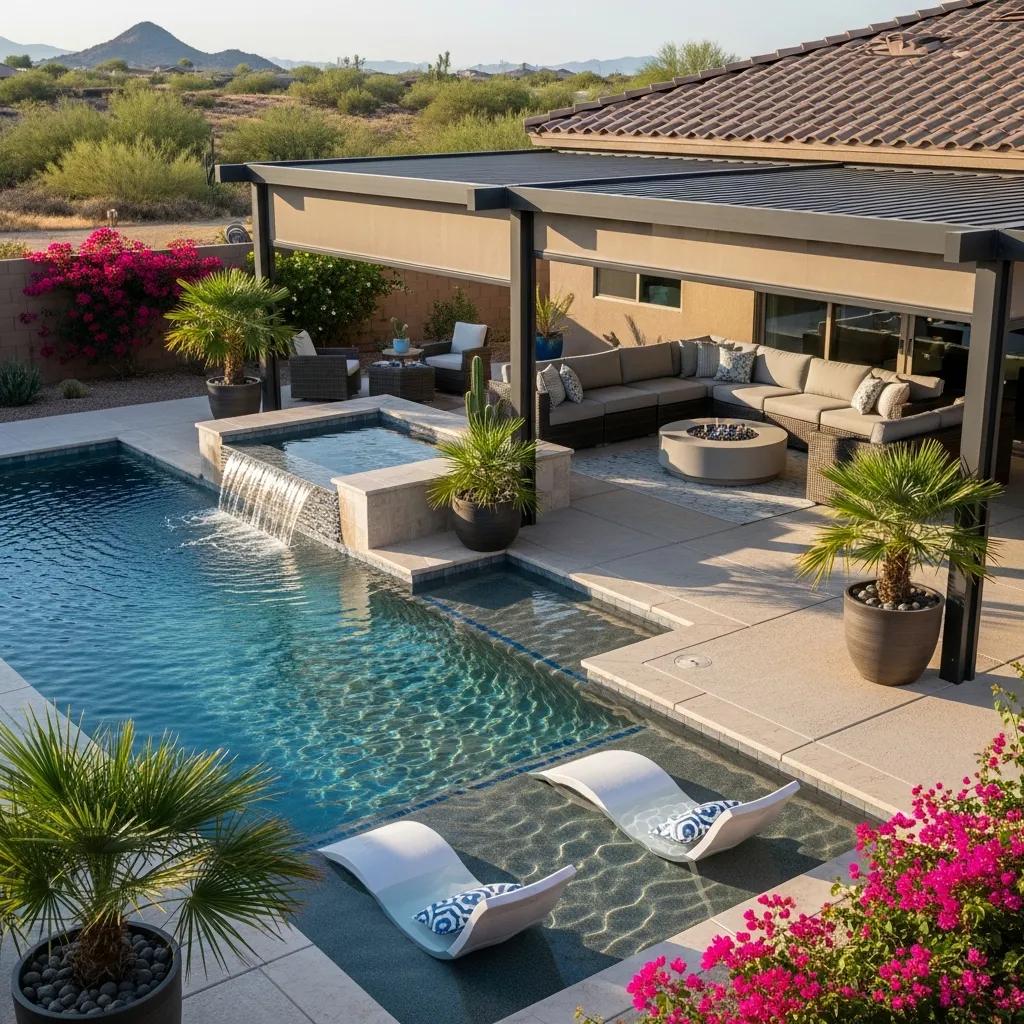
Small-backyard layouts work best when each element serves multiple purposes — spa seating, a shallow tanning ledge, and vertical water features add luxury without a large footprint. A spool gives you seating and heat for year-round use; a narrow lap or corner L-shape provides exercise and cooling without crowding the deck. Designers consolidate equipment into compact enclosures and specify low-debris plantings to reduce maintenance. Thoughtful lighting and layered hardscapes create perceived depth and make small yards feel more expansive and inviting. These compact strategies translate directly to planning larger, resort-style layouts when you need to scale up.

How to Design Resort-Style Pool Layouts for Luxury Arizona Homes?

Resort-style layouts layer features — tanning ledges, seating niches, vanishing edges, and defined outdoor rooms — to support both intimate gatherings and large events. Clear circulation routes keep guests moving between patios, kitchens, and pool edges without crossing swim lanes; framed sightlines from indoor rooms highlight key features. Using consistent materials across decks, coping, and outdoor kitchens preserves an elevated look day or night, while multi-level lighting and fire features extend usable hours. Staggered depths create micro-environments for kids, casual loungers, and serious swimmers, improving safety and functionality. With features selected, homeowners should weigh which upgrades add meaningful value versus unnecessary cost or upkeep.

What Luxury Features Enhance Arizona Pool Designs?

Features like Baja shelves, infinity edges, integrated spas, advanced automation, and LED lighting change how pools are used and felt in Arizona. Each feature brings aesthetic appeal and operational trade-offs: Baja shelves expand shallow lounging, infinity edges maximize views on slopes, integrated spas enable year‑round comfort, and automation simplifies routine maintenance while improving efficiency. Choose features with local climate in mind — high solar load, evaporation, and mineral content all influence material and equipment choices. The table below compares common luxury features by benefit and typical Arizona considerations to help prioritize upgrades.

The table below compares popular luxury features with practical considerations to help homeowners prioritize upgrades.

FeatureAttribute / BenefitTypical Cost Range / Consideration
Baja shelf (tanning ledge)Shallow lounging area, great for familiesModerate cost; increases exposed surface and evaporation
Infinity edge (vanishing edge)Dramatic, seamless view integrationHigher cost; needs catch basin and additional pumping capacity
Integrated spaHeated seating and jets for year-round useAdds heating equipment and seasonal energy use
Smart pool automationRemote control and scheduling for pumps, heaters, lightsReduces manual work; improves pump efficiency
Water features (waterfalls, scuppers)Visual and auditory appealVariable cost; adds plumbing and maintenance needs

This comparison highlights the trade-offs between look and long-term operational cost, and it leads into how Baja shelves and infinity edges affect placement and performance.

When evaluating features, Island Pool & Landscaping brings local experience that turns design intent into buildable solutions while being upfront about maintenance and performance impacts.

We design, build, and landscape custom pools and outdoor living spaces across Arizona. Our team focuses on attention to detail, clear communication, and lasting customer satisfaction. Our primary service is Custom Pool Design and Build, with strengths in luxury pool remodeling and complete outdoor living projects. We back our work with a transparent process and proven results to help homeowners feel confident booking a consultation.

That positioning should reassure homeowners as they weigh which luxury elements belong in their yard.

How Do Baja Shelves and Infinity Edges Elevate Pool Aesthetics?

Baja shelves add a shallow, sun-warmed living area that invites social lounging and easy access for kids — a transitional zone between deck and water. They let you float chairs and umbrellas partially submerged for cooling relief under Arizona sun. Infinity edges create a sweeping, vanishing effect where water meets view, best used on sloped lots or properties with a strong panorama. Both features require careful placement: wind can increase evaporation on Baja shelves and scatter skimmed water from infinity edges, so orientation and equipment planning are important for long-term performance. With placement decided, smart technologies can help optimize how these features operate.

What Smart Pool Technologies Are Popular in Arizona Luxury Pools?

Popular smart technologies include automation platforms, variable-speed pumps, solar controllers, automated covers, and remote monitoring systems. Automation schedules filtration, heating, and lighting for off-peak hours to save energy while keeping water balanced; variable-speed pumps cut energy use by matching flow to the task rather than running full speed. Remote monitoring alerts you to chemistry or equipment faults, reducing emergency service calls. These systems pair well with features like infinity edges and integrated spas because automated sequences can manage fill levels, temperature, and run cycles without constant manual intervention. After choosing technology, designers factor Arizona’s climate into orientation, shading, and material choices.

How Does Arizona’s Climate Influence Pool Shape and Layout Choices?

Arizona’s hot, dry climate drives design decisions that limit evaporation, reduce solar heat gain, and minimize debris, while maximizing comfort and cutting operating costs. Sun orientation and shading determine where lounges and dining areas are most usable in summer. Material choices — light-reflective coping and heat-resistant decking — lower surface temperatures underfoot. Equipment selections like variable-speed pumps, efficient heaters, and covers reduce energy use and water loss. Plant palettes of drought-tolerant species reduce maintenance. The table below links common design choices with climate considerations and homeowner recommendations so you can trade off comfort, cost, and aesthetics thoughtfully.

The table below connects climate-driven design choices with clear recommendations for Arizona properties.

Design ChoiceClimate ConsiderationPractical Recommendation
Shade structures and pergolasReduces occupant heat stressPosition shade for afternoon sun; use breathable fabrics
Light-colored coping and deckingLowers surface temperatureChoose travertine or textured concrete to limit heat retention
Variable-speed pumps and automationReduces energy use and runtimeSchedule filtration for early morning or night
Pool covers and reduced surface area featuresLimits evaporationUse automated covers and avoid excessive exposed surface

This mapping helps prioritize improvements that reduce operating costs and improve summer usability. Next we cover landscaping that complements desert poolscapes.

What Landscaping Ideas Complement Pool Designs in Desert Environments?

Drought-tolerant planting reduces water use and debris while framing the pool with agaves, succulents, and Mediterranean shrubs. Warm stone, textured pavers, and earth-toned palette choices make pools feel tied to the landscape and reduce glare. Place plants to limit leaf drop near water and choose root profiles that won’t threaten pool shells or plumbing; locate larger shade trees at a distance to provide cooling without extra maintenance. Layered planting, stucco or rammed-earth planters, and gravel mulch add texture while keeping upkeep low. With planting sorted, focus next on energy-efficient equipment to handle Arizona heat.

How Do Energy-Efficient Pool Designs Address Arizona’s Heat?

Energy-efficient designs in Arizona focus on cutting pump runtimes, limiting evaporation, and using solar where it makes sense. Variable-speed pumps with smart controllers tailor flow rates to the task and reduce energy use versus single-speed units. Automated covers curb evaporation and overnight heat loss, lowering water and chemical costs. Solar heating can deliver comfortable swim temps without heavy gas use, and deliberate shade and orientation reduce daytime heat demand. These equipment and layout choices lead into the practical steps homeowners need when planning a build or remodel.

How to Plan and Customize Your Arizona Backyard Pool Project?

Successful planning starts with a thorough site assessment, a realistic budget, and a timeline that factors in permits, construction sequencing, and landscaping. Early tasks include measuring site constraints, mapping sun paths and prevailing winds, and collecting images that express style and priority features. Budgets vary by shape and finish — infinity edges and major rockwork increase cost and schedule — so prioritize must-haves versus nice-to-haves during design. Choose a designer-builder who explains process, shows proven workflows, and outlines warranties and service expectations to minimize surprises. The checklist below prepares you for a smoother consultation and build.

  1. Site Assessment: Measure the lot, note access points and utilities, and record slopes and sun orientation.
  2. Budgeting & Prioritization: Define must-haves and set contingency funds for upgrades.
  3. Design & Permitting: Finalize schematic design, secure permits, and coordinate HOA reviews as needed.
  4. Construction Phases: Demolition/excavation, plumbing/electrical, shell and finishes, pool start-up and commissioning.
  5. Landscaping & Lighting: Install plantings, hardscape, and layered lighting for evening use.

This checklist outlines the typical sequence of activities to expect. The final section explains what to bring to a consultation with a local design-build team.

What Design Considerations Should Arizona Homeowners Know?

Consider site logistics — construction access, slopes, and existing utilities — alongside your goals: lap swimming, entertaining, or low maintenance. Equipment access clearances, setback rules for fencing, and proximity to utility lines can affect shape choice and add excavation or retaining costs. Match pool scale to house architecture to keep the yard proportional; material choices affect durability and daytime comfort. Bring inspiration photos, preferred materials, and a realistic timeline to your first meeting — clear direction speeds schematic design and yields more accurate budgets. Preparing these items sets you up for a productive consultation with a design-build specialist.

How to Schedule a Custom Pool Design Consultation with Island Pool & Landscaping?

Prepare site photos, a short description of lifestyle goals, and a prioritized feature list before your initial consultation — these items help focus the conversation and produce a useful preliminary budget. Island Pool & Landscaping designs, builds, and landscapes custom pools and outdoor living spaces across Arizona, with a focus on detail, transparent communication, and customer satisfaction. Expect the consultation to cover site constraints, preferred shapes (freeform, geometric, L-shaped, plunge, spool), and a phased proposal with deliverables and timelines. To request a consultation, use our contact details on the site and bring sample images to accelerate concept development.

Taking this step turns planning into action, helping you make informed decisions about shape, layout, and luxury features for your Arizona backyard.

Frequently Asked Questions

What factors should I consider when choosing a pool shape for my Arizona backyard?

Think about yard size and layout, how you’ll use the pool (entertaining, exercise, cooling), and the local climate. Small yards benefit from compact designs like plunge pools or spools, while larger properties can support freeform or geometric layouts. Also consider how the pool will connect to outdoor living areas, sun exposure, and upkeep expectations — these impact both function and look.

How can I enhance the energy efficiency of my Arizona pool?

Install a variable-speed pump and smart automation to run filtration and features during off-peak hours. Use automated covers to cut evaporation and heat loss, and consider solar heating to maintain comfortable temperatures without heavy gas use. Light-colored decking and coping reduce surface heat, improving comfort and lowering cooling demand.

What are the best landscaping options to complement my pool design?

Choose drought-tolerant plants like succulents, agaves, and Mediterranean shrubs to reduce water use and debris. Use warm stone and textured pavers to tie the pool into the landscape. Place shade trees strategically to provide cooling without excessive leaf drop near the water.

How do I ensure my pool design is suitable for family use?

Include zoning features like an L-shape or a Baja shelf to separate play areas from deeper swim zones. Add safety features such as automated covers, non-slip surfaces, and clear sightlines from indoor living areas. Built-in seating and shallow lounging areas make the pool more inclusive for all ages.

What are the advantages of using smart pool technology in Arizona?

Smart tech improves convenience and cuts operating costs. Automation schedules pumps, heaters, and lights for efficiency; variable-speed pumps reduce power draw; and remote monitoring alerts you to chemistry or equipment issues before they become emergencies. These tools make maintenance easier and more predictable in Arizona’s climate.

How can I effectively plan my pool project from start to finish?

Begin with a site assessment and a realistic budget. Work with a designer to finalize shape and layout, secure permits, and plan a construction timeline. Prioritize features, understand how they affect cost and schedule, and choose a builder who explains process and warranties clearly for a smoother project.

Conclusion

Picking the right pool shape and layout for your Arizona backyard elevates outdoor living while balancing function and maintenance. Whether you favor freeform curves, geometric precision, or the flexible L-shape, choose features and materials that suit your lifestyle and local climate. Ready to move forward? Contact Island Pool & Landscaping to schedule a custom consultation and start the design process for your dream pool.