Bring Luxury Outdoor Entertainment to Your Backyard — Designed for Arizona Living

A luxury outdoor entertainment system combines weather-rated audiovisual equipment, landscape‑aware installation, and smart automation to turn your backyard into a space that entertains, relaxes, and enhances daily life. This guide walks through what those systems include, why they matter for today’s homeowners, and how outdoor TV installation, weatherproof speakers, and smart tech work together to create poolside movie nights and multi‑zone audio. Homeowners often want high‑quality sound, bright all‑weather displays, and discreet integration that stands up to Arizona’s sun and dust. We cover design possibilities, the key AV and network components to specify, smart automation scenarios, a step‑by‑step design and install process, why a local design‑build partner helps, and long‑term maintenance and upgrade strategies. By the end you’ll know how to plan outdoor AV integration, what to ask your installer, and how to future‑proof poolside entertainment for years of enjoyment.

How Can You Transform Your Backyard with Luxury Outdoor Entertainment Systems?

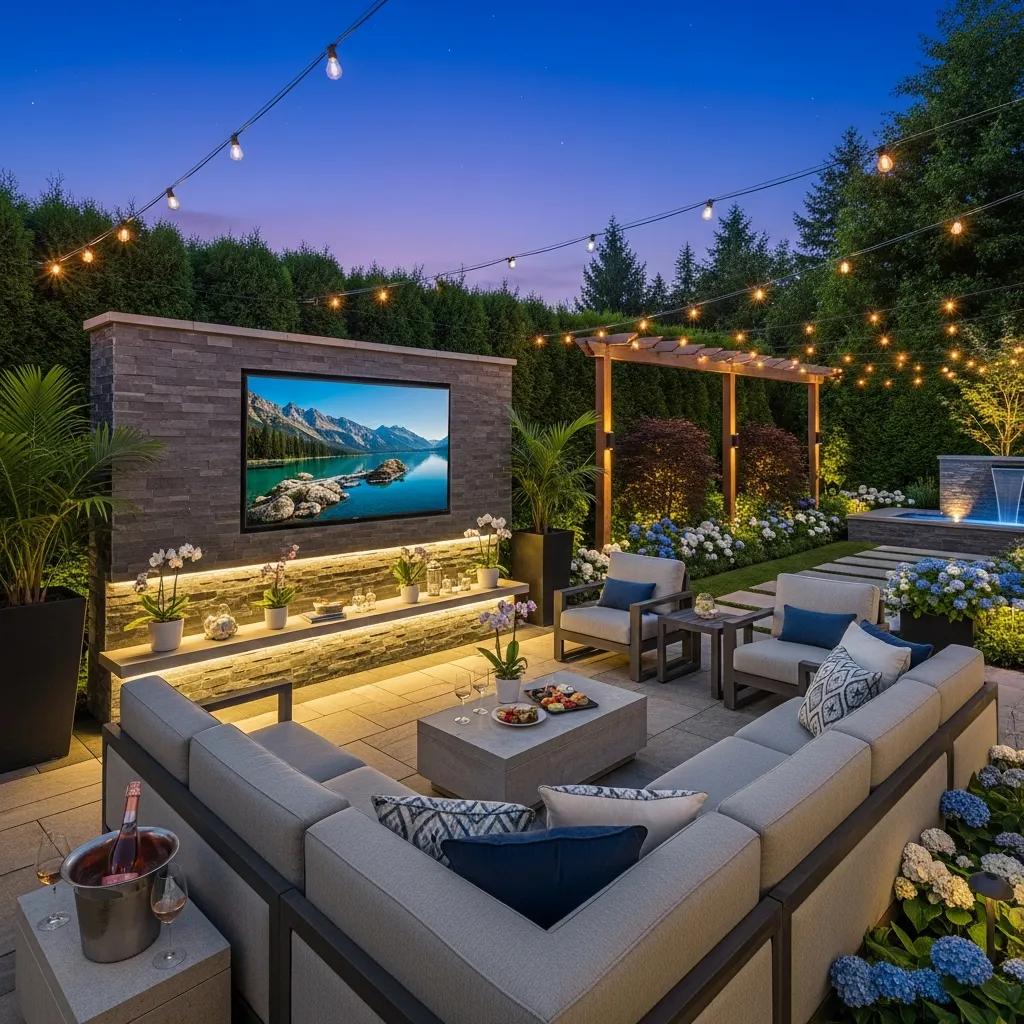
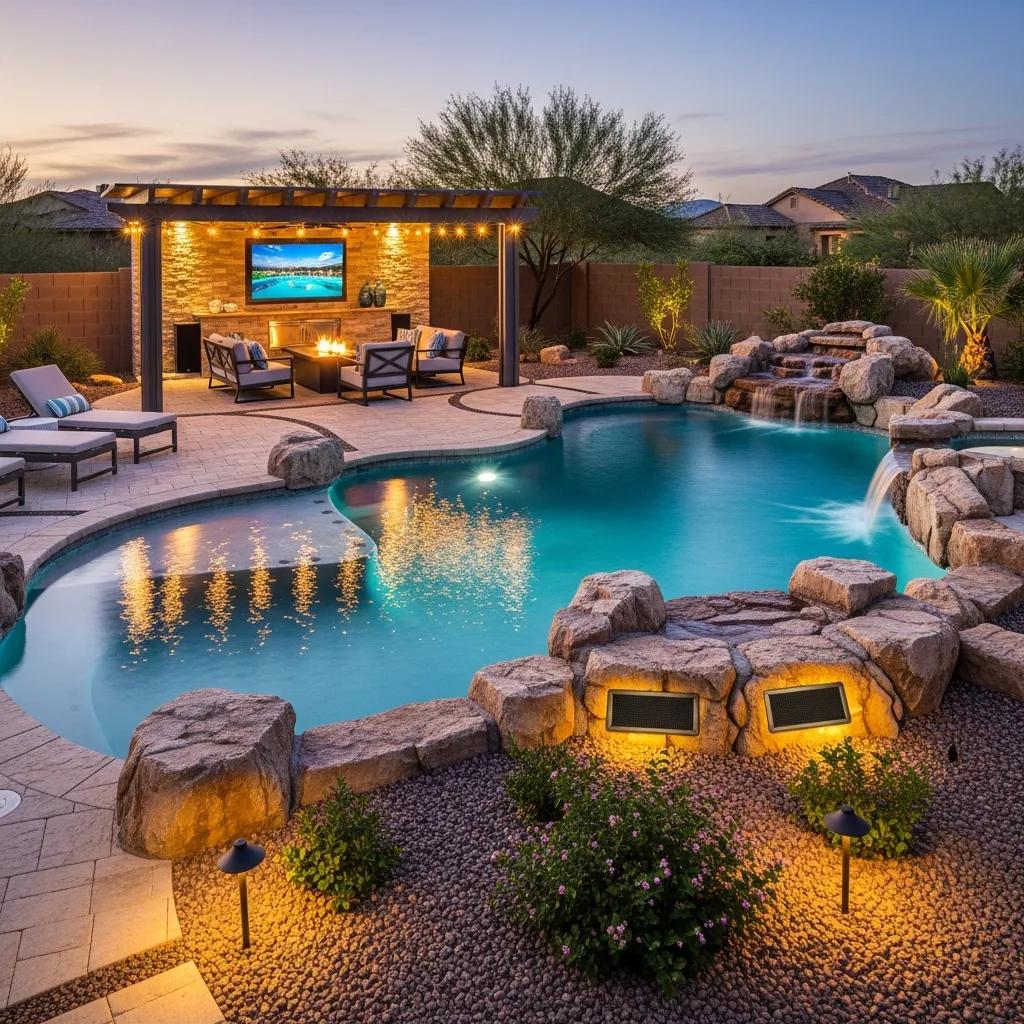
Luxury outdoor entertainment transforms a yard by blending rugged AV gear with thoughtful landscape design to create areas for movies, sports, and socializing. These systems pair weatherproof displays and speakers with amplifiers, networked control, and layered lighting scenes to shape moods and define functional zones around pools, patios, and lawns. The payoff is a backyard that functions like an outdoor living room or private theater—boosting lifestyle value and giving you more reasons to use the space year‑round. Knowing how these transformations work helps you prioritize the zones and scenes that matter before choosing equipment or signing off on installation.

Common transformation types we design include:

  • Poolside cinema setups with bright, sun‑readable displays and directional speakers for clear movie sound under the stars.
  • Integrated patio living rooms with covered or retractable screens and multi‑zone audio that extend indoor comfort outside.
  • Distributed audio across pool, dining, and garden areas so music and volume follow activity.
  • Mood‑driven lighting and automation that ties AV, irrigation, and climate controls together for effortless hosting.

These approaches deliver lifestyle benefits and measurable resale value, and they inform the equipment and installer choices that fit local conditions.

H3: What Makes Outdoor Entertainment Essential for Modern Backyards?

Outdoor entertainment matters because homeowners now treat exterior spaces as extensions of their home—for daily use, socializing, and quiet retreats. Outdoor sound and poolside systems deliver background music, cinematic audio, and clear commentary for sports gatherings while solving challenges indoor systems don’t face, like glare, reflections, and exposure to weather. With more time spent outdoors, the right mix of multi‑zone audio, durable displays, and smart lighting supports a wide range of activities throughout the year. Identifying those use cases early helps define viewing distances, speaker coverage, and the brightness and weather ratings your displays need.

Those practical requirements lead to the next step: choosing components that withstand heat, UV, and moisture while preserving the look of your landscape.

H3: How Does Island Pools and Landscaping AZ Create Seamless Outdoor Experiences?

Island Pools and Landscaping AZ works as a design‑build partner that coordinates custom pools, landscapes, and outdoor technology so everything feels intentional and lasts. Our team designs pools and yards with AV integration in mind—selecting durable materials, planning equipment placement, and ensuring access for service. Working with one firm eliminates finger‑pointing between trades, improves placement decisions for screens and speakers, and protects the overall aesthetic. That single‑team approach streamlines installation and supports long‑term reliability by aligning hardscape, enclosures, and service access from the start.

That collaboration sets the stage for choosing hardware that’s specified for Arizona conditions—starting with displays and speakers rated for the desert.

What Are the Key Components of a High-End Outdoor Entertainment System?

A high‑end outdoor entertainment system groups into four core areas: all‑weather displays, weatherproof speakers and buried subwoofers, robust amplification and control electronics, and outdoor‑grade network and power infrastructure. Each element must meet weather and brightness requirements and be mounted so it performs reliably—pay attention to sun‑facing brightness (nits), IP ratings, and display ventilation, plus speaker placement to avoid acoustic dead zones near water. Designing these parts as an integrated whole—outdoor TV installation, sound system layout, and Wi‑Fi/mesh coverage—keeps performance consistent for backyard cinemas and poolside entertainment.

The essential components include:

  1. Outdoor TV or display: A weatherproof, high‑brightness display with UV‑resistant enclosure for direct sun viewing.
  2. Outdoor speakers and subwoofers: Landscape or bollard speakers and buried subwoofers for even coverage with low visual impact.
  3. Amplification, receivers, and control: Weather‑rated amps and smart controllers for scene recall and multi‑zone routing.
  4. Networking and power: Outdoor‑capable mesh nodes, surge protection, and sealed power enclosures for dependable streaming and control.

Below is a concise comparison to help guide product selection before you consult an installer.

ComponentKey AttributeTypical Consideration
Outdoor DisplayBrightness & IP ratingSpecify 1500–2000+ nits for sun‑facing installs; IP65+ enclosures limit dust/moisture and UV exposure
Outdoor SpeakersDispersion & mountingWide dispersion for patios; buried subwoofers add bass without visible cabinets
Amplifier / ReceiverWeatherproofing & channelsRack‑mounted gear with ventilation or dedicated outdoor enclosures for protection
Wi‑Fi / MeshCoverage & latencyPlace mesh nodes near living areas to support streaming and reliable smart‑tech control

Which Weatherproof Outdoor TVs Are Best Suited for Arizona Climates?

In Arizona, choose displays engineered for high ambient brightness, active thermal management, and UV‑resistant housings to avoid sun and heat damage. Ask for specs on nits for daytime visibility, IP ratings to keep out dust and moisture, and whether the unit uses active cooling or passive heat dissipation. Homeowners and installers commonly compare purpose‑built outdoor display lines—ask about warranties for direct‑sun installs and recommended mounting clearances. Picking the right display also dictates speaker placement, shading, and viewing comfort strategies.

That decision then informs the overall layout to optimize sightlines and shade wherever possible.

How Do Integrated Outdoor Speaker Systems Enhance Your Backyard Ambiance?

Integrated outdoor speaker systems shape ambiance by delivering even, balanced sound across defined backyard zones while staying visually discreet. Landscape speakers hide in planting beds, bollard speakers guide sound along paths, and buried subwoofers add bass without visible boxes—so a mixed approach usually works best. Placement takes into account listening positions, reflections from hard surfaces, and neighbor concerns; concealing components in planters or behind features preserves the look. Good audio design ties directly into lighting and automation so music and movie soundtracks complement the scene rather than compete with it.

Those placement and aesthetic choices naturally lead to automation strategies that sync lighting, AV, and irrigation for smooth control.

How Can Smart Backyard Automation Elevate Your Outdoor Living Space?

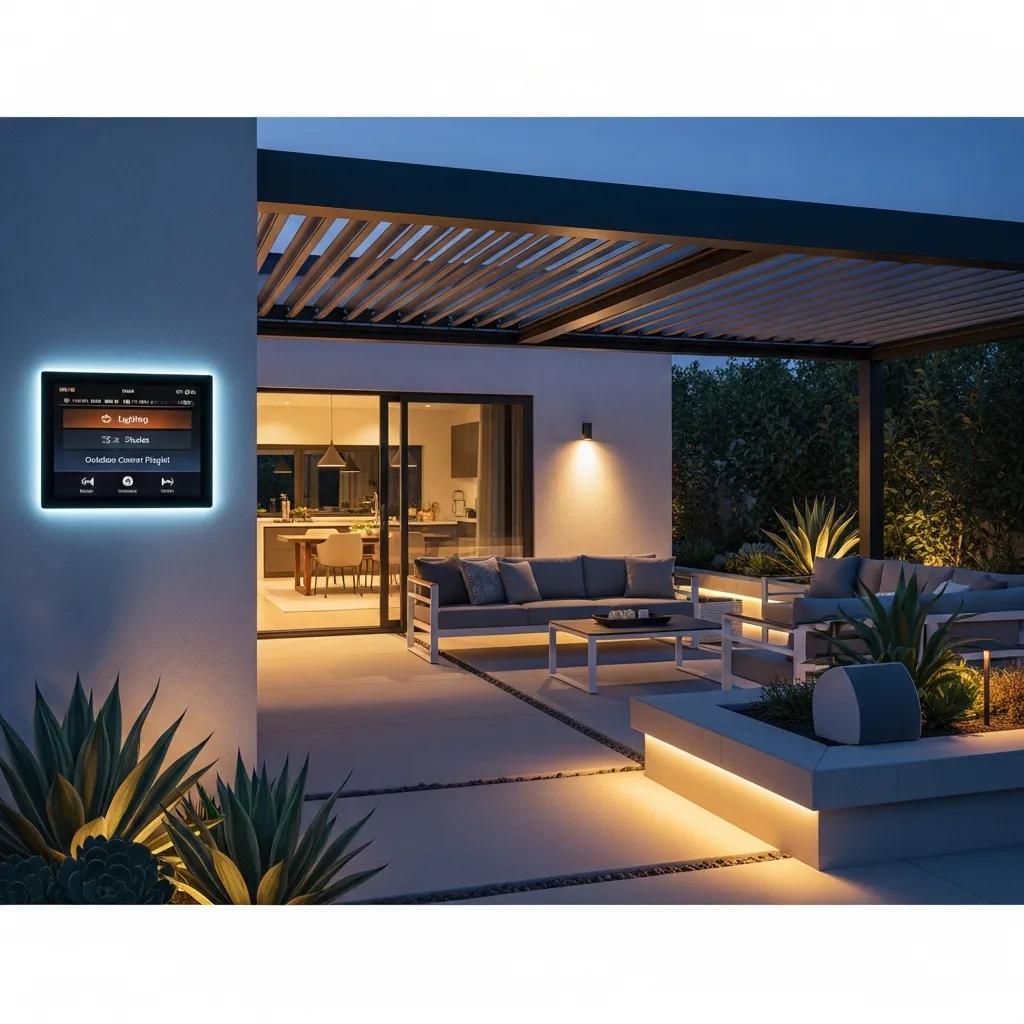
Smart automation ties lighting scenes, AV control, irrigation, and climate devices together so one command sets mood, comfort, and utility. A single “movie night” action can dim landscape lights, send audio to patio speakers, lower a screen, and turn on heaters—so complex coordination happens automatically. Common integration points include voice assistants, app scene control, and central hubs that manage multi‑zone audio and lighting while respecting network limits. Homeowners get convenience, energy savings through scheduling, improved security with simulated occupancy, and consistent ambiance for entertaining.

Below is a simple mapping of common smart features to homeowner benefits to clarify trade‑offs.

Smart FeatureIntegrated FunctionPrimary Benefit
Smart Lighting ScenesColor, dimming, schedulingEasy ambiance control and reduced energy use
AV Scene ControlMulti‑zone routing, presetsSmooth transitions between activities
Smart IrrigationScheduled watering, weather‑basedWater savings and healthier plants
Climate DevicesHeaters/fans with schedulesComfort that extends your outdoor season

What Smart Home Features Integrate with Outdoor Entertainment Systems?

Features that integrate well include lighting control platforms, multi‑zone AV controllers, voice assistants, smart irrigation controllers, and networked climate devices like patio heaters and fans. Those integrations enable scenes—party mode, for example—where paths light up, a playlist starts, and irrigation pauses during the event, all from one app or voice command. You can choose a central hub for orchestrating scenes, direct cloud integrations for remote access, or local control for lower latency and reliability. Picking a control strategy early avoids vendor lock‑in and keeps future upgrades straightforward.

Choosing integration points also shapes the installation sequence and ensures your network can handle the load.

How Does Smart Landscape Lighting Improve Mood and Security?

Smart landscape lighting improves both mood and safety with dimmable fixtures, adjustable color temperature, motion triggers, and schedules that support activities and deter intruders. Warm, layered lighting creates inviting dining and relaxation areas, while path and step lighting keeps everyone safe after dark. Motion‑activated fixtures add security without wasting energy, and automation can simulate occupancy when you’re away. Selecting durable fixtures and protecting power connections ensures scenes remain consistent and fixtures last longer.

Those lighting decisions feed directly into the design and installation plan that makes scenes come to life.

What Is the Process for Designing and Installing a Custom Outdoor Home Theater?

Designing and installing a custom outdoor theater follows a reliable sequence: initial consultation and visioning, system design and product selection, coordinated installation with trades, then testing and ongoing support. This phased approach makes sure choices—screen size, speaker layout, and network topology—match homeowner expectations and site realities like sightlines, sun paths, and power access. Expect measured site surveys, renderings or mock‑ups, and tight coordination among electrician, landscape contractor, and AV installer to protect aesthetics and function. After commissioning, documented testing and a maintenance plan keep performance predictable and reduce service calls.

The steps below summarize typical workflow and timeline.

  1. Consultation and vision planning: Capture use cases, budget, viewing distances, and long‑term goals.
  2. Design and product selection: Specify displays, speakers, amps, and automation rated for local climate.
  3. Installation and coordination: Sequence trades, install mounts and wiring, and protect gear with enclosures.
  4. Testing, commissioning, and support: Calibrate audio/video, program scenes, and set up maintenance protocols.

How Does Consultation and Vision Planning Ensure Personalized Solutions?

Consultation and vision planning make solutions personal by documenting lifestyle needs, preferred activities, budget parameters, and site constraints before choosing gear. Installers gather details like typical audience size, primary viewing spots, audio coverage goals, nearby reflective surfaces, and available power/network access. That checklist‑driven process aligns product performance—brightness, speaker dispersion, and mountings—with practical realities like sun orientation and wiring routes. A thorough vision phase reduces rework and results in placements and products that satisfy over the long term.

A detailed plan then moves smoothly into installation and testing where those decisions are realized.

What Are the Steps for Professional Installation and Ongoing Support?

Professional installation follows staged milestones: site prep and conduit rough‑in, mounting and wiring of displays and speakers, enclosure and weatherproofing work, then detailed audio/video calibration and scene programming. Roles typically include a design‑build lead coordinating landscapers and electricians, an AV installer handling integration, and a commissioning tech validating performance. At handoff, homeowners receive documentation on settings, firmware update steps, and seasonal checks. Service agreements or maintenance plans that cover firmware updates, warranty coordination, and annual inspections help preserve uptime and protect the investment.

Clear responsibilities and proactive support reduce downtime and make future upgrades simpler.

Why Choose Island Pools and Landscaping AZ for Your Outdoor Entertainment Integration?

Island Pools and Landscaping AZ brings full design‑build experience to integrated outdoor projects—combining custom pools and landscapes with AV integration and a focus on quality, detail, and customer care. Working with a single firm that understands hardscape, softscape, and AV placement reduces coordination friction, simplifies warranty handling, and ensures equipment is installed for peak performance and easy service access. Our portfolio of luxury backyard projects emphasizes cohesive aesthetics and durable installations that address Arizona‑specific issues like heat, dust, and sun exposure. Homeowners get a partner who designs the landscape and integrates the technology rather than tacking AV on as an afterthought.

When evaluating partners, ask about their design‑build coordination, examples of integrated work, and how they handle long‑term service and homeowner communication.

How Does Local Arizona Expertise Benefit Your Outdoor System?

Local Arizona expertise helps by matching materials and installation methods to desert conditions—specifying UV‑resistant enclosures, advising on shading or ventilation for sun‑exposed displays, and scheduling maintenance around dust and heat seasons. Knowing local sun paths and temperature swings guides optimal display orientation and mount heights to reduce glare and thermal stress. Local experience also yields practical service interval recommendations and protective measures that extend component life in arid environments. This climate‑aware approach improves performance and lowers the risk of premature failure.

Those local choices also affect which premium brands and warranties are most valuable for long‑term support.

What Luxury Brand Partnerships Enhance System Quality and Reliability?

Luxury brand partnerships matter because top outdoor display, speaker, and control manufacturers generally offer higher IP ratings, outdoor‑specific warranties, and proven field performance—key to long‑term reliability. Expect reputable outdoor AV names to come up during product discussions; these vendors invest in rugged materials and support networks for outdoor deployments. Ask about outdoor warranty terms and the installer’s experience with each brand. Choosing well‑supported manufacturers simplifies spare parts sourcing and service over the system’s life.

Knowing which brands do well outdoors helps homeowners prioritize durability and serviceability over the lowest upfront price.

How Do You Maintain and Upgrade Your Outdoor Entertainment System Over Time?

Maintaining and upgrading an outdoor system follows a scheduled, proactive approach: routine cleaning, firmware updates, seasonal inspections, and planned upgrades to network and control elements as tech changes. Regular tasks keep performance steady—cleaning displays, checking speaker fastenings, testing surge protection, and updating the control hub. Typical upgrade paths start with network improvements, then control hub or software updates, and finally component replacements like displays or speakers; this order minimizes disruption while extending system life. A proactive maintenance plan also catches weathering early and supports smarter long‑term investments, such as adding zones or modern smart devices.

Below is a practical maintenance schedule to guide homeowners through routine care.

ComponentMaintenance TaskFrequency / Notes
Outdoor DisplayClean enclosure, check seals, test brightnessQuarterly cleaning; inspect seals biannually before summer
Speakers & SubwooferVisual inspection, cable tension, calibration checkBiannual checks and annual audio calibration
Network & PowerFirmware updates, mesh optimization, surge protection testUpdate firmware quarterly; test surge devices annually
Enclosures & MountsCheck for corrosion, ventilation clearanceInspect annually and before monsoon season

What Are Best Practices for Weatherproofing and Durability?

Weatherproofing best practices include using IP‑rated enclosures, elevating and ventilating displays to prevent heat buildup, running sealed conduit for cabling, and installing surge protection for electrical storms. Choose hardware with proven UV resistance and stainless‑steel fasteners or protective coatings to minimize corrosion in dusty conditions. Seasonal prep—verifying seals before the hottest months and cleaning dust after storms—reduces stress on components and prevents premature wear. Doing this work at installation simplifies upkeep and lowers lifecycle costs.

These protective measures also create a solid foundation for future upgrades without replacing the entire system.How Can You Incorporate Emerging Smart Technologies into Existing Setups?

Bringing new smart tech into an existing system works best as a phased plan: strengthen the network backbone first, add a flexible control hub next, then introduce new devices and voice integrations to avoid compatibility problems. Upgrades often start with mesh Wi‑Fi improvements to cut latency and extend coverage, then move to a control platform that supports modern APIs and voice assistants. Run compatibility checks and pilot new devices in a small zone before full rollout. Keeping wiring modular and enclosures accessible makes hardware swaps easier. This sequence modernizes your setup while protecting investments in current displays and speakers.

That upgrade path lets you modernize steadily while keeping the yard usable for events and everyday life.

Frequently Asked Questions

What are the benefits of integrating smart technology into outdoor entertainment systems?

Smart technology makes outdoor systems easier to use and more capable. From a single app or voice command you can control lights, audio, and climate to create tailored experiences—like a “movie night” that dims lights, adjusts sound, and lowers a screen automatically. Smart schedules reduce energy use, and motion‑activated lighting adds security. In short, smart integration delivers convenience, efficiency, and a polished experience for hosting and everyday living.

How do I choose the right outdoor entertainment system for my space?

Start by evaluating how you’ll use the space, its size, and your typical guest count. Consider sightlines, sun exposure, and how permanent you want the installation to be. Choose weatherproof AV components rated for your climate and think about smart integration for easy control. A professional site assessment and consultation will produce tailored recommendations that balance performance, aesthetics, and budget.

What maintenance is required for outdoor entertainment systems?

Regular maintenance keeps systems reliable: clean displays and enclosures, check seals and cable connections, test audio, and install firmware updates for smart devices. Schedule seasonal inspections to catch wear from dust, heat, or storms. A simple maintenance routine prevents bigger problems and helps the system last longer.

Can I upgrade my existing outdoor entertainment system?

Yes. Begin with a system audit to identify weak points—often the network or control hub—and plan upgrades in phases. You can add smarter control, improve Wi‑Fi, or swap in newer displays and speakers. Work with a pro to ensure compatibility and to stage changes without disrupting the whole system.

What are the common challenges faced when installing outdoor entertainment systems?

Challenges include glare and heat on screens, sound reflections from hard surfaces, weatherproofing requirements, and coordinating electricians, landscapers, and AV techs. Planning, good site surveys, and working with experienced design‑build teams mitigate these issues and keep the project on schedule.

How do I ensure my outdoor entertainment system is energy efficient?

Use smart scheduling and automation so devices run only when needed, choose LED lighting and energy‑efficient audio gear, and consider solar lighting where appropriate. Regular firmware updates and system tuning also help maintain efficient operation over time.

Conclusion

A thoughtfully integrated luxury outdoor entertainment system turns your backyard into a versatile place for gatherings and relaxation while boosting lifestyle and property value. Understanding the right components and design choices lets you create a dependable, beautiful AV experience tailored to your needs. Partnering with a knowledgeable design‑build team ensures the result is both functional and visually cohesive—built to withstand Arizona conditions. Reach out to learn how our team can transform your outdoor living space.