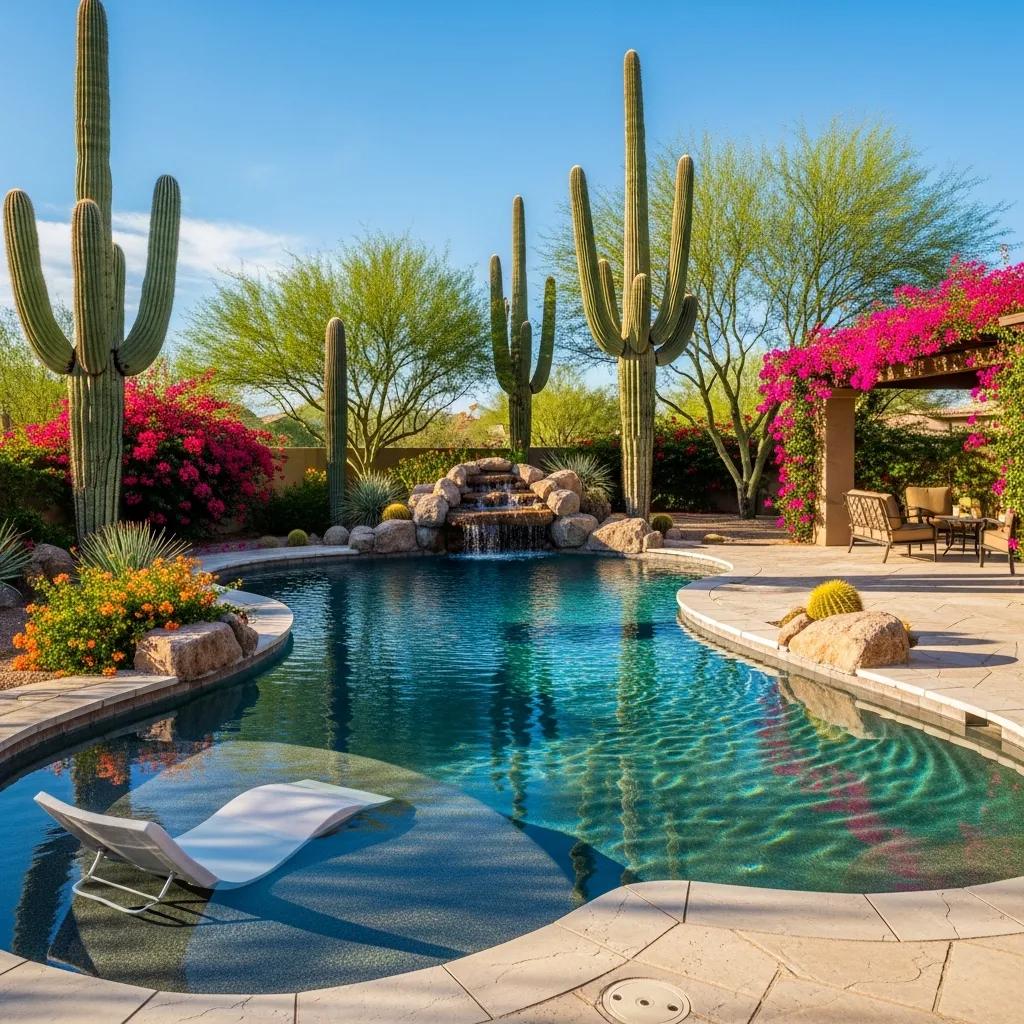
Luxury pool in Arizona backyard with cacti, vibrant flowers, and waterfall, showcasing summer maintenance and aesthetic appeal.

Arizona Summer Pool Care: Essential Maintenance for Luxury Pools

Arizona’s summer heat puts extra strain on luxury pools: chlorine breaks down faster, water evaporates more quickly, and finishes and equipment face intense UV and dust exposure. This homeowner-focused guide from Island Pools and Landscaping AZ explains how heat, bright sun, and desert dust affect water chemistry and materials, then gives practical, region-specific steps to protect performance and appearance. You’ll find clear targets for chemistry and testing cadence, evaporation and water-saving tactics, equipment-protection routines, and higher-level options like automation and professional service. Follow these recommendations to keep your pool balanced, efficient, and looking its best all summer — with fewer surprises and lower operating costs.

Pool Heat Challenges in Arizona Summer Island Pools and Landscaping AZ
Arizona combines high daytime temperatures, strong solar radiation, low humidity, and seasonal dust events. Together those conditions speed chlorine loss, promote pH drift, increase evaporation, and wear on surfaces and equipment. UV light photolyzes sanitizers and fades finishes; low humidity and high heat raise evaporation, forcing frequent top-offs that change chemistry; and monsoon dust and pollen increase the solids load on your filtration. Understanding these drivers helps you choose targeted steps that cut water loss, chemical use, and premature surface wear.

Here are the main challenges to prioritize so your actions address the causes — not just the symptoms.

  • High temperatures speed sanitizer breakdown and raise water temperature, increasing bacterial growth risk.
  • Strong UV exposure degrades chlorine and accelerates tile and plaster fading.
  • Rapid evaporation concentrates dissolved solids and requires more frequent refilling, which alters chemistry.
  • Dust storms and monsoon debris add solids to the water, increasing filter workload and maintenance frequency.

These issues shape the practical solutions below, including chemistry control and evaporation-reduction tactics that target each listed problem.

How Does Arizona's Climate Affect Pool Water Chemistry and Surfaces?

Arizona sunlight and heat speed chemical reactions in pool water: free chlorine breaks down faster and pH can drift up as CO2 escapes. Intense UV calls for careful cyanuric acid (CYA) management to protect chlorine without over-stabilizing it. Hard, mineral-rich source water common here increases the risk of calcium scaling and plaster discoloration when pH and alkalinity aren’t buffered correctly. Repeated thermal cycling and hot surfaces also stress tile and decking, which can cause early deterioration.

Begin mitigation with proactive chemistry control and routine surface checks. Keep alkalinity and buffers in range, monitor calcium hardness, and use shading and appropriate materials to reduce UV-driven fading and surface wear.

What Impact Do Rapid Evaporation and Dust Storms Have on Pool Maintenance?

Rapid evaporation quickly lowers pool volume, concentrating dissolved solids and changing pH and sanitizer levels unpredictably. Topping off with hard municipal water can raise mineral content and speed scaling. Daytime temperature swings stress equipment and finishes. Dust storms and monsoons drop fine particulates that can bypass skimmers, burden filters, and increase algae risk if sanitizer levels fall.

To limit these effects, check water level daily during heat spikes and use covers, shade, and landscaping to reduce exposure. Watch for rising filter pressure or persistent chemical drift — those are signs you should step up maintenance or call a pro.

How Can You Optimize Pool Water Chemistry During Arizona Summers?

Optimizing chemistry in Arizona means targeting slightly adjusted ranges and testing more often to counteract UV-driven chlorine loss and evaporation-driven concentration changes. Set a routine testing schedule, manage CYA to protect chlorine, and shock the pool after storms or heavy use to restore sanitizer levels. Regular checks prevent scaling, staining, and microbial growth while keeping the high-end look you expect from a luxury pool.

Below is a compact table comparing key chemical parameters with Arizona-specific notes so you can act quickly and confidently.

This table lists ideal ranges and practical notes for hot-weather management:

ParameterIdeal RangeNotes for Arizona Heat
pH7.4–7.6Bias toward 7.4–7.6 to reduce scaling and keep chlorine effective.
Free Chlorine (FC)1.0–3.0 ppmKeep at the upper end during heat spikes; boost after storms or heavy use.
Total Alkalinity (TA)80–120 ppmMid-range TA helps stabilize pH against evaporation-driven swings.
Cyanuric Acid (CYA)30–50 ppmUse higher CYA to guard chlorine from UV, but avoid levels >70 ppm.
Calcium Hardness200–400 ppmMonitor to prevent plaster scaling when source water is mineral-rich.

Action recommendation: Test 2–3 times per week at minimum, and test daily during heatwaves. Adjust chlorine and buffer chemicals immediately when readings fall outside these ranges to avoid cascading issues.

This compact summary gives clear targets and a short action step so homeowners can apply guidance quickly.

What Are the Ideal pH, Chlorine, and Alkalinity Levels for Arizona Pools?

In Arizona summers, aim for pH 7.4–7.6 to limit scale and keep sanitizers effective. Free chlorine should typically be 1.0–3.0 ppm, leaning higher during heat spikes, heavy bather loads, or after storms. Total alkalinity of 80–120 ppm buffers pH against evaporation and CO2 loss. Keep CYA between 30–50 ppm to protect chlorine from intense UV; avoid over-stabilizing the water.

When correcting chemistry, raise alkalinity first if it’s low, then adjust pH, and finally set chlorine — that order minimizes unintended swings and protects finishes and equipment. Small, frequent adjustments beat large corrections that can cause damage.

How Often Should You Test and Adjust Pool Chemicals in Hot Weather?

During a typical Arizona summer test chemistry at least 2–3 times weekly, and switch to daily testing during heatwaves, big gatherings, or after storms. Use reliable test strips or a quick kit for daily checks and run a full panel with a digital reader or lab test weekly to monitor calcium hardness and CYA. Smart dosing systems can handle continuous pH and sanitizer adjustments, reducing manual work and keeping levels steady.

Choose between DIY and automation based on how hands-on you want to be: automation reduces human error and keeps chemistry consistent, while manual testing gives you direct control. If balance keeps drifting despite care, have a pro evaluate source-water hardness, equipment, or hidden causes.

What Are Effective Evaporation Control and Water Conservation Strategies for Luxury Pools?

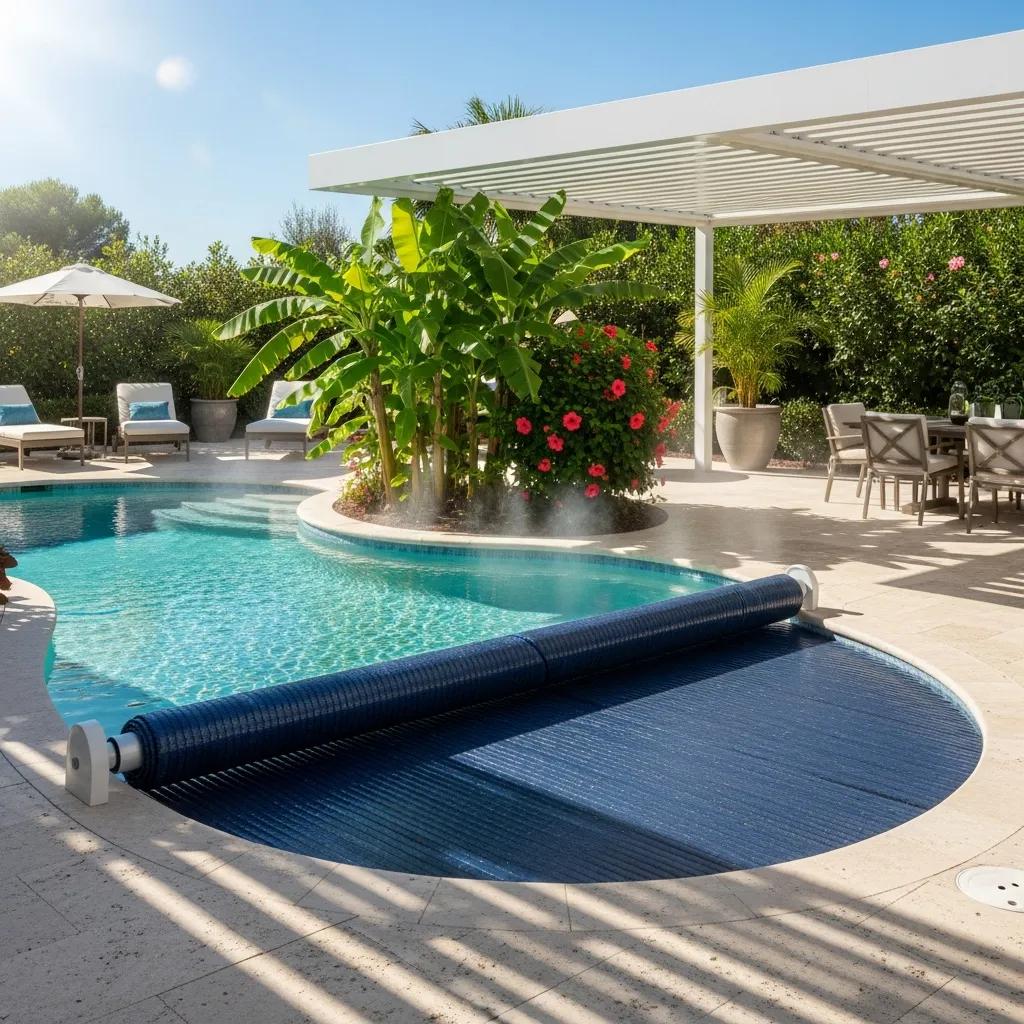
Luxury pool with automatic cover, surrounded by tropical landscaping and shaded seating area, showcasing evaporation control strategies for Arizona's summer heat.

Evaporation drives water and chemical costs in Arizona — especially for large luxury pools and water features. The best conservation approach combines covers, architectural shading, and landscaping to reduce wind and sun exposure. Automatic and safety covers offer the strongest evaporation reduction and integrate cleanly with upscale design; solar blankets and custom shade structures balance cost and aesthetics. Pair these with smart fill systems and leak detection for the most reliable water savings on high-end properties.

Below is a quick comparison of common evaporation-control solutions and their typical benefits for luxury pools.

SolutionEstimated Evaporation ReductionLuxury Tradeoff / Benefit
Solar pool cover50–70%Cost-effective and easy to retrofit; removes visually when in use.
Automatic pool cover90–95%Top performance, integrates with decking and safety features; premium finish options.
Shade structures (pergolas/awnings)20–40%Adds architectural value, lowers UV exposure, and creates usable outdoor space.
Smart retractable cover80–90%Offers automation and design integration; best planned at build or remodel.

Summary: Automatic covers give the biggest evaporation savings and pair well with luxury design. Solar covers are an affordable retrofit, while shade and landscaping add thermal and visual benefits.

How Do Pool Covers and Shade Structures Reduce Water Loss?

Covers reduce direct surface exposure, the main driver of evaporation. A well-fitted automatic cover can cut evaporation 90–95%, while solar or thermal blankets typically reduce it 50–70%. Shade — pergolas, awnings, or well-placed trees — lowers surface temperature and UV exposure, cutting both evaporation and UV-driven sanitizer loss. Luxury installations often conceal covers within decking or water-features so protection doesn’t compromise design.

Choose a solution based on retrofit feasibility, visual goals, and automation preferences; combining covers with landscape elements delivers the best functional and aesthetic outcome while lowering refill and chemical costs over time.

What Are Best Practices for Water Level Management and Leak Detection?

Keeping the water level steady prevents pump cavitation and skimmer problems, and it helps you spot abnormal loss that suggests a leak. Do daily visual checks during heat spikes and consider automatic-fill systems or level sensors to avoid manual topping-off. For a basic leak test, use a bucket test to compare pool loss versus evaporation over 24 hours — big differences usually indicate a leak. If you see persistent unexplained loss, wet spots near equipment, or rapid drops that aren’t evaporation, call a leak-detection specialist.

Early detection saves infrastructure and repair costs. Integrate level sensors with auto-fill and alerts for a hands-off setup that protects water resources and your pool’s finishes.

How Should You Protect Pool Equipment and Surfaces from Arizona's Harsh Conditions?
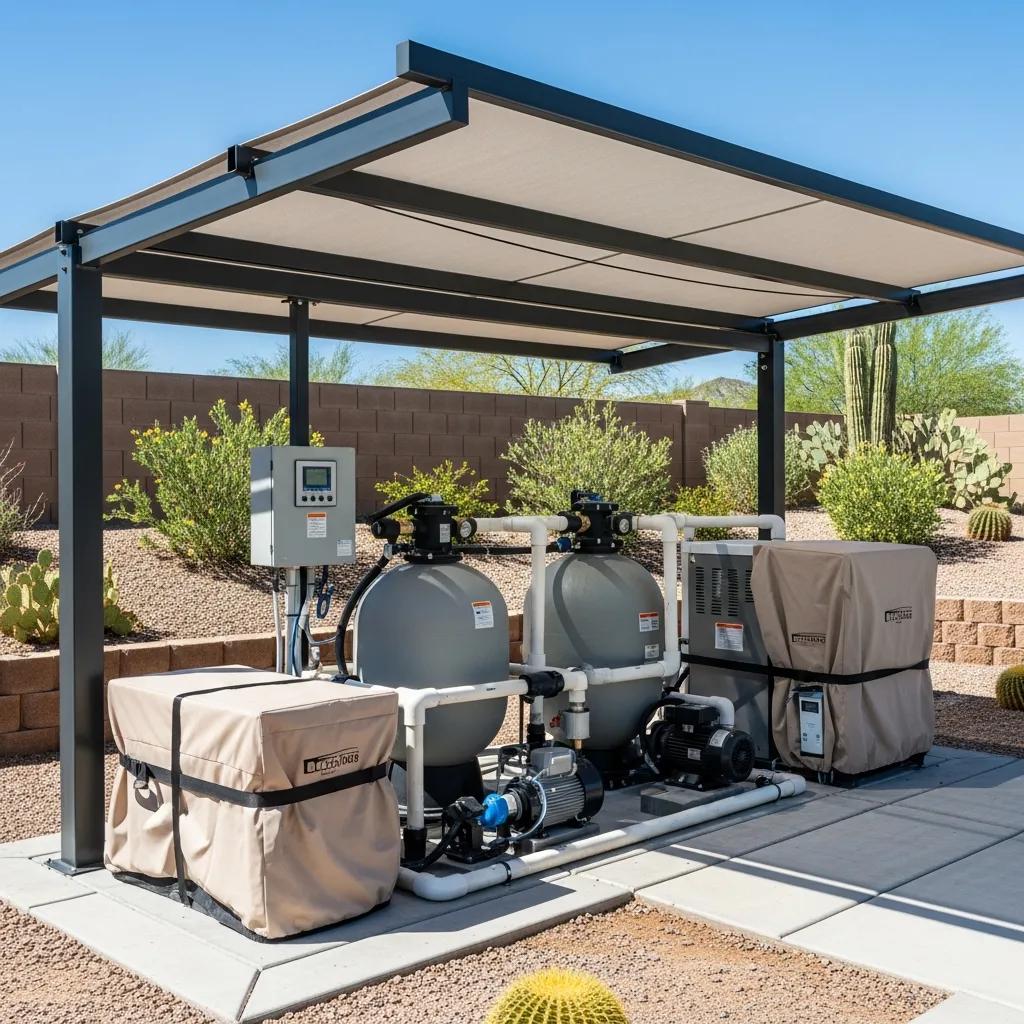
Pool equipment under shaded cover, including pumps, filters, and heaters, with protective coverings, in a landscaped Arizona setting.

Protect pumps, filters, heaters, and finishes with routine maintenance and physical shielding from sun and heat. Equipment in direct sun ages faster — seals and plastics become brittle and electrical parts wear sooner. Place mechanicals on shaded pads, inside ventilated enclosures, or under UV-rated covers to extend service life. Plaster and tile are prone to mineral scaling and thermal stress; regular inspections and targeted cleaning slow deterioration. Pair maintenance with design choices — for example, situating mechanicals in shaded, accessible locations — to prevent heat-related failures and keep systems running efficiently.

The maintenance schedule below lists recommended actions and frequencies for luxury pools in Arizona.

ComponentRecommended ActionFrequency
PumpInspect seals, check for leaks, clean strainer basketWeekly visual / monthly detailed
FilterBackwash or clean cartridge, inspect media and pressureEvery 1–2 weeks or as pressure rises
Heater/Heat pumpClean intake screens, inspect electrical connectionsMonthly during heavy use
Surfaces (plaster/tile)Inspect for cracks, clean scale, apply protective cleaningMonthly visual / quarterly deep clean

Summary: A scheduled maintenance plan cuts heat- and UV-related failures and preserves the premium finishes you expect from a high-end pool.

What Are Optimal Pump and Filter Run Times for Summer Efficiency?

Balance filtration turnover with energy use: aim to circulate the pool volume once per day, which typically requires 8–10 hours with a correctly sized pump. Variable-speed pumps let you spread that runtime across low-speed continuous circulation plus short high-speed cycles for cleaning. Running filtration partly overnight reduces costs and improves clarity, while daytime cycles address heat-driven sanitizer loss. Calculate turnover by dividing pool volume by pump flow and set schedules to meet that target.

Use timers, variable-speed settings, and smart controllers to keep filtration consistent and efficient. Watch filter pressure so the system maintains designed flow without unnecessary extra runtime.

How Do You Maintain and Shield Equipment from UV and Heat Damage?

Shield mechanicals with UV-resistant covers, shaded enclosures, and good ventilation to prevent overheating and seal failure. Mount equipment on elevated, level pads that drain water and allow airflow; choose corrosion-resistant hardware and UV-rated piping when possible. Do monthly visual checks for brittle hoses, cracked housings, or faded labels that signal UV breakdown, and replace small parts proactively. For electrical systems, use protective conduits and schedule routine safety inspections to keep systems reliable in extreme temperatures.

What Advanced Maintenance Tips Enhance Luxury Pool Longevity and Performance?

Advanced care focuses on automation, premium filtration, and professional service to protect aesthetics while reducing homeowner effort. Smart controllers and automated dosing keep pH and sanitizer steady with small, precise corrections that prevent large swings from heat and evaporation. Higher-tier filtration — like secondary polishing cartridges or specialty media — improves clarity and eases the load on primary systems. Regular professional service packages for luxury pools include deep cleaning, finish inspection, and seasonal tuning to protect long-term value.

How Can Smart Pool Technology Automate Chemical Dosing and Temperature Control?

Smart systems use sensors to read pH, ORP (oxidation-reduction potential), and temperature, then trigger dosing pumps to add small amounts of acid, chlorine, or alkalinity as needed. The pattern is straightforward — sensor → trigger → dose — which stabilizes chemistry and smooths out the peaks caused by heat. Integration with home automation and remote alerts lets owners track trends and get notifications, reducing manual tests and improving response times. Maintain sensors with regular calibration and consider redundancy for critical controls.

The return on investment from automation often shows up as lower chemical waste, fewer emergency calls, and longer finish and equipment life — a compelling option for busy homeowners who want a hands-off pool experience.

When Should High-End Homeowners Seek Professional Pool Services?

Call professionals when chemical imbalance persists despite correct dosing, when leaks or unexplained water loss continue after DIY checks, when you’re planning complex automation or mechanical upgrades, or when resurfacing and tile work are required. Monthly or biweekly professional packages can include deep-cleaning, filter media replacement, finish inspections, and system tuning to stop small problems from growing. High-end owners also benefit from seasonal audits before peak summer use to confirm automation, heaters, and water features are ready.

How Does Proper Summer Pool Maintenance Support Your Luxury Outdoor Living Investment?

Consistent summer maintenance preserves pool aesthetics, lowers lifecycle costs, and protects the broader outdoor-living investment that luxury homeowners expect. Healthy water and well-maintained equipment prevent visible issues like staining, scaling, and faded tile, and efficient operation reduces utility and chemical bills over time. Pairing pool care with drought-friendly landscaping and water-saving tech supports sustainability goals and Arizona’s conservation priorities. These choices help maintain property value and keep the outdoor space a reliable extension of the home.

If you’re considering design-built upgrades, integrated covers, or a hands-off service plan, Island Pools and Landscaping AZ offers consultations, portfolio walkthroughs, and service packages with transparent communication and a satisfaction guarantee to protect your investment.

Why Is Regular Maintenance Key to Preserving Pool Aesthetics and Functionality?

Routine maintenance stops staining, scale, and mechanical wear from gradually degrading appearance and performance. Small, steady steps avoid large corrective projects later. Keeping pH, sanitizer, and alkalinity in range prevents mineral precipitation and surface etching; prompt filter service removes particulates before they embed in finishes. Scheduled professional inspections catch early signs of tile separation, plaster crazing, or equipment strain homeowners might miss. Preventive care preserves the premium look-and-feel of a luxury pool and lowers total ownership cost.

Well-maintained pools not only look better but also show good stewardship of a valuable asset — a plus for resale and owner satisfaction.

How Does Pool Care Integrate with Sustainable Luxury Lifestyle Practices in Arizona?

Sustainable luxury pool care blends efficient equipment, water-saving covers, and desert-appropriate landscaping so you reduce environmental impact without sacrificing style. Xeriscaping and native-plant buffers cut debris and irrigation needs, while high-efficiency variable-speed pumps and automation lower energy and water waste. Water-conserving measures — automatic covers, smart-fill systems, and leak detection — fit into design-build plans that pair sustainability with high-end finishes. Today’s luxury outdoor living increasingly includes visible conservation practices as part of the overall design brief.

Adopting these strategies delivers immediate operating savings and aligns your property with Arizona’s stewardship expectations — completing an integrated approach to luxury pool ownership.

Frequently Asked Questions

What are the benefits of using automated pool maintenance systems?

Automated systems give luxury pool owners continuous monitoring and small, accurate chemical corrections so water stays balanced without constant attention. That saves time, reduces chemical waste, and cuts down on human error. Many systems also integrate with home automation so you can receive alerts and check status remotely. Overall, automation offers consistent water quality, fewer emergency calls, and longer equipment and finish life.

How can landscaping contribute to pool maintenance in Arizona?

Thoughtful landscaping helps a lot in Arizona. Shade trees and well-placed shrubs lower direct sun exposure, reducing evaporation and UV damage. Proper plant selection and placement can block wind-driven dust and debris, cutting filter workload. Choosing drought-resistant plants supports water conservation and keeps the outdoor space cohesive and low-maintenance — an important pairing with a luxury pool.

What should homeowners look for in a professional pool service?

Choose a service experienced with luxury pools and local climate challenges. Look for comprehensive offerings: regular cleaning, chemical balancing, equipment inspections, and emergency repairs. Tailored maintenance plans based on your pool’s design and water source are valuable. Check reviews and testimonials, and confirm the company is licensed and insured to protect your investment and give you peace of mind.

How does water conservation impact pool maintenance costs?

Water conservation lowers refill frequency and the need for chemical rebalancing, which cuts operating costs. In high-evaporation climates like Arizona, covers, efficient landscaping, and smart-fill systems reduce water loss and utility bills. Conservation also reduces wear on equipment and surfaces, further lowering long-term maintenance expenses while preserving the pool’s appearance.

What are the signs of a potential leak in a pool?

Watch for steady water loss beyond normal evaporation, damp or soggy areas near equipment, or unexpectedly high water bills. If the skimmer or pump runs dry, that can also signal a leak. A bucket test (compare pool versus bucket water loss over 24 hours) helps distinguish evaporation from a leak. If results suggest a leak, contact a professional leak-detection service promptly.

What role does regular equipment inspection play in pool maintenance?

Regular inspections keep equipment efficient and extend service life. Checking pumps, filters, heaters, and controls identifies small issues before they become costly failures. Routine tasks — replacing seals, cleaning strainers, monitoring pressure — prevent bigger problems and save energy. A proactive inspection routine preserves performance and supports a safer, more reliable pool experience.

Conclusion

Keeping a luxury pool healthy through Arizona’s extreme heat requires focused chemistry control, evaporation reduction, and equipment protection. Follow a consistent maintenance plan — or partner with a trusted professional — to preserve beauty, cut operating costs, and support sustainability goals. For tailored advice, design-built upgrades, or a premium maintenance plan, reach out to Island Pools and Landscaping AZ and we’ll help protect your outdoor living investment.