
Arizona Spring Pool Opening Guide | Island Pools and Landscaping AZ
When is the Best Time to Open Your Pool in Arizona?
How Do Arizona's Climate and Seasonal Changes Affect Pool Opening Timing?
What Are the Risks of Opening Your Pool Too Early or Late in Arizona?
What Are the Essential Pre-Opening Preparations for Arizona Pools?
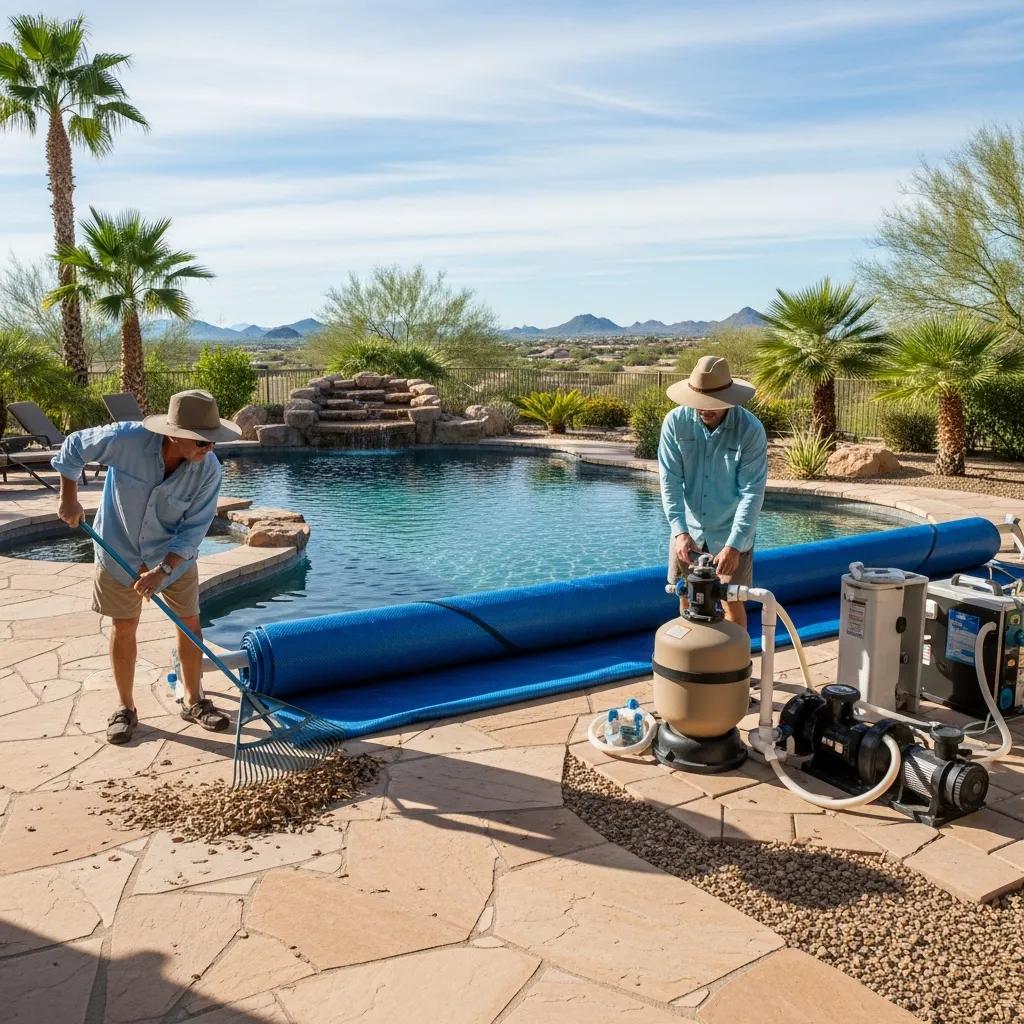
- Clear loose debris around the pool to prevent wind-driven contamination when you remove the cover.
- Inspect and document the cover’s condition and any fasteners or integrated tracks before attempting removal.
- Confirm access to the pool pad, equipment pad, and automation controls, and switch power off before starting inspections.
How to Properly Remove and Clean Your Luxury Pool Cover
Which Equipment Inspections Protect Your Investment During Spring Opening?
How Do You Master Arizona Pool Chemistry for Spring?
| Chemical | Recommended Range (Arizona spring) | Purpose / Notes |
|---|---|---|
| pH | 7.4 – 7.6 | Balances sanitizer efficiency and protects plaster; slightly higher pH helps reduce corrosion risk in hard water. |
| Total Alkalinity | 80 – 120 ppm | Buffers pH swings from rapid temperature shifts and bather load. |
| Free Chlorine | 1.5 – 3.0 ppm (higher after opening/shock) | Primary sanitizer; expect UV-driven decay—check and adjust frequently. |
| Calcium Hardness | 200 – 400 ppm | Protects plaster from erosion and prevents scaling; Arizona well water can run high—monitor for buildup. |
| Cyanuric Acid (CYA) | 30 – 50 ppm | Stabilizer to slow UV chlorine loss; keep moderate to avoid locking up sanitizer. |
What Are the Ideal Chemical Levels for Arizona Pools in Spring?
How to Test and Balance pH, Alkalinity, Chlorine, and Other Chemicals Effectively?
What Essential Equipment Checks Ensure a Smooth Pool Opening Season?
| Equipment | Common Issues (spring) | Action / When to call a pro |
|---|---|---|
| Pump & Motor | Leaks, noisy bearings, seal failure | Tighten unions and replace O-rings; call a pro for seal or motor replacement |
| Filter (sand/DE/cartridge) | High pressure, clogged media, tears | Backwash or clean cartridges; replace media or DE grids if performance doesn’t recover |
| Heater | Vent blockage, ignition failure, scale | Inspect vents and gas/electric connections; call a pro for combustion or ignition issues |
| Automation & Controls | Communication dropouts, sensor drift | Reboot and recalibrate sensors; call a pro for wiring or firmware faults |
How to Inspect and Maintain Your Pool Pump, Filter, and Heater
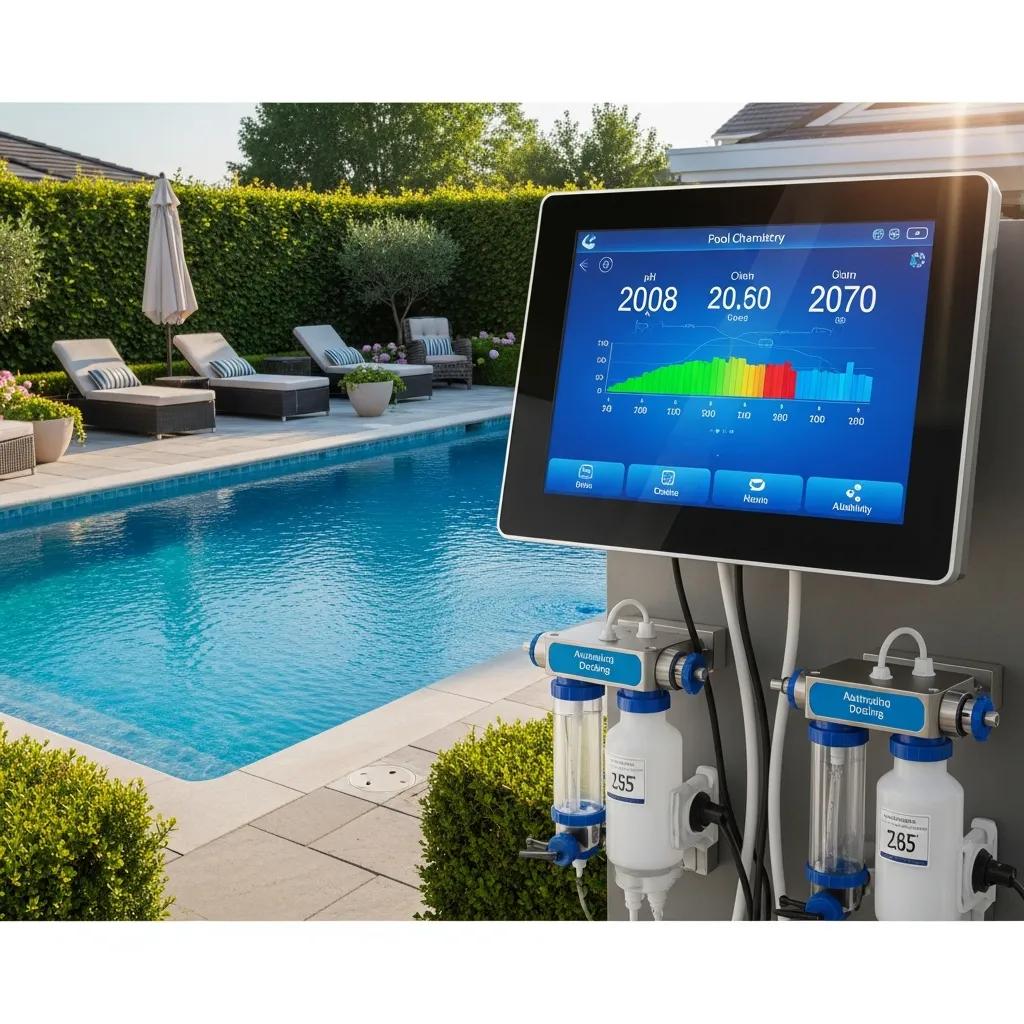
How Can Smart Pool Technology Enhance Your Spring Pool Opening?
How Do You Complete Cleaning and Final Touches for a Luxury Pool Opening?
- Brush and vacuum: Remove settled debris and clean scum lines with soft brushes made for delicate finishes.
- Service skimmers and baskets: Empty hair and leaf traps and confirm skimmer weir operation.
- Test accessories: Verify lights, ladders, and any safety covers are secure and functioning after reinstallation.
What Are the Best Practices for Deep Cleaning Pool Walls, Floors, and Skimmers?
How to Reinstall Accessories and Safety Features Correctly?
When Should Arizona Homeowners Consider Professional Pool Opening and Remodeling?
| Signal | What it Means for your Pool | Recommended Action (DIY vs Pro) |
|---|---|---|
| Persistent green water after shock | High organic load or circulation failure | Pro service for heavy algae removal and circulation assessment |
| Repeated filter pressure spikes | Clogged media or mechanical restriction | DIY cleaning first; call a pro if pressure returns quickly |
| Cracked tile or coping gaps | Potential structural or water intrusion | Pro evaluation for repair and finish protection |
| Automation or heater failure | Safety and efficiency impacts | Pro diagnostics and certified repair recommended |