
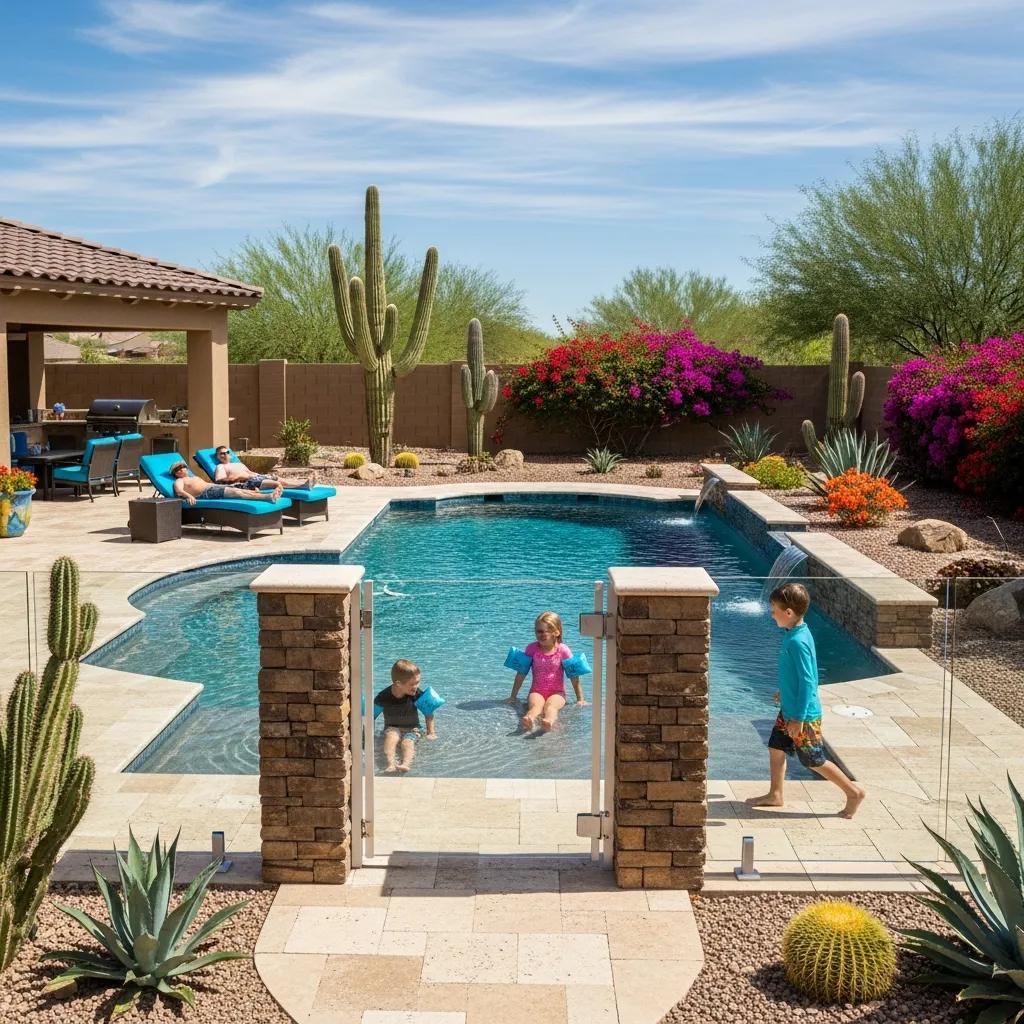
Comprehensive Pool Safety for Children and Pets in Arizona — Luxury Design That Meets Code

Owning a pool in Arizona means balancing a hot climate, high-end outdoor living, and serious safety responsibilities. Protecting children and pets around luxury pools calls for smart design decisions plus strict adherence to local rules. This guide walks through Arizona pool barrier laws, elegant safety features that preserve a refined look, pet-focused drowning-prevention ideas, and human-centered measures like supervision, swim lessons, and CPR readiness. You’ll get practical advice on fences, gates, alarms, ramps, landscape choices, and outdoor-living layouts that reduce risk without compromising style. We also explain how designers and builders can bake safety into a project from concept to permit to handoff, and where homeowners should coordinate with local authorities and trainers. Throughout, we use local terms—Arizona pool barrier laws, child pool fence, pet pool safety, smart pool safety systems Phoenix, pool alarms for kids—so you can match solutions to code and modern tech.

What Are the Arizona Pool Barrier Laws for Child and Pet Safety?
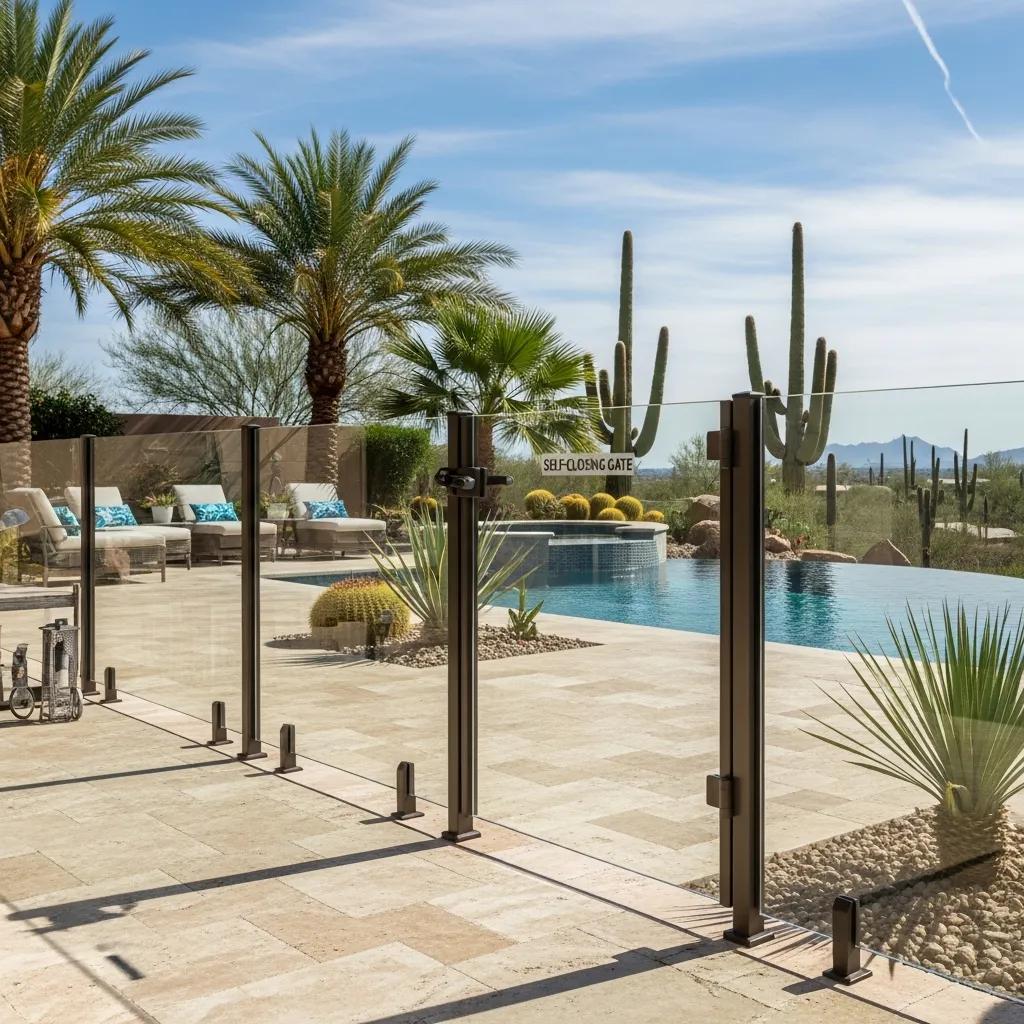
Arizona’s pool barrier rules require a clear, effective separation between a residential pool and spaces children or many pets can access. That usually means a minimum barrier height plus self-closing, self-latching gates to prevent unsupervised entry. Barriers work because physical separation delays or prevents accidental access, giving caregivers time to respond and greatly lowering drowning risk. Properly installed barriers measurably reduce unsupervised pool entries and improve safety outcomes. Treat state law as the foundation, then check city or municipal codes—especially in the Phoenix area—for additional requirements that affect luxury design and permitting. Addressing rules early avoids costly rework and lets you choose fences, gates, and covers that satisfy both safety and style goals.

Before we dive into the details, here’s a short checklist of homeowner responsibilities and typical permit steps. It highlights the hardware and siting concerns inspectors focus on and helps prepare conversations with designers and local building departments.

  • Install a barrier that meets minimum height and forms a continuous enclosure.
  • Fit gates with self-closing, self-latching hardware, and put latches out of children’s reach.
  • Avoid footholds or climbable elements and eliminate access paths from adjacent structures.

The checklist above frames the quick comparison below, which matches common barrier types to core Arizona requirements and typical municipal variations.

Arizona pool barrier comparison for quick compliance reference:

Barrier TypeRequired FeatureArizona Requirement / Common Municipal Note
Perimeter fence (opaque or decorative)Continuous enclosure; minimum heightMinimum 5 feet height; some local codes specify 60 inches (5 feet) or add visibility and spacing rules
Gate (pedestrian)Self-closing, self-latching hardware; latch out of reachLatches typically must be at least 54 inches above finished grade or otherwise inaccessible to small children
Pool cover / removable fenceSafety-rated, child-resistant locks or tested removable systemsCovers and removable barriers should meet ASTM F1346-91 or equivalent standards and be maintained to remain compliant

Which Pool Fence Requirements Must Arizona Homeowners Follow?

Fences must form a continuous, climb-resistant boundary around the pool with an effective minimum height and gate hardware that prevents young children from getting in unsupervised. A properly designed fence interrupts unsupervised approaches and gives caregivers time to intervene, which lowers accidental entries and strengthens legal defensibility after an incident. Popular materials for luxury residential pools include frameless glass, wrought iron, and removable mesh; each meets safety goals but differs in sightlines, upkeep, and climbability. Choose materials that balance aesthetic priorities, code compliance, and long-term maintenance.

Use this quick pros and cons list to compare common fence styles.

  • Glass pool fence: Clean sightlines and a premium look; requires regular cleaning and secure anchoring.
  • Wrought iron fence: Durable, decorative, and airflow-friendly; must be detailed to eliminate hand- and footholds.
  • Mesh removable fence: Versatile and effective when tensioned correctly; less integrated visually in high-end landscapes.

Those trade-offs make municipal variations important—local rules can change installation details and inspection expectations.

How Do Local Phoenix Regulations Impact Luxury Pool Safety Design?

Phoenix and nearby cities may layer extra rules on top of state law that influence fence height, gate placement, and allowed exceptions for integrated yards. Local ordinances often address visibility for inspectors, picket spacing, and how barriers interface with existing walls or structures—so early coordination with planners is essential. For luxury properties, designers translate safety hardware into refined details—hidden latches, integrated posts, and tempered glass—that satisfy inspectors while preserving the estate look. Permitting timelines and inspection schedules also affect project planning and cost, so engage your local building department early to reduce redesign risk. Knowing municipal nuances helps owners and designers plan fences and gates that are both code-compliant and visually cohesive.

Permitting coordination leads to practical design decisions: gate swing direction, sightlines for supervising adults, and landscaping that supports rather than undermines the barrier. Next, we cover premium safety features that blend into high-end pool design while protecting children.

How Can Luxury Pool Safety Features Protect Children in Arizona?
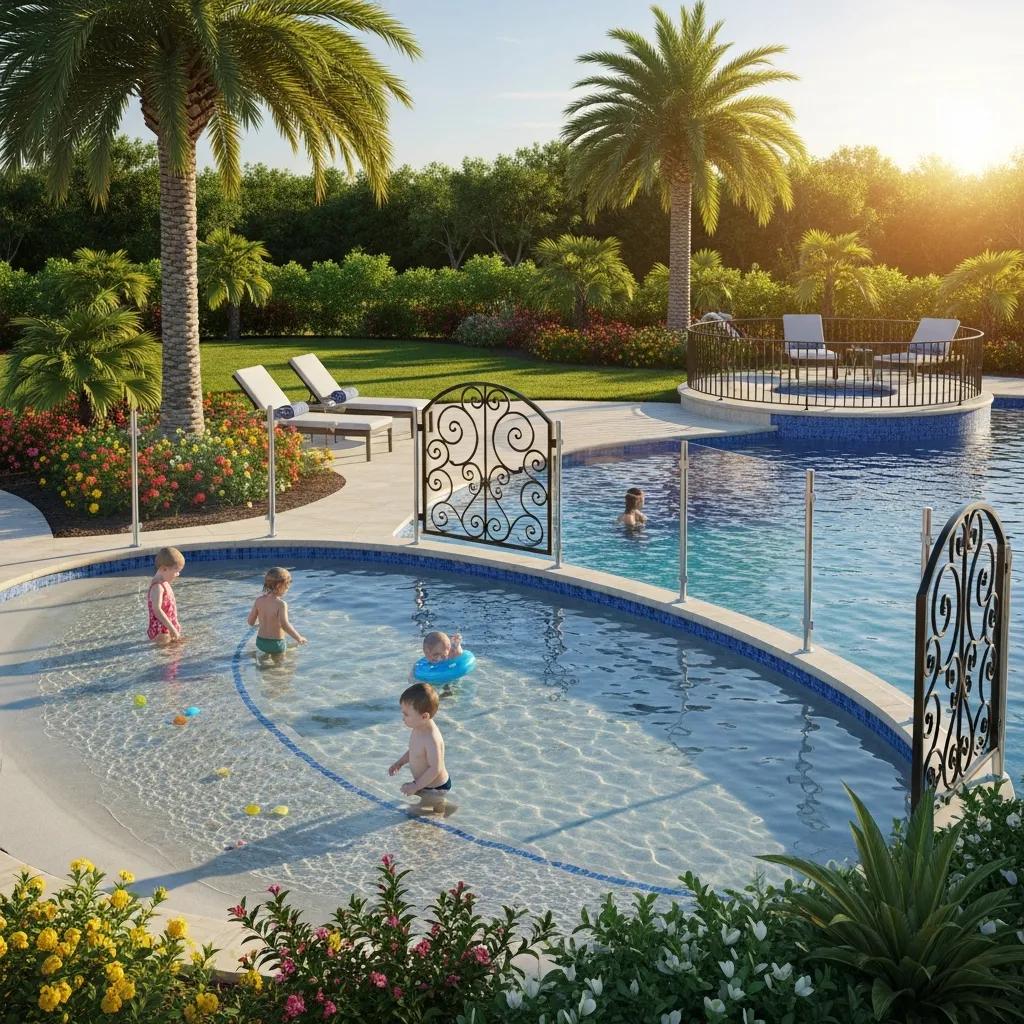
High-end pool safety draws on engineered barriers, smart detection, and thoughtful pool geometry to lower drowning risk without sacrificing style. These features either stop unsupervised access (barriers and gates), detect unexpected entries (alarms and sensors), or reduce harm when an entry happens (gradual entries, non-slip finishes). We recommend a layered approach—barriers plus detection plus safe pool geometry—so multiple systems back each other up. On remodels, integrate hardware, route alarms into home automation, and specify materials that meet both safety performance and the visual standards you expect. Treat safety as a design requirement, not an afterthought; that approach preserves beauty and peace of mind.

Use the table below to evaluate premium fence and gate options by appearance, upkeep, and safety value so your choices support your style goals.

Premium safety options for luxury pools:

Fence TypeAesthetic / MaterialSafety Benefit + Maintenance Consideration
Frameless glass panelsMinimal visual interruption; contemporary finishExcellent sightlines for supervision; needs regular cleaning and professional anchoring checks
Decorative wrought ironClassic, customizable stylesDurable and secure when vertical spacing meets code; periodic repainting or powder-coating recommended
Removable mesh barrierDiscreet when stored; flexible placementGood temporary protection; must be tensioned and inspected frequently

What Integrated Pool Fences and Gates Enhance Child Safety?

Integrated fences and gates blend permanent materials with architectural detailing to create barriers that are both effective and discreet. They protect by physically blocking access and by using managed-entry hardware—keyed locks or smart latches—to control who gets in. Benefits include clearer sightlines for supervision, fewer trip hazards at transition points, and dependable gate operation that keeps young children out. Design priorities include placing latches out of reach, using self-closing hinges, and avoiding horizontal rails that become footholds. Regular maintenance—weatherproofing metals, checking glass seals, and testing mechanical or magnetic latches—keeps these systems reliable.

Coordinate gate swing, adjacent planting, and interior sightlines so caregivers can monitor the pool from main living areas. Effective gating also complements electronic detection systems, which we cover next.

Which Smart Pool Alarms and Monitoring Systems Are Effective for Kids?

Smart alarms and monitoring systems use perimeter sensors, surface-wave detectors, wearable alerts, or sub-surface sensors to detect unauthorized pool entry and trigger local and remote alerts. They add value because barriers can be bypassed; detection systems provide a second line of defense that shortens response time. Benefits include instant notifications to phones or home hubs, integration with lighting and cameras, and a clear picture of system health. When choosing a system, prioritize sensor types with low false positives, reliable power (or battery backup), and straightforward maintenance protocols.

Integration tips: tie perimeter sensors into your home automation to flash lights and sound alarms, set geofenced alerts for caregivers, and test systems monthly to confirm responsiveness and reduce nuisance alarms. With alarms in place, let’s turn to pet-focused strategies that address different mobility and behavior patterns.

What Are Effective Pet Pool Drowning Prevention Strategies in Arizona?

Pet drowning prevention focuses on helping animals exit safely, reducing slip and heat hazards, and using detection tuned for pet size and movement. The strategy addresses how pets typically interact with water: provide easy exits (ramps or wide shallow entries), use cool, high-traction decking, and add pet-aware alarms or camera zones. The payoff is fewer emergency rescues and less owner stress—especially in Arizona heat, when pets may seek the pool to cool down. Specifying pet-friendly features during design ensures ramps, steps, and sensors are thoughtfully integrated instead of awkwardly retrofitted.

Match pet-focused features to your pet’s size and needs using the table below.

Pet safety feature comparison:

FeatureBest For (pet size/age)Benefit / Consideration
Low-gradient pet rampSmall to medium dogs, seniorsHelps pets exit independently; use textured, cool treads and keep the approach clear
Wide shallow entry (beach entry)All sizes, young petsNatural step-in lowers panic and aids training; uses more pool area
Pet-aware motion/alarm sensorActive outdoor petsNotifies owners of unexpected pool activity; requires sensitivity tuning to avoid wildlife triggers

How Do Custom Pet-Friendly Pool Exits and Ramps Improve Safety?

Custom ramps and exit points give animals a gradual, textured route out of the water so they don’t slide or struggle. This matters because many pet drownings occur when animals become exhausted or panic and cannot find a reliable exit; ramps change that outcome by creating an obvious escape. Benefits include greater independence for pets, fewer emergency interventions, and easier training so animals learn where exits are. Choose heat-resistant, coarse textures and cool composite treads to avoid paw burns in Phoenix temperatures.

Place ramps where they are visible from primary living spaces and away from steep drop-offs so pets naturally head toward safe exits. With ramps in place, landscape choices and alarms add another layer of protection.

Which Landscaping Choices and Pool Alarms Protect Pets from Drowning?

Pet-focused landscaping emphasizes non-toxic, drought-tolerant plants, cool high-traction decking, and shaded resting areas, combined with detection systems tuned for animal size. These measures reduce slips, overheating, and accidental pool entries by creating steady footing and comfortable relief spots. The result is calmer pets that are less likely to jump in impulsively. Recommended elements include pet-safe plantings, artificial turf with heat-reduction strategies, and textured decking that keeps paws cool and grippy.

Pair these landscape choices with pet-aware alarm zones and camera notification settings so you get early alerts for behavior that might lead to an accident. After physical and environmental protections, the human factor—supervision and training—remains critical.

How Does Adult Supervision and Education Reduce Pool Drowning Risks?

Supervision and education work because they provide continuous oversight, faster response, and trained eyes and hands during an emergency. Active supervision (no multitasking near water), designated water-watchers, and swim and CPR training for household members all reinforce one another. Trained supervisors spot hazards earlier, perform safer rescues, and activate emergency protocols more effectively—outcomes supported by drowning-prevention organizations. Embed supervision protocols into daily routines and pool rules to make safe behavior predictable for caregivers, guests, and older kids.

Here’s a short, memorable checklist—the “ABCs”—to help build a daily safety routine and training plan.

  1. Active Supervision: Assign a responsible adult whenever children or pets are near the pool.
  2. Barriers: Keep gates closed and covers in place when the pool isn’t in use; remove toys that attract children from the pool area.
  3. Classes & Emergency Prep: Enroll family members in swim lessons and CPR, and keep rescue gear easily accessible.

What Are the ABCs of Pool Safety for Children and Pets?

The ABCs—Active supervision, Barriers, and Classes/emergency readiness—address separate failure points in drowning prevention. Active supervision reduces unattended exposure, barriers block easy access, and classes plus emergency gear improve outcomes if an incident occurs. Put the ABCs into practice by assigning water-watchers, inspecting gates and latches regularly, keeping flotation and reaching tools near the pool, and scheduling swim and CPR refreshers. The result is a repeatable family safety routine that’s easy to share with caregivers and guests.

Using the ABCs as a baseline leads naturally to the next step: swim lessons and CPR training, which materially improve survival odds.

How Can Swim Lessons and CPR Training Prevent Drowning Accidents?

Swim lessons build water competency—floating, controlled breathing, and basic strokes—that reduce panic and increase the chance of self-rescue. CPR training gives family members the skills to respond immediately if someone is unresponsive. Together, these interventions significantly raise survival odds: research shows swim lessons lower drowning risk for young children and that prompt bystander CPR improves out-of-hospital survival. Look for age-appropriate swim programs and keep CPR/first-aid certifications current for primary caregivers.

Practically, combine formal lessons with family drills and store emergency gear where trained responders can grab it without delay. With human factors addressed, the right outdoor-living design further supports safety and comfort.

How to Design Safe Outdoor Living Spaces Around Pools in Arizona?

Safe outdoor living in Arizona depends on materials and layouts that reduce trip hazards, provide cool shaded zones, and preserve clear sightlines for supervision. The payoff is a yard that’s safer and more usable—caregivers can watch the pool easily and guests move confidently after dusk. Choose non-slip decking, cool-surface composites, and heat-mitigating turf to reduce paw and foot burns. Plan layouts so outdoor kitchens and fire features sit away from main pool edges, add barrier treatments around hazards, and keep pathways well lit and continuous to lower fall risk.

Design sightlines from primary living spaces and pool seating so supervising adults can see primary entry points at a glance. The following sections cover plant and surface choices and safety measures for outdoor hazards.

What Are Child and Pet-Safe Landscaping and Hardscape Options?

Safe landscaping and hardscaping prioritize drought-tolerant, non-toxic plants, cool surface materials, and turf alternatives that keep surfaces cooler and provide predictable footing. Non-slip finishes and shaded resting zones reduce slips and heat-related incidents for both kids and animals. Benefits include lower maintenance, longer-lasting materials under Arizona sun, and a more usable play area. Consider artificial turf with cooling strategies, stabilized decomposed granite walkways, and cool composite decking for high-end yards.

Choose native or adapted plants that avoid common pet toxins and provide shade and visual buffers. Once surfaces and plantings are settled, address fire and cooking areas near pools to remove secondary hazards.

How to Secure Outdoor Kitchens, Fire Features, and Pathways for Safety?

Keep heat and flame sources away from primary pool routes, use barriers or removable screens around open flames, and install clear, well-lit non-slip pathways to reduce trips near water. Many pool-area accidents start with slips or crowded entertainment zones; separating cooking and pool functions preserves sightlines and discourages running. Benefits include fewer falls, controlled access to hot surfaces, and safer movement during evening gatherings. Use paver transitions, raised beds as visual barriers, and targeted lighting to enhance safety without sacrificing outdoor living quality.

Design circulation so service routes and guest flow avoid pool edges, and add childproof storage for fuel or grill supplies. With outdoor living planned, the final section explains how Island Pools and Landscaping AZ embeds safety into luxury remodels.

How Does Island Pools and Landscaping AZ Integrate Safety in Luxury Pool Remodeling?

We build safety into luxury pool remodels from the first site visit through the final walkthrough. That means prioritizing safety during concept design, coordinating permits, and completing installations with client education so projects meet code and homeowner expectations. Our process treats safety as a design driver—selecting gate hardware, covers, alarms, and materials that support the luxury vision while satisfying inspectors. The practical benefit is a remodel that preserves aesthetics, avoids permit delays, and delivers a clear maintenance plan. Our team brings experience in custom pools, landscaping, and outdoor living with attention to detail and straightforward communication.

Here’s the typical project flow when safety is integrated from concept to completion:

  1. Design Assessment: We evaluate site conditions, family and pet needs, and local code constraints to prioritize safety features within the luxury plan.
  2. Documentation & Permitting: We prepare detailed plans and coordinate with local authorities to secure permits and clarify inspection requirements.
  3. Installation & Systems Integration: Our crew installs barriers, gates, alarms, and specified materials to professional standards and integrates smart monitoring when requested.
  4. Walkthrough & Education: We perform final inspections, demonstrate system operation, and leave a maintenance and safety guide with the homeowner.

What Is the Process for Incorporating Safety Features from Design to Build?

We start with an on-site assessment to map sightlines, likely child and pet access points, and landscape constraints. That assessment sets priorities for fence, ramp, and alarm placement. A smooth project depends on iterative coordination between the homeowner, designer, and permitting officials so design choices meet legal standards. The benefits are fewer surprises during inspections, integrated hardware that looks intentional, and a maintenance plan that keeps safety systems working. Expect permit-ready plan sets, scheduled inspections during construction, and a final walkthrough where we demonstrate gates, alarms, and covers.

These predictable steps simplify subcontractor handoffs and produce installations that meet both luxury expectations and safety codes. Next we outline how drought-friendly materials and smart tech improve safety while lowering environmental impact.

How Do Drought-Friendly Materials and Smart Technologies Enhance Safety?

Materials like cool-surface decking, low-heat artificial turf, and permeable pavers reduce surface temperatures, lower slip risk, and preserve sightlines—important safety factors in hot climates. Smart tech—integrated alarms, sensor-driven lighting, and home-automation links—provides immediate alerts and automated responses that help caregivers find and respond to incidents faster. Together, materials and tech deliver two benefits: physical comfort and traction plus rapid monitoring and notification. When specified thoughtfully during design, these choices create resilient, low-maintenance outdoor environments that reflect our approach to balancing hardscape, softscape, and climate-aware luxury.

If you’re ready to start, Island Pools and Landscaping AZ acts as a partner who integrates safety, aesthetics, and permitting from day one.

  1. Contact Island Pools and Landscaping AZ to request a safety-first remodel consultation and site assessment.
  2. Review design proposals that show integrated safety features, materials, and permit strategies.
  3. Schedule installation and walkthroughs so you understand system operation and recommended maintenance.

Frequently Asked Questions

What are the best practices for supervising children around pools?

Supervision is the single most important step to prevent pool accidents. Designate a focused adult as the “water-watcher” who avoids phones or distractions, rotate watchers during gatherings, and set a household rule that children must ask for permission before entering the pool. Regularly review pool rules with kids so expectations stay clear.

How can I choose the right pool alarm system for my home?

Match alarm technology to your property and habits. Consider perimeter sensors, surface-wave detectors, wearable alerts for children, and integration with your smart home. Prioritize systems with low false positives, reliable power (or backups), and clear maintenance schedules. Talk with professionals and read independent reviews to find a system that fits your needs and minimizes nuisance alerts.

What landscaping features can enhance pool safety for children and pets?

Choose non-toxic, drought-tolerant plants, add shaded resting spots, and use cool, high-traction surfaces near the pool. Artificial turf and cool composite decking reduce heat, and clear pathways and visual barriers help steer children and pets away from pool edges. Thoughtful planting can act as a natural deterrent without compromising design.

How often should pool safety equipment be inspected and maintained?

Inspect barriers, gates, and alarms at least monthly. Check that gates close and latch properly, test alarm responsiveness, and look for wear or corrosion. Schedule seasonal checks before peak swim months and keep a maintenance log to track inspections and repairs so safety measures remain reliable.

What role do swim lessons play in preventing drowning incidents?

Swim lessons build essential water skills and confidence, which lowers drowning risk. Children who learn to float and swim are less likely to panic. Look for age-appropriate programs and combine lessons with family practice and water-safety drills for the best results.

What are the benefits of using smart technology for pool safety?

Smart systems provide real-time monitoring and instant alerts, which shorten response time. Alarms, motion sensors, and automation integration can trigger lighting and cameras, notify caregivers, and give you remote visibility. That reduces anxiety and helps you manage safety even when you’re not on site.

How can I ensure my pool area is safe for pets?

Install low-gradient ramps or wide shallow entries, use non-slip, cool surfaces, and create shaded rest areas. Add pet-aware sensors or camera zones and choose non-toxic plants. Regularly inspect the area, supervise pets near water, and train them to use exit points so they can get out safely.

Conclusion

Protecting children and pets around luxury pools in Arizona is both a legal obligation and a core part of responsible ownership. By combining effective barriers, integrated smart technology, climate-aware materials, and consistent supervision and training, you can significantly reduce risk while preserving a beautiful outdoor space. If you’re planning a remodel or new pool, contact Island Pools and Landscaping AZ to discuss a safety-first design that balances code requirements with the luxury look you want.