
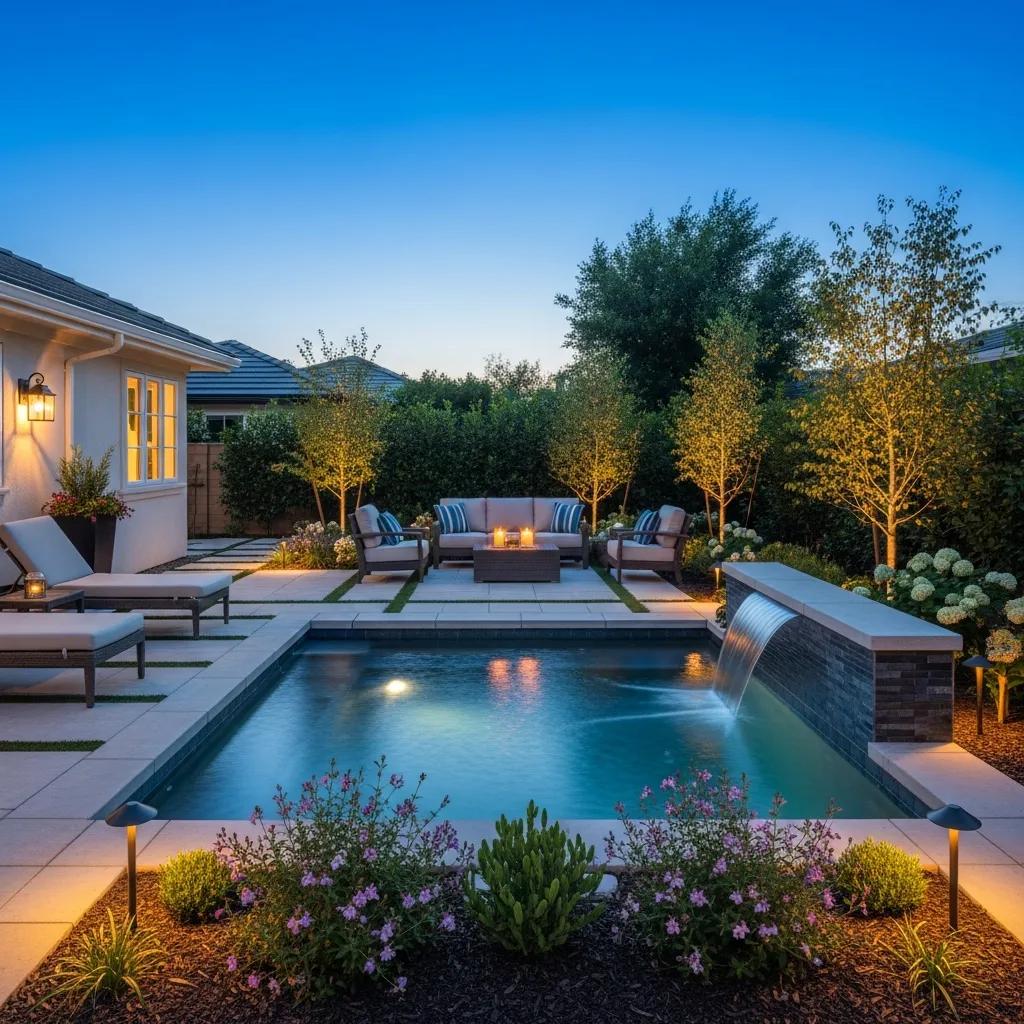
Small Yard, Big Impact: Luxury Pool & Landscape Ideas for Compact Outdoor Living

Even the smallest backyards can feel private, generous, and resort‑like with the right pool and landscape choices. This guide walks you through practical, design-forward strategies for tight yards—space‑saving pool types, luxury finishes and lighting that make areas feel larger, and drought‑smart planting suited to Arizona. You’ll learn which compact pool styles (plunge, cocktail, lap, spool) suit different footprints, how materials and illumination visually expand a space, and how hardscape and artificial turf create usable zones. We also cover the cost drivers you’ll encounter and how to hire a design‑build team. Expect clear layout tips, plant picks, and tradeoffs so you can plan a beautiful, realistic small‑yard oasis.

Why Choose Small Luxury Pools for Your Backyard Oasis?

A small luxury pool is a high-end, compact swim or soak feature that prioritizes experience over scale—think depth, premium finishes, and integrated amenities—all on a reduced footprint. By concentrating resort‑grade touches and efficient systems into less water, these pools lower maintenance, free up yard for entertaining and landscaping, and still deliver a strong visual statement. The outcome is an outdoor room you’ll use every day and into the evening without the upkeep or space demands of a full‑size pool. For homeowners who want a custom, modern inground pool that reads luxurious while preserving usable landscape and privacy, small luxury pools are a smart, strategic choice.

Small luxury pools work in many shapes and lifestyles. Below are the core benefits that make compact designs so appealing for elevated outdoor living.

  1. Lower maintenance and operational costs: Less water means fewer chemicals and lower heating costs.
  2. More usable yard for entertaining and landscaping: Compact pools free space for seating, cooking, and play areas.
  3. Resort‑style finishes in a smaller footprint: Premium tile, lighting, and spillways create a luxe feel without a large shell.

These three advantages explain why homeowners often choose compact pool solutions; next we’ll look at how those practical gains translate into specific design and aesthetic benefits.

What Are the Benefits of Compact Pool Designs?

Compact pool designs concentrate the upside: lower lifetime maintenance, quicker build schedules, and flexible placement in corners or narrow strips. Smaller water volume requires lighter filtration and fewer chemicals, so seasonal care is simpler—an advantage for busy households. Compact layouts also create more intimate social spaces: built‑in seating and tanning ledges encourage conversation and multi‑use zones while still supporting high‑end finishes like glass tile or stone coping. In short, small pools give you efficient, beautiful outdoor living without the footprint of a traditional pool.

Next, we’ll explain how luxury finishes and design choices make small yards feel larger and more refined.

How Does Luxury Enhance Small Backyard Spaces?

Luxury design stretches perception: vertical elements, reflective surfaces, and clear focal points draw the eye and lengthen usable hours. High‑end finishes—glass tile, polished aggregate, or natural stone—add depth and luster so a compact water feature feels richer and more spacious. Integrated LED lighting, sheer descents, and narrow spillways create layered sightlines and evening utility that increase perceived scale. Thoughtful material and light choices reduce visual clutter and make small yards feel intentional and calm—setting you up to choose the right pool type for your site.

With those visual strategies in mind, the next section helps you match pool type to your yard.

Which Small Pool Types Best Maximize Limited Backyard Space?
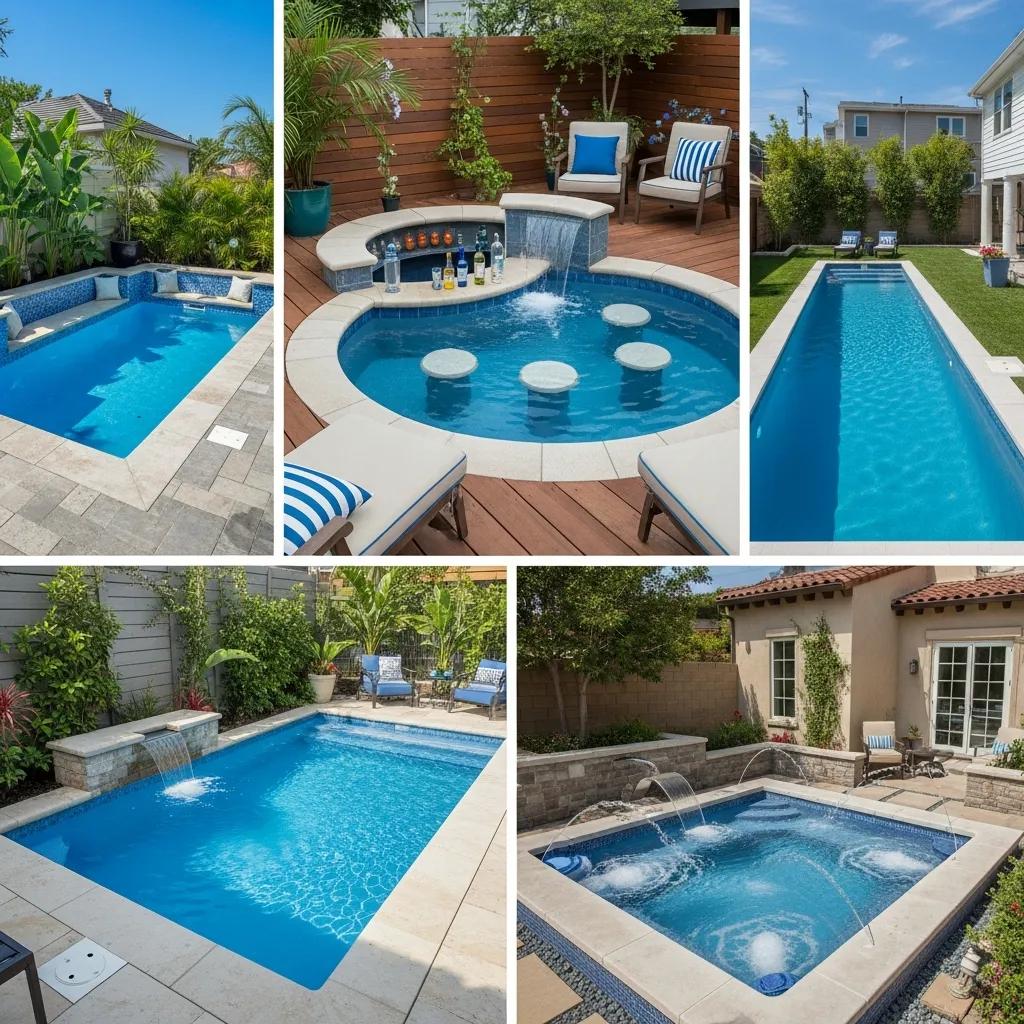
Small pool types vary footprint, depth, and built‑in elements to maximize function in tight yards. Your choice depends on whether you prioritize quick dips, exercise, socializing, or a year‑round soak. Below are the most space‑efficient pool types with a one‑line description to help you compare.

  1. Plunge pools: Deep, compact—perfect for cooling off and fitting into corners.
  2. Cocktail pools: Social by design, with built‑in seating and shallow ledges for conversation.
  3. Lap pools: Narrow and long for exercise in linear yards or side yards.
  4. Spools (spa + pool hybrids): Blend hot‑tub warmth with a small swim area for all‑season use.

These short summaries clarify use cases and lead into a quick comparison of footprints and best backyard shapes.

Pool TypeTypical FootprintPrimary UseBest Backyard Shapes
Plunge poolSmall, square/rectangularCooling, quick dipsTight corners, courtyards
Cocktail poolCompact, irregular/socialLounging, entertainingPatios and near decks
Lap poolNarrow, long rectangleExercise, lapsSide yards, narrow strips
SpoolSmall footprint with seatingSoak + short swimsMulti‑use small yards

This table helps you match a pool type to site constraints and intended use. The next subsections dive deeper into plunge and cocktail pool strategies.

What Makes Plunge Pools Ideal for Compact Areas?

Plunge pools trade horizontal space for depth, delivering a full‑body dip in a short length. Their efficient volume reduces heating loads and system size, while offering sensory benefits like deeper immersion and options for submerged benches or swim jets. Plunges fit well against walls or inside courtyards, minimizing circulation space and maximizing usable yard. In Arizona, they pair especially well with drought‑tolerant planting and screening for privacy—making them a frequent pick for small high‑end projects.

Next we’ll look at cocktail pools—designed to maximize social use in tight yards.

How Do Cocktail Pools Combine Socializing and Space Efficiency?

Cocktail pools are built for people: shallow ledges, integrated seating, and conversational depths let several people relax comfortably in the water. These pools increase usable surface area with meronyms like tanning ledges and built‑in benches rather than expanding the shell. Durable materials such as textured plaster or tile and sturdy coping keep the footprint small and comfortable, while jets and modest spillways add motion without sacrificing space. Cocktail pools are an excellent choice when entertaining and casual gatherings matter more than lap swimming.

From social pool layouts we move into luxury features that elevate compact designs without overwhelming them.

How Can Luxury Features Elevate Small Backyard Pools?
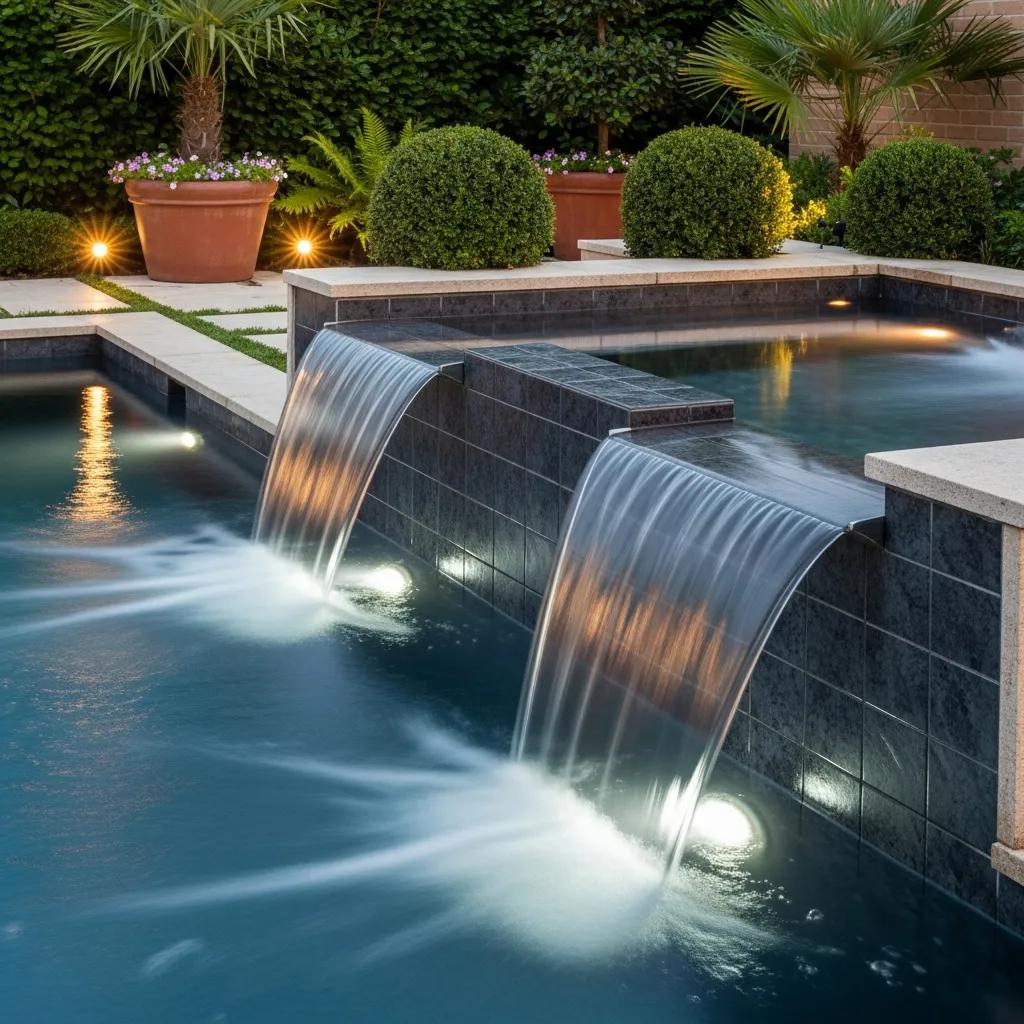
Luxury touches give small pools vertical interest and evening life without taking up horizontal space. Thoughtful water features, refined finishes, and layered lighting create focal points that distract from limited width and invite longer use. A narrow sheer descent or glass‑tiled accent wall can add drama without eating patio area, and warm layered lighting increases nighttime usability. Below are compact water features that bring elegance while keeping the overall footprint tight.

  • Sheer descents: Thin sheets of water that add motion and sound with minimal footprint.
  • Integrated spillways: Built into walls or planters to hide plumbing and save floor area.
  • Small cascades: Modest tiered drops ideal for corner installations.

These scaled features keep maintenance low while delivering a luxury feel. The next section covers lighting strategies that extend usability and safety.

Which Water Features Add Elegance Without Overcrowding?

Vertical, compact water features deliver drama and a soothing soundscape without expanding the pool’s footprint—perfect for small luxury projects. Sheer descents and spillways set into planters or retaining walls create refined cascades sized to match a plunge or cocktail pool. Small cascades and wall jets add texture and a focal point while remaining serviceable and easy to winterize. Choosing features with few moving parts reduces maintenance and preserves patio area—key to maximizing compact backyard landscaping.

Pair these features with thoughtful lighting to enhance evening ambiance and perceived space.

How Does LED Lighting Enhance Ambiance and Safety?

LED lighting transforms small pools by creating layered scenes that add depth, reflections, and safe circulation after dark. Use zone lighting—underwater fixtures, perimeter uplights, and path accents—to craft scenes for entertaining or quiet nights. Color temperature affects warmth and perceived scale, and modern LEDs are energy‑efficient, programmable, and smart‑control friendly. Integrating subtle fixtures into pool edges, seating, and adjacent hardscape gives you both safety and a resort‑style evening atmosphere without cluttering the yard.

Lighting that complements materials and vertical water features completes a refined composition and leads into landscaping best practices.

What Landscaping Strategies Optimize Small Backyard Functionality?

Good landscape design for compact yards emphasizes drought‑tolerant plantings, layered hardscapes to define zones, and vertical elements for privacy and depth. In Arizona, choosing low‑water species placed thoughtfully reduces debris in the pool while improving cooling and texture. Hardscape choices—narrow paving, cantilevered decks, and multifunction planters—create clear circulation and activity zones that tie into pool edges. The table below compares plant and hardscape options by water use, maintenance, scale suitability, and visual impact to help you build a durable, low‑maintenance palette.

OptionWater UseMaintenanceScale Suitability
Agave / SucculentsVery lowLowSmall groupings, rock beds
Desert ornamental grassesLowLow‑moderateBorders and soft edges
Privacy hedges (dwarf)ModerateModerate pruningScreens and vertical privacy
Artificial turfNoneLow (occasional cleaning)Small play lawns, sightlines
Permeable paversN/ALowNarrow paths, expanded patios

Use this table to weigh tradeoffs between plant choices and hardscape materials. The next section lists drought‑tolerant plants that work well near pools in Arizona conditions.

Which Drought-Tolerant Plants Thrive in Arizona’s Climate?

Choosing low‑water plants reduces irrigation and minimizes leaf litter in the pool. Architectural succulents like agave add sculptural form, desert‑adapted grasses bring soft movement, and small blooming shrubs offer seasonal interest without heavy upkeep. Place low, tidy succulents near pool edges to limit debris and use slim hedges or espaliered trees along property lines for privacy that doesn’t overwhelm the space. These selections follow compact landscaping principles—water efficiency, seasonality, and easy maintenance—while keeping the modern pool aesthetic intact.

With your plant palette chosen, consider how hardscaping and artificial turf complete a practical, multi‑use layout.

How Do Hardscaping and Artificial Turf Complement Pool Areas?

Hardscape defines circulation, seating, and cooking zones, while artificial turf gives you green sightlines without the irrigation or upkeep of real grass. Permeable pavers, narrow linear banding, and cantilevered timber decks can visually widen a yard by emphasizing length or creating floating platforms. Artificial turf works well in small installations where a soft surface is needed and pairs cleanly with gravel or decomposed granite for a low‑water palette. Thoughtful integration of hardscape and turf reduces maintenance, increases usable area, and frames views to make the pool feel like part of a cohesive outdoor room.

These landscape strategies lead naturally to working with a professional design‑build team to bring the plan to life.

How Does Island Pool & Landscaping Transform Small Backyards?

Island Pool & Landscaping takes a design‑build approach to tight yards—creating custom, resort‑style pools with careful attention to details that make small sites feel purposeful. We translate space‑saving ideas into engineered solutions—balancing micro‑drainage, grading, and mechanical integration—so luxury features fit comfortably without overwhelming the property. For homeowners ready to move forward, we provide clear next steps to get a tailored plan and an estimate; reach out for a consultation and to see portfolio examples. Below we outline our process and how we help clients start a compact backyard transformation.

The next subsection breaks down our design‑build process and what to expect at each phase.

What Is Our Design-Build Process for Creating Compact Outdoor Oases?

We begin with a site visit and consultation to document existing conditions, goals, and constraints like setbacks or mature trees. From there we produce schematic designs and a material palette showing pool type, water features, lighting, and landscape—usually with 2–3 rounds of refinement. After approvals we handle permitting and construction documents, then move into phased construction: excavation, shell work, finishes, and systems commissioning. Final walkthroughs and operating training ensure you know how to use and care for the new spaces. To get started, contact us to schedule a consultation with our team.

This overview shows why custom solutions matter on compact sites—next we explain what those solutions address.

Why Are Custom Solutions Essential for Small Backyard Projects?

Off‑the‑shelf pool designs rarely solve micro‑site challenges like uneven grades, tight access, or drainage pinch points. Custom design adjusts geometry and engineering—examples include raised spillways that conceal equipment and create storage, tapered walls to fit irregular lot lines, or micro‑retaining walls that double as benches and planters. These tailored details preserve usable yard, reduce long‑term maintenance headaches, and improve safety by coordinating pool edges with circulation. For compact projects, custom work turns cramped features into cohesive outdoor rooms that feel intentional and built to last.

Next we’ll cover cost considerations and how value stacks up for small pools.

What Are the Typical Costs and Value of Small Inground Pools?

Costs for small inground pools depend on pool type, finishes, features, landscape scope, and permitting—each factor pushes a project from entry to premium. Rather than a single price, we recommend three conservative buckets: entry (basic shell and systems, minimal landscaping), mid (premium finishes and modest hardscape), and premium (custom outdoor living, designer materials). Major cost drivers include shell complexity, finish materials (glass tile raises cost), water features, lighting and controls, and adjacent hardscape. The table below outlines these drivers and how they affect value so you can prioritize investments that boost lifestyle and resale appeal.

Cost DriverAttributeValue Impact
Pool TypePlunge/Cocktail/Lap/Spool complexityDetermines shell size and mechanicals
FinishTile, stone, premium plasterHigh impact on perceived luxury
FeaturesWater features, LED systems, built‑in seatingRaises experiential value and price
LandscapingHardscape, artificial turf, plantingExtends living space and increases cost
Permits & EngineeringSite‑specific requirementsVariable; necessary for compliance

Understanding these drivers helps you allocate budget to the elements that matter most for lifestyle and resale. The next section explains budget buckets and ways to evaluate ROI.

How Much Does a Luxury Small Pool Installation Cost in Arizona?

Pricing varies by scope and material choices, so use budget buckets rather than a single number: entry‑level compact installs focus on efficient shells and minimal landscape; mid‑range adds premium finishes and modest outdoor living; premium includes outdoor kitchens, custom hardscape, and designer materials. Finish choices, water feature complexity, and utility upgrades drive variation. Because every site has unique permitting and access considerations, we recommend an on‑site consultation for an accurate, tailored estimate—contact us to schedule a personalized quote and design review.

Below we consider how those investments translate into long‑term value.

What Is the Return on Investment for Compact Backyard Pools?

A well‑designed small pool, thoughtfully integrated with landscaping and outdoor living amenities, can increase property appeal—often delivering more perceived value than a mismatched full‑size pool. ROI depends on local market tastes, finish quality, and how seamlessly the pool connects to usable outdoor rooms like dining and shade areas. Strategic choices—durable finishes, low‑maintenance surfaces, and drought‑resistant planting—tend to yield better long‑term value by reducing upkeep and appealing to buyers seeking turnkey outdoor living. Prioritizing cohesive design and durable materials gives you the best chance of both enjoyment and resale upside.

This wraps up our detailed look at compact pools and small‑yard landscaping. A professional consultation will refine cost and design for your specific site.

Frequently Asked Questions

What are the best maintenance practices for small luxury pools?

Keep small pools clear with regular skimming, weekly chemical checks (pH and sanitizer), and routine brushing and vacuuming. Smaller water volume means chemicals can shift faster, so monitor levels weekly. Clean or backwash filters monthly and follow manufacturer guidance for pumps and heaters. A quality pool cover reduces debris and evaporation, cutting cleaning and chemical needs—especially helpful in Arizona’s climate.

How can I enhance privacy in a small backyard with a pool?

Privacy comes from layered solutions: tall, dense shrubs or dwarf hedges along property lines, vertical screens or trellises with vines, and pergolas with outdoor curtains. Slim, columnar trees or espaliered plantings give height without bulk. Thoughtful hardscaping—raised planters or privacy walls—can also create secluded niches while doubling as seating or feature elements.

What are the most popular materials for small pool finishes?

Glass tile, natural stone, and premium plaster are popular for compact pools. Glass tile adds reflective depth and visual sparkle; stone (travertine, slate) brings a natural, slip‑resistant edge; premium plaster offers smooth texture in many colors. Each option affects maintenance and cost, so choose a finish that matches your aesthetic and lifecycle expectations.

How can I incorporate outdoor lighting effectively around my small pool?

Layer lighting for safety and mood: underwater LEDs, path lights, and uplights for key plants or walls. Use dimmable fixtures and warm color temperatures for a welcoming evening feel. Programmable or smart controls let you create scenes for entertaining and automated schedules to simplify operation. Subtle, integrated fixtures keep the look clean and the yard usable after dark.

What are some cost-effective landscaping ideas for small backyards?

Use native, low‑water plants to cut irrigation costs and maintenance. Cluster plants for impact, add mulch to retain moisture, and rely on permeable pavers or gravel for durable circulation. Vertical planting—wall planters or trellises—adds greenery without taking ground space. Simple, well‑placed hardscape elements often deliver the biggest functional gains for a modest budget.

What are the benefits of using artificial turf in small backyard designs?

Artificial turf gives a green, low‑maintenance surface year‑round with no mowing or watering—ideal for compact yards in dry climates. It integrates well with hardscape, handles foot traffic, and provides a soft play area without the upkeep of natural grass. Choose quality products and proper installation for drainage and longevity.

Conclusion

Your small backyard can become a high‑use, low‑maintenance retreat with focused design: the right compact pool, drought‑wise planting, and smart hardscaping. These elements maximize functionality and style without overwhelming upkeep. By tailoring materials and layout to your space—and working with an experienced design‑build team—you can create a personalized oasis that fits your lifestyle and adds long‑term value. Contact us to explore ideas and start designing your backyard retreat.