
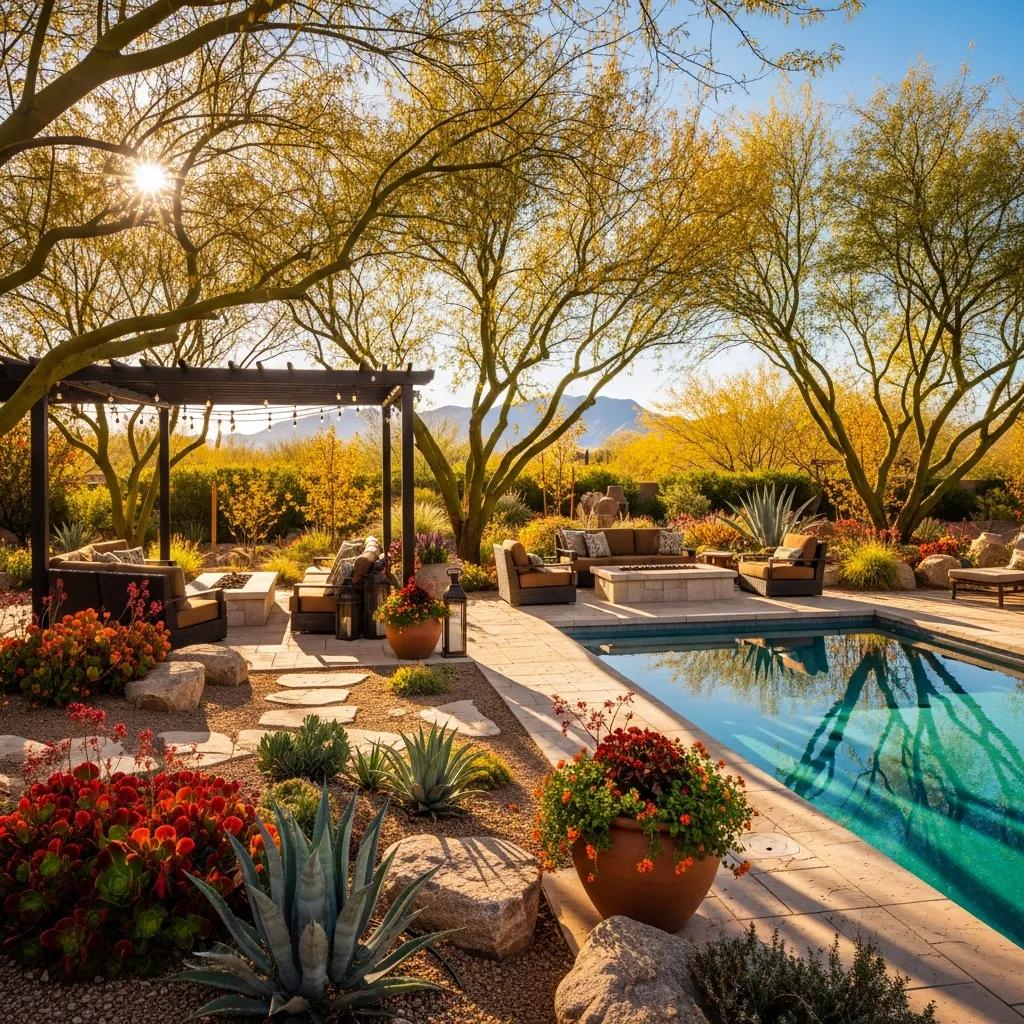
Luxurious autumn garden in Arizona featuring vibrant foliage, a serene poolside landscape, and cozy outdoor seating areas, ideal for fall entertaining and low-maintenance landscaping.

Arizona Fall Landscaping: Luxury Tips Island Pools and Landscaping AZ

Autumn is the smartest season to refresh an Arizona yard: cooler air and still‑warm soil let roots push deeper with less heat stress, so new plants establish more reliably before winter and the following spring. This guide walks through what to plant, how to craft poolside, luxury outdoor living areas for fall entertaining, and which low‑maintenance choices save water and time while keeping an upscale look. You’ll find specific planting windows, irrigation tweaks, and practical installation options—everything from artificial turf to elegant hardscapes and outdoor heating—that complement fall color and entertaining needs. We also outline recommended trees, shrubs, seasonal flowers, maintenance steps like irrigation reprogramming, and lawn prep tactics such as overseeding with ryegrass or caring for dormant Bermuda. Throughout, practical keywords like fall planting Arizona, Arizona fall landscaping, overseeding ryegrass Arizona, and artificial turf Arizona fall are woven into clear, actionable advice so you can plan an elegant, drought‑aware autumn landscape.

Why Is Fall the Best Season for Landscaping in Arizona?

Fall is a top choice in Arizona because daytime temperatures ease while soils retain summer warmth—an ideal mix for root growth and lower transplant shock. With reduced evapotranspiration, newly planted roots hold moisture more easily and need fewer supplemental waterings than summer installs, producing long‑term health and measurable water savings. Contractors and homeowners also benefit from more comfortable working conditions that allow quality hardscape and planting work to finish and settle before winter weather. Understanding these seasonal advantages helps you pick the right plants and schedules for your microclimate and elevation.

Fall planting delivers several clear benefits for Arizona homeowners:

  • Cooler air plus warm soil cuts transplant shock and encourages faster root development.
  • Lower irrigation frequency in fall reduces water use and favors drought‑aware landscapes.
  • Installing trees and shrubs in fall gives roots a head start before spring heat returns.

Those advantages make autumn an excellent time to invest in quality materials and design that conserve water, build shade for next season, and stretch the entertaining calendar.

How Do Arizona's Fall Climate Conditions Benefit Plant Growth?

Arizona fall generally pairs cooler days with warm soils leftover from summer, shifting plant energy toward root development rather than top growth. That root focus improves drought resilience and nutrient uptake—key for long‑term success in arid yards. Planting windows vary by microclimate: the lower Valley typically works from mid‑October through early December, while higher elevations start earlier. The science is consistent across locations: warm soil encourages root cell activity and cooler air lowers transpiration, reducing transplant losses and giving new specimens a stronger, lower‑maintenance start into spring.

What Are the Water Conservation Benefits of Fall Planting in Arizona?

Planting in fall reduces lifetime irrigation because plants can form deeper root systems before summer heat returns, cutting the need for heavy summer hand‑watering compared with summer installs. Water agencies and xeriscape principles support fall planting as a water‑wise move: with lower evaporation and reduced ET rates you can shorten cycles and use smart controllers more effectively. For example, shrubs planted in fall often require fewer hand‑watering sessions after the first two months versus summer transplants, and establishment sometimes overlaps with seasonal monsoon moisture. Those savings are closely tied to smart plant choices, soil prep, and controller programming—the core of sustainable Arizona fall landscaping.

Which Are the Best Fall Plants for Arizona Luxury Landscapes?
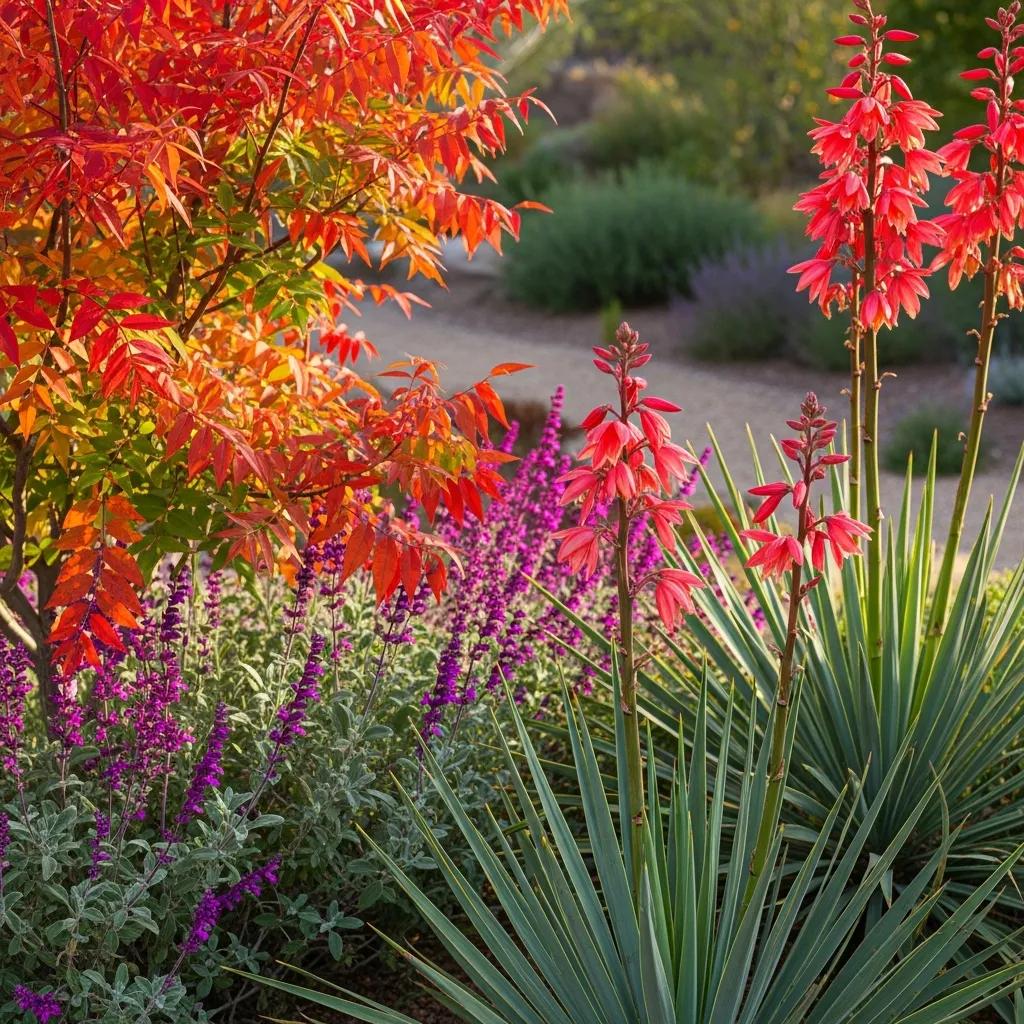
Close-up of vibrant fall plants in a luxury Arizona landscape, featuring red foliage of Chinese Pistache, blooming Red Yucca, and purple Autumn Sage, showcasing drought tolerance and seasonal interest.

For a luxury, low‑maintenance palette choose plants with strong form, drought tolerance, and seasonal interest. Pair evergreen structure for year‑round backbone with trees and shrubs that deliver fall color, and add perennials and groundcovers for bloom and texture near pools and outdoor rooms. Below are high‑impact, low‑water selections commonly used in upscale Arizona yards.

  • Chinese Pistache — dramatic fall color, excellent shade canopy, low water once established.
  • Red Yucca — bold architectural leaves with late‑season blooms that attract pollinators.
  • Autumn Sage — dependable fall and winter blooms with modest water needs.
  • Desert‑adapted groundcovers — stabilize soil, add color near pool decks, and cut maintenance.

These choices lead into a quick comparison so you can weigh water needs, mature size, and placement for each species.

PlantWater NeedsFall Color / BloomMature SizeBest Use
Chinese PistacheLowBrilliant orange‑red canopy20–35 ftShade specimen, street‑side screening
Red YuccaLowCoral tubular blooms (fall–winter)3–6 ftAccent, pool‑edge, rock garden
Autumn Sage (Salvia)LowPurple to red blooms in fall2–4 ftBorders, pollinator pockets
Dwarf LantanaLow–MedYellow/orange blooms1–3 ftGroundcover, containers

This table makes it easier to place each species in poolside or formal garden settings and plan care accordingly.

What Drought-Tolerant Trees and Shrubs Thrive in Arizona's Fall?

Drought‑tolerant trees and shrubs give structure, seasonal color, and low irrigation demand when sited and mulched correctly. Chinese Pistache offers striking fall color and broad shade for patios and pools; palo verde varieties bring spring flowers and a refined, fine‑textured look. Shrubs like Texas sage and, where appropriate, oleander form low‑maintenance hedges or specimen groupings. Mind mature size and distance from pools or foundations to avoid root conflicts, and focus on correct early watering and soil amendment so these woody plants thrive through Arizona winters into spring.

Which Fall Flowers and Groundcovers Add Seasonal Color to Arizona Gardens?

Fall‑friendly flowers and groundcovers deliver color, texture, and erosion control without heavy upkeep. Pansies and autumn sage provide dependable cool‑season blooms, while trailing lantana, dichondra, and native sedums work well around pool coping and in planters. Combine bold foliage (agave, ornamental grasses) with smaller perennials for a refined look that isn’t cluttered. These selections generally need less water and deadheading when matched to seasonal performance—perfect for patios, fire features, and high‑end outdoor rooms.

Use CaseRecommended SpeciesWater NeedsDesign Note
Pool‑adjacent accentsRed Yucca, Dwarf LantanaLowChoose low‑shedding plants to reduce debris
Shade treesChinese Pistache, Palo VerdeLowPlant outside splash zones and allow canopy room
Pollinator pocketsAutumn Sage, Native SalviasLowPlace near seating to enhance evening enjoyment
GroundcoverDichondra, SedumLowStabilize slopes, reduce erosion, soften paver edges

Use this guide to match plants to functional areas before planning poolside and patio adjacencies.

How Can You Design a Luxury Fall Outdoor Living Space in Arizona?
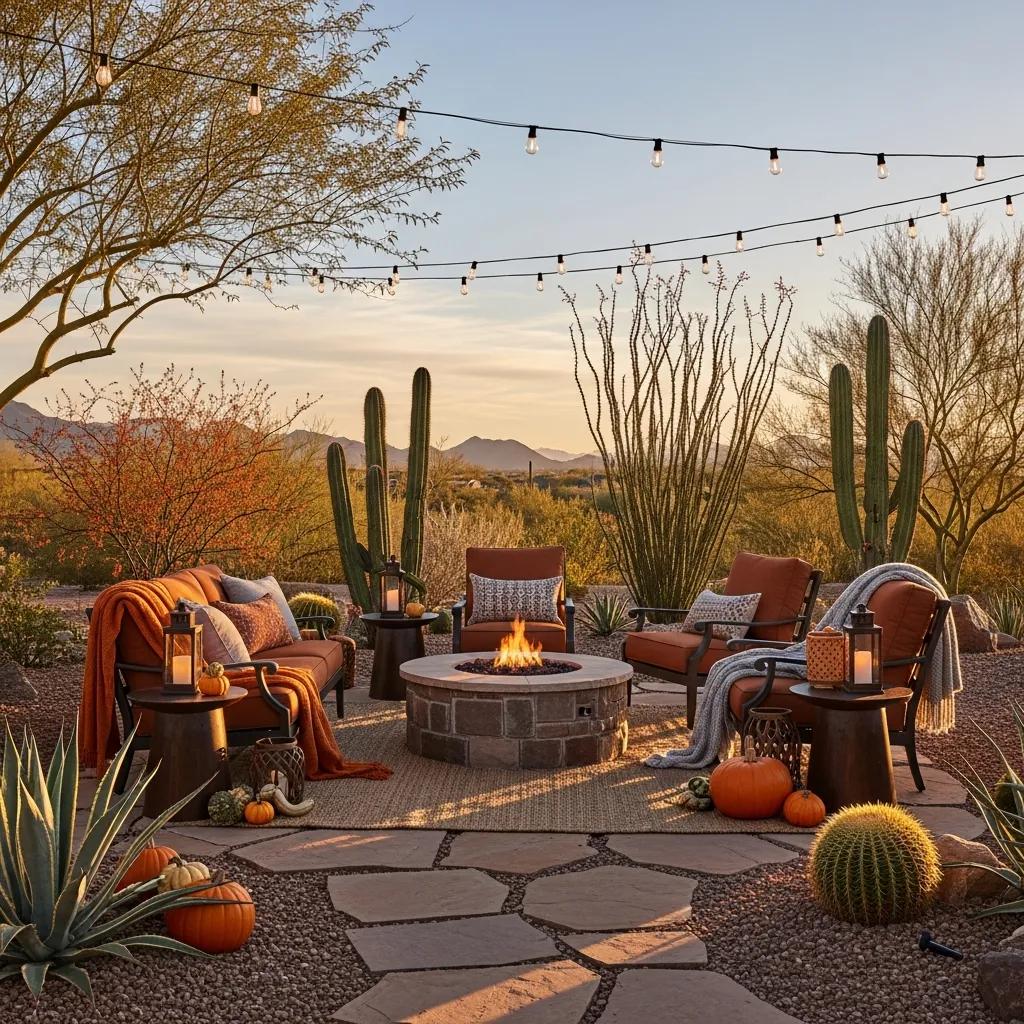
Elegant outdoor living space in Arizona featuring cozy seating around a fire pit, warm lighting, decorative pumpkins, and desert plants, ideal for fall gatherings.

Designing a luxury outdoor living space for fall is about layers, focal points, and materials that extend comfort into cooler evenings while keeping maintenance low. Start with durable hardscapes—pavers, protected decking, and reliable drainage—then layer canopy trees and low‑shedding shrubs to frame views and shelter outdoor kitchens and seating. Lighting sets autumn ambiance: warm‑tone fixtures and low‑voltage path lights create inviting evenings, and fire features or infrared heaters lengthen the entertaining season. Those design choices should guide poolside plant selection and placement to minimize debris and protect pool finishes.

  1. Place low‑shedding accents like Red Yucca and dwarf agaves near pool edges to cut maintenance.
  2. Use raised planters with drip irrigation to keep beds tidy and water‑efficient.
  3. Layer uplighting and recessed step lights to add depth and a refined evening atmosphere.

A clear plant‑and‑material plan lowers upkeep and keeps outdoor rooms usable year‑round—exactly where professional design‑build expertise turns ideas into a polished installation.

Island Pools and Landscaping AZ brings design‑build experience to luxury pool remodels and integrated outdoor living projects. We combine landscape design, hardscaping, and pool finishes into fall‑ready plans that balance drought‑tolerant palettes, quality materials, and straightforward communication. Homeowners planning a remodel often start with a consultation to review gallery examples and discuss how combined pool and landscape updates can boost autumn entertaining while reducing long‑term water use.

What Are Creative Poolside Landscaping Ideas for Fall?

Creative poolside design for fall focuses on low‑shedding plants, durable surfaces that resist staining, and seating arranged to enjoy cooler evenings. Site canopy trees for late‑afternoon shade but keep them far enough from pool plumbing and surfaces to avoid root issues and leaf drop. Containers with seasonal flowers add color without long‑term commitment and are easy to rotate; choose frost‑tolerant plants for higher elevations. Thoughtful lighting and slip‑resistant materials make pool edges usable after dark and reduce cleanup from organic debris.

  1. Use low‑shedding accent plants like Red Yucca and dwarf agaves near the pool edge to minimize maintenance.
  2. Integrate raised planters with drip irrigation to keep planting beds tidy and water‑efficient.
  3. Layer uplighting and recessed steps to create depth and a luxury evening atmosphere.

How Do You Enhance Patios, Fire Pits, and Outdoor Kitchens for Autumn Entertaining?

To ready patios and outdoor kitchens for fall, choose durable finishes, layered lighting, and thermal comforts that keep a refined look with minimal upkeep. Pick weather‑resistant furniture with removable cushions and high‑end materials—natural stone or premium porcelain pavers—paired with built‑in fire pits or gas fireplaces to anchor seating areas. Use plants and hardscape walls to define outdoor rooms and block seasonal breezes so dining and conversation stay comfortable.

These moves support frequent use and low maintenance, helping homeowners host easily through Arizona’s pleasant autumn evenings.

What Are Essential Fall Landscape Maintenance Tips for Arizona Homeowners?

Fall maintenance focuses on irrigation adjustments, light pruning for structure, weed control, and soil prep for planting or overseeding. Start with an irrigation audit: reduce run times as temperatures fall, check emitters for clogs, and recalibrate drip and rotor schedules to match lower ET rates. Remove deadwood and make light corrective pruning to preserve shape and avoid heavy cuts before possible cold snaps. These steps prepare beds for overseeding or new installations and tie into the more detailed schedules below.

Irrigation and maintenance steps to follow this fall:

  1. Reduce irrigation run‑times by 20–40% as daytime highs drop; check soil moisture weekly for new plantings.
  2. Inspect and clean drip emitters and adjust spray head angles to prevent overspray on hardscapes.
  3. Apply 2–3 inches of mulch around new plants to conserve moisture and moderate soil temperature.

A deliberate maintenance plan minimizes water waste and prepares planting areas; if you prefer pros, seasonal irrigation audits, controller reprogramming, and maintenance contracts make these changes straightforward.

Maintenance TaskWhen to Do ItTools / MaterialsFrequency
Irrigation auditEarly fall (Oct–Nov)Controller, moisture meter, basic toolsAnnual / Before overseed
Light pruningFall (Oct–Dec)Hand pruners, loppersAnnual / As needed
Mulching & soil prepAt planting timeCompost, mulch, soil test kitPer planting
Weed preventionEarly fallPre‑emergent or manual removalAnnual / Seasonal

This checklist clarifies timing and tools for routine fall tasks and leads into irrigation adjustments for different landscape areas.

When technical work is needed, Island Pools and Landscaping AZ provides irrigation audits and seasonal maintenance to reprogram controllers, test emitters, and set watering plans that match fall planting schedules—saving water while protecting new materials. Our approach emphasizes clear communication, project walkthroughs, and quality materials to support long‑term performance.

How Should You Adjust Watering and Irrigation Schedules in Fall?

Adjust watering in fall by shortening run‑times and spacing cycles to match lower evaporation, while keeping enough moisture for new roots. A practical approach: cut run‑times 20–40% as temperatures drop, switch established trees and shrubs to fewer but deeper cycles, and keep frequent, shallow cycles for seed germination during overseeding. An ET‑based or smart controller automates these percentage reductions and reacts to weather changes; verify with manual soil‑moisture checks to ensure proper root‑zone wetting. Pair these adjustments with mulch and soil amendments for best results.

What Are Best Practices for Pruning, Weed Control, and Soil Preparation in Autumn?

In fall, focus pruning on removing dead or crossing branches and on preserving overall structure—avoid heavy reductions just before cold snaps. For weed control, apply pre‑emergent herbicides in early fall where appropriate or remove weeds manually to reduce competition. Soil prep should start with a pH and nutrient test, add organic matter to improve structure, and avoid deep tilling that disturbs established roots. These steps give new plantings a hospitable root zone and keep established specimens healthy through dormancy and into spring.

How Do Low-Maintenance Solutions Like Artificial Turf and Hardscapes Benefit Fall Landscaping?

Low‑maintenance options such as artificial turf and durable hardscapes reduce water use, cut seasonal upkeep, and extend usable outdoor time in Arizona fall landscapes. Artificial turf eliminates many late‑season overseeding chores and gives a consistent, green surface for play areas, putting greens, and pool surrounds. Decomposed granite, pavers, and bluestone provide stable entertaining surfaces that resist erosion and require little seasonal care. These practical components complement softscapes and outdoor living design; use the comparison below to weigh maintenance, cost, and best uses.

SolutionMaintenanceCost ConsiderationBest Use
Artificial turfMinimal watering, occasional brushingHigher upfront, lower lifecycle water costPlay areas, putting greens, pool‑adjacent lawns
PaversRare sealing, occasional joint refillingModerate upfront, durablePatios, pathways, outdoor kitchens
Decomposed granitePeriodic top‑up, weed controlLow to moderateCasual paths, filler areas, xeriscape beds
Native rock / boulderVirtually maintenance‑freeVariableStructural accents, erosion control

Why Is Artificial Turf Ideal for Arizona Fall Yards?

Artificial turf works well in Arizona fall yards because it keeps a green, even surface for entertaining while cutting water use and mowing time. Turf is excellent for putting greens, play areas, and pool surrounds where consistent footing and neat aesthetics matter. Top‑quality turf systems mimic natural blades and handle drainage well. Concerns about heat and lifespan are mitigated by choosing the right infill, professional installation, and solid warranties—installation quality and warranty details matter when evaluating turf as a long‑term, low‑maintenance luxury surface.

What Hardscape Features Complement Fall Landscaping and Outdoor Living?

Hardscapes that complement fall landscapes include paver patios, integrated fire pits, raised planters, and clearly defined pathways that form outdoor rooms for entertaining. Textured pavers, natural stone, and permeable options pair with autumn foliage while helping drainage and reducing upkeep. Proper grading and drainage protect adjacent plantings, and warm, muted materials enhance fall color schemes. These elements create durable, usable spaces for outdoor kitchens and seating with less seasonal work than large perennial beds.

How Can Arizona Homeowners Prepare Their Lawns for Winter After Fall Landscaping?

Preparing lawns for winter requires a plan for overseeding, dormant turf care, and weed prevention that matches your Arizona climate zone. For cool‑season overseeding with ryegrass, timing and seed‑bed prep are key to achieve even germination and a dense winter cover for fall and winter use. For warm‑season Bermuda entering dormancy, cut back on fertilization and irrigation to protect crown health and avoid late‑season stress. These lawn strategies integrate with your fall landscaping choices and complete a seasonal program.

When and How Should You Overseed with Ryegrass in Arizona?

Overseeding with ryegrass works best in early to mid‑fall in the lower Valley—typically when nighttime lows consistently reach the 50s°F—so seedlings establish before growth slows. Prep includes mowing lower, lightly raking for good seed‑to‑soil contact, sowing at recommended rates, and using frequent shallow irrigations for the first two weeks to encourage germination. After establishment, reduce frequency and increase run time to promote deeper roots and a smoother spring transition. This timing and contact focus helps avoid patchy results and builds consistent winter turf.

What Are Dormant Bermuda Grass Care and Winter Weed Prevention Tips?

For dormant Bermuda, reduce irrigation and skip late, high‑nitrogen fertilizing as growth slows—those practices can invite disease or weak winter growth. Apply pre‑emergent herbicides in the recommended fall window to suppress winter annuals, or use targeted post‑emergent treatments for visible outbreaks. Keep cultural controls—proper mowing and dethatching—as your first defense. During dormancy, water only as needed to prevent desiccation, and schedule aeration and other soil health work during active growth windows. These steps preserve a healthy turf base that rebounds quickly when warm‑season growth returns.

Island Pools and Landscaping AZ provides integrated lawn and landscape services to support overseeding plans, irrigation reprogramming, and dormant turf care as part of seasonal maintenance contracts. Our design‑build approach prioritizes quality materials, clear project walkthroughs, and responsive communication so fall installations perform as intended. Homeowners seeking a consultation can contact Island Pools and Landscaping AZ by phone at 602.818.1277 or by email at PoolConnect@Gmail.com to schedule an on‑site evaluation or discuss gallery examples and service options that fit luxury, low‑maintenance fall landscaping goals.

Frequently Asked Questions

What are the benefits of using artificial turf in Arizona fall landscaping?

Artificial turf gives a consistent, green surface with very little maintenance—no mowing and little to no watering—so it’s a strong choice in a region where conserving water matters. It stays usable through fall and winter for gatherings and play, and high‑quality turf closely resembles natural grass while simplifying upkeep. When specified and installed correctly, turf delivers both performance and an elevated look for low‑maintenance yards.

How can I incorporate seasonal flowers into my fall landscape design?

Add seasonal flowers to boost color and seasonal interest. Choose hardy annuals and perennials that do well in Arizona—pansies, autumn sage, and ornamental kale are good examples. Plant in clusters or borders for impact and contrast them with evergreen elements. Containers are a great option for rotateable color and easy maintenance, and seasonal blooms also support pollinators to enrich your garden’s ecosystem.

What are some effective strategies for weed control in fall landscaping?

Combine prevention and hands‑on care for the best results. Apply pre‑emergent herbicides in early fall where appropriate to block winter annuals, and remove visible weeds promptly to reduce competition with new plants. Mulching beds suppresses weeds while conserving moisture. These tactics keep landscapes tidy and cut spring weeding needs.

How can I ensure my outdoor living space is comfortable during cooler fall evenings?

Focus on warmth and ambiance: add a fire pit or outdoor heater to extend use after sunset, layer soft lighting like string lights or lanterns for a cozy feel, and choose weather‑resistant seating with removable cushions for comfort. Arrange plants and hardscapes to create sheltered niches that block wind and make evenings inviting for gatherings.

What maintenance tasks should I prioritize in the fall for my landscape?

Start with an irrigation audit to adjust schedules to cooler weather, then do light pruning to remove dead or crossing branches. Apply mulch around new plantings to conserve moisture and set up for overseeding if you plan to add ryegrass. These priorities protect investments and prepare the landscape for winter and spring recovery.

How can I design a low-maintenance garden that still looks luxurious?

A low‑maintenance, luxurious garden begins with smart plant and material choices. Use drought‑tolerant species—native plants and succulents—alongside durable hardscapes like pavers and stone. Raised planters with drip irrigation reduce upkeep, and strategic plant placement and layering deliver visual richness without constant work. The result is an elegant outdoor space that performs well year after year.

Conclusion

Updating your Arizona landscape this fall improves curb appeal, conserves water, and reduces long‑term upkeep when you choose the right plants, materials, and irrigation strategies. With thoughtful design—especially around pools and outdoor living areas—you can create a luxurious, low‑maintenance yard that thrives through the cooler months. If you’d like help turning these ideas into a practical plan, contact Island Pools and Landscaping AZ to explore custom solutions for your fall landscaping project.