
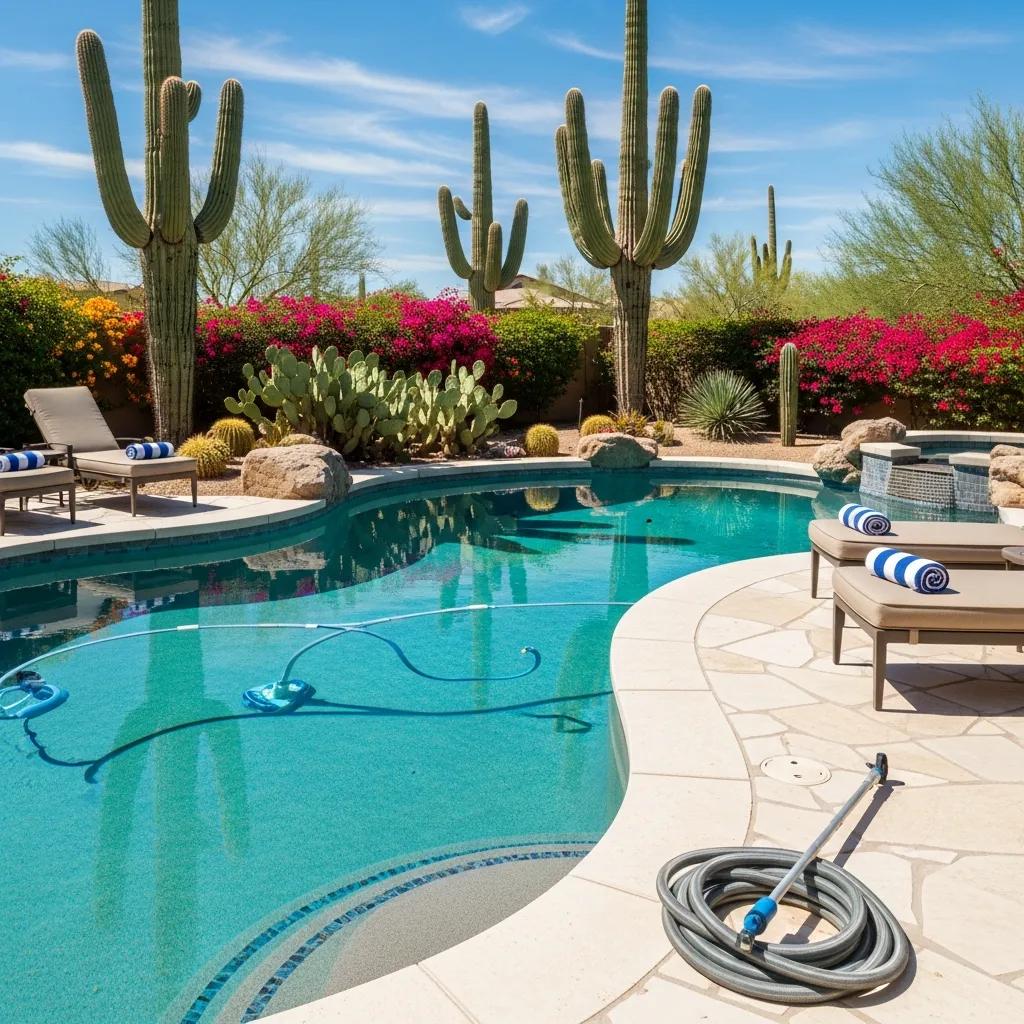
Arizona swimming pool with clear water, surrounded by desert landscaping, cacti, and vibrant flowers, showcasing pool maintenance tools and lounge chairs, illustrating essential pool cleaning tips for homeowners.

Ultimate Arizona Pool Cleaning Tips by Island Pools and Landscaping AZ

Arizona pools require a different maintenance playbook. This guide walks homeowners through keeping water crystal clear, equipment running smoothly, and finishes protected year‑round. You’ll learn how desert heat, hard water, dust storms and monsoon debris change chemical needs, filtration routines and weekly chores so you can prevent algae and scale. We outline ideal chemistry ranges for Arizona, share a practical weekly checklist, recommend DIY tools and water‑saving options, and explain algae ID and treatment. You’ll also get steps for filter and pump care and clear signs that mean it’s time to call a luxury pool pro. Each section includes straightforward, actionable steps and quick references so you can use these strategies immediately.

What Are the Unique Pool Cleaning Challenges for Arizona Homeowners?

Arizona pools face three main environmental pressures that shape how you maintain them: intense heat that burns through sanitizer, mineral‑rich source water that encourages scale, and seasonal airborne debris that clogs filters. Together these forces shorten chemical life, increase evaporation and dissolved solids, and raise organic load after storms. Knowing how temperature, minerals and debris interact helps you prioritize preventive steps. Below we break down each factor and offer fast, practical mitigations you can start using right away to protect water quality and extend equipment life. Addressing them in sequence creates a layered maintenance plan that cuts down on emergency treatments and preserves upscale finishes.

How Does Arizona's Desert Climate Affect Pool Maintenance?

The desert climate speeds chlorine breakdown and drives evaporation, so chemicals need more frequent attention and occasional partial refills. High daytime heat and strong UV degrade free chlorine faster, so sanitizer demand spikes on hot, sunny days and after heavy use—adding stabilizer and using shade where practical help slow that loss. Evaporation concentrates calcium and other dissolved solids, which raises scaling risk on tile and gear; tracking calcium hardness and diluting when necessary prevents damage. Using covers during peak heat and scheduling pump runtime for cooler overnight hours improves circulation and lowers chemical consumption, which both protects surfaces and reduces long‑term service needs.

What Impact Do Dust Storms and Monsoon Season Have on Pool Cleanliness?

Dust storms and monsoon rains dump fine dust, organic debris and extra nutrients into pools that can overwhelm skimmers and filters, increasing turbidity and algae risk. After dust events or storms, increase skimming, empty skimmer baskets, and check filter pressure to see if backwashing or cartridge cleaning is needed—ignoring it lets organics break down and spike chlorine demand. Build a seasonal calendar with pre‑monsoon shock treatments and post‑storm filtration checks to lower the chance of persistent cloudiness and blooms. Landscape choices—like stabilizing loose soil and adding windbreaks—also reduce cleanup frequency and help keep water clearer longer.

How Do You Balance Pool Chemicals for Optimal Water Quality in Arizona?
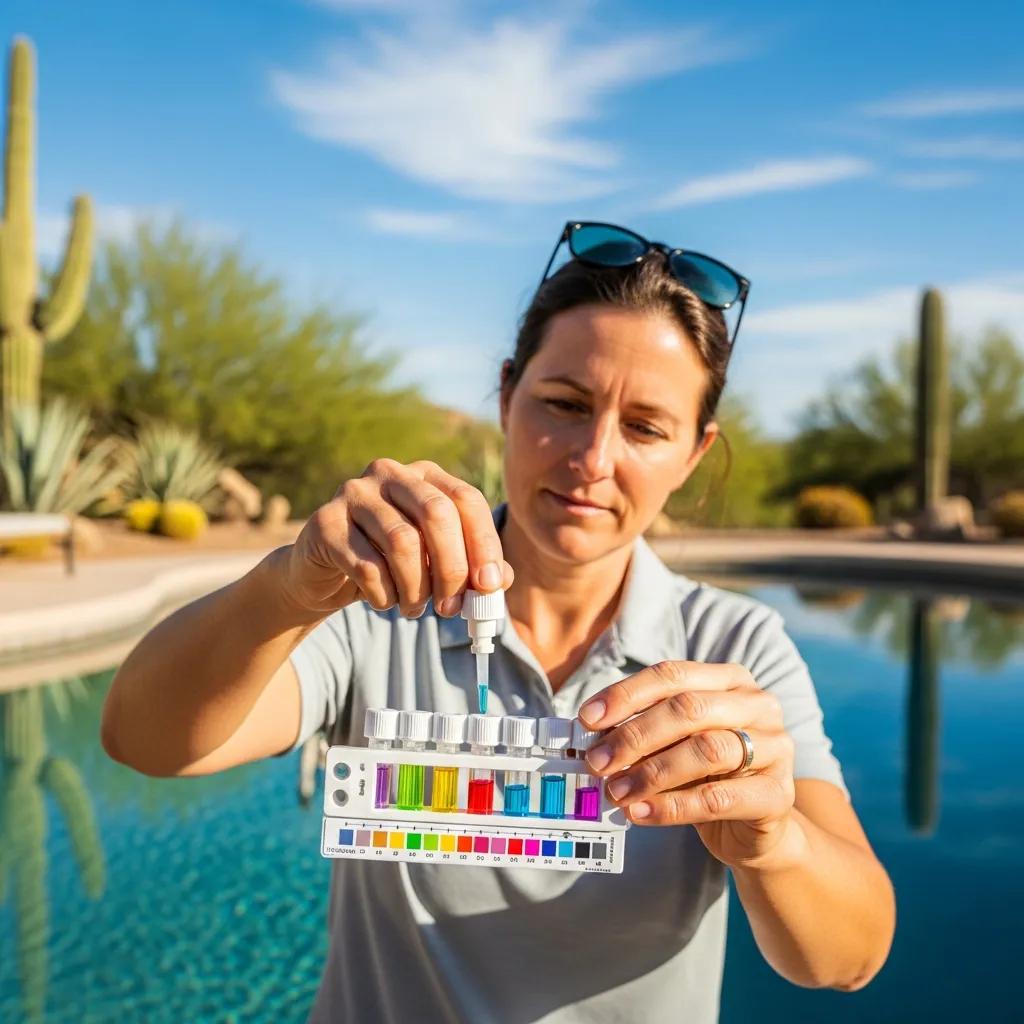
Woman testing pool water chemistry with a liquid test kit, surrounded by desert landscaping in Arizona.

Balancing Arizona pool chemistry means keeping pH, free chlorine, total alkalinity, calcium hardness and cyanuric acid (CYA) in ranges that offset heat, evaporation and mineral content while avoiding stains or corrosion. Regular testing and a repeatable adjustment cycle—test, interpret, dose, circulate, retest—keeps chemistry stable even through rapid weather changes. The table below is a quick reference with target ranges and immediate actions when readings fall outside ideal windows. Small, frequent corrections are better than large shocks that stress finishes and waste products.

Before the table, a short note on why each metric matters for Arizona pools:

  • pH dictates how well your sanitizer works and protects surfaces from corrosion or scale.
  • Free chlorine is your daily disinfectant and is consumed faster in heat and after storms.
  • Total alkalinity buffers pH to reduce rapid swings common in desert conditions.
ParameterRecommended RangeQuick Action if Out of Range
pH7.2 – 7.8Lower pH with muriatic acid or sodium bisulfate if >7.8; raise with soda ash if <7.2; retest after circulation.
Free Chlorine (FC)2.0 – 4.0 ppm (higher during heat/bather load)Add chlorine shock or boost sanitizer feed if FC below range; maintain stabilizer if sunlight exposure high.
Total Alkalinity (TA)80 – 120 ppmRaise TA with baking soda; lower with controlled acid additions and retest to stabilize pH.
Calcium Hardness200 – 400 ppmReduce hardness via partial drain and refill if scaling occurs; use sequestering agents for moderate increases.
Cyanuric Acid (CYA)30 – 50 ppmDilute with fresh water if CYA too high; maintain moderate CYA to protect chlorine from UV but avoid over‑stabilization.

Use this table to respond quickly to off‑range readings so equipment and surfaces stay protected. If balancing stays unstable because of very hard source water, consider professional water analysis and a long‑term treatment plan.

What Are the Ideal pH, Chlorine, and Alkalinity Levels for Arizona Pools?

For Arizona pools, follow slightly conservative targets to account for heat‑related swings: keep pH between 7.2 and 7.8 so chlorine works without risking etching, and aim for free chlorine of 2.0–4.0 ppm—higher during peak heat or heavy use. Total alkalinity of 80–120 ppm helps buffer pH against evaporation and routine dosing. These ranges balance sanitizing power, swimmer comfort and equipment protection; make small, regular adjustments and always circulate for several hours before retesting to verify results.

How Can Homeowners Test and Adjust Pool Water Chemistry Effectively?

Test at least twice a week during hot spells and after storms, and at least once a week in cooler, stable months—more often with increased bather load or after chemical treatments. Use a good liquid test kit or a calibrated digital tester for accurate free chlorine and pH readings, and send samples to a professional lab if imbalances persist to check source‑water influence. The simple workflow is: test → compare to targets → dose the calculated amount → run the pump for proper turnover → retest after circulation. This loop prevents overcorrection and chemical waste. Safety reminders: always add chemicals to water (never the reverse), wear gloves and eye protection with acids or concentrated chlorine, and store chemicals in a cool, dry place to preserve potency.

What Is the Weekly Pool Cleaning Checklist for Arizona Homeowners?
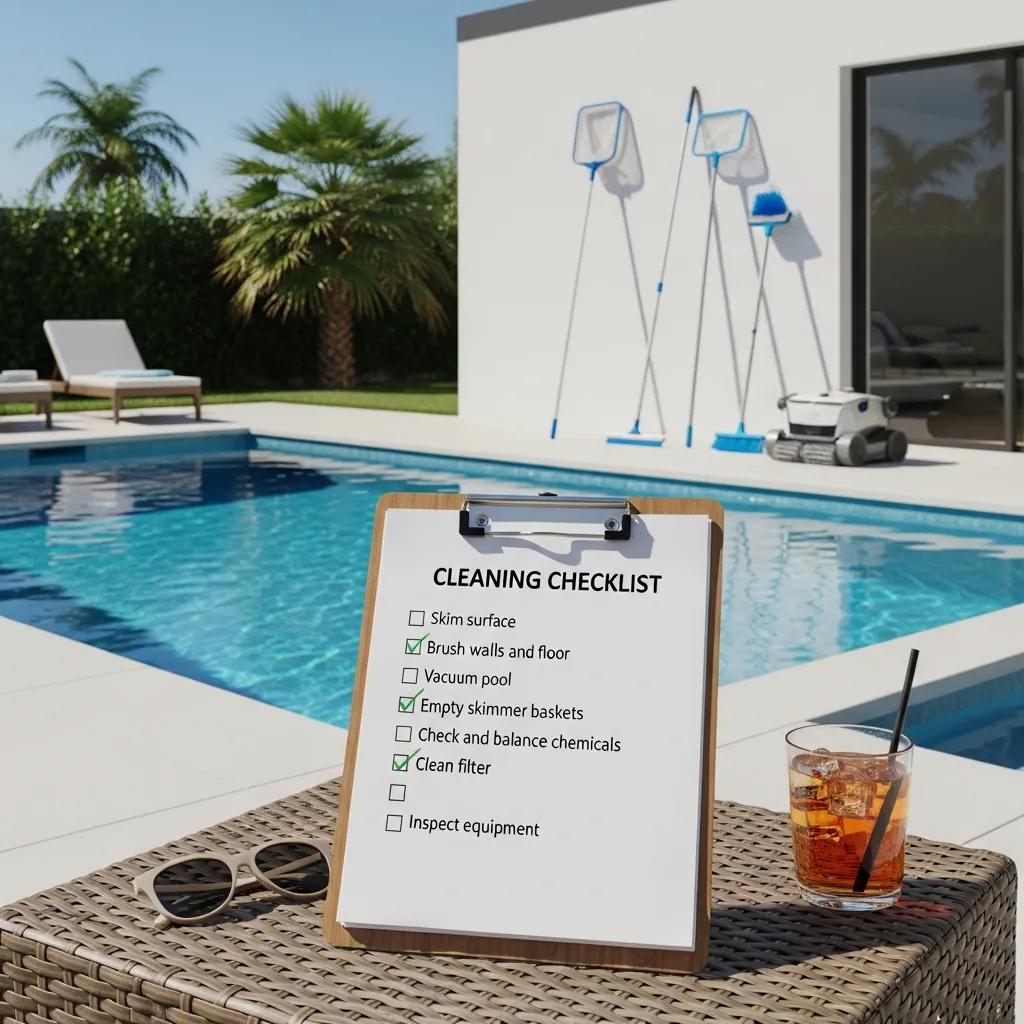
Cleaning checklist on a clipboard beside a swimming pool, featuring tasks like skimming, brushing, and vacuuming, with pool maintenance tools displayed in the background, emphasizing Arizona pool care.

A simple, Arizona‑focused weekly checklist makes maintenance predictable and keeps small problems from turning into costly repairs: daily skimming and visual checks, weekly brushing and vacuuming, and filter care based on debris load. A steady routine minimizes sanitizer swings and prevents algae by removing organics before they break down. Below is a compact guide that pairs tasks with frequency and tools to streamline your work and cut total maintenance time. Consistency keeps chemistry stable and lets you optimize pump schedules for energy savings.

The weekly checklist and tool guidance are summarized below for quick reference:

TaskFrequencyTool / Method
Skim surface debrisDailyLeaf skimmer; empty skimmer baskets each visit
Brush walls and tileWeeklyNylon brush; focus on corners and waterline
Vacuum pool floorWeeklyManual vacuum or robotic cleaner
Test water chemistry2–3× per week in heatLiquid test kit or digital tester; record results
Clean pump and skimmer basketsWeeklyHand‑clean; inspect for tears or blockages
Backwash or clean filterAs-needed / monthly checkBackwash sand/DE; rinse cartridges; monitor pressure
Inspect equipment and pool areaWeeklyVisual check for leaks, noise, or loose fittings

Which Daily and Weekly Tasks Keep Your Pool Sparkling Clean?

Daily tasks are quick prevention that stop debris from upsetting chemistry; weekly tasks remove biofilm and nutrient buildup that feed algae. Spend 5–10 minutes each day skimming, checking the waterline and confirming pump runtime to prevent leaf buildup and lower sanitizer demand. Weekly, brush all surfaces, vacuum settled debris, test chemistry and clean baskets and hair traps—these 30–60 minute sessions dramatically reduce cloudy water and algae risk. Regular attention helps you catch small issues early so filter and pump care can stay focused on efficient operation rather than remediation.

How Should You Maintain Pool Filters and Pumps in Arizona?

In a dusty, hard‑water environment you need to watch filters and pumps closely: monitor filter pressure and backwash or clean when pressure rises 8–10 psi above baseline, and inspect pumps for leaks, cavitation or odd noises. Cartridge filters usually need rinsing and occasional chemical soak every 3–6 months depending on load; sand filters require regular backwashing and periodic sand replacement; DE filters need careful recharging and cleaning to keep fine filtration working. Balance pump cycles for turnover and energy efficiency—longer overnight runs during cooler hours reduce evaporation and chemical loss and work well with variable‑speed pumps. Regularly lubricate O‑rings, check unions visually and confirm the pump lid seals properly to avoid air leaks and loss of prime.

How Can You Prevent and Treat Algae Growth in Arizona Pools?

Prevention relies on steady sanitizer levels, good circulation and removing organics; treatment uses targeted shock, brushing and algaecide when needed. Arizona’s heat, sunlight and nutrient‑rich dust make algae spread fast after storms or maintenance lapses, so be proactive. The table below compares common algae types, signs and the most effective prevention and treatment steps so you can triage a bloom quickly. Early identification and action cut down on repeated shocks and reduce staining risk.

Algae TypeSignsPreventionTreatment
Green algaeCloudy water, green tint, slimy surfacesMaintain FC, brush surfaces, keep circulationShock with chlorine, brush, filter thoroughly; use algaecide for persistent cases
Mustard (yellow) algaeYellow/brown particles clinging to surfacesBrush regularly, maintain sanitizer, vacuumUse algaecide effective on mustard algae, brush, repeat shock as needed
Black algaeBlack spots in grout or rough surfacesPrevent by targeting rough surfaces with consistent brushingAggressive scrubbing, high chlorine shock, algaecide labeled for black algae; may need repeated treatments

What Are Common Types of Algae Affecting Arizona Pools?

Arizona pools typically see three algae types—green, mustard (yellow) and black—each with distinct looks and treatment difficulty. Green algae cause a general green tint and are the easiest to clear with shock and brushing. Mustard algae creates stubborn yellow flakes that resist chlorine and often need specific algaecides and thorough filtration. Black algae grips rough surfaces and grout and usually requires vigorous scrubbing and repeated chemical treatment to remove its root‑like hold. Spotting the differences early lets you pick the right treatment and avoid wasting time and chemicals on ineffective fixes.

Which Algae Prevention and Shock Treatment Methods Work Best?

Combine prevention—steady sanitizer, good circulation and routine brushing—with calibrated shock treatments and targeted algaecides when prevention falls short. During peak season or after storms, perform a preventive shock to raise free chlorine quickly and oxidize organics, then brush and run filtration until clarity returns. Choose algaecides suited to the algae type and follow label dosages; for stubborn blooms repeat shock and algaecide over consecutive days while backwashing and cleaning filters frequently. Safety note: don’t mix shock with metal‑based clarifiers that can stain, and always follow personal protection and chemical handling instructions.

What DIY Pool Care Techniques and Tools Are Recommended for Arizona Homeowners?

A compact DIY kit and desert‑smart techniques reduce labor, conserve water and protect premium finishes. Invest in a sturdy skimmer, a quality nylon brush, a reliable test kit or digital meter, and a robotic cleaner for floors to cut manual time and keep surfaces consistently clean. Automation—programmable timers or smart controllers and variable‑speed pumps—saves energy and improves circulation control. Covers and windbreaks minimize evaporation and debris. Below is a practical homeowner kit and why each item matters for Arizona pools.

Recommended DIY tool kit:

  • Skimmer and telescoping pole for daily debris removal.
  • Nylon brush and vacuum head for weekly surface cleaning.
  • Liquid test kit or digital meter for accurate chemistry checks.
  • Robotic pool cleaner for consistent floor cleaning and reduced pump usage.

Use these tools with simple habits—brush before vacuuming and run the pump during cooler night hours—to reduce chemical swings and preserve tile and plaster. These practices extend time between professional visits, though trained technicians are still needed for complex equipment work and warranty‑sensitive repairs.

How Do Robotic Pool Cleaners and Smart Technology Enhance Maintenance?

Robotic cleaners and smart controllers cut manual labor, boost filtration efficiency and save energy by optimizing pump runtime and scheduling cleaning windows. Robotic units work independently of the main pump, scrubbing and filtering debris while reducing runtime and energy cost compared with traditional suction systems. Smart controllers and variable‑speed pumps let you run circulation during off‑peak hours and dial flow to the job—cleaning without overworking equipment. Integration with home automation can send alerts for pressure spikes or chemical alarms so you can act faster and avoid prolonged imbalances that lead to algae or equipment stress.

What Eco-Friendly Pool Cleaning Solutions Are Suitable for Arizona?

Eco‑friendly strategies in Arizona focus on cutting evaporation, lowering chemical use and improving energy efficiency. Solar or automatic covers dramatically reduce evaporation and heat loss, preserving water and lowering top‑offs; paired with variable‑speed pumps, covers yield measurable energy savings. Enzymatic cleaners and selective clarifiers reduce organic load and chlorine demand as supplemental tools while keeping core sanitizer levels for safety. Thoughtful landscaping that reduces loose soil and adds windbreaks lowers debris and saves water used for backwashing or partial drains.

When Should Arizona Homeowners Call Professionals for Pool Maintenance?

Call a pro when chemistry stays unstable, algae keeps returning despite proper treatment, equipment shows failure signs, or structural issues threaten finishes or warranties. Professionals are crucial when water won’t balance after careful DIY work, when pumps or heaters make unusual noises, or when cracks, lifting tile or stubborn stains appear. The list below gives triage guidance so you can decide whether to stabilize the pool short‑term or schedule immediate service. Recognizing these thresholds protects valuable pool investments and keeps homeowner effort efficient.

  1. Immediate attention needed: Rapidly cloudy water after dosing, persistent foaming, or visible smoke from equipment.
  2. Schedule soon: Repeated algae returns, ongoing pressure spikes, or pump cavitation.
  3. Monitor and plan: Minor leaks, slow chemical drift, or cosmetic tile discoloration.

What Are Signs That Require Expert Pool Cleaning or Repairs?

Call an expert for equipment failure or unusual noises, persistent cloudiness despite correct chemistry, recurring algae after repeated treatments, or visible structural problems like cracks or tile separation. If filter pressure keeps climbing after backwashing, you detect hot spots on equipment, or clarity doesn’t return within 24–48 hours after corrective steps, professional diagnostics can find circulation dead zones, hidden leaks or failing components. Short‑term homeowner actions include reducing bather load, increasing circulation and maintaining shock‑level sanitizer until help arrives—but don’t delay service on critical equipment faults to avoid larger damage and higher repair costs.

How Does Island Pool & Landscaping Support Luxury Pool Care Needs?

Island Pool & Landscaping specializes in luxury pools and outdoor living with a design‑build background that supports both preventative maintenance and complex repairs—ideal for protecting high‑end finishes and custom installations. Our Arizona experience means attention to detail, clear communication and a satisfaction approach designed to preserve resort‑style investments. Homeowners can request a consultation to review recurring chemistry issues, create seasonal maintenance plans, or evaluate equipment upgrades for energy efficiency and hard‑water management. Partnering with a specialist helps turn the routine steps in this guide into a long‑term preservation plan for your luxury pool and outdoor space.

Frequently Asked Questions

What are the benefits of using a robotic pool cleaner in Arizona?

Robotic pool cleaners are especially useful here: they scrub and filter debris independently of your pool pump, which saves energy and reduces wear on equipment. They can run on a schedule during off‑peak hours and keep surfaces clean, helping prevent algae and lowering the frequency of chemical adjustments. In short, they make maintenance easier and more efficient.

How can homeowners reduce water evaporation in their pools?

To cut evaporation in Arizona, use solar or automatic covers—these are the most effective tools for saving water and heat. Add landscaping or windbreaks to reduce direct wind exposure, and keep proper circulation so water isn’t stagnant. Together these steps conserve water, stabilize chemistry and reduce maintenance costs.

What should I do if my pool water remains cloudy after treatment?

If cloudiness persists, first check the filtration system—clogged or failing filters are a common culprit. Test pH, alkalinity and chlorine to ensure chemistry is in range. If chemistry is correct, consider a shock treatment and run filtration continuously. If clarity doesn’t return, contact a professional for a full filter clean or diagnostic to find hidden issues.

How often should I perform a deep clean of my pool?

Plan a deep clean at least once a month during peak season—this includes thorough brushing, vacuuming and cleaning the filter. Also do a deep clean after major weather events like dust storms or heavy rains. Regular deep cleaning preserves clarity, prevents algae and keeps equipment running efficiently.

What are the signs that my pool equipment needs professional servicing?

Look for unusual pump noises, persistent cloudy water despite correct chemistry, frequent pressure spikes, leaks around the pump or filter, or a heater that won’t reach temperature. These signs indicate the need for professional servicing—address them promptly to avoid more costly repairs.

Can I use natural cleaning products for my pool maintenance?

Yes—many eco‑minded homeowners use enzymatic cleaners to break down organics and lower chlorine demand, and baking soda can help stabilize pH. Always check that any natural product is pool‑safe and won’t disrupt chemistry. When in doubt, consult a pool professional about compatibility.

What is the best time of day to clean my pool in Arizona?

Clean early in the morning or late evening when temperatures are cooler. Lower heat reduces evaporation and makes chemical applications more effective, and running pumps during cooler hours improves circulation efficiency and comfort while you work.

Conclusion

Keeping a pool in Arizona looking its best means adapting routines to the region’s heat, minerals and seasonal debris. With consistent cleaning habits, regular chemistry checks and the right tools you can enjoy clear water and long‑lasting equipment. For recurring problems or high‑end finishes, professional services can add peace of mind and protect your investment. Contact us to learn how specialized pool care can elevate your outdoor living experience.